3 Reasons Age-Group Coaches Are Valuable in Molding Young Swimmers (From the Archive)
By Julia Czentye (formerly Warnken)
If you were a swimmer, you should remember your first coach, right? Or like any sport you played when you were young, some of the most memorable older figures were your first teachers, coaches, or babysitters. Those were the fun days where everything was so simple and life was so easy. Don’t you wish you could have a day in memory lane? I do.
I would give a lot of money, if I had it, to go back to Coach Jim Kytta’s practices in South Bend and swim with my friends, laugh, and work hard (or what we thought at the time was hard…little did we know it would get more challenging each year). Some of my most memorable moments were with my 10 and under coaches.
If you are a head coach, senior coach, and/or head age group coach now or want to be in the future pay close attention to why your 10 and under coaches should be some of your top priorities when building a program. Now I am not saying that all other age group coaches do not matter, I am simply saying how big of a role our coaches who teach younger athletes play in our sport. Let’s dive in.
1. Filling the Toolbox
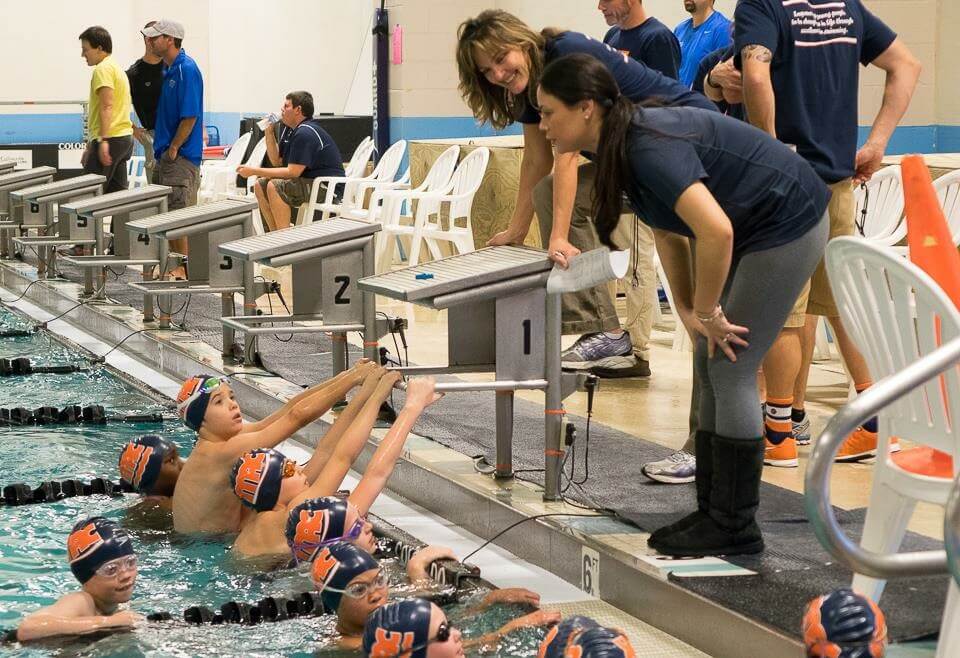
Ten and unders are like sponges, right? The younger, the better, and the less they know about swimming to begin with, the better. Our main goal is to expose them to everything, yes everything (appropriately, of course. I am not going to introduce a crossover IM turn to a beginner swimmer- yikes!). Most of the time younger swimmers are beginners so you have to start from the bottom and work your way up. Teaching them how to swim and stay legal, backstroke counts, how to pass in a lane, leaving and finishing properly, reading the clocks, flipturns, what the whistle at means at swim meets…the list goes on. And those are all things most head coaches do not have the time for. That why they hire us!
Our job as 10 and under coaches is to fill the kids’ toolboxes with as many tools as we can to properly prepare them for the next level of their program. Of course we want them to do it as well as possible so they represent you well at the next level. But if it’s not perfect…be easy on your 10 and under coaches! They’ve worked really hard just to introduce all the aspects of swimming to the kids and are trying to make the swimmer’s next coach’s job easier. Remember, they are your future! I think that right there deserves a little appreciation…
2. Behavior and Culture
Along with filling the toolbox, we need to go over the behavior of 10 and unders and the culture we try to plant in their little (but brilliant) minds. These are kids are smart, but having all of these different, young personalities in the pool simultaneously sometimes makes it difficult to get things done (aka put tools in the toolbox). It’s a challenge that every group has and every age group has, and being a coach who oversees the younger ones, I love the challenge. Most 10 and under coaches truly enjoy it (even if they don’t admit it!).
Is it easy? No, but it helps me be very versatile with my coaching styles and get to work with a lot of different personality types, which makes me a better coach. It also helps you to recognize scenarios and situations so you are prepared for similar ones in the future. In this age group we still have criers, shy birds, little boys who do not keep hands to selves and flat-out naughty or rude behavior. They are kids! Of course they act this way. Our focus is not to punish them, but redirect them to see the bigger picture and to act better in the future.
That takes us back to our first point….filling the toolbox with good behavior, molding them for their future coaches. If I had to choose one thing that the kids who I worked with could take away with them, it would most definitely be life behaviors. How to treat others, interact with teammates in a positive way, never give up because they can make it happen! Since 10 and under coaches are “first” coaches for the majority of new swimmers, we are the first to introduce these behaviors and help them to acquire a team-oriented mentality. After we’ve taught them all we can….at the very least they are aware of how to act or behave for the next coach. We have built the foundation so that our colleagues can have fun adding into their toolbox. Now that I have touched upon the serious part of why our age group coaches are important, we can move onto a lighter topic.
3. Longevity and Fun in the Sport
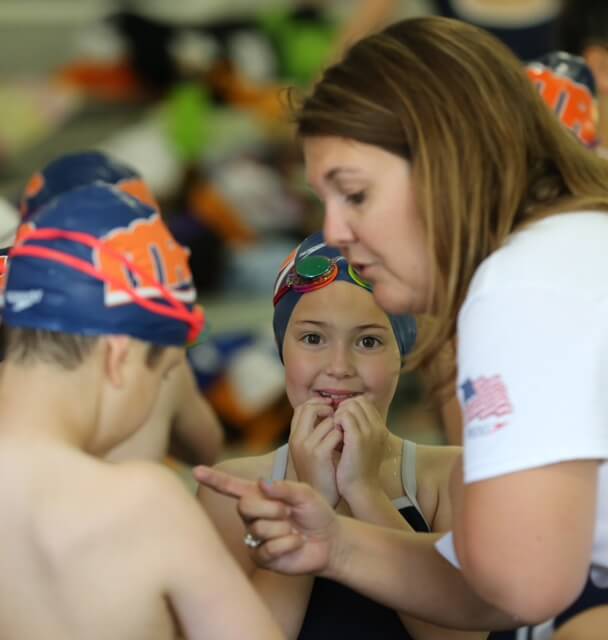
Photo Courtesy: Bryan May
Swimming is not always the most fun sport. Let’s be honest, staring at a black line swimming laps, counting strokes, thinking about high catches, while trying to hold our best average wouldn’t appeal to most people. But that is why they are not swimmers. We do have fun and we love what we do. That did not begin in the senior division though. This all started way back when…in swim school, developmental groups, summer leagues, and of course, in the 10 and under competitive groups.
While swimming fast and training is very important, so is rewarding your kiddos with a game (It needs to have a teaching component, of course. With purpose, you don’t have to tell them the intention of the game, just let them play and they will benefit from it!). We have the ability to chuck the rest of practice and play a racing game or a game that works on reactions for example. This helps get them motivated and keeps them striving for more.
I am not saying older swimmers do not get to play games; the excitement only starts in the younger groups. Having fun and still being able to play games more often than the older groups is good for the soul. Keeping swimming fun increases longevity in the sport, and ultimately, in life!
This is why our age group and developmental coaches are so important to programs. If you want to grow a program and make it strong from top to bottom, think more closely at whom you hire for those beginning level positions. It will make a world of a difference when you have the right coach with the right age group.
If you are already part of a program that has all levels of swimmers, reach out to your age group coaches and let them know you appreciate and support them. Ten and unders are not always that easy to keep up with! And remember…..their swimmers are your swimmers and your team’s future. So if you want to continue to see great swimmers feeding through the program and moving into your groups as they progress, start with recognizing your age group coaches and the toolboxes they have built for you to run with!