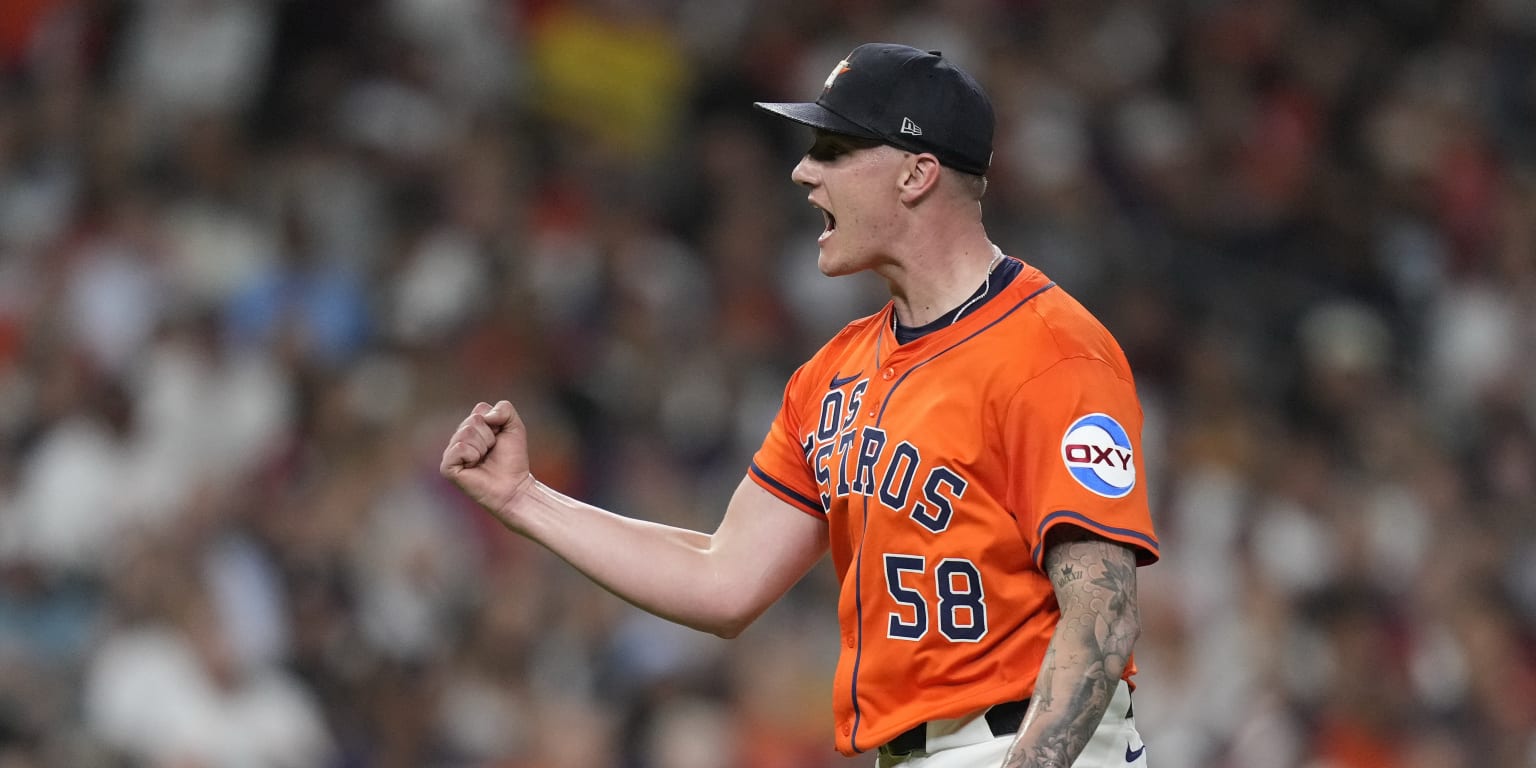
This story was excerpted from Brian McTaggart’s Astros Beat newsletter. To read the full newsletter, click here. And subscribe to get it regularly in your inbox.
Brown was eligible for the Prospect Promotion Incentive (PPI), which was implemented in the 2022 Collective Bargaining Agreement to encourage teams to promote their best young players to the big leagues as early as possible. Because Brown accrued one year of service time as a rookie and finished in the top three in voting for a major award prior to qualifying for arbitration, the Astros will receive an extra pick following the first round of the 2026 MLB Draft.
Brown, one of the Astros’ top prospects in 2022, was called up that year and maintained his rookie status in 2023. He spent his entire rookie season on Houston’s Major League roster. Brown will be eligible for arbitration next season.
How do clubs earn PPI picks?
MLB clubs can earn a Draft pick after the first round if a PPI-eligible player accrues one year of service as a rookie, then factors into a major award. That means he either has to win his league’s Rookie of the Year Award or place in the top three in MVP or Cy Young voting prior to qualifying for arbitration.
But there are a few ways that can happen. One year of service requires 172 days on an active roster, which means …
Players with little or no MLB service time need to break camp with the team or be called up within two weeks of Opening Day. Then they must spend all or most of the year in the big leagues. Then, they must meet the previously mentioned award requirements.
Players who made an Opening Day roster and accrued the service time but didn’t factor in any awards that year retain PPI eligibility. They need to place in the top three for MVP or Cy Young before hitting arbitration, which typically allows for a three-year window.
Are there limits?
Yes. There is a limit of one PPI pick per organization per year, and players can earn only one PPI pick for their clubs.
How do players become PPI-eligible?
Eligibility is based on the preseason rankings. Eligible prospects have to appear on at least two of the three Top 100 Prospect rankings released by MLB Pipeline, Baseball America and ESPN. Those players must be rookie-eligible and have fewer than 60 days of prior MLB service.
Can a player lose eligibility?
Yes. PPI eligibility only extends to the clubs for which prospects make their MLB debuts. If a prospect is traded after making his debut, his PPI eligibility is nullified for his new club, even if he still has rookie status. Meanwhile, prospects traded before their MLB debuts retain PPI eligibility with their new clubs. A good example is Astros outfielder Cam Smith, who was acquired from the Cubs last December before making his debut for Houston on Opening Day 2025.
Why is Brown a Cy Young finalist?
Brown, 27, had the best season of his career this year and was the anchor of the Houston pitching staff. He made 31 starts and went 12-9 with a 2.43 ERA and a career-low 1.03 WHIP. He struck out a career-high 206 batters in 185 1/3 innings and allowed only 133 hits. He had eight starts in which he didn’t allow an earned run.
Among AL starters, Brown ranked first in opponents’ slugging percentage (.318), second in ERA and opponents’ OPS (.589), tied for second in quality starts (21) and third in strikeouts.
The winner of the Cy Young will be announced at 6 p.m. CT Nov. 12 on MLB Network. But in a way, the Astros have already won.
