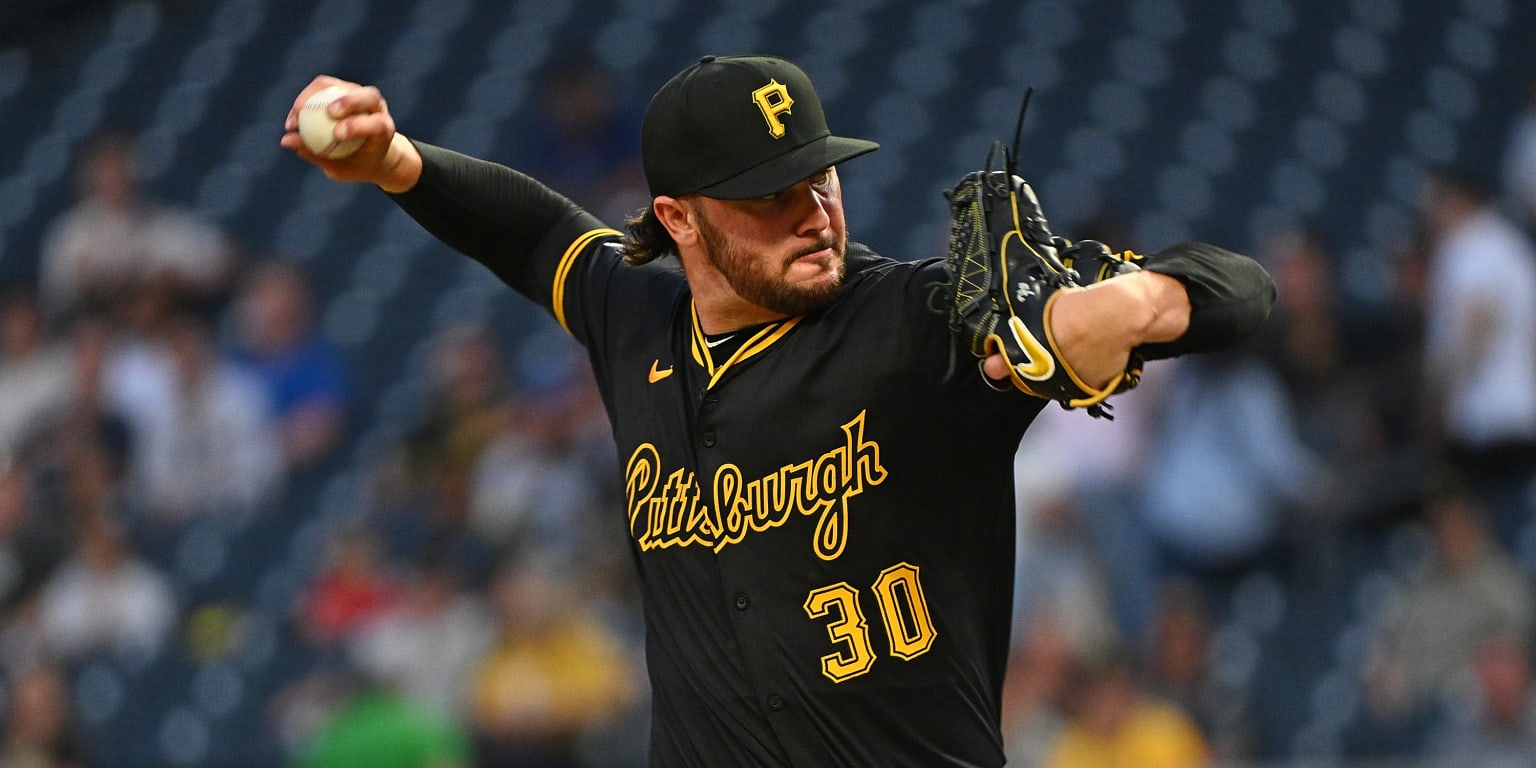
Skenes was just 23 years and 122 days old on the final day of the ’25 regular season, making him the fifth-youngest pitcher to win the award and the seventh pitcher to earn it at the age of 23 or younger.
Per the Elias Sports Bureau, here are the seven pitchers who were 23 or younger on the final day of the regular season in which they won the Cy Young Award.
Each age presented is how old that player was on the final day of the regular season in their Cy Young-winning year.
Dwight Gooden, 1985 Mets
20 years, 324 days
Gooden almost became the first pitcher to win the Cy Young in each of his first two seasons; he finished as the NL runner-up to Rick Sutcliffe in 1984. Gooden, still a teenager, had better numbers than the veteran Sutcliffe in many categories that year … other than winning percentage. Gooden went 17-9 while Sutcliffe went 16-1 for the division-winning Cubs after a midseason trade from Cleveland.
No matter. Gooden came back at age 20 with one of the very best pitching seasons in MLB history, one that made him a unanimous Cy Young Award winner. Gooden went 24-4 with 16 complete games in 1985. He led the big leagues in strikeouts for the second straight year (268). His 1.53 ERA over 276 2/3 innings stands as the second-lowest ERA by a qualified pitcher in the Live Ball Era (since 1920). And no AL/NL pitcher over that same span has surpassed Gooden’s single-season Baseball-Reference WAR of 12.2.
Fernando Valenzuela, 1981 Dodgers
20 years, 338 days
Valenzuela was the Dodgers’ Opening Day starter in his captivating 1981 season. But that’s not how it was originally scheduled; the 20-year-old had to step in due to injuries to Burt Hooton and Jerry Reuss. The first rookie pitcher to start for the Dodgers on Opening Day, Valenzuela went out and dealt a complete-game shutout against the Astros. He won his next seven starts as well, went the distance in six of them and allowed only four runs while striking out 63 batters over those 63 innings. Fernandomania was off and running.
Bret Saberhagen, 1985 Royals
21 years, 178 days
The 1985 season had not just one, but two Cy Young-winning phenoms. While Gooden was dominating in the NL, a 21-year-old Saberhagen was producing a 2.87 ERA over 235 1/3 frames for Kansas City. He paced the AL with a 2.89 FIP, a 1.06 WHIP and 7.1 bWAR.
Saberhagen didn’t have Cy Young-worthy numbers into mid-May. But starting on May 17 — the day he threw a two-hit shutout against the Brewers — he went 18-3 with a 2.54 ERA over his final 26 starts. He capped his fantastic year with a pair of complete games in the ’85 World Series, including a five-hit shutout versus the Cardinals in Game 7.
Vida Blue, 1971 Athletics
22 years, 64 days
Blue made only six starts in 1970, but one of them was a one-hitter, and that came 10 days before he threw a no-hitter. That should have given everyone a hint about what was to come. Blue allowed 6.0 hits per nine innings in 1971, the lowest rate in the Majors. He also led the sport with eight shutouts and posted a thin 1.82 ERA over 312 innings. Blue won 24 games while the Athletics won 101 on the season and made the playoffs for the first time in 40 years.
Besides claiming the AL Cy Young, Blue bested Athletics teammate Sal Bando in the 1971 AL MVP race and is still the youngest player to earn that honor.
Paul Skenes, 2025 Pirates
23 years, 122 days
Skenes accomplished what Gooden couldn’t quite do 40 years earlier: be named Rookie of the Year after his debut season and take home a Cy Young Award the following year. After recording a 1.96 ERA over 133 innings as a rookie, a 23-year-old Skenes led the Majors with a 1.97 ERA and struck out 216 batters over 187 2/3 innings in 2025. He also paced the NL with a 0.95 WHIP and a 23.7% strikeout-minus-walk rate.
That 1.97 ERA was the lowest by a qualified Pirates starting pitcher in the Live Ball Era (since 1920). And by allowing only four earned runs over his final 33 2/3 innings, Skenes became the first starting pitcher since Bill Burns in 1908-09 to have a sub-2.00 ERA in each of his first two MLB seasons (min. 100 IP each year).
Dean Chance, 1964 Angels
23 years, 125 days
Chance’s run to the AL Cy Young in 1964 really didn’t begin in earnest until June. Yes, he had a 2.57 ERA through the season’s first two months, but he had pitched only 42 innings through his first 14 appearances, eight of which came out of the bullpen. Chance then twirled a two-hit shutout with 15 K’s in his first start of June and followed that up four days later by throwing 14 scoreless innings, allowing three hits and striking out 12. Somehow, he was left with a no-decision as the Angels lost to the Yankees, 2-0, in 15 innings.
Chance had a stretch of three straight shutouts in July and gave up a total of nine earned runs over a 12-outing span from July 11 through Aug. 22, encompassing 93 innings. He won 14 of his final 17 decisions as a starter en route to an AL-best 20 victories. He also had a 1.29 ERA during the season’s second half and finished the year as the big league leader in ERA (1.65) and shutouts (11). His 9.4 bWAR that season was second only to Willie Mays (11.0).
Clayton Kershaw, 2011 Dodgers
23 years, 193 days
Kershaw’s breakout 2011 campaign saw him become the first Dodger since Sandy Koufax in 1966 to win the pitching Triple Crown. He led the NL with 21 wins, a 2.28 ERA and 248 strikeouts. This was also the year that started Kershaw’s run of four consecutive ERA titles and three Cy Young Awards in four seasons. (He was the NL runner-up in 2012.)
Kershaw cemented his case for his first Cy by finishing 2011 with a flurry. Over his final nine starts, he went 8-0 with a total of seven earned runs allowed across 65 2/3 innings and a 64-to-9 strikeout-to-walk ratio.
