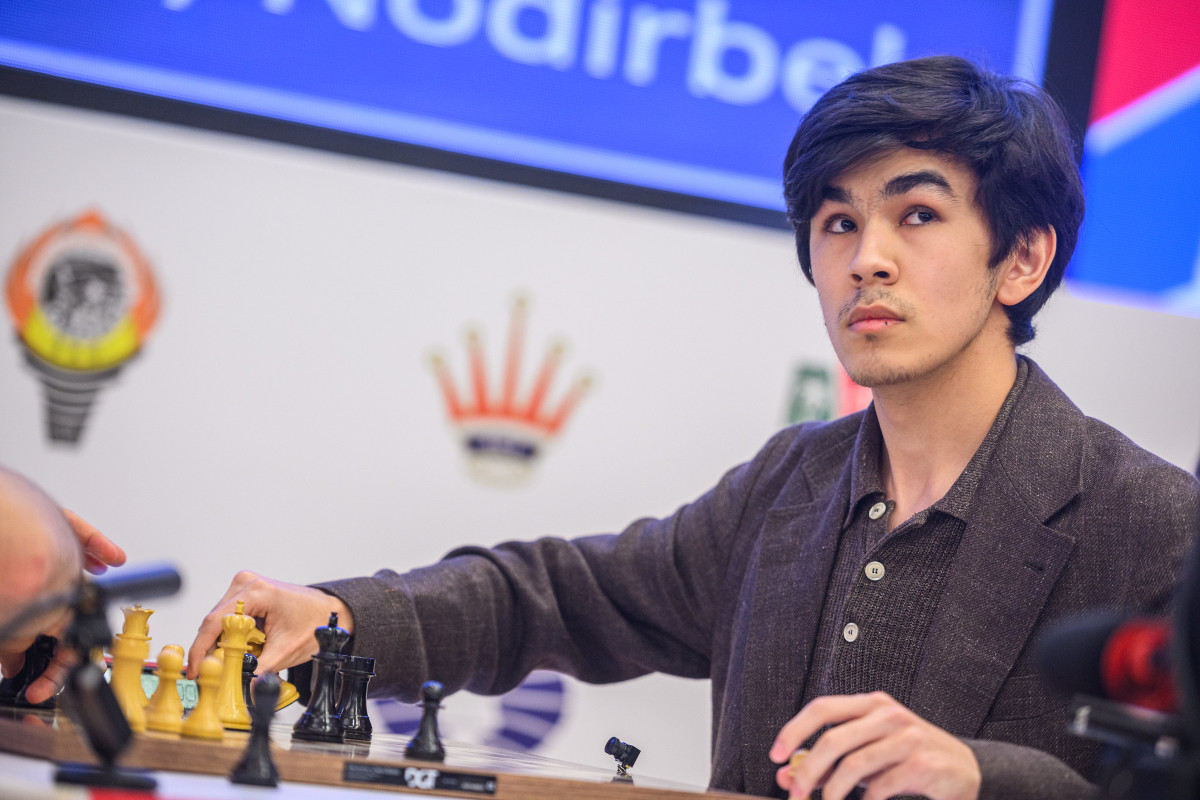
A one-move blunder by Esipenko
Two more names have been added to the lineup for the 2026 Candidates Tournament. By winning their semifinal matches in Sunday’s tiebreaks at the FIDE World Cup in Goa, Wei Yi of China and Javokhir Sindarov of Uzbekistan secured their places in next year’s eight-player tournament, where the challenger for Gukesh Dommaraju’s world title will be decided.
Both semifinal winners prevailed by a 2½–1½ score, each needing only the first rapid section (15+10) to settle matters. Wei eliminated Andrey Esipenko, while Sindarov defeated his compatriot Nodirbek Yakubboev.
In today’s fast-paced chess world, especially online, where blitz and rapid games dominate, the traditional approach of grinding through lines of opening theory can feel overwhelming, and even unnecessary. The real challenge? Striking the right balance in your opening preparation. How deep should you go? Where do you stop? This course is built on the timeless wisdom of my legendary coach, Chebanenko, who designed opening repertoires for his “lazy” students – not lazy in attitude, but smart in approach. His philosophy? Don’t memorise. Understand.
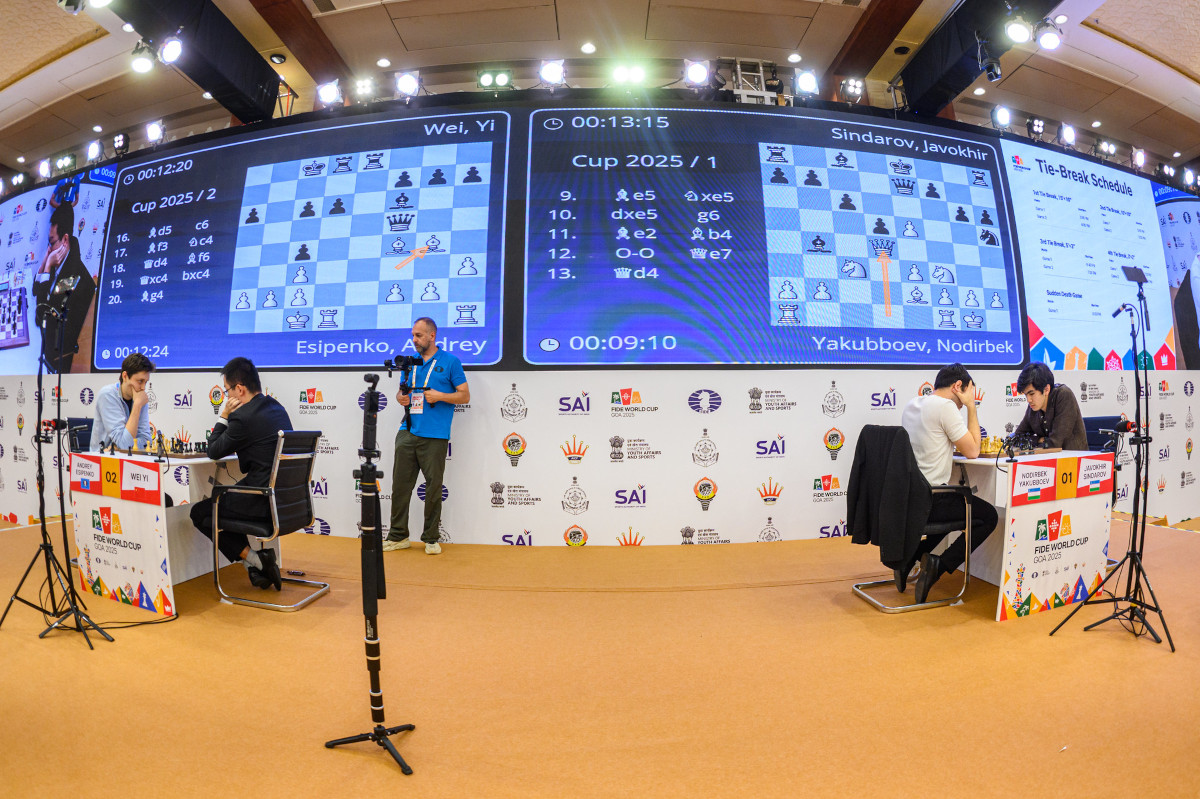
The all-important semifinals in Goa | Photo: Michal Walusza
Wei, at 26 the oldest of the four semifinalists, reaches his first Candidates after a steady climb back into the elite. A decade has passed since he became the youngest player ever to cross the 2700 barrier, and his victory at the 2024 Tata Steel Masters confirmed that he remains fully capable of beating the world’s best.
In Goa, Wei has been impressively resilient: in both classical games of his semifinal match he found himself defending worse positions against Esipenko, yet he held firm.
In the tiebreaks, however, Wei seized the initiative. With black in the first rapid game, Wei reached a structurally superior position after 28…e4 in a Petroff Defence, but opted for a triple repetition due to limited time on the clock.
The second game delivered the match’s decisive moment. Esipenko, playing black, reached a slightly favourable endgame with rooks and knights, outmanoeuvred his opponent and eventually emerged two pawns up.
Yet with 55…Kb6 he let the advantage slip – 55…Ra2 was necessary to retain control. Wei replied instantly with the correct 56.Ne3, simultaneously attacking the rook on g2 and threatening Ne3-d5+ to collect the c7-pawn.
Esipenko, now short of time, pushed …c6, forgetting that his rook was undefended. Wei captured the piece and Esipenko resigned.
In this insightful video course, Grandmaster David Navara shares practical advice on when to calculate deeply in a position — and just as importantly, when not to.
Free sample video: Introduction
Free sample video: Invisible moves
Afterwards, the characteristically modest Wei described himself as “so lucky in this tournament”. Indeed, in earlier matches, Parham Maghsoodloo and Arjun Erigaisi missed clear winning chances against him. Nonetheless, the Chinese star has reached the World Cup final without losing a single game in Goa, winning two matches in the classical section (against Kacper Piorun and Sam Sevian) and the rest in rapid and blitz tiebreakers.
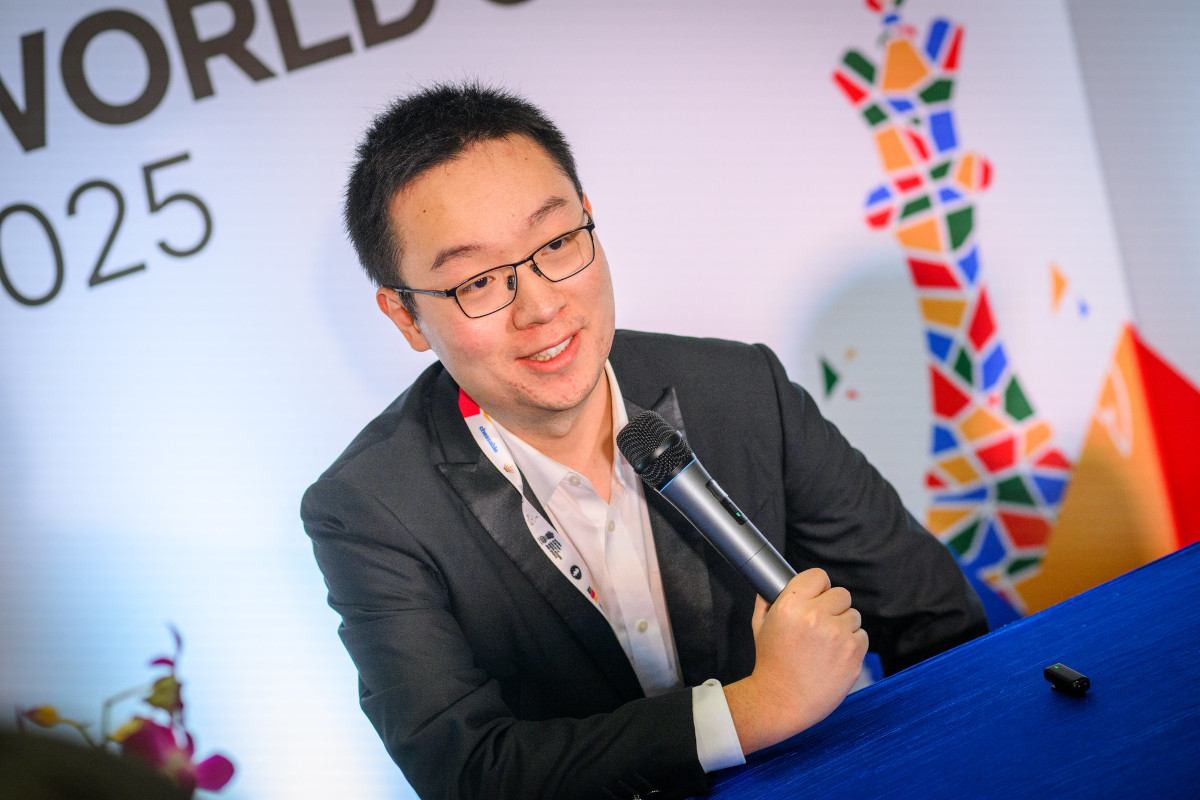
Wei Yi | Photo: Michal Walusza
At the other end of the age spectrum, 19-year-old Javokhir Sindarov was the youngest semifinalist. His rise came a bit late (as per today’s standards) but has been steady: though he crossed 2700 briefly at the end of 2023, it was only in 2025 that he established himself firmly among the world’s top thirty.
A former prodigy – the fifth-youngest GM in history – Sindarov has made good on early expectations. After the Uzbek team won the 2022 Olympiad with him on board three, team captain Ivan Sokolov had this to say about the then-16-year-old:
Sindarov is very tactical, but he needs to improve his knowledge about many types of positions coming from different kinds of openings, which he doesn’t have at this particular moment, in order to improve further. But he’s obviously an extremely talented player, and he will achieve a lot.
Sindarov has evidently put in the work.
His route to the semifinals in Goa included a classical win over Yu Yangyi, nominally his strongest opponent, as he was lucky to be paired up against two players who had produced major upsets – Frederik Svane, conqueror of top seed Gukesh, and Jose Martinez, who eliminated Nodirbek Abdusattorov and Alexey Sarana.
If one skill decides more games, it’s calculation. Openings fade, plans change – but seeing clearly, comparing lines, and choosing with confidence wins points. In this course GM Ganguly turns calculation into a trainable skill with a structured path for any level. You won’t just solve tactics; you’ll learn how to think: where to start, which branches to explore, when to stop, and how to keep a crystal-clear mental board under pressure.
Free video sample: Introduction
Free video sample: Forcing moves
These circumstances do not detract from Sindarov’s achievement, who has more than once shown he can beat elite opponents: earlier this year, for example, he knocked out Hikaru Nakamura in the quarterfinals of the Weissenhaus Freestyle Chess event.
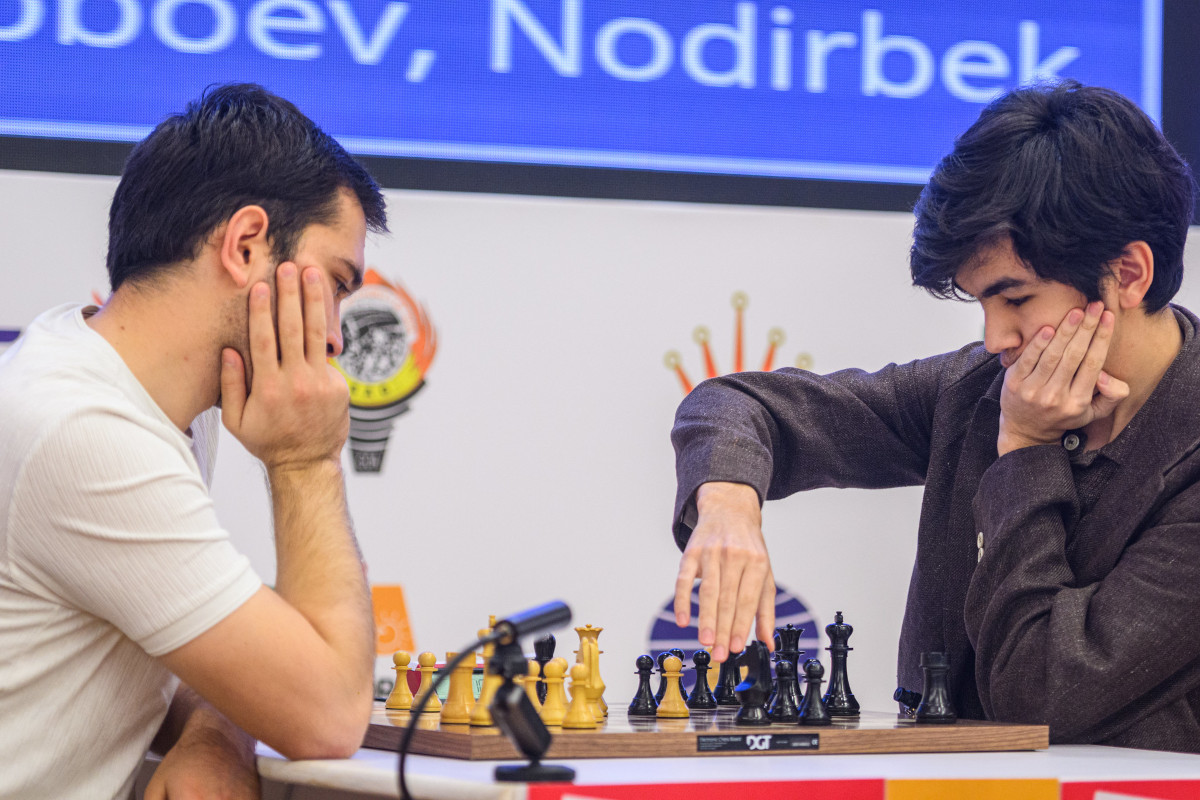
Teammates Nodirbek Yakubboev and Javokhir Sindarov | Photo: Michal Walusza
The semifinal match between Sindarov and Yakubboev, two long-time friends and teammates, saw two quiet classical draws before the tiebreaks erupted into life. In the first rapid game, Sindarov, playing black in a Queen’s Gambit Declined, reached a favourable structure with well-targeted pressure against the weaknesses on e3 and b2.
The critical moment came after Yakubboev’s 32.Rbc1, when 32.b3 was needed to generate counterplay against the queenside (e.g. 32.b3 cxb3 33.Rxb3 b5, and White has counterplay).
Following 32…b5, Black consolidated his bind and gradually improved his position, bringing his king into play and activating his rooks.
By the time he broke through by infiltrating with his rook via 41…Ra2+ and solidifying his queenside structure after 42.Kg1 cxb5, the result was no longer in doubt.
Yakubboev resigned five moves later.
In the rematch, Yakubboev switched from his usual 1…e5 (against 1.e4) to the Sicilian. Sindarov met the change with ambition, entering a sharp line in which he pushed his kingside pawns and prompted his opponent to (correctly) give up an exchange. In fact, after 20…Nc4 it was White who had the upper hand with both kings in the centre of the board.
However, here Sindarov – given the match situation – elected to simplify with 21.Bxc4 bxc4 22.Qd5 (diagram), forcing the queen exchange, since any continuation other than 22…Qxd5 would leave Black in serious trouble.
From that point on, Sindarov missed a couple of wins, but handled the complications with notable composure, even giving back the exchange to maintain control. After 54 moves, he secured the draw he needed to reach the World Cup final.
Picture this: you’ve outplayed your opponent move by move, you’re clearly better – and then the endgame slips into a draw, simply because you lacked the crucial theoretical knowledge. That is exactly where this course comes in. Without solid endgame skills, there’s no way forward. Rook endgames are most essential: they occur more often than any other type of endgame, and often make the difference between victory and half a point. If you master them, you’ll confidently convert your advantages into wins!
Free video sample: Introduction
Free video sample: Bodycheck
Ever respectful of his long-time colleague, Sindarov did not celebrate, and even apologised to Yakubboev. “I’m very happy, but sad for my friend”, he said afterwards.
Sindarov’s qualification marks a historic moment for Uzbekistan. It will be the first time since Rustam Kasimdzhanov’s participation in the 2007 Candidates that the country is represented in the World Championship prelude. And with Yakubboev now headed to the third-place match against Esipenko, Uzbekistan still has the chance to send two players to the Candidates.
All games – Semifinals
Replay games from all rounds at Live.ChessBase.com
EXPAND YOUR CHESS HORIZONS
Data, plans, practice – the new Opening Report In ChessBase there are always attempts to show the typical plans of an opening variation. In the age of engines, chess is much more concrete than previously thought. But amateurs in particular love openings with clear plans, see the London System. In ChessBase ’26, three functions deal with the display of plans. The new opening report examines which piece moves or pawn advances are significant for each important variation. In the reference search you can now see on the board where the pieces usually go. If you start the new Monte Carlo analysis, the board also shows the most common figure paths.
