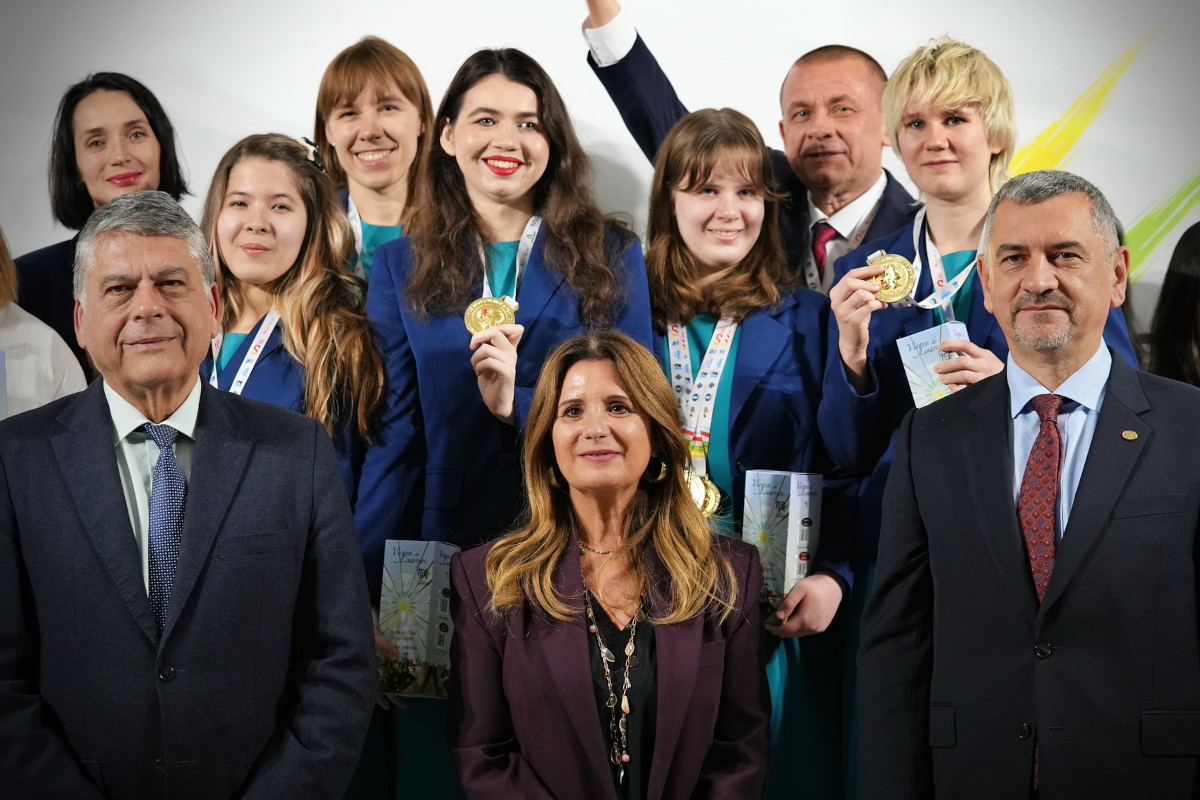
Russia, Azerbaijan and China reach the podium
The World Women’s Team Championship concluded in Linares, with Russia (competing as the FIDE Team) taking the title after defeating Azerbaijan in Sunday’s final. China secured the bronze-medal position by prevailing twice against Kazakhstan. The decisive encounters followed tense semifinals on Saturday, when Russia overcame China on Saturday with two identical 2½–1½ victories, while Azerbaijan reached the final by defeating Kazakhstan in blitz tiebreaks after both of their classical matches had ended 2–2.
In the championship match, Russia maintained full control, winning the first duel 3–1 and the second 2½–1½ to claim gold without needing a playoff. China, meanwhile, twice defeated Kazakhstan 2½–1½, thus completing the podium. These matches brought a close to an event marked by consistently narrow margins, except in Russia’s case, where the favourites demonstrated clear dominance throughout.
Data, plans, practice – the new Opening Report In ChessBase there are always attempts to show the typical plans of an opening variation. In the age of engines, chess is much more concrete than previously thought. But amateurs in particular love openings with clear plans, see the London System. In ChessBase ’26, three functions deal with the display of plans. The new opening report examines which piece moves or pawn advances are significant for each important variation. In the reference search you can now see on the board where the pieces usually go. If you start the new Monte Carlo analysis, the board also shows the most common figure paths.
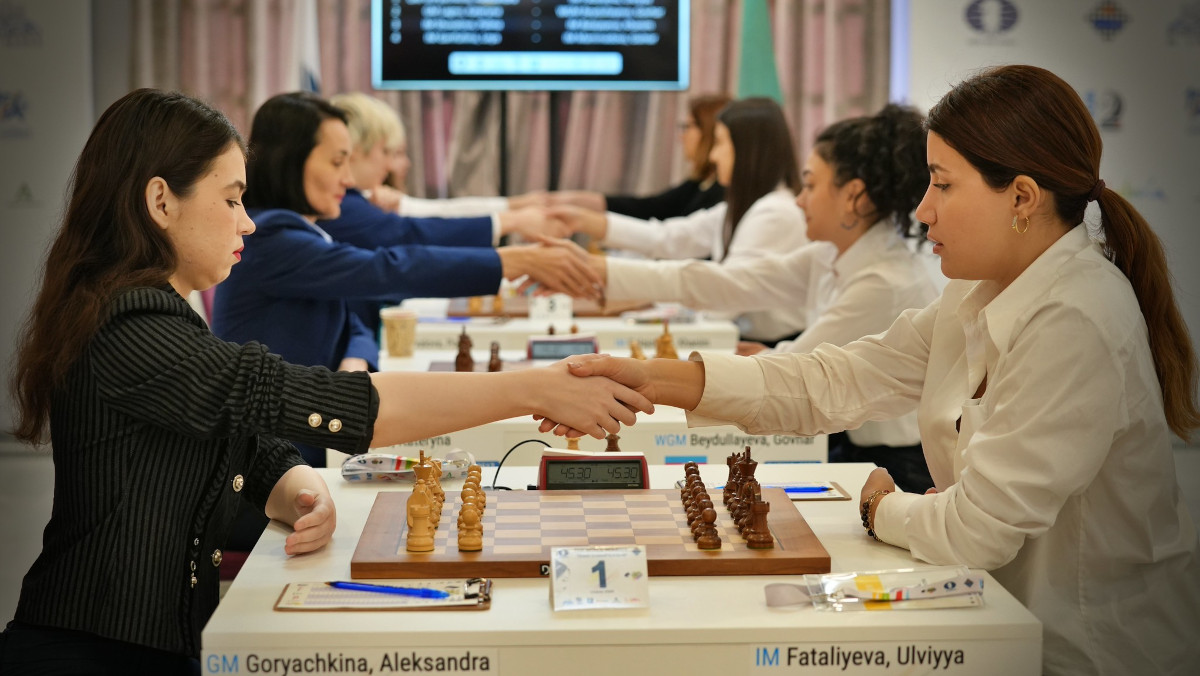
The second encounter in the Russia v. Azerbaijan final | Photo: Pavel Dvorkovich
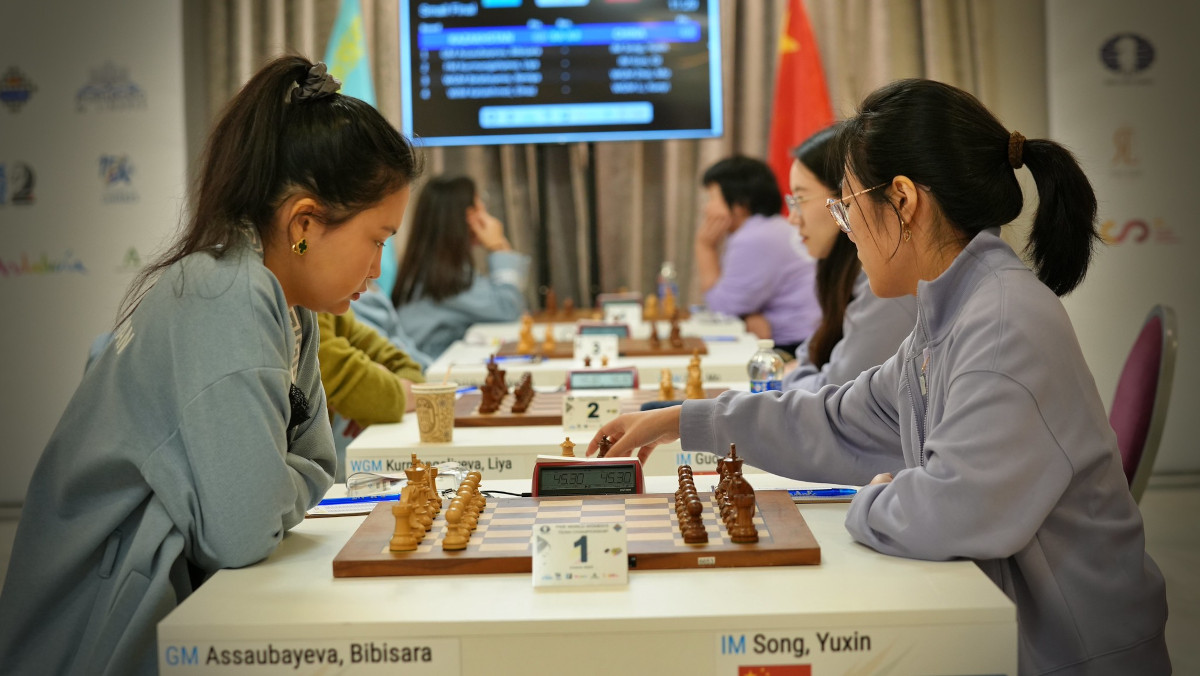
The match for third place: Kazakhstan v. China, with Bibisara Assaubayeva facing Song Yuxin on the top board | Photo: Pavel Dvorkovich
Assaubayeva 0-1 Song (Match for third place)
Analysis by GM Karsten Müller
Russia’s overall performance was remarkable. They won all five matches in the pool stage and then all three duels in the knockout rounds – against the United States, China and Azerbaijan – without once requiring a tiebreak. Impressively, across the entire event, covering 44 individual games, the Russian players suffered only a single loss. The only opponent to defeat a Russian representative was none other than top seed Hou Yifan, who overcame Aleksandra Goryachkina with the black pieces in a Sicilian Defence.
The standout individual performance for Russia (and across all participants) was delivered by Polina Shuvalova, who scored 9½/10 on board three. Her near-perfect run came to an end only in the final round of the event, when she agreed a short draw with black against Gulnar Mammadova – a pragmatic choice given Russia’s favourable match situation.
Strong contributions on the lower boards also proved decisive for the champions: Leya Garifullina and Anna Shukhman earned individual silver and gold medals on boards four and five, respectively.
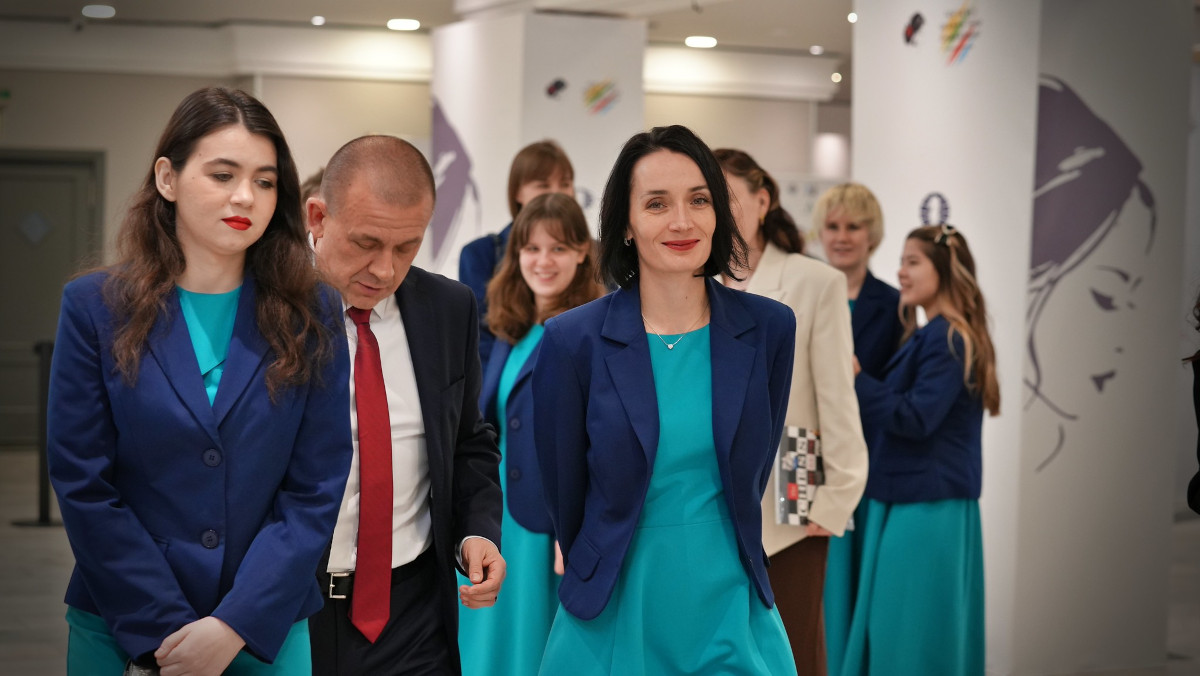
Team leaders Aleksandra Goryachkina alongside team captain Sergey Rublevsy soon after winning the six-day tournament | Photo: Pavel Dvorkovich
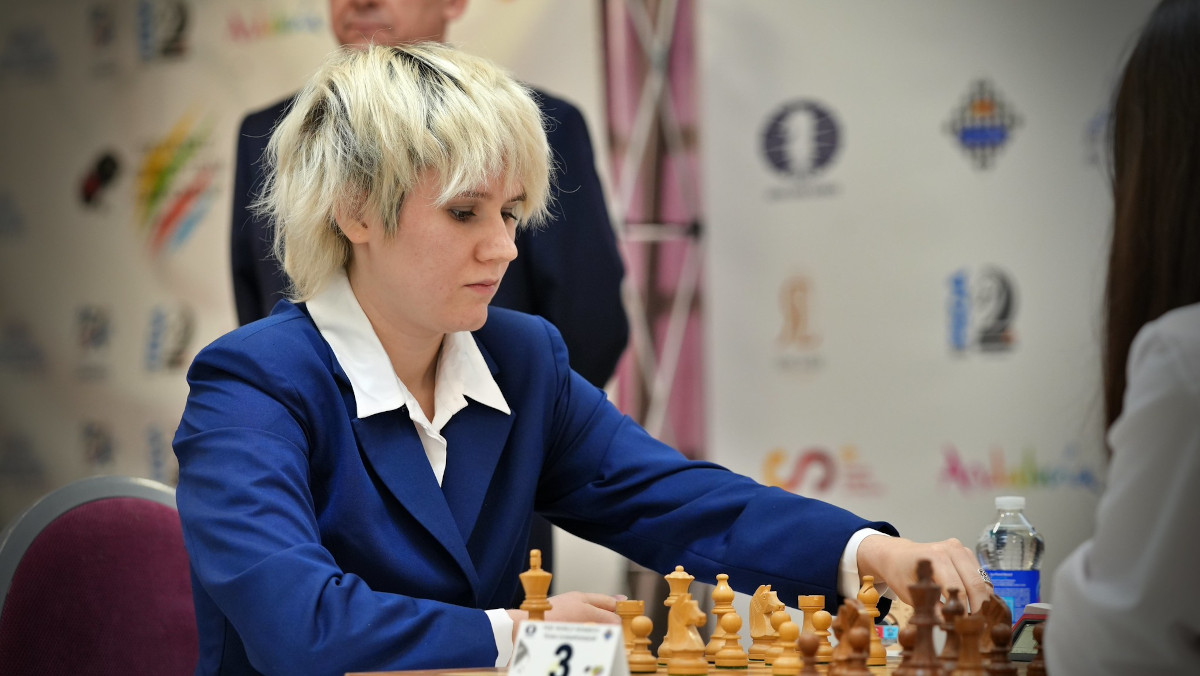
Polina Shuvalova had a stunning performance in Linares | Photo: Pavel Dvorkovich
Azerbaijan’s silver-medal finish was certainly noteworthy. In a field that included strong squads from China, Georgia, the United States and Kazakhstan, the Azerbaijani team exceeded expectations and produced consistent results in both the pool stage and the knockout rounds. Their campaign was led by Ulviyya Fataliyeva, who scored 6/10 on board one to claim individual gold. Her wins against Nino Batsiashvili (Georgia) and Bibisara Assaubayeva (Kazakhstan) in the knockout were crucial in guiding her team to the final.
The Chinese squad, which did not include the four players who have stood out at the top of the women’s circuit in recent years – Ju Wenjun, Tan Zhongyi, Lei Tingjie and Zhu Jiner -produced a solid all-around performance and saw four of their five representatives claim individual medals. On board one, 31-year-old Hou Yifan earned individual silver with a 3½/6 result against strong opposition. Rising talents Song Yuxin (20) and Lu Miaoyi (15) took silver medals on boards two and three, while Zhai Mo, a member of the 2018 Olympiad-winning team, added another silver on board five.
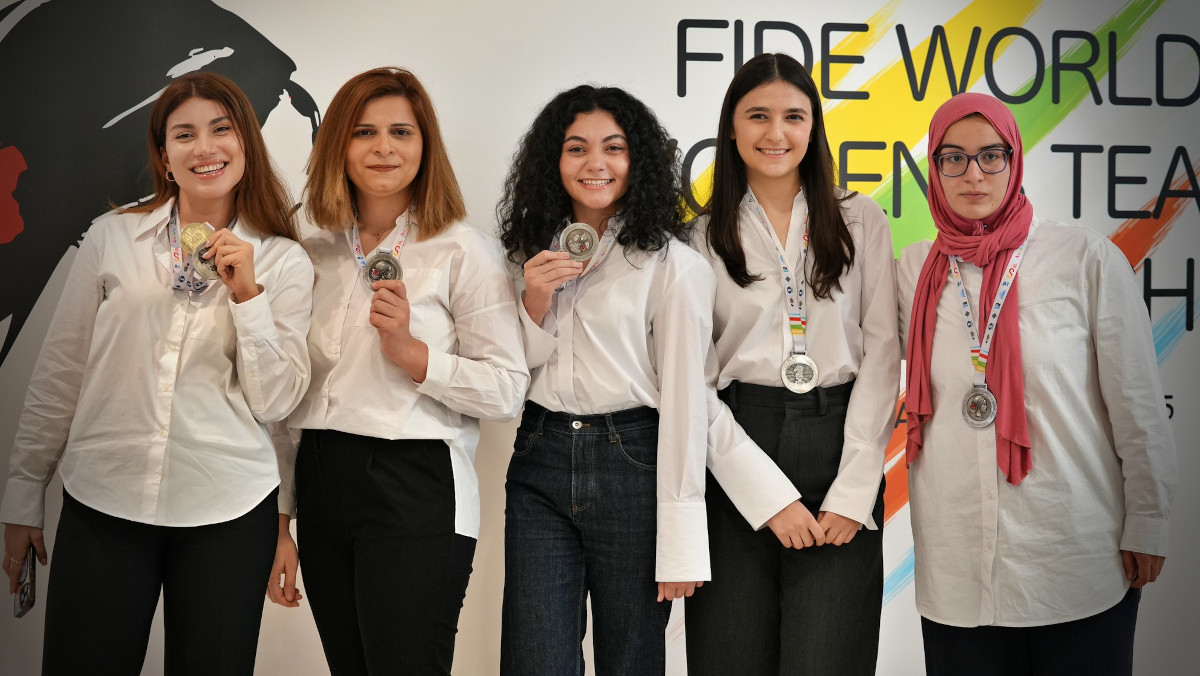
Team Azerbaijan | Photo: Pavel Dvorkovich
The Ragozin Defence (1.d4 Nf6 2.c4 e6 3.Nf3 d5 4.Nc3 Bb4) has become a cornerstone of modern chess theory. With 3.Nf3 gaining popularity as a way to avoid Nimzo-Indian setups and the challenges Black faces in the Queen’s Indian, the Ragozin offers a solid and dynamic alternative.
Free video sample: Introduction
Free video sample: 5.cxd5 exd5 6.Bf4
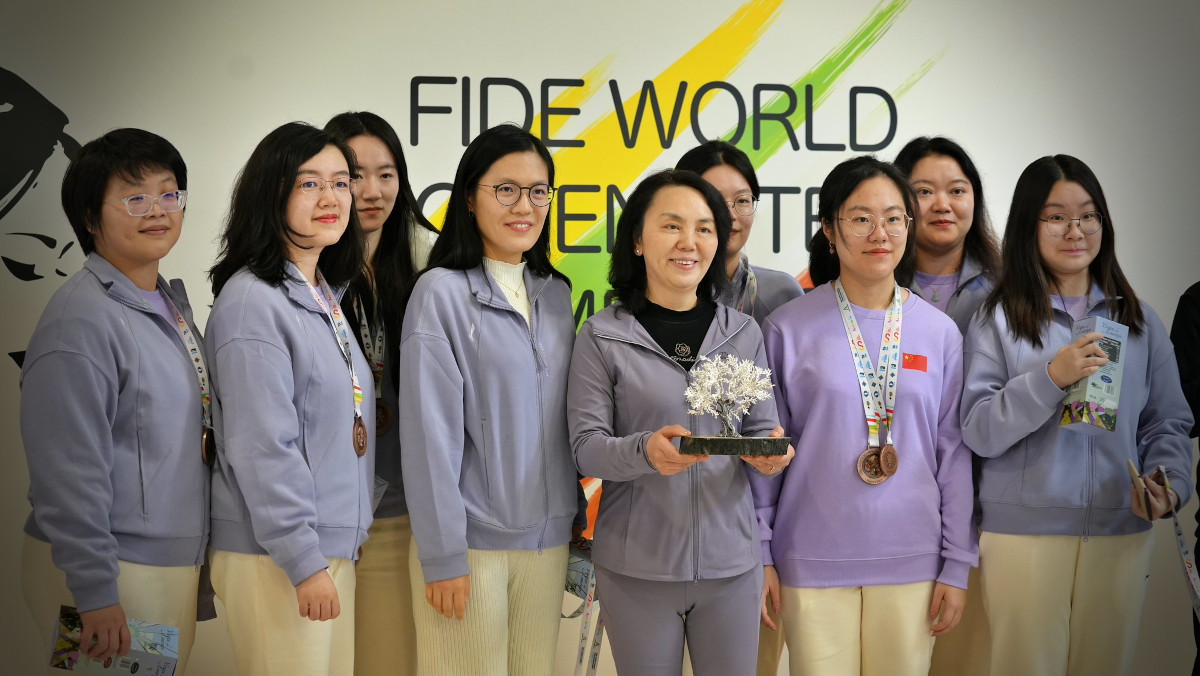
Team China | Photo: Pavel Dvorkovich
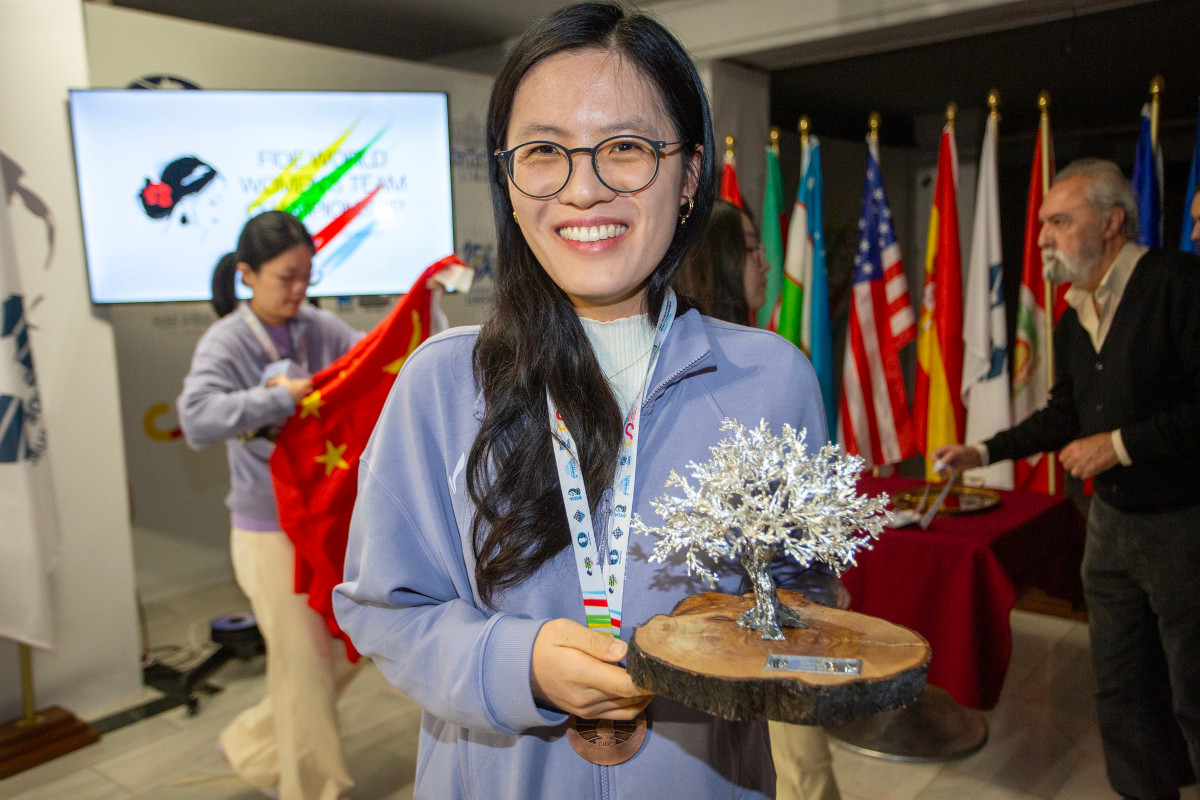
It is always nice to see the long-time women’s world number one competing in international tournaments – Hou Yifan | Photo: Raúl Martínez
Individual medals
| Board/place | Player | Country | TPR | Games | Points |
| 1st board | |||||
| 🥇 | Fataliyeva, Ulviyya | AZE | 2524 | 10 | 6 |
| 🥈 | Hou, Yifan | CHN | 2523 | 6 | 3½ |
| 🥉 | Padmini, Rout | IND | 2495 | 7 | 4 |
| 2nd board | |||||
| 🥇 | Kamalidenova, Meruert | KAZ | 2531 | 9 | 6 |
| 🥈 | Javakhishvili, Lela | GEO | 2492 | 6 | 4 |
| 🥉 | Song, Yuxin | CHN | 2488 | 10 | 6 |
| 3rd board | |||||
| 🥇 | Shuvalova, Polina | FIDE | 2827 | 10 | 9½ |
| 🥈 | Khotenashvili, Bella | GEO | 2456 | 6 | 4 |
| 🥉 | Lu, Miaoyi | CHN | 2376 | 10 | 5 |
| 4th board | |||||
| 🥇 | Arabidze, Meri | GEO | 2463 | 7 | 5 |
| 🥈 | Garifullina, Leya | FIDE | 2407 | 8 | 5½ |
| 🥉 | Savitha Shri B | IND | 2401 | 7 | 4 |
| 5th board | |||||
| 🥇 | Shukhman, Anna | FIDE | 2675 | 5 | 4½ |
| 🥈 | Zhai, Mo | CHN | 2391 | 8 | 4½ |
| 🥉 | Nurgaliyeva, Zarina | KAZ | 2276 | 5 | 2 |
| 6th board | |||||
| 🥇 | Kaliakhmet, Elnaz | KAZ | 2515 | 9 | 7 |
Lagno ½-½ Song (Semifinals)
Analysis by GM Karsten Müller
All games – Knockout
EXPAND YOUR CHESS HORIZONS
Data, plans, practice – the new Opening Report In ChessBase there are always attempts to show the typical plans of an opening variation. In the age of engines, chess is much more concrete than previously thought. But amateurs in particular love openings with clear plans, see the London System. In ChessBase ’26, three functions deal with the display of plans. The new opening report examines which piece moves or pawn advances are significant for each important variation. In the reference search you can now see on the board where the pieces usually go. If you start the new Monte Carlo analysis, the board also shows the most common figure paths.
