Incredible resilience
After seven rounds of intense knockout play in Goa, four players remain in action at the 2025 FIDE Chess World Cup. In the final, Wei Yi (China, 7th seed) and Javokhir Sindarov (Uzbekistan, 16th seed) are meeting after both secured qualification to the 2026 Candidates Tournament by winning their semifinal tiebreaks on Sunday.
With the biggest objective already achieved, the finalists can approach the match with comparatively less pressure, though the stakes remain high: the winner will take home the $120,000 first prize, while the runner-up receives $85,000.
In today’s fast-paced chess world, especially online, where blitz and rapid games dominate, the traditional approach of grinding through lines of opening theory can feel overwhelming, and even unnecessary. The real challenge? Striking the right balance in your opening preparation. How deep should you go? Where do you stop? This course is built on the timeless wisdom of my legendary coach, Chebanenko, who designed opening repertoires for his “lazy” students – not lazy in attitude, but smart in approach. His philosophy? Don’t memorise. Understand.
In the parallel match for third place, Andrey Esipenko (FIDE, 27th seed) faces Nodirbek Yakubboev (Uzbekistan, 28th seed). Unlike the finalists, both players are still fighting for a coveted Candidates place. Their match has added emotional weight, as both are coming off painful defeats in closely contested semifinals.
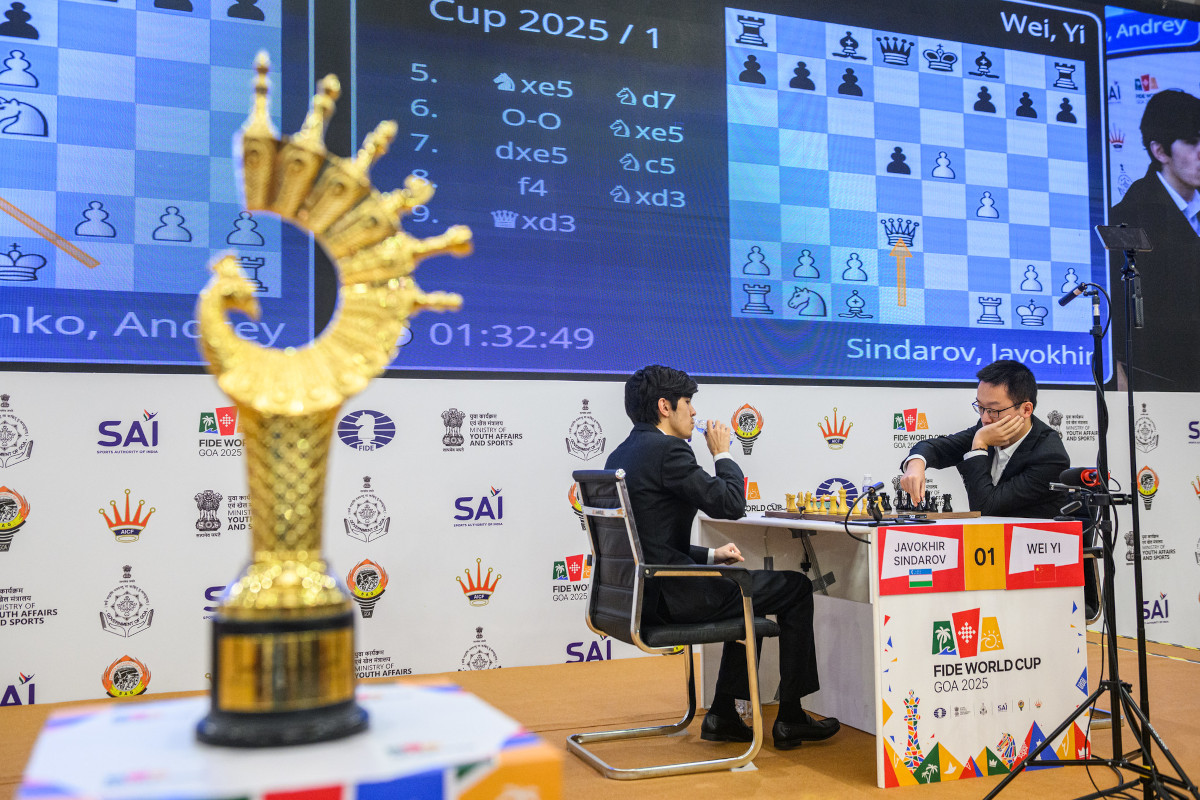
The beautiful winner’s trophy is in display during the finals | Photo: Michal Walusza
The first classical game of the final saw Wei Yi obtain the more pleasant position from the black side of a Petroff Defence. After a solid opening battle, the Chinese grandmaster reached a moment where he could have sharpened the struggle with the tactical shot 24…Rxf4
The idea, fully workable with precise calculation, runs 25.Nxc5 Rxg4+ 26.Bg3 Bxf1 27.Kxf1 Rf8+ 28.Kg2 b6 (diagram), after which Black is for choice in the endgame thanks to his better pawn structure and pair of active rooks.
Wei instead opted for 24…Bxe4, a safer continuation that maintained slight pressure but was insufficient to generate real winning chances. Sindarov defended accurately, and after White’s 50th move the players agreed to a draw. Replay the full encounter with annotations by Johannes Fischer below.
In this insightful video course, Grandmaster David Navara shares practical advice on when to calculate deeply in a position — and just as importantly, when not to.
Free sample video: Introduction
Free sample video: Invisible moves
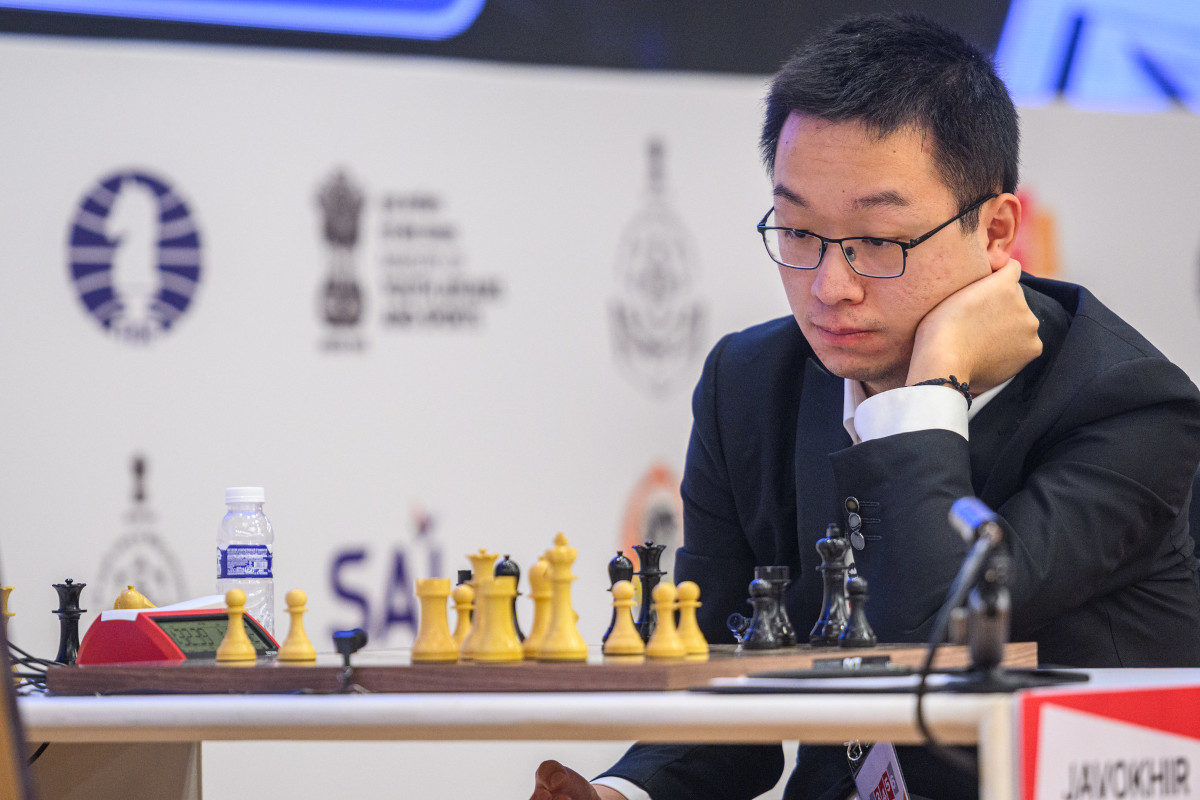
Wei Yi | Photo: Michal Walusza
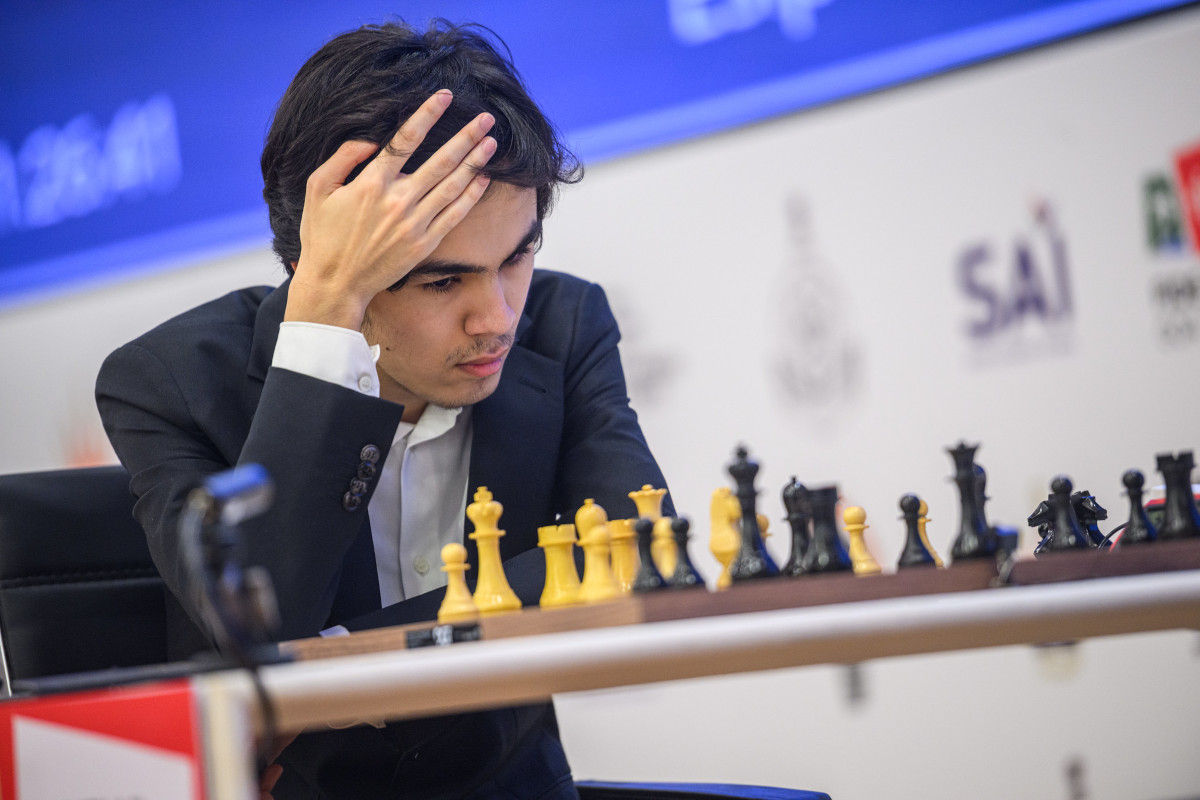
Javokhir Sindarov | Photo: Michal Walusza
The match for third place featured a striking turnaround from Esipenko, who the previous day had suffered one of the most painful losses of his career – blundering in a single move against Wei and also letting a favourable endgame slip.
The 23-year-old was candid in the post-game interview, admitting that he felt really bad after the defeat, but noted that a restorative dinner, a beer shared with his second, and Arsenal’s victory over Tottenham in the Premier League had helped him regain composure. (Esipenko has been seen wearing an Arsenal shirt in previous events.)
Back at the board on Monday, Esipenko produced one of his most controlled performances of the tournament. Playing white, he gradually outplayed Yakubboev in a queenless middlegame featuring rook and bishop against rook and knight. His strategic grip grew move by move, with manoeuvring ideas such as 29.Re2 keeping Black tied down and unable to fully coordinate.
Time pressure also played a role: when the players reached the position above, Yakubboev had only 6 minutes on the clock, while Esipenko retained 22. Eventually, the Russian grandmaster’s precise technique broke through, and he converted the advantage to take the lead in the match. Replay the full game below, with annotations by GM Karsten Müller.
Esipenko is now one draw away from qualifying for the Candidates Tournament for the first time in his career, while Yakubboev will need to win on Tuesday to keep his hopes alive.
If one skill decides more games, it’s calculation. Openings fade, plans change – but seeing clearly, comparing lines, and choosing with confidence wins points. In this course GM Ganguly turns calculation into a trainable skill with a structured path for any level. You won’t just solve tactics; you’ll learn how to think: where to start, which branches to explore, when to stop, and how to keep a crystal-clear mental board under pressure.
Free video sample: Introduction
Free video sample: Forcing moves
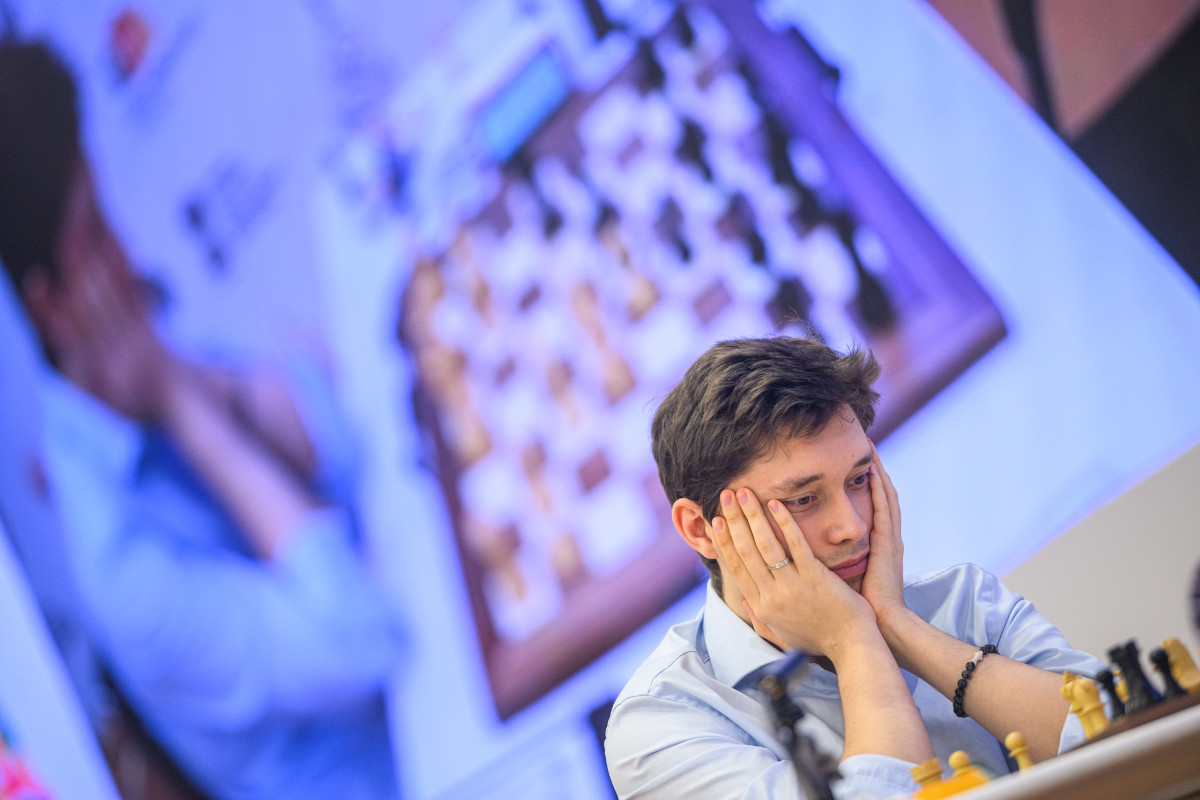
Andrey Esipenko | Photo: Michal Walusza
All games – Final and match for third place
Replay games from all rounds at Live.ChessBase.com
EXPAND YOUR CHESS HORIZONS
Data, plans, practice – the new Opening Report In ChessBase there are always attempts to show the typical plans of an opening variation. In the age of engines, chess is much more concrete than previously thought. But amateurs in particular love openings with clear plans, see the London System. In ChessBase ’26, three functions deal with the display of plans. The new opening report examines which piece moves or pawn advances are significant for each important variation. In the reference search you can now see on the board where the pieces usually go. If you start the new Monte Carlo analysis, the board also shows the most common figure paths.
