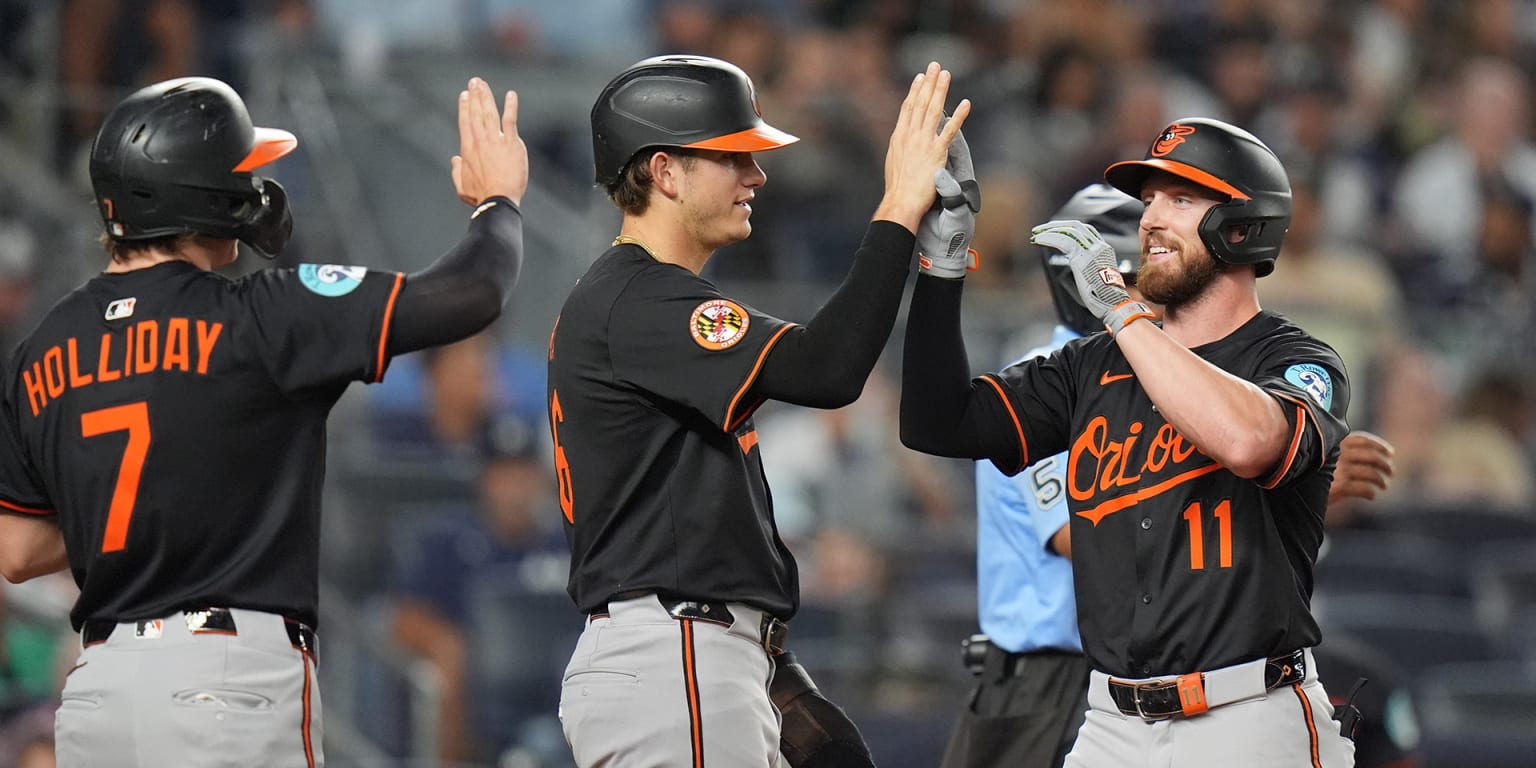
The Baltimore Orioles are the most fascinating team this offseason. I’m not sure there’s anyone close.
There are teams under more pressure to win a World Series in 2026 than the Orioles. The Phillies may be running out of time; the Mets have already passed owner Steve Cohen’s deadline; the Blue Jays want to make that Dodgers series a painful but no longer relevant memory; until the Yankees win a World Series again, their fans will be impatient.
There are teams in worse positions than the Orioles that are still desperate to be successful in 2026. The Giants are still trying to figure themselves out under president of baseball operations Buster Posey; the Pirates need to show they’re not wasting Paul Skenes; the Royals are trying to surround Bobby Witt Jr. with a stronger team; the Astros are getting older and fading but trying to keep their window open.
But the Orioles are in a unique situation. Remember, this — right now — was supposed to be their time. Baltimore won 101 games just two years ago in 2023, and the general consensus was that season was only the beginning. The O’s had more young phenom position players than they knew what to do with, they had a smart, confident front office full of people who had just built the Astros into a juggernaut and they were soon to have a new owner who was motivated to bring a winner back to Baltimore.
It has not turned out the way it was supposed to. After being swept in the 2023 American League Division Series, the Orioles won 10 fewer games in ’24 and were swept out of the AL Wild Card Series, scoring one total run in two games against the Royals. Then last year went off the rails quickly, with Baltimore going 75-87 and finishing in last place in the AL East.
Remember the previous time the Orioles finished 75-87? It was 2017, when the team was coming off a stretch of three playoff appearances in five years under manager Buck Showalter. The bottom fell out in ‘18 with a 47-115 record, and the O’s changed their mindset entirely, building for the future, focusing on analytics, bringing in Mike Elias as general manager and tearing the whole organization down to the studs in order to build, at last, for a modern future. That modern future is now.
This is what they were trying to build. And look at them: back at 75-87 again.
Rodriguez, 26, was the No. 11 overall pick in the 2018 MLB Draft and a consensus top-10 prospect, someone the Orioles and their fans had their hopes pinned to for years. Yet that never quite turned into the big league results everyone wished for, with Rodriguez putting up a 4.11 ERA in 43 starts from 2023-24, before missing all of ‘25 due to injuries.
Still, Rodriguez has four years of team control remaining, while Ward has just one before he is due to reach free agency. And even though Ward is a good hitter — he has a 117 OPS+ since 2022, averaging 24 homers per season — he has struck some as remarkably similar to Tyler O’Neill, a player the Orioles still have on the roster after a frustrating first year in Baltimore. That’s not entirely fair to a reliable player like Ward, whose lefty-mashing bat fits nicely into this lineup.
But it speaks to the larger Orioles fan angst that has been present since ace starter Corbin Burnes left via free agency after spending one season in Baltimore in 2024. True, that move ultimately didn’t hurt the O’s, given that Burnes made just 11 starts for the D-backs before undergoing Tommy John surgery. Yet it still left a bad taste in fans’ mouths, given the missed opportunity to capitalize on the team’s upward trajectory.
Orioles fans might be frustrated about the Rodriguez trade, about giving up so many years of team control and knowing that if Rodriguez ever does stay healthy and figure it out, he won’t do so in Baltimore. But that’s a problem for the future, and this is a sign that this front office, the one that built up all of this young talent, now recognizes the urgency here. They can’t worry about the future so much anymore.
Ward helps this team now — like, right now — and right now is the only time that matters. The Orioles have to win this year as much as any team. If they are better this year — and Ward will make them better — then Rodriguez’s future is a luxury that fans won’t be worried about.
The most fascinating thing will be seeing what comes next. Because while the reactions by some to the Orioles trading away Rodriguez may have been a bit outsized, the fact remains: A team that desperately needs more impact pitching just traded away a pitcher — and one with arguably a higher ceiling than any other arm currently on the roster. Right now, Baltimore’s rotation consists of Trevor Rogers, Kyle Bradish, Dean Kremer, Tyler Wells and Cade Povich, which is to say, it looks exactly like last year’s, the one that caused so much trouble in the first place.
The Orioles have had some success trading away prospects for MLB starters before — see Burnes and Rogers — and adding Ward increases their outfield depth in a way that could set them up for another hitting-for-pitching swap. But Baltimore’s payroll also is still relatively low. That’s where free agency comes into play. While this market doesn’t have the upside of a Burnes last year — again, a deal the Orioles were fortunate to avoid — there’s plenty of depth to it. The O’s have many options to upgrade this rotation.
And the primary reason for that is the lineup which, while underperforming last year, is still highly talented, not to mention mostly cost controlled. This should allow the Orioles to spend on the rotation while also giving them significant upside.
Gunnar Henderson took a slight step back last year, but even that was a 5-bWAR season at age 24. Jackson Holliday turns 22 next week, and he’s already a league-average hitter. A breakout sure looks like it’s about to happen for him, and there are plenty of other candidates to take a step forward in 2026. Jordan Westburg? Dylan Beavers? Colton Cowser? Coby Mayo? Jeremiah Jackson?
Adding Ward gives the Orioles more certainty, which is needed, but the true way for Baltimore to win is for some of these guys to make good on their prospect pedigrees and bring internal improvement. It may not matter if the pitching isn’t better. But the pitching should be better — there’s at least every reason to invest heavily in making it so.
The Orioles looked like the team of the future two years ago. It didn’t happen then, but it could happen now. This offseason will go a long way toward determining if it does.
