When you think of the best free-agent relievers this winter, you’re going to think of the obvious fireballers who pile up saves. There are those coming off sustained success (Edwin Díaz, Robert Suarez), and there are those you think you can fix as buy-low candidates, believing better outcomes are possible simply because of how overwhelming the physical skills are (Ryan Helsley, Devin Williams).
To all that, we say: No. Too obvious. Let’s get weird. Really weird. Because, as it turns out, weird can get a lot of outs, and getting outs is the point, isn’t it?
That’s showing Statcast’s Pitching Run Value, which gives credit for every single pitch, not just the ones that end a plate appearance. (That is: given the massive difference in outcomes based on whether the batter is ahead or behind, to the tune sometimes of hundreds of points of OPS, it’s worth giving credit for those pitches that get you ahead and lead to bad outcomes.)
No one, it must be clarified, actually thinks Rogers is one of the two or three best relievers in the Majors going forward. Whatever contract he gets is very likely going to be a small fraction of what Díaz gets, because Díaz is three years younger and potentially on a Hall of Fame track.
But when you can throw like, well, that, and get outs, it’s worth noticing. Rogers earned slightly more value than Díaz on a per-pitch basis, and was able to accumulate more value over 11 additional innings, too. It’s not just this past year, either, because Rogers has a 2.76 ERA in parts of seven seasons, and over the last five seasons, he’s tied for the fifth among relievers in run value.
The Mets valued him enough, anyway, to acquire two months of his time by trading Drew Gilbert, Blade Tidwell, and José Buttó. He allowed exactly one home run as a Met, yet allowed zero balls to be hit over the fence, thanks to this catastrophe:
A few weeks ago, we looked at what was available on the free agent market and realized how many different places Rogers’ name was appearing. Not strikeouts, surely, and of course not velocity, but to go back to the categories we used, with a minimum of 40 innings pitched, Rogers was there in a variety of ways.
That’s just of the free-agent relievers available. Throw in as well the second-lowest walk rate (2.3%) of any pitcher who threw 40 innings, free agent or not, and you get a pitcher who doesn’t allow damage or walks, and gets more grounders than almost anyone. It’s not traditional ‘dominance,’ but there’s more than one way to succeed, too.
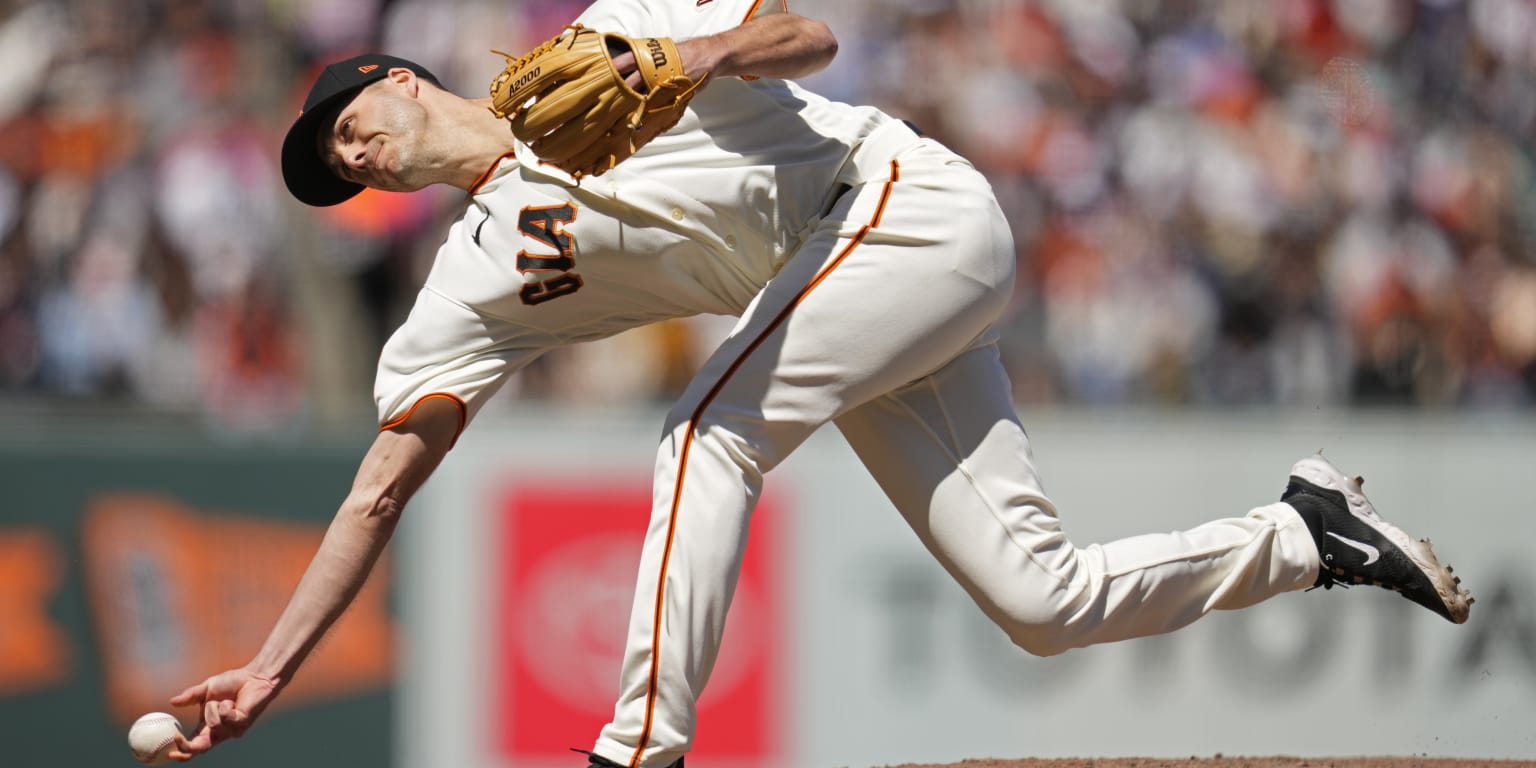
You know most of the ‘why,’ or at least you think you do, and that’s obviously got to start with the way he throws the ball, which he releases just 1.18 feet off the ground. That’s essentially tied with Chad Bradford for the lowest release point in the nearly two decades for which we have pitch tracking, which makes it in the conversation for the lowest release point ever, simply because it’s hard to imagine anyone getting much lower.
Whether it’s indeed the lowest or not is immaterial, because it’s simply unlike anything else that hitters are seeing today, and if you think you inherently know that – yes, of course, the submariner throws weird – you can’t fully understand that until you see the way he throws compared to the rest of the game. Hard to see which one is him, right?
His slider breaks up, to start, but what Rogers really does – aside from getting grounders, and preventing walks and loud contact – is something you might not expect at all: He makes batters swing late.
Yes, late, not early. Late, on 83 mph ‘heat,’ if you can really call a fastball slower than some changeups a ‘heater.’ It sounds like it shouldn’t be possible. This is high school heat, or lower in many cases. How could it possibly make a Major League hitter late?
“He’s different,” Giants catcher Patrick Bailey told MLB.com’s David Adler in 2023. “The fastballs go down and the breaking balls go up. It’s funny — you get the reactions of hitters, and umpires even, and it’s like, I’m glad I’m catching and not hitting or umpiring.”
Or, it can mimic almost every pitcher’s release and stuff. As of this summer, the Trajekt machine could not give hitters looks at a Rogers-type delivery. He’s that far off the charts – or under them, as it were.
You can see it by seeing how uncomfortable he made no less a batter than potential future Hall of Famer José Ramírez on a first-pitch slider last summer, leaning back like he thought he was about to get hit by a frisbee slider that ended up being right down the middle.
Swings being late is, in the coming months, a metric that Statcast will be able to quantify, but we’ll give you a sneak peak now. Looking at the initial leaderboards, at the combo of pitcher+pitch types that made bats the latest – defined as where the bat is in relation to the ball at their closest points – you’ll see a few big expected names. There are four-seamers from the likes of Chris Sale and Max Fried, as well as pitchers with elite, top-of-the-scale velocity, like Jhoan Duran and Seth Halvorsen. Exactly the sort of entries you’d expect.
Not quite at the top of the scale, but very, very close to it: Rogers’s 83.5 mph slowball. An elite late-making pitch.
To show you how that’s possible, consider Rogers facing Angels infielder Luis Rengifo last April, a four-pitch affair full of awkward swings that ended up with a weak grounder, tapped right back to Rogers.
The first pitch, as you saw, was a slider taken outside for a 1-0 count. The next pitch was a sinker, 82.9 mph, down the middle. Rengifo wasn’t just late on it; he was later on the pitch than any swing-and-miss Rogers got in the entire season. It was later than any swing-and-miss Tarik Skubal got all season, and while Rengifo did not have a good year, we’re also talking about a seven-year veteran who’d hit .300/.347/.417 the season prior.
From the side view, it looked like this. This pitch was, we cannot express enough, a fastball at 82.9 mph. Rogers was responsible for more than 92% of four-seamers and sinkers thrown that slow or slower, because it’s not a profile that works from a ‘normal’ pitcher.
If there’s a concern, it’s that he’ll be 35 in December, that there’s got to be a point where the slowball can’t possibly survive being any slower, that the relatively low strikeout rate declined further with the Mets.
Then again, those are concerns you have about ‘normal’ pitchers, which he is not, and it all means there’s no massive long-term contract coming here, anyway. The extreme arm angle is the first thing you’ll notice about Rogers, obviously, and we’ve mentioned it a few times here. It’s a requirement for his success; you simply can’t throw 83 mph and last long if you’re not an outlier in some other way.
It’s not just a parlor trick, either, weird for the sake of weird. It’s a way to get outs – and he’s sure gotten a lot of them. Some team is going to be happy to find out this winter.
