TORONTO — It’s a new tradition for the Blue Jays. Each trip to the MLB Winter Meetings has its own main character.
Two years ago in Nashville, Tenn., it was Shohei Ohtani. Shrouded in secrecy and speaking to us via Zoom from Parts Unknown, Ross Atkins and the Blue Jays did everything possible to try to land the brightest star in baseball, but fell just short, the heartbreak finally landing just a few days after the Meetings had wrapped.
Last year in Dallas, it was Juan Soto. Same story, similar numbers, same ending.
The Blue Jays no longer deserve the narrative of being baseball’s runners-up, though. It was already a lazy narrative, but after handing Vladimir Guerrero Jr. $500 million in the spring and Dylan Cease $210 million last week, jumping the starting pitching market entirely, there’s no room for that label in any serious baseball conversation.
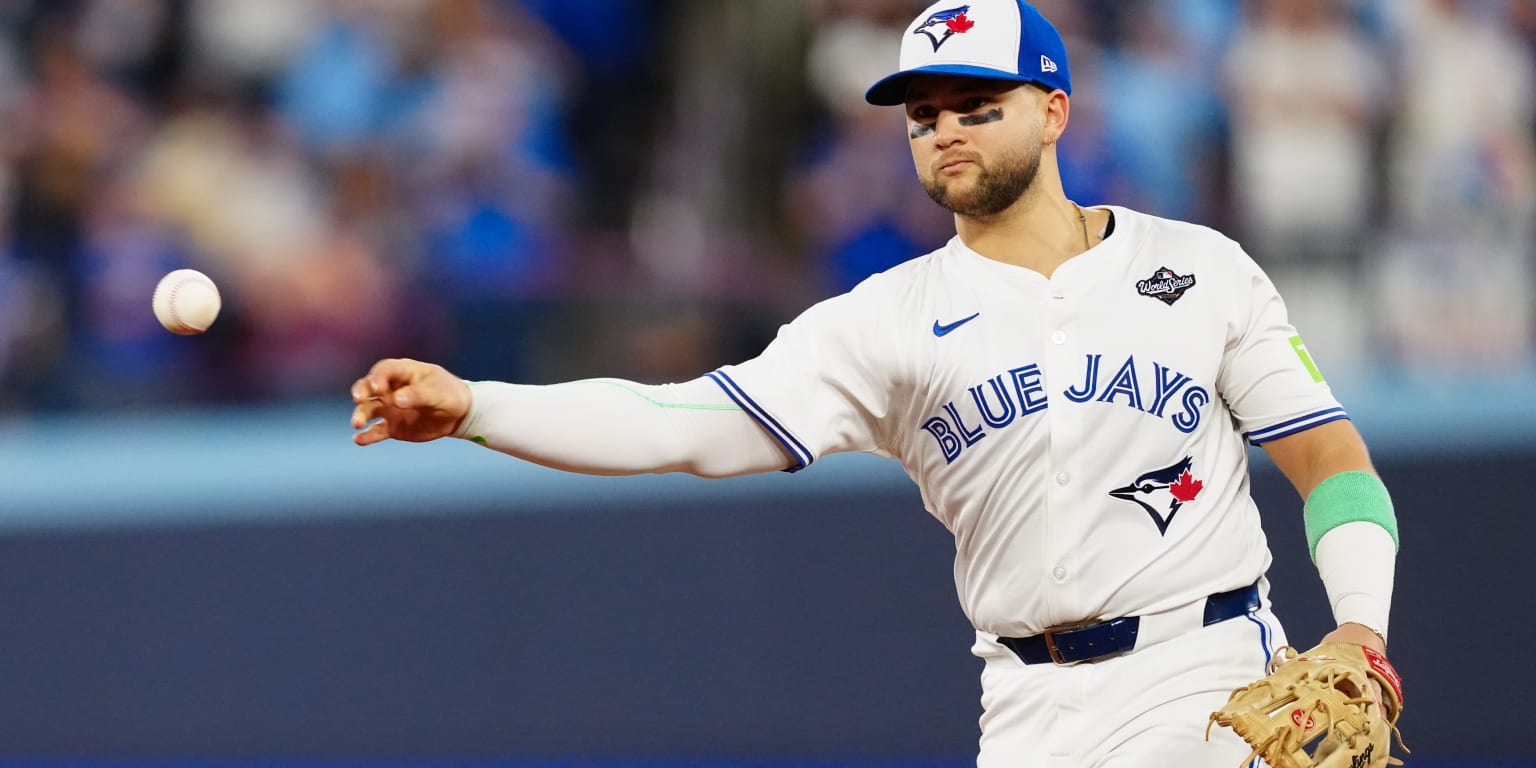
This brings us to Bo Bichette, the main character of next week’s Winter Meetings in Orlando, Fla. Yes, the Blue Jays will be involved in the Kyle Tucker sweepstakes, but that’s just stating the obvious for any serious team with cash. Bichette still feels like their main character this offseason, the beloved, homegrown star who just hobbled up to the plate and launched a three-run shot off Ohtani in Game 7 of the World Series. It’s tragic that Bichette’s moment was lost due to the Dodgers’ comeback.
Bichette has said the same thing all along, though. As a rookie and as a veteran, and before and after Guerrero inked his deal, Bichette has stuck to one point and never wavered.
“I’ve said I want to be here from the beginning,” Bichette said just hours after the Game 7 loss.
Fact or fiction: Hometown discounts
Fiction. Let’s not waste any time here.
It’s a charming narrative each offseason, but 999 times out of 1,000, money talks and money wins, especially when we’re talking about long-term deals like the one Bichette is expected to sign.
Shane Bieber’s case is an example of where “discounts” can enter play. Bieber, who surprised most of the baseball world by picking up his $16 million player option for 2026 instead of hitting free agency, is clearly betting that the Blue Jays are his best bet at hitting the market one year from now at the peak possible value. If that costs him a few million up front to increase his earning potential by another $30 million down the road? Easy.
That decision can factor into pillow contracts as veterans try to bounce back and reestablish value, but Bichette isn’t thinking about the next contract he’ll sign in his mid-to-late 30s. This is his one big shot, so if the Blue Jays’ offer is $25 million short of the best offer on the table, he’s surely worn this uniform for the last time.
Instead, think of this like a tiebreaker. This is still extremely valuable. The Blue Jays have been on the wrong side of tiebreakers over the years, whether it be due to the quality of their roster, the fact they play in Canada or any number of other factors. This time, they should be on the right side of that tiebreaker.
The Blue Jays have needed to chase tiebreakers in the past by adding years or dollars — think Hyun Jin Ryu and George Springer, perhaps even this Cease deal — but they shouldn’t need to chase it this time. If they agree with where the market moves on Bichette and match the best offer, everyone can end up happy.
Dollars and cents: What will Bichette’s deal look like?
We need to talk about contracts in terms of average annual value in baseball more often. Willy Adames has been an important comparison for Bichette. Last December, Adames signed a seven-year, $182 million deal with the Giants. That’s an AAV of $26 million, also close to Springer’s annual salary on his current deal ($25 million AAV).
This feels like a useful number for Bichette annually. In theory, the top end of Bichette’s market could see him touch $200 million on an eight-year deal. There will also be teams eager to keep the term of Bichette’s deal shorter, which is understandable given that his sprint speed dropped noticeably in 2025 and he could play more of this contract at second base than shortstop. That opens the door to five- and six-year deals that look closer to Springer’s, but perhaps a shorter term opens Bichette up to a higher AAV.
The Blue Jays have the money and the motivation to land their main character. This time, they should have the tiebreaker, too.
