By Richard Pagliaro | Thursday, December 11, 2025
All Photo credits: International Tennis Hall of Fame
Living legends populate the International Tennis Hall of Fame—and Hall of Fame President Patrick McEnroe’s daily life.
The man who grew up in the Douglaston, Queens home shared by Hall of Famer John McEnroe grew into a doubles Grand Slam champion.
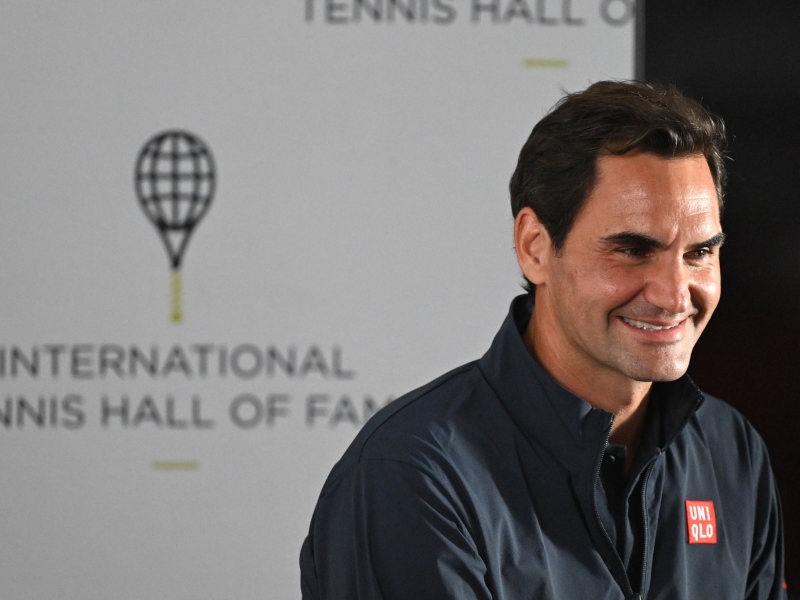
These days, Patrick McEnroe relishes his role as ITHF President welcoming iconic champions to the Hall. McEnroe recently led a Zoom call that featured 30 Hall of Famers welcoming an emotional Roger Federer into the Newport-based Hall ahead of his official induction into the Hall next summer.
Long-time ESPN analyst Patrick McEnroe has been surrounded by tennis greatness since birth.
During his 10-year professional career on the ATP Tour, McEnroe captured the 1989 French Open doubles title alongside Jim Grabb. Two years later, he reached the singles semifinals at the 1991 Australian Open.
Patrick McEnroe followed in older brother John McEnroe’s footsteps as U.S. Davis Cup captain in 2000, a position he held until 2010. He led a U.S. squad of Andy Roddick, James Blake and Mike and Bob Bryan to the 2007 Davis Cup championship defeating Russia in a festive final staged in Portland.
From 2008 to 2014, McEnroe was the USTA’s General Manager of Player Development.
These days, McEnroe’s work spans the spectrum from young juniors taking their early steps at the John McEnroe Tennis Academy on Randall’s Island to tennis icons taking the giant steps of entering the Hall of Fame in Newport.
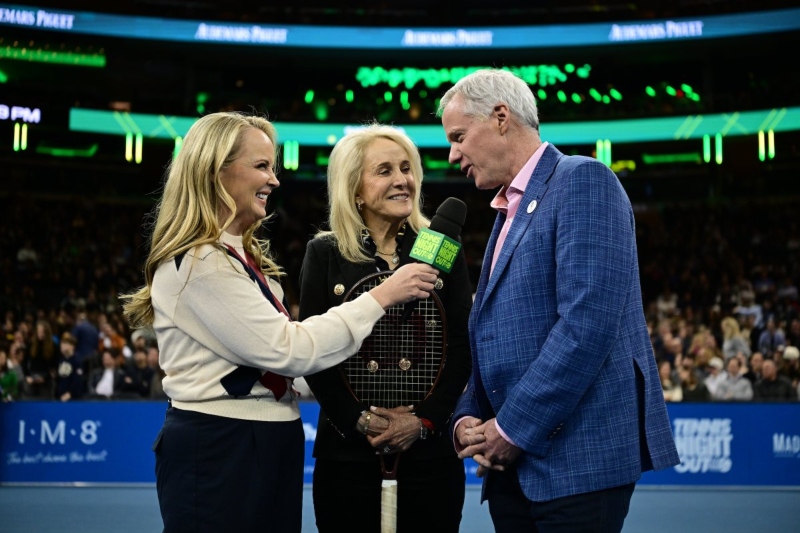
Last Sunday, McEnroe joined Hall of Famers Tracy Austin and Gigi Fernandez teaching young junior players from three New York City boroughs at the Be Legendary clinic at the NYJTL Cary Leeds Center for Tennis & Learning—a couple of miles from famed Fordham University where McEnroe’s father graduated with a law degree..
Be Legendary is the International Tennis Hall of Fame’s global youth initiative designed to “inspire and empower players ages 10–18 by connecting them with tennis history, core values, and legendary players.”
The Be Legendary program is more than bringing tennis history to life. It aspires to teach kids valuable life lessons tennis has to offer through the lens of Hall of Fame players, help them foster a deeper connection to the sport, and encourage them to find their personal greatness, both on and off the court.
In 2025, Be Legendary has taught youth around the world through clinics conducted in Melbourne with former No. 1 Lleyton Hewitt, Dallas, Indian Wells, Miami, London (with the Bryan brothers and Maria Sharapova) and Newport, Rhode Island. Each event offers youth players the chance to learn from Hall of Famers.
We caught up with Patrick McEnroe the day after the Be Legendary clinic for this Q&A where he discusses the Hall of Fame’s initiative, Roger Federer’s impending induction, why he disagrees with Toni Nadal’s assertion tennis should reduce racquet size and the champions he can envision winning a calendar Grand Slam in the coming years.
Tennis Now: Be Legendary, seems like a creative and cool way to connect tennis history to its future. I like that it shows tennis history is a living breathing resource and not something that should be just stuck in a museum or confined to a history book. What are the origins of the initiative and where do you see it going in the future?
Patrick McEnroe: It’s been incredibly successful for us. I want to credit Kim Clijsters, who was constantly talking about doing something to inspire youth and cohort and CEO Dan Faber and his background with education and being a school teacher. They really spearheaded the Be Legendary program and obviously our team at the International Tennis Hall of Fame all over the world for their work in putting the initiative together. It’s been a successful initiative. To see a Lleyton Hewitt come out in Australia and talk about different characteristics of what it takes to be a champion is great.
And to see all of the different Hall of Farmers who have participated to share life lessons with the kids. It’s pretty cool for the junior players and they get to study Hall of Fame players and different times in tennis. It’s not only inspiring for kids from a tennis perspective, but also an educational perspective teaching them about the background of these Hall of Famers and of the sport.
Tennis Now: You were personally present for some very powerful tennis ceremonies this year: The Big 4 reuniting at Roland Garros for Rafa’s Farewell. And of course Serena Williams and Maria Sharapova reuniting in Newport for Maria’s Hall of Fame induction. You mention life lessons and both were great life lessons about how rivals can share mutual respect and honor. What did you draw from those two historic ceremonies?
Is there any behind the scenes moment you can share regarding Serena and Maria because that was such a surprising and beautiful moment between two champions who had been very bitter rivals at times.
Patrick McEnroe: I think from a behind the scenes perspective that we were able to keep it extremely quiet, which I think made it even more exciting when Serena did walk out. A lot of people didn’t know she was there and didn’t expect that.
And as you said, they were heated rivals at times, so it was kind of cool to see them come together and share their story. I never even heard their shared story. To me, I felt like I was a fan and hearing about it for the first time and their backgrounds, while on the surface would seem to be different, seemingly quite similar with both of their dads spurring them on. And both of them not having a lot growing up, not coming from a lot of money and really having that desire and discipline.
It was super cool to see Serena and Maria come together and it created huge buzz for the Hall of Fame as well. We never could have predicted how well it was received.
The Big 3 reunion of these legendary players really resonated, I think, with sports fans all over the world. Having called many of their matches, you could see they always had a great respect. And now to have a little distance between their playing careers, having been retired, makes them appreciated even more what they were able to do and the rivalries they created.
I think in both instances with the Big 3 and Maria and Serena they impacted us way more than just tennis-wise. I think they impacted us culturally. Celebrating that through the Hall of Fame induction was special. And as tennis champions, these are icons that have done a lot to promote and change the way the sport is perceived all over the world.
Tennis Now: Roger Federer and Mary Carillo will be inducted into the International Tennis Hall of Fame next summer in what could be one of the most special induction ceremonies we’ve ever seen in Newport. Can you give us any sneak peek of what is planned for Roger and Mary?
You’ve set the bar high with the Serena and Maria reunion. So could Rafa be involved in the Roger induction in any way given the fact they’ve both talked about playing some charity exos together in 2026?
Patrick McEnroe: I could tell you, Richard, but then I’d have to kill you [laughs].
We’re working on it right now so there’s not much I can share yet.
Part of the idea that we were able to relay the official news to Roger with 30 Hall of Fames on the Zoom call that you probably saw. We talked about that months ago and Roger is super into it. He really wants to help the Hall of Fame and he’s told us numerous times he wants to celebrate the Hall of Fame.
Not many people have the kind of awareness of the Hall of Fame and tennis history, even while he was playing, that Roger Federer has. That’s why I think it’s gonna be very emotional for him.
Mary Joe [Fernandez] texted me. Her family is very close with Roger and his family and she was in Switzerland when he received the news. She said Roger already had tears in his eyes all seeing all of the Hall of Famer who showed up on that Zoom call to welcome him to the Hall of Fame.
So it was a pretty emotional moment for him and for tennis as well. I can’t tell you how many people have reached out to me asking: How can I get there to Newport? How can I get tickets for Roger’s induction? So it’s gonna be pretty wild and obviously a great moment for the Hall of Fame.
And of course, Mary Carillo and our families go way back to our Douglaston, Queens days together. So Mary is someone I’ve looked up to for a long, long time. Her knowledge, her brain power, her wit and all the things she’s contributed to the sport are impactful. So we’re looking forward to a very special day in Newport.
Tennis Now: I was there for Marat Safin’s induction and Safin said he wished he had visited the Hall of Fame while he was a player because it give you a sense of perspective, of being part of something that’s much greater than yourself and your own career.
Can you envision the Hall of Fame ever working with the Tours to get players to Newport so that they could experience what Safin was talking about? Also, I happened to be standing right behind Mike Agassi, Andre’s father, in the Museum the day before Andre was inducted. And he was so moved seeing the exhibit, at one point, Mike Agassi turned around and there were tears of pride and joy streaming down his face. You realize it really is the culmination of a life’s work to be inducted. Any visceral reactions like that you saw and can share?
Patrick McEnroe: It’s always special when you see the inductees walk through and see their exhibit. It’s pretty cool seeing the old cans of tennis balls and racquets from the last 100 years and also you get an appreciation for the global nature of the sport. We have exhibits of pictures when they first started playing tennis in France and England when tennis first started.
So I think you’re right: As a player you’re sort of single-minded. That’s what makes you a great tennis player: You can be single-minded, you can be focused on what you need to do to succeed and you sometimes don’t understand or appreciate the bigger picture.
Obviously, with a little rear-view mirror look, you know looking back at your career, a few more years of experience I think the players that do come there and even the players that just come back as Hall of Famers appreciate it even that much more.
So to answer your first question: I would love to get more players to the Hall of Fame. I mean that’s part of the reason I pushed hard to still have a Challenger tournament for men and women, which we did for the first time this year. That we can have men and women participating in our event so I think that’s part of the reason why we keep doing that event.
Tennis Now: We are approaching the 40th anniversary of Steffi Graf’s Golden Slam—the only calendar Golden Slam in history. Had Sinner converted a championship point in Paris, he could have played for the calendar Slam at the US Open. Looking ahead, do you see anyone like Sinner, Alcaraz, Sabalenka, Swiatek, who could pull off a calendar Grand Slam and do you think that’s something we could actually see happen in the next five or six years?
Patrick McEnroe: Well, I think you just mention the ones who can do it. Sabalenka can play well on any surface. We’ve seen that from her. We know about the big two in men’s tennis and it may be just one or the other that prevents them from winning the calendar Slam. They’re so good and so close and at least at the moment they’ve distanced themselves so dramatically from the rest of the field.
I’m kind of hoping someone else can step up and challenge them. I think that would be great for tennis. Remember when you had the Big 3, you always had Murray and Wawrinka and del Potro and a few other guys, who could step in there.
So at the moment, it’s the big two and everyone else. So I think it would be healthy for tennis if some other man could step up [and win a major.] Obviously, you put the big two in there as two guys who could certainly do it. They can win on all surfaces so I don’t think that’s an issue at all.
Tennis Now: ATP Chairman Andrea Gaudenzi advocates Davis Cup becoming a biennial competition and both Carlos Alcaraz and Jannik Sinner publicly support playing Davis Cup every other year. You’re the last American captain to win the Davis Cup. Will Davis Cup become biennial and should it?
Patrick McEnroe: I’m not sure it will happen, but I do think it should happen, particularly with the Olympic Games now. Tennis has gotten bigger in these last years and it’s been an Olympic sport.
I would like to see the Olympic Games have a bit more of a team concept behind it. That’s a conversation we can have for another day.
I do think the Davis Cup would be better served if the finale of it was every other year. We’ve always heard talk from the players and the global tennis community that the season is too long—that’s gone on forever. You’d think that everybody is sort of looking for their piece of the pie. And I do think team events have become more popular, whether it’s the Laver Cup, whether it’s the ATP Cup, even an event like this one at the Garden [Garden Cup], it’s men and women. It’s not a team event, but it’s men and women.
I think that’s one of the things about these team events and tennis that separates us from other sports so I think that’s something that we can capitalize on. You do run a danger of over-saturating the market.
Tennis Now: Toni Nadal has said he’d like to see the Tours reduce the size of the racquet head in an effort to bring back the finesse, the feel, the point construction that a John McEnroe, a Nastase, a Hingis brought to the game.
Do you concur with Uncle Toni’s proposal? Or do you think at this point, it’s just too late to ask players and the game to make that type of equipment change? On the other hand, we see in Major League Baseball players who grow up hitting with aluminum bats have to suddenly switch to wood to play MLB.
Patrick McEnroe: You know, I think that horse has already left the barn. There are restrictions already on how big and how long and wide the racquet can be at the pro level.
Look, I think tennis is more exciting than ever right now. So I don’t buy that idea.
Of course there’s more power than there was in the past. And the average player plays with way more power certainly than when I played—and that’s part of the nature of the sport. Yet there’s still players who play with finesse, players that can slice.
To me, I see it at our [John McEnroe Tennis] Academy, Richard, with young kids playing right now. They’re hitting more different types of shots now than I’ve ever seen. You know great two-handed players are learning a one-handed slice backhand when they’re young. They’re learning how to hit a drop shot. They’re practicing drop shots. Of course, they’re practicing tweeners too—we want to keep the game fun. I think that’s part of the evolution of the game, it’s unique to have that as part of your arsenal.
The great players are the ones who can play with finesse as well. I mean look at what Alcaraz can do with the racquet. I think more players are trying to emulate that.
I actually think that the racquets and the technology have made the game more exciting to watch.
You can go back and watch, if you want Richard, which I’m sure you have done, is go back and watch my brother’s match with Bjorn Borg back at the Open. Or go back and watch like Lendl against Wilander in the French Open final. I mean Lendl is literally hitting ball and walking into the center of the court every rally.
Obviously, if they all grew up with the same racquets, they would be just as good. But you can’t tell me that the game then was more exciting than it is now—there’s just no chance of you winning that argument.
Tennis Now: It’s a bit like music in that people tend to romanticize or grow nostalgic for the sights and sounds they grew up with and some think: nothing is better than that.
Last question: Last time I really talked to you was right before the US Open. At that time, you boldly predicted an American man would win the Open. That didn’t happen, but still a gutsy call to make. Do you think Sinner and Alcaraz, who have won eight straight Slam titles, will sweep all Slams the next three years? Or do you think an American man can break through and be the first since Andy Roddick in 2003 to raise a Slam title trophy?
Patrick McEnroe: I’m cautiously optimistic that an American will win. There’s Shelton, Fritz, a younger guy like Learner Tien has got some potential if he gets a little more fire power.
It’s obvious that those two guys [Alcaraz and Sinner], as I said earlier in this conversation, have distanced themselves. I think you see Shelton, you see Fritz, these guys are working really hard. They’re trying to add more assets to their games. They’re trying.
So I think it could happen because I think they’ve been knocking on the door. I think almost every year we’ve had guys go deep in Slams. By “we”, I mean as a country. So I think it can happen.
I think it will be good, not just for an American, but for someone else to sneak in and win one of these big ones.
Tennis Now: Last question: Anything about the Be Legendary program or any of the Hall of Fames’s programs you’d like our readers to know?
Patrick McEnroe: I think just to remind people what a global sport tennis is. I mean that’s a big part of our push: To educate people all over the world—even people in the tennis community.
Because, you know, the Hall of Fame is kind of an American phenomenon to a lot of people. There’s a reason we are the International Tennis Hall of Fame: To spread the love and the message of tennis globally and all that the sport represents.
