In the week after Lando Norris‘ Formula 1 championship victory in Abu Dhabi, social media was awash with examples of how events during the 2025 campaign impacted the final count of the championship standings.
It’s usually considered unwise to buy into such counterfactuals as they are often fraught with oversimplifications that lead to alternate realities that can never be proved. But as the comment sections show, that doesn’t mean they aren’t fun to entertain.
The reality of the 2025 drivers’ championship is that Norris beat Max Verstappen to the title by two points, while Oscar Piastri was third after missing out by 13 points to his McLaren teammate. The following list of races is not designed to contest the validity of that outcome, but it does show how close the title battle was and underlines that all three contenders would have been worthy champions.
With that in mind, rather than an attempt to rewrite history, some of the most compelling “what ifs” from the 2025 title battle are listed below.
Australia
A late spin in wet weather cost Piastri a shot at a home podium and, ultimately, 16 points in the first round of the title fight. One of the reasons the mistake remains compelling 23 races later is because Piastri looked so close to retaining control of the car after initially running wide and, with it, what would have been a second-place finish. Norris, running just ahead of him in the lead of the race, also ran wide in Turn 12 on the same lap as the conditions worsened, but while Piastri’s McLaren pirouetted as he attempted to rejoin the track at Turn 13, Norris was able to make the next corner and hold onto the lead of the grand prix.
In the final math of the championship, it’s clear how beneficial the extra 16 points would have been to Piastri, but with so much racing still to play out after Australia, it’s not entirely clear how it would have impacted the course of the 2025 season. Would Piastri’s extra points have gone some way to breaking Norris’ resolve by midseason as the British driver struggled and the Australian hit his stride? Or would they have acted as an impetus for him to work harder — as he said he did after the Dutch Grand Prix, when he was 34 points behind — even earlier in the year? Of course, similar arguments around the knock-on effects of events can be applied to all the examples on this list, but as this one happened in race one of 24, it is impossible to say with certainty that Piastri would have been crowned champion without the mistake.
Spain
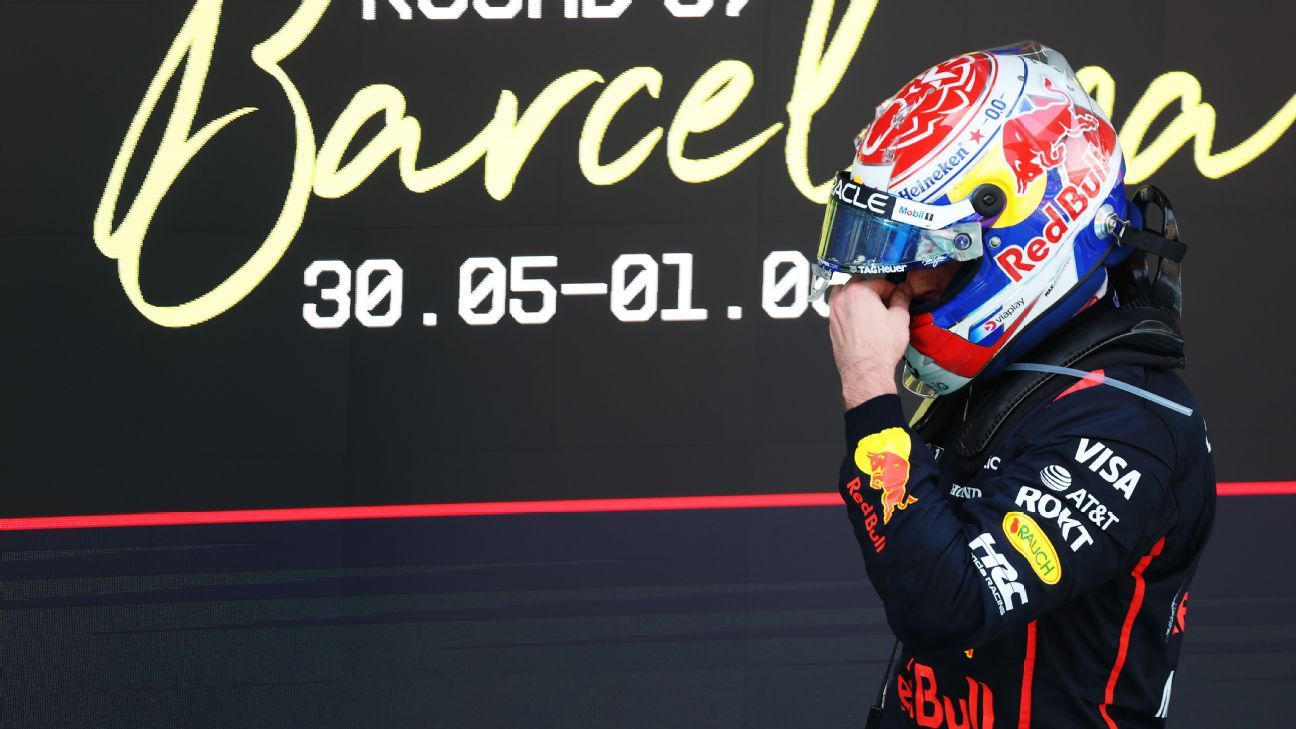
This was the big one for Verstappen. In a season of remarkable performances that so often outstripped what was expected from the car, one clear and avoidable mistake stands out. On being told by his engineer to give a position back to George Russell following a wheel-to-wheel battle between the two at a safety car restart, red mist descended on Verstappen and he drove into the side of the Mercedes as it came past. A ten-second penalty followed, dropping Verstappen from fifth place to 10th and costing him nine championship points. Based purely on points lost, there’s clearly an argument that Spain cost the Dutchman his fifth world title.
But in a world of “what ifs,” we could explore several other scenarios around the grand prix. What if the safety car that led to Verstappen switching to uncompetitive hard tires for the restart hadn’t happened because Kimi Antonelli‘s Mercedes retired in a different spot? Or what if Red Bull had opted for a different strategy earlier in the race that meant Verstappen also had the option of soft tires at the finish and could better defend from Russell in the first place? The difference with those factors, of course, is that they were not in Verstappen’s control, but it is a reminder that every incident on this list is a consequence of multiple random events conspiring together.
What’s also interesting is that Verstappen’s result in Spain didn’t feel like a turning point at the time. McLaren’s advantage over Red Bull at that stage of the season suggested Verstappen would not have a car capable of getting him back in the title fight anyway, and while he was rightly criticized for his actions in the aftermath, very few were speculating that he had just thrown away the title. It’s only now, with the following mistakes made by McLaren that opened the door for Verstappen to return to the title fight, that it seems that way.
Nevertheless, if you want to point to one moment when Verstappen — and no one else — negatively impacted his stake to a fifth consecutive title, this was it.
Canada
One race that did feel like a turning point at the time was the Canadian Grand Prix. Norris’ collision with teammate Piastri cost him crucial points that he could ill afford to lose in the title battle and left him 22 points adrift of his teammate after 10 rounds. It was all the more galling for Norris as he clearly had the pace to pass Piastri in Montreal, and it seemed to put an end to momentum he had built at the previous two rounds in Monaco and Spain. With the benefit of hindsight, we know that the points weren’t critical to his championship, but they would have come in handy in making his life a lot less stressful at the final rounds of the season.
But there are other counterfactuals to explore here, too. What if the collision had resulted in race-ending damage for Piastri? Even if Norris had accepted the blame — as he did in reality — he may have been cast as the villain in the driver pairing and even McLaren’s management could have turned against him. Based on the examples of collisions at the Singapore and U.S. Grands Prix later in the year, he may also have faced sporting repercussions from his team that likely would have tipped the title balance more in Piastri’s favor.
Austria
If Verstappen’s red-mist moment in Spain is cited as the reason he lost the title, he can just as easily point to his DNF in Austria as a moment that cost him dearly. The Red Bull driver was running sixth on the opening lap at the Red Bull Ring when Antonelli misjudged his braking point for Turn 3 and smashed into Verstappen’s sidepod, taking both drivers out of the race. Assuming Verstappen held onto sixth place (in reality, he may well have finished higher), the collision cost him eight points and all that they may have entailed at the end of the season.
Great Britain
Both Piastri and Verstappen have reasons to look back at Silverstone as a missed opportunity. Piastri was penalized for driving erratically behind the safety car, ultimately costing him victory to Norris, while Verstappen spun out of second place just before the race restarted — ultimately leaving him fifth at the finish.
Piastri’s mistake is also occasionally cited as an example of McLaren favoring Norris as the Australian’s request for the pit wall to overrule the FIA penalty by telling Norris to give the position back was denied. You could argue that in the context of what happened in Monza later in the year, Piastri’s request arguably had some grounds, but in reality he only had himself to blame for the lost victory at Silverstone.
For what it’s worth, seven points removed from Norris’ tally and added to Piastri’s would have resulted in Piastri beating his teammate in the championship standings, but both drivers losing out to Verstappen in the final count.
Netherlands
Any suggestion that Norris in some way had it easy in 2025 can be countered by his retirement from the Dutch Grand Prix. While running second with a handful of laps remaining, an oil leak on his McLaren saw him lose 18 points in a heartbeat and drop 34 behind teammate Piastri in the standings with nine races remaining.
Speaking after his title victory in Abu Dhabi, Norris revealed that he doubled his efforts after the incident to extract as much performance as possible from himself and his McLaren over the rest of the year. It raises an interesting question as to whether he would have been as complete of a driver in the final races without the heartbreak in Zandvoort, although given the option at the time, and probably even now, he would have taken the 18 extra points over the extra motivation.
Monza
When McLaren told Piastri to give second place back to Norris in Monza, it was always going to create controversy, regardless of the reasons for the decision. Setting aside whether it was the right thing to do, it resulted in a six-point swing in favor of Norris that for a long time looked like it might be pivotal in deciding the title fight between the McLaren teammates. But if you take three points from Norris at the end of the season and add them to Piastri, you actually end up handing the title to Verstappen. An interesting outcome until you consider that McLaren could have, and almost certainly would have, swapped Piastri and Norris on the final lap in Abu Dhabi if it meant Norris beating Verstappen to the championship.
But there is a more complex counterfactual here, too. Piastri has since admitted that the Monza controversy was still playing on his mind during his error-strewn Azerbaijan Grand Prix weekend. If you can link Monza to his two crashes in Baku (in qualifying and the race), then you could argue that the team order in Italy broke Piastri’s momentum and contributed to him losing the title.
Singapore and Austin
McLaren’s “Papaya rules” were put to the test over the course of two weekends in Singapore and Austin. In Singapore, Norris barged past Piastri for third place at the start of the race — seemingly breaking the primary rule laid down by McLaren for its two drivers not to touch — and faced unnamed repercussions as a result of the move a race later in Austin. The slate was soon wiped clean, however, after Piastri triggered a multi-car collision at the first corner of the U.S. Grand Prix sprint race that saw both McLarens retire and lose points to Verstappen. Many will still hold opinions over how McLaren dealt with its drivers during those races, but it’s hard to claim they ultimately changed the course of the championship.
Mexico
Norris’ performance in Mexico was his most dominant of the season and saw him take a lead in the drivers’ championship that he hold until the checkered flag in Abu Dhabi. On the face of it, there aren’t many opportunities to rewrite history from this race, but immediately after the race, a late virtual safety car became a hot topic.
Verstappen was closing on Charles Leclerc for second place when Carlos Sainz spun in the stadium section and came to a halt in one of the gaps in the barrier. With the Williams car exposed beyond the barriers and the rear brakes smoldering, the race director called for a VSC to ensure marshals could safely extinguish any flames and remove the car.
Based on pictorial evidence produced by the FIA after the race, it’s hard to argue that a VSC was not the right call, but that didn’t stop some Verstappen fans calling foul. Had Sainz not spun or had the car been cleared without a VSC, you could argue Verstappen had the pace to overtake Leclerc and secure three crucial points late in the year.
Las Vegas
McLaren’s double disqualification from the Las Vegas Grand Prix opened the door for Verstappen to remain in the hunt until the final round of the year. Excessive plank wear is perhaps not the most thrilling topic of conversation for the early hours of a Las Vegas morning, but it was significant. Norris’ car was found to be illegal by 0.12 millimeters of wear — literally less than a hair’s width if you want to kind to McLaren, but also 12% over the threshold if you want to be harsh — while Piastri’s plank wear was 0.26 millimeters beyond the permitted amount at the plank’s most worn measurement point.
Had McLaren’s cars run legally in Las Vegas, Norris would have extended his lead over Piastri by six points and kept Verstappen a further 18 points at bay. Such a result would have seen Norris crowned champion a race later in Qatar, even with the strategy errors made by McLaren.
Qatar
McLaren’s botched strategy at the Qatar Grand Prix appeared to end any realistic hope Piastri may have had of becoming world champion in 2025. The Australian had been dominant over the course of the weekend and would very likely won the race ahead of eventual winner Verstappen had McLaren opted to pit its cars under an opportune safety car period along with the rest of the field.
Norris, being behind Piastri on the road, would have likely lost positions as he queued in the pits, and may have meant he finished no higher than he did in reality in fourth place. Piastri winning the race with Norris fourth would have seen Piastri enter the final round nine points behind his teammate and Norris’ closest rival as Verstappen would have been 19 points adrift. Assuming the final race then played out as it did, Norris still would have won the title, albeit with Piastri second in the standings and ahead of Verstappen.
There is one other factor that needs to be addressed from the Qatar Grand Prix, although arguably it was of no significance in the final outcome. Norris initially looked set to finish the race fifth until Antonelli ahead of him made a mistake and ceded fourth place, giving Norris two extra points.
Although it was clearly an error by Antonelli, it was highlighted by Verstappen’s race engineer Gianpiero Lambiase over team radio and then by Red Bull motorsport advisor Helmut Marko to the media. Although Verstappen missed out on the title by two points in the final standings, McLaren still held the option of switching Piastri and Norris to ensure Norris won the title right up to the final lap in Abu Dhabi if it needed to.
