It’s easy to see why starters like the Tigers’ Tarik Skubal and the Brewers’ Freddy Peralta are so widely coveted on the trade market. Skubal may be baseball’s best pitcher, having won back-to-back American League Cy Young Awards. Peralta has struck out 200 or more batters in each of the past three years and recorded a 2.70 ERA in 2025.
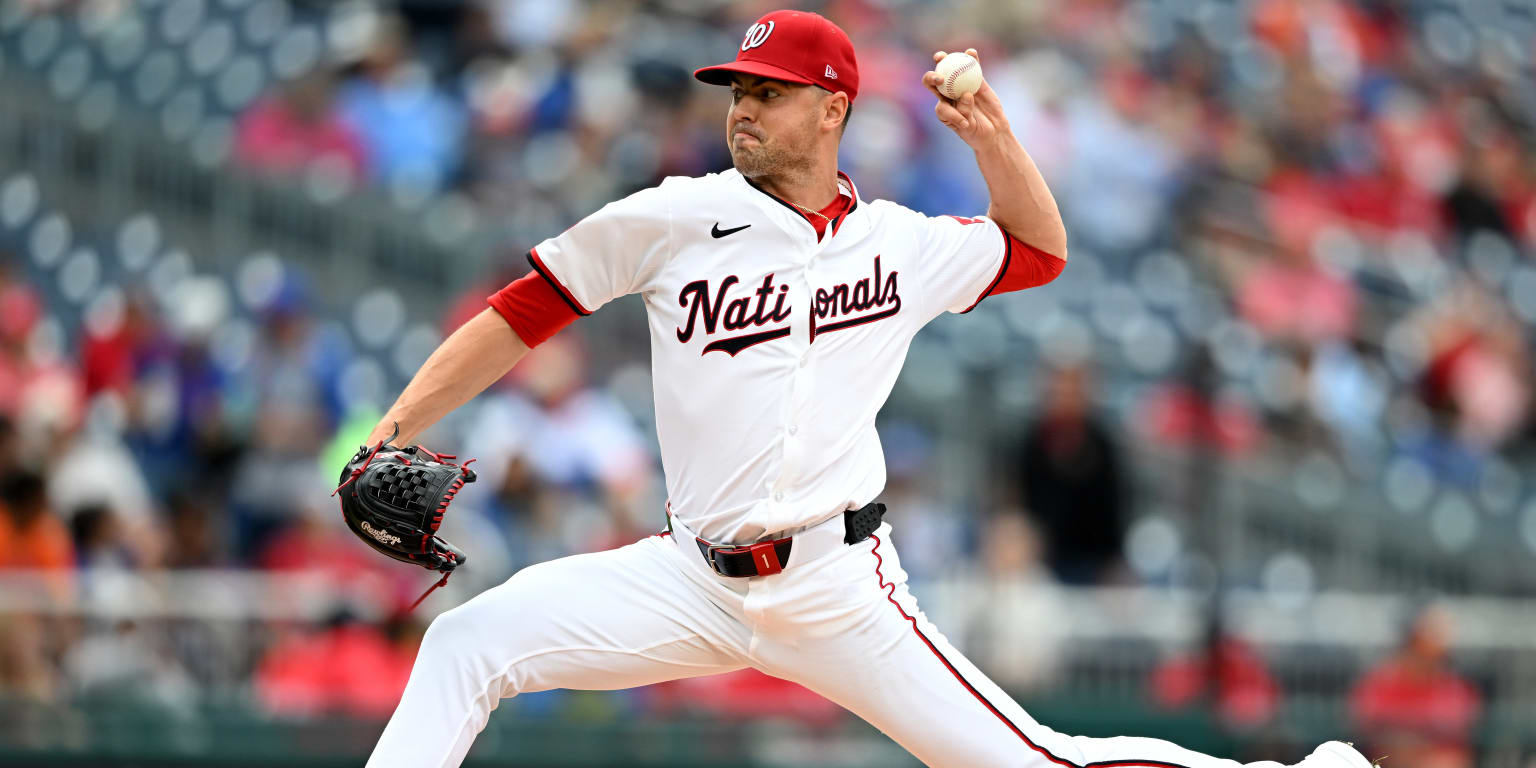
Nationals left-hander MacKenzie Gore’s name doesn’t jump off the page in the same way. Gore made his first All-Star team in 2025, but he finished the year with a 4.17 ERA and a 98 ERA+, which were right in line with his career figures (4.19 ERA, 98 ERA+) through four big league seasons.
And yet, Gore reportedly was one of the most popular trade targets among teams searching for starting pitching at the Winter Meetings. The significant interest in Gore is another indication that teams aren’t evaluating starting pitchers like they used to.
Here’s MLB.com’s Mike Petriello to explain:
“What’s happening is the same thing that’s been happening for a number of years now … The first aspect is obvious: Teams don’t place value on pitcher win-loss records or, increasingly, even ERA. Second: They don’t care so much about what you have done for other teams in the past. They care about what they think you will do for them in the future, especially if they think they have the coaching, tools or skills to make you a better player.”
Petriello actually wrote that in 2021, but it remains just as true today.
In Gore’s case, it’s clear teams see untapped potential in his left arm. Here’s a look at some of the reasons he’s such an intriguing trade candidate.
Cease’s deal with the Blue Jays was proof of how much clubs value punchouts. In 2025, only five qualifiers had higher strikeout rates than Cease’s 29.8% mark, while his 33.4% whiff rate led that same group. Add in the durability factor and the impressive performances Cease put forth in 2022 and ’24 and it makes sense why Toronto would invest so heavily in him.
Gore has yet to reach the same heights as Cease, but his appeal comes from a similar place.
Gore had a 27.2% strikeout rate and a 29.7% whiff rate in 2025, both of which ranked just outside the top 10 among qualifiers. Gore’s strikeout rate was up 2.4 percentage points from 2024. His whiff rate, meanwhile, increased for the third straight season.
A key reason for the uptick? Gore’s increased reliance on his impressive secondary stuff.
He has multiple weapons for generating whiffs
Gore’s four-seam fastball usage hit a career low in a variety of situations this past season, whether he was facing lefties or righties, starting off at-bats, ahead or behind in the count or looking to put batters away with two strikes.
It’s not a coincidence that Gore posted the highest strikeout rate of his career while throwing his four-seamer a career-low 36.1% of the time in two-strike counts. Leaning more on his breaking stuff in those scenarios, the lefty collected 69 K’s with his curveball and 31 K’s with his slider in 2025, making him one of nine pitchers to tally at least 100 strikeouts on breaking pitches.
With an additional 17 strikeouts on changeups and another 17 on cutters, Gore racked up 134 K’s in 370 plate appearances ending on pitches other than his four-seamer, good for a 36.2% strikeout rate.
Gore’s ability to consistently generate whiffs with a variety of pitches is a big reason why he’s receiving widespread consideration as a trade candidate. His curveball, slider, changeup and cutter each had a whiff rate above 35.0% in 2025. Even in the “year of the pitch mix,” that type of diversity in the bat-missing department was a rarity across MLB.
Gore was the only starting pitcher who registered a whiff rate of 35.0% or higher on four different pitch types (minimum 50 swings on each). Just five others even had three such pitch types.
Most pitch types with a whiff rate of 35% or higher, SP, 2025
Min. 50 swings on each
As for Gore’s four-seamer, there’s reason to believe that it could develop into another valuable weapon. The results haven’t been pretty — his four-seamer yielded a .465 slugging percentage and had a -8 run value across 2023-25 — but not many left-handed starters throw harder. Gore also had a superb 110 Stuff+ — a metric that rates pitches based on physical characteristics such as velocity and movement — in 2024. That tied for fourth best among qualifiers.
Multiple years of control remaining
This is another major factor for teams seeking a high-end starter. Free-agent pitchers of that caliber require expensive long-term commitments, and it can be argued that none of the top unsigned starters offers the same level of upside that Gore does.
As far as the trade market goes, many of the best hurlers rumored to be available come with only one year of control, requiring teams to pay a steep price for someone who could leave as a free agent next winter. Skubal, Peralta, Kris Bubic and Nick Pivetta (opt-out) are all in that boat.
There’s no such risk with Gore, who is controllable for two more seasons and should remain quite affordable in his final years of arbitration eligibility after earning $2.89 million in 2025.
Of course, the same factors that make Gore such an intriguing trade candidate are also reasons newly hired president of baseball operations Paul Toboni might want to keep him in Washington. Toboni has a difficult call to make: strike while the southpaw is drawing significant interest now, or bet that further development under new manager Blake Butera and a revamped coaching staff could position Gore to fetch an even greater return down the line.
It’s a situation many clubs will be watching closely as the winter unfolds.
