
Continental Kings win round-robin phase
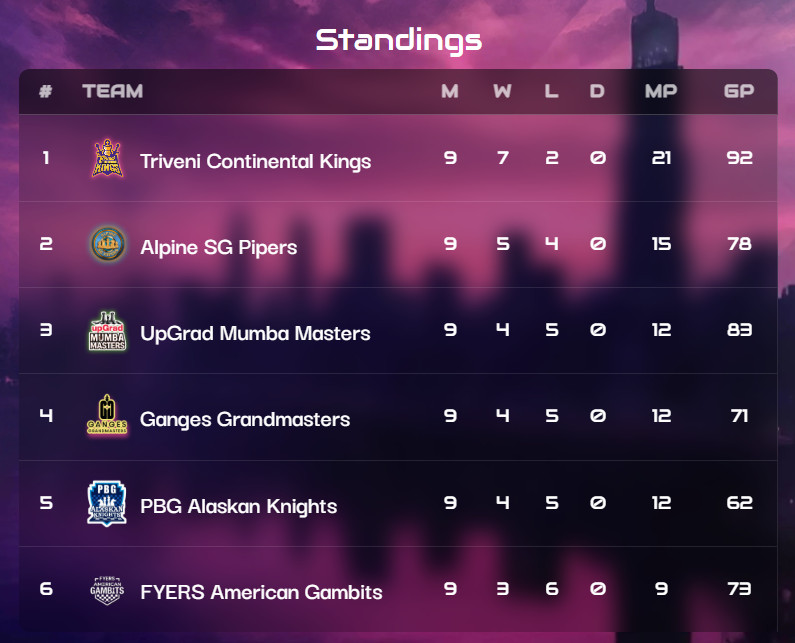
Triveni Continental Kings confirmed their place in the Global Chess League Final with a commanding 14–5 win over Ganges Grandmasters. The defending champions managed to keep their six-match-point lead at the top of the standings – with that cushion, they are mathematically assured of finishing first, while attention now shifts to who will join them in the Final of the league’s third edition.
The race for second place tightened following a narrow 8–7 win by Alpine SG Pipers over upGrad Mumba Masters. The difference came from Hou Yifan defeating Humpy Koneru with the black pieces, a result worth an extra game point. The margin was slim, and the outcome could easily have swung the other way had Wesley So of the Mumba Masters punished a major one-move blunder by Anish Giri.
Master your middlegame with the complete strategy series – now available as a bundle at a reduced price. Take your chance to save and improve!
Although the Continental Kings’ victory over the Ganges Grandmasters appeared one-sided, the scoreline concealed a decisive turning point. A seven-point swing occurred when Polina Shuvalova (Ganges GMs) missed a mate-in-two against Zhu Jiner. Zhu not only escaped the immediate danger but went on to win, transforming the complexion of the match. That moment, combined with Alireza Firouzja’s top-board success, ensured a comfortable overall result for the leaders.
Further down the table, Fyers American Gambits lost ground in the standings after an 8–7 defeat to the Alpine SG Pipers, effectively ending their chances of finishing first. Once again, a win with black by Hou Yifan proved decisive (she defeated Bibisara Assaubayeva), while Volodar Murzin’s victory on the junior board was not enough to turn the match.
The day concluded with PBG Alaskan Knights beating the Mumba Masters 10–8, thanks to standout performances by Leinier Dominguez and Sara Khadem. With one round of the first phase remaining, it remains to be decided who will join the Continental Kings in the final match. This year, an additional match will take place between the teams that finish third and fourth in the double round-robin.
Match #24: Mumba Masters 7–8 Pipers
| Upgrad Mumba Masters | Rtg | – | Alpine SG Pipers | Rtg | 7 – 8 |
| Vachier-Lagrave, Maxime | 2730 | – | Caruana, Fabiano | 2751 | 1 – 1 |
| So, Wesley | 2702 | – | Giri, Anish | 2685 | 1 – 1 |
| Mamedyarov, Shakhriyar | 2707 | – | Praggnanandhaa, R | 2663 | 1 – 1 |
| Koneru, Humpy | 2448 | – | Hou, Yifan | 2536 | 0 – 4 |
| Dronavalli, Harika | 2435 | – | Batsiashvili, Nino | 2346 | 1 – 1 |
| Daneshvar, Bardiya | 2498 | – | Mendonca, Leon Luke | 2498 | 3 – 0 |
In today’s fast-paced chess world, especially online, where blitz and rapid games dominate, the traditional approach of grinding through lines of opening theory can feel overwhelming, and even unnecessary. The real challenge? Striking the right balance in your opening preparation. How deep should you go? Where do you stop? This course is built on the timeless wisdom of my legendary coach, Chebanenko, who designed opening repertoires for his “lazy” students – not lazy in attitude, but smart in approach. His philosophy? Don’t memorise. Understand.
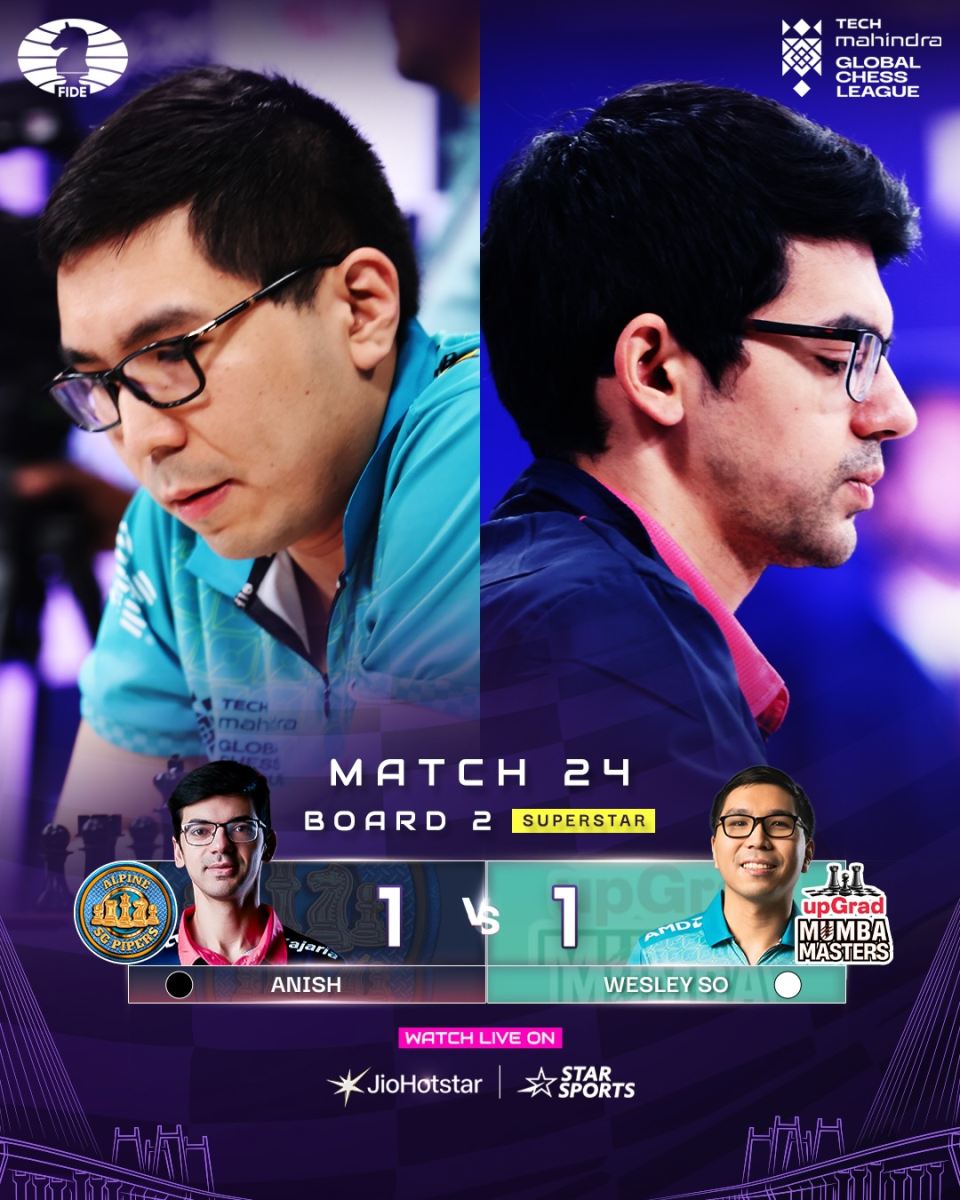
For the first time in the day (she would achieve the same feat again), Hou Yifan scored the crucial, match-winning victory for the Pipers. Given the final result, with a win by the smallest of margins, Wesley So’s miss against Anish Giri became all the more relevant.
Giri’s 22…Qc3?? is a blunder. Though the queen is attacking both bishops at once, White can gain material with the simple 23.Bd4 Qxc4 24.Bxb2, getting a winning advantage. Instead, however, So went for 23.Qd3??, and after 23…Qe5, the position was again balanced.
Note that 24.Bd4 is no longer possible due to 24…Qxh2#. Giri went on to get the draw that would give the Pipers match victory.
Match #25: Ganges GMs 5–14 Continental Kings
| Ganges Grandmasters | Rtg | – | Triveni Continental Kings | Rtg | 5 – 14 |
| Anand, Viswanathan | 2727 | – | Firouzja, Alireza | 2754 | 0 – 4 |
| Keymer, Vincent | 2640 | – | Wei, Yi | 2751 | 1 – 1 |
| Sindarov, Javokhir | 2704 | – | Vidit, Santosh Gujrathi | 2650 | 3 – 0 |
| Shuvalova, Polina | 2360 | – | Zhu, Jiner | 2435 | 0 – 4 |
| Tsolakidou, Stavroula | 2358 | – | Kosteniuk, Alexandra | 2450 | 0 – 4 |
| Sadhwani, Raunak | 2611 | – | Maurizzi, Marcandria | 2506 | 1 – 1 |
Data, plans, practice – the new Opening Report In ChessBase there are always attempts to show the typical plans of an opening variation. In the age of engines, chess is much more concrete than previously thought. But amateurs in particular love openings with clear plans, see the London System. In ChessBase ’26, three functions deal with the display of plans. The new opening report examines which piece moves or pawn advances are significant for each important variation. In the reference search you can now see on the board where the pieces usually go. If you start the new Monte Carlo analysis, the board also shows the most common figure paths.
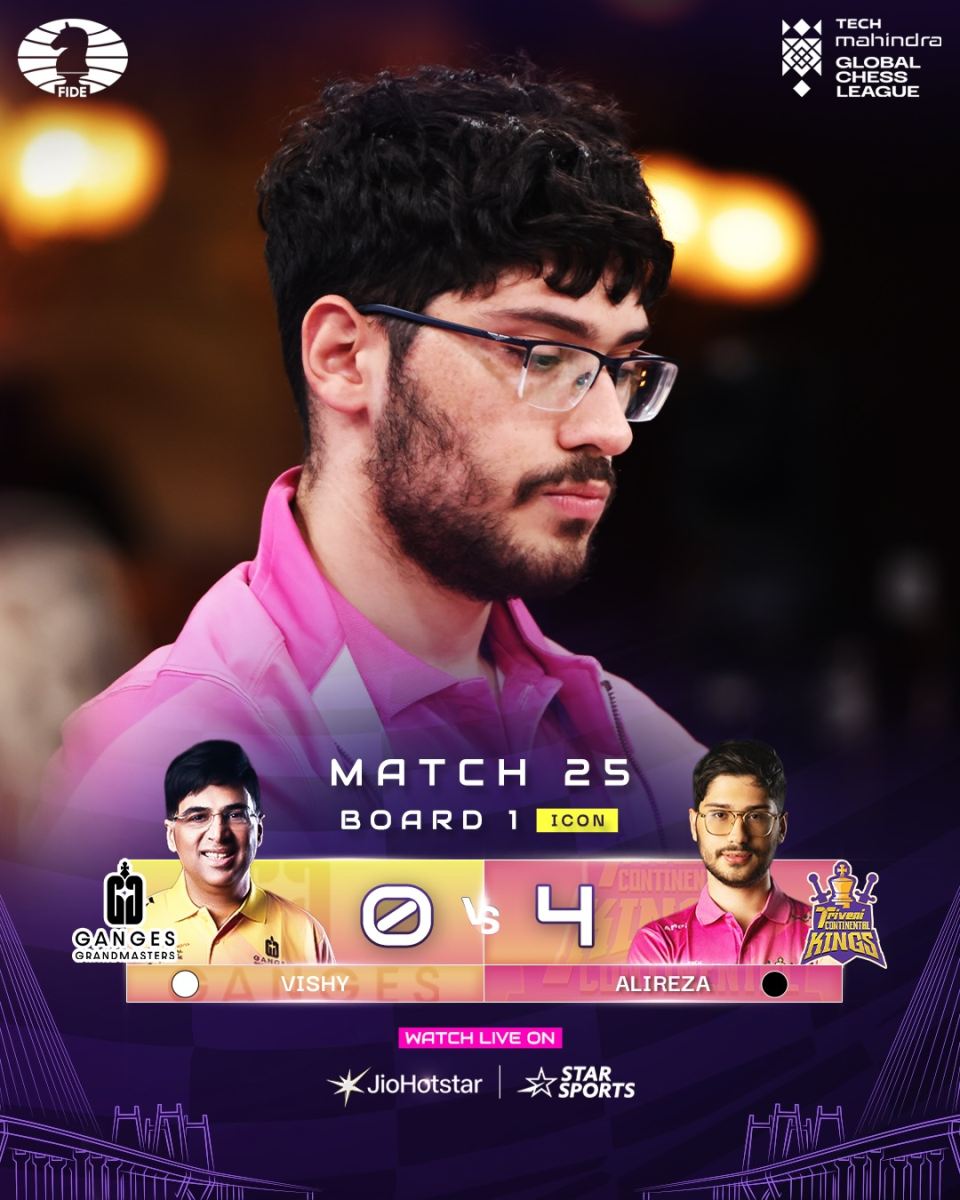
Following his strong start, with five wins in a row, Alireza Firouzja lost twice and drew Hikaru Nakamura in rounds six to eight. Now, the French representative won again, and saw his two female teammates Zhu Jiner and Alexandra Kosteniuk joining him in the winning circle. The two-time defending champions have again secured a spot in the league’s final match.
Match #26: American Gambits 7–8 Pipers
| Fyers American Gambits | Rtg | – | Alpine SG Pipers | Rtg | 7 – 8 |
| Nakamura, Hikaru | 2732 | – | Caruana, Fabiano | 2751 | 1 – 1 |
| Artemiev, Vladislav | 2727 | – | Giri, Anish | 2685 | 1 – 1 |
| Rapport, Richard | 2702 | – | Praggnanandhaa, R | 2663 | 1 – 1 |
| Assaubayeva, Bibisara | 2461 | – | Hou, Yifan | 2536 | 0 – 4 |
| Injac, Teodora | 2360 | – | Batsiashvili, Nino | 2346 | 1 – 1 |
| Murzin, Volodar | 2642 | – | Mendonca, Leon Luke | 2498 | 3 – 0 |
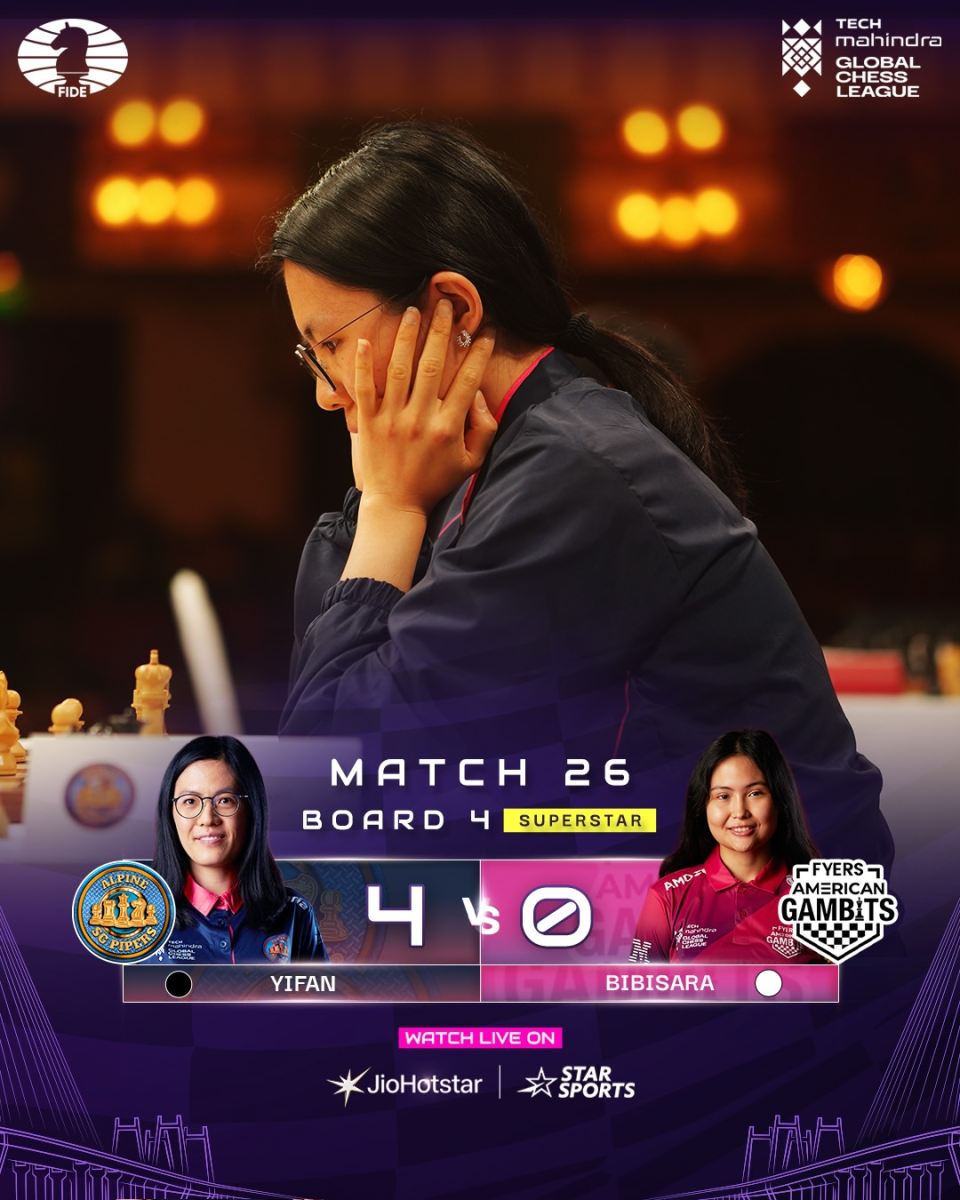
Hou Yifan’s second success of the day came after her opponent, Bibisara Assaubayeva, mistakenly allowed the position to be simplified into a pure king and pawns endgame.
Here White should give up his extra (doubled) pawn with 21.Kc1 Rxc3, and the position would remain balanced going forward. Instead, Assaubayeva erred decisively with 21.Bxb5??, allowing 21…Rcxb5+ 22.Kc1 (placing the king on the a-file gives way to …Rb5-a5#) 22.Kc1 Rb1+ 23.Kd2 Rd8+ 24.Ke2
After trading both pair of rooks on d1, Black gets a winning king and pawns endgame.
Black is easily winning after 31…a5. What a great day it was for the multiple women’s world champion and professor at Peking University!
Match #27: Mumba Masters 8–10 Alaskan Knights
| Upgrad Mumba Masters | Rtg | – | PBG Alaskan Knights | Rtg | 8 – 10 |
| Vachier-Lagrave, Maxime | 2730 | – | Gukesh, D | 2692 | 3 – 0 |
| So, Wesley | 2702 | – | Erigaisi, Arjun | 2714 | 1 – 1 |
| Mamedyarov, Shakhriyar | 2707 | – | Dominguez Perez, Leinier | 2703 | 0 – 4 |
| Koneru, Humpy | 2448 | – | Lagno, Kateryna | 2452 | 1 – 1 |
| Dronavalli, Harika | 2435 | – | Khademalsharieh, Sarasadat | 2356 | 0 – 4 |
| Daneshvar, Bardiya | 2498 | – | Dardha, Daniel | 2592 | 3 – 0 |
Picture this: you’ve outplayed your opponent move by move, you’re clearly better – and then the endgame slips into a draw, simply because you lacked the crucial theoretical knowledge. That is exactly where this course comes in. Without solid endgame skills, there’s no way forward. Rook endgames are most essential: they occur more often than any other type of endgame, and often make the difference between victory and half a point. If you master them, you’ll confidently convert your advantages into wins!
Free video sample: Introduction
Free video sample: Bodycheck
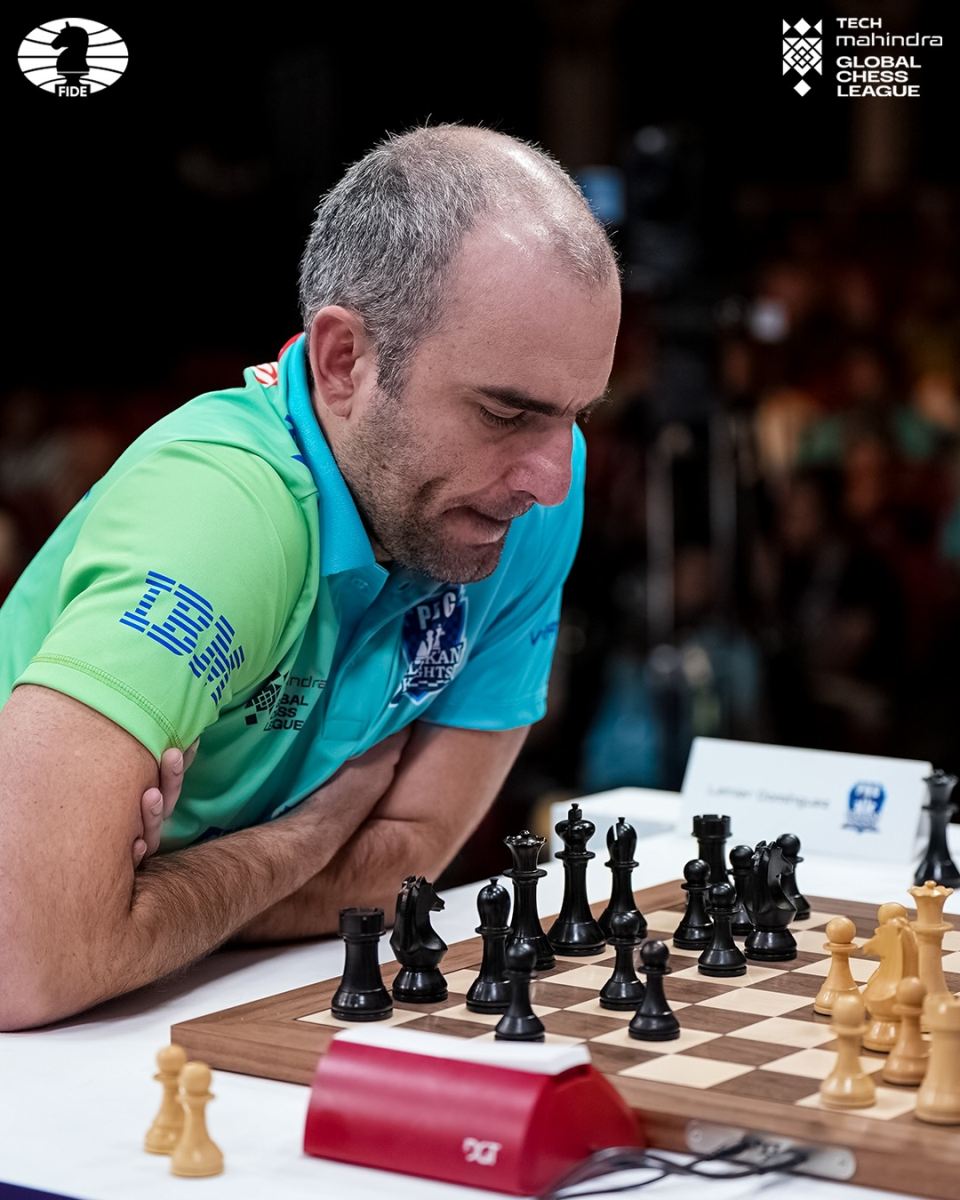
Had the Mumba Masters won this match, they would have entered the final day tied for second place with the Pipers. However, the Alaskan Knights, who had a slow start in Mumbai, saw their representatives Leinier Dominguez and Sara Khadem collecting wins with black to claim overall victory.
