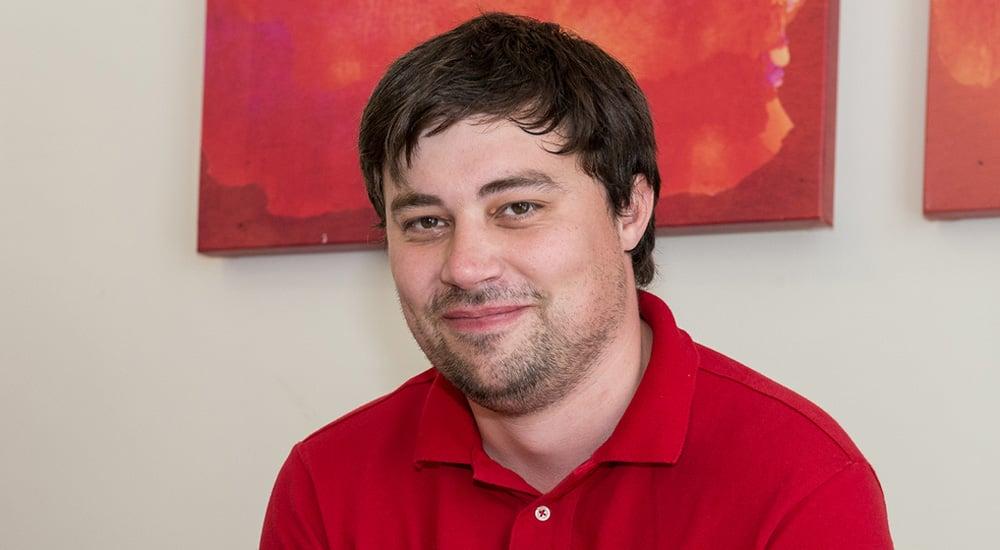
GM Jonathan Hawkins, a two-time British Champion, author, and coach, passed away on Monday at the age of 42 after losing the battle with a rare form of cancer. His passing came just a week after GM Daniel Gormally had launched an appeal to help Hawkins and his family financially.
Jonathan Hawkins was born May 1, 1983, in Consett, Durham, England. He was the perfect example of a rather successful “adult improver” as he reached grandmaster level of play at a relatively late stage in his life.
Hawkins was not a prodigy and could be described as an average club player in his teenage years and early twenties. When he was 18, his English rating was about 150, the equivalent of roughly 1800 FIDE.
By 2006 however, when he was 23, he had broken the 2200 barrier and he quickly managed to improve his rating quite a bit further. Hawkins became an FM in 2008 and an international master in 2010. By August 2012, aged 29, he had broken the 2500 mark. It would take two more years before he secured the GM title.
Perhaps the first sign of things to come was his game with GM Mark Hebden in Blackpool in 2007. At 23 years old, Hawkins had just gotten a FIDE rating of 2207, and managed to hold a draw against the experienced GM. Or rather, it was Hebden who managed to hold after being a pawn down for most of the game.
To many strong players in the British chess scene, Hawkins seemed to be coming from nowhere. The story behind his success was one of dedication.
He was living in County Durham, in the northeast of the country, an area that didn’t have really strong chess players and which was far away from where the traditional English tournaments took place. But he took up studying chess, and he took it very seriously.
In 2012, Hawkins shared his “secret” with the world in his highly instructive endgame book Amateur to IM: Proven Ideas and Training Methods, published by Mongoose Press. (A review can be found on our website here.)
In the introduction, he wrote:
We can trace the history of the book you now hold back in time eight years. Somewhere around that time there came a point when I decided I’d had enough. Being a (relatively) weak chess player wasn’t for me. I committed a large portion of my time to studying chess, which was, in hindsight, quite a bad idea since I was starting university at the time.
I always had quite a strong memory for chess. Ever since I learned the game I could recall all of my games – and the games of others – easily. So openings were my topic of study and I could memorize opening theory with no problem. I actually made some improvement in playing strength with this rather artificial method of study. At some point though, this all changed and I became addicted to studying the endgame. I filled notebook after notebook with endgame analysis. This is what led to my biggest improvement. It also felt as if my better understanding helped me to assimilate more knowledge.
Hawkins noted: “I am convinced a careful study of the endgame sparked the biggest leap forward in my own game.” He made the point that is still valid and topical today, 13 years later: that everyone is good in (the studying of) openings and even middlegames these days, and so, perhaps more than ever before, it is the endgame where it is possible to outplay opponents.
A year after the publication of his book, in 2013, Hawkins tied for first place in the 18th Vienna Open with six other players. And then, in 2014, he won his first British Championship title in Aberystwyth, shared with GM David Howell. Both scored 8.5/11 and finished a point ahead of the field.
The result would have been enough for his third GM norm if not for the lack of foreign opponents. Getting his rating to 2532, Hawkins was now one of the highest-rated IMs in the world, outranking the majority of English GMs. He was the first winner of the British Championship without a GM title since IM Michael Hennigan in 1993.
Here’s one of his wins from the tournament:
That year, Hawkins won his second British Rapidplay Championship title as well (after winning it first in 2012), so he was double national champion, in both classical and rapid chess. He scored his third grandmaster norm at the 2014 PokerStars tournament in Isle of Man, and at the end of the year FIDE confirmed his GM title.
Now nicknamed “The Hawk,” Hawkins won another British Championship in Coventry in 2015, this time outright. He held his nerves under control as he beat GM Keith Arkell in a critical game in the final round. Interestingly, he went 1.e4 for this important game, whereas Hawkins usually played 1.d4.

After the game, Arkell posted on Facebook: “Anyway, really well played to Jonathan Hawkins. I played the Sicilian defence to guarantee a full bloodied scrap and he outplayed me, and consequently is the new British Chess Champion.”
British Championship 2015 | Final Standings (top 24)
| Rk. | Title | Name | Rtg | Pts. | |
| 1 | GM | Hawkins, Jonathan | 2554 | 8.5 | |
| 2 | GM | Howell, David W L | 2698 | 8 | |
| 2 | GM | Pert, Nicholas | 2562 | 8 | |
| 2 | GM | Gormally, Daniel W | 2484 | 8 | |
| 5 | GM | Hebden, Mark L | 2500 | 7.5 | |
| 5 | IM | Pert, Richard G | 2440 | 7.5 | |
| 5 | GM | Williams, Simon K | 2426 | 7.5 | |
| 5 | GM | Ward, Chris G | 2423 | 7.5 | |
| 5 | GM | Summerscale, Aaron P | 2416 | 7.5 | |
| 10 | GM | Arkell, Keith C | 2502 | 7 | |
| 10 | FM | Jackson, James P | 2343 | 7 | |
| 10 | FM | Batchelor, Peter J | 2304 | 7 | |
| 10 | Wadsworth, Matthew J | 2160 | 7 | ||
| 10 | Jones, Steven A | 2126 | 7 | ||
| 15 | GM | Emms, John M | 2460 | 6.5 | |
| 15 | GM | Flear, Glenn C | 2450 | 6.5 | |
| 15 | FM | Lewis, Andrew P | 2295 | 6.5 | |
| 15 | Weaving, Richard | 2257 | 6.5 | ||
| 15 | IM | Rudd, Jack | 2247 | 6.5 | |
| 15 | FM | Storey, Charles H | 2245 | 6.5 | |
| 15 | Hackner, Oskar A | 2162 | 6.5 | ||
| 15 | Burrows, Martin P | 2148 | 6.5 | ||
| 15 | Mason, Donald J | 2145 | 6.5 | ||
| 15 | Kalaiyalahan, Akshaya | 1999 | 6.5 |
Hawkins moved to London in 2012. There, he met his partner Angela Eyton, also a chess player, and they worked together building up a coaching business. Later they moved to Devon.
His coaching career was important to Hawkins, and he was successful. Several of his pupils won medals at e.g. European Schools Championships or World Cadets, the most well known being WFM Bodhana Sivanandhan.
The strongest opponent Hawkins ever beat was the French GM Laurent Fressinet, from a 4NCL match between Cheddleton and Guildford in 2019:
The tragic news of Hawkins’ passing came only a week after his friend, GM Danny Gormally, had launched a GoFundMe page in order to help Hawkins and his family. At the time of writing, over £27,000 has been raised.
The page reveals that Hawkins had been diagnosed with large cell neuroendocrine carcinoma, a rare and particularly aggressive form of cancer. He had just started or was about to start a new course of chemotherapy.
An update to the page now says:
It is with great sadness that we announce the passing of our beloved Jonathan. Jonathan passed away peacefully this morning, 22nd December in Torbay hospital.
He was just 42 years old.
Jonathan’s cancer was unbelievably aggressive. The speed at which he has been taken has shocked us all, but we are at least grateful that Jonathan did not suffer for long and was not in pain.
Jonathan is survived by his parents, his two brothers, and his wife Angela. The two got married last Friday in the hospital which was “very bittersweet,” she told Chess.com, adding: “We met at the British Championships in North Shields in 2012 and worked together coaching ever since, in London until the pandemic and then from Devon online.”
GM Gormally told Chess.com: “He probably could have achieved more if he had played more. He didn’t play much outside of the UK and so he didn’t have as much experience as other players. He went this trajectory and then kind of stopped, I think he could have got over 2600, maybe 2650. He said he didn’t enjoy playing anymore, so maybe he enjoyed coaching more.”
GM Gawain Maroroa Jones wrote in an email to Chess.com: “In an era of younger and younger titled players, Jonathan provided hope for those who come to chess late. He worked extremely hard to become one of England’s top grandmasters. Despite being a few years older than me, the more games we played the tougher an opponent he became.
“Who knows how strong he might have been had he not taken a step back to concentrate on coaching? Perhaps being able to remember learning is what made Jonathan such a good coach and writer. I thoroughly enjoyed his book Amateur to IM and learned a lot. This cruel loss will be felt keenly in the British chess community.”
FM Tim Wall, the ECF Director for Junior Development, told Chess.com: “I would say he was almost completely self-taught from club player through to IM and then GM, which is pretty unique. The story from his book is brilliant: ‘I just studied the endgame and that’s how I learned to calculate and got better.’ He was a softly spoken, lovely person, easy-going. He was just one of the best people, no one every had any problem with Jonathan. It’s very sad that this has happened to him. Chess players in the Northeast are very sad today. He was a real local hero, a very kind and giving person.”
In the comments section on Facebook under the message from the English Chess Federation, IM Richard Pert wrote: “Very sad news. I had the privilege of playing Jonathan in both the 2014 and 2015 British Championships which he would go on to win. A fierce competitor over the board and a nice guy off it. Condolences to his family.”
GM Paul Littlewood wrote: “Terribly sad news. My best wishes to all his family and friends. I distinctly remember playing a blitz game against him where he just blew me off the board…”
Such sad news. For me personally, Jonathan’s chess story was inspirational, from Amateur to Grandmaster and then British champion! He wasn’t just a great chess player- he was always super friendly, easy going, and loved by his students. Rest in peace Jonathan. You will be missed https://t.co/367qS1GM1O
— Jovanka Houska (@thelittlehat) December 23, 2025
Sad to hear about the passing of Jonathan Hawkins. He was a fantastic player, and I always enjoyed our battles on the board. We shared the British title (2014) & were teammates in the 4NCL. I can highly recommend his book, Amateur to IM, as an inspiring read. Rest in peace. pic.twitter.com/fIFewaXlkw
— David Howell (@DavidHowellGM) December 23, 2025
