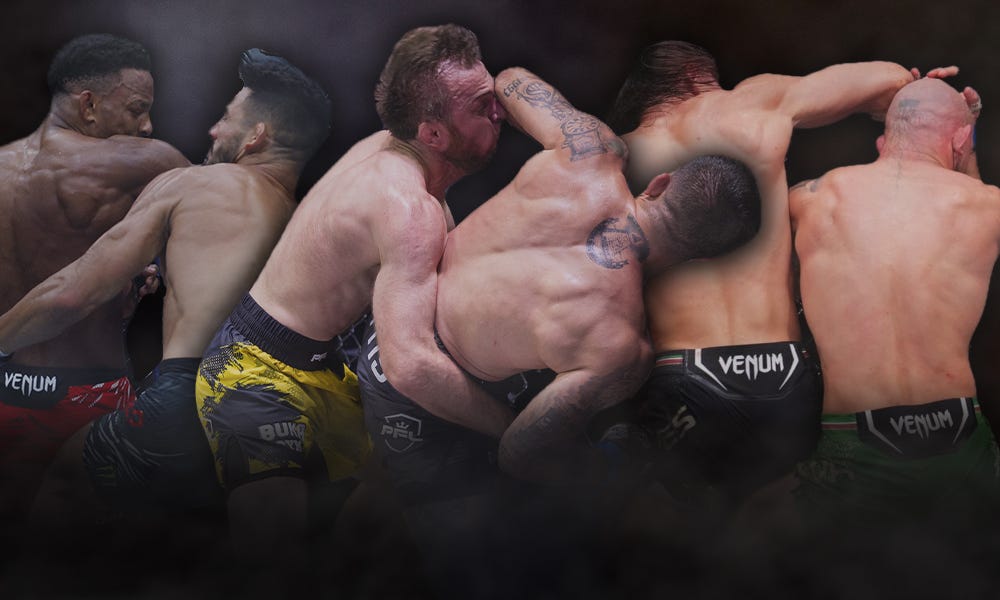
Just like any other sport, high-level competition in MMA is subject to trends. One of the big ones in 2025 was the rise in spinning back elbow knockouts.
One-fifth of all spinning back elbow knockouts in UFC history happened over the past 12 months, with PFL also cashing in spectacular highlights courtesy of the technique and various other promotions around the globe, as well.
Advertisement
Is it simply a coincidence? Almost certainly not.
The two UFC fights that ended by spinning elbow knockout happened in August, in back-to-back fights no less, when Carlos Prates halted Geoff Neal and Lerone Murphy flattened Aaron Pico at UFC 319.
There was also Diego Lopes‘ finish of Jean Silva at Noche UFC a few weeks later, which wasn’t technically registered as a spinning back elbow knockout, but the knockdown that led to the finish was a product of one.
“It’s not luck,” UFC welterweight and analyst Michael Chiesa told MMA Junkie. “From UFC 319 to Noche UFC, we saw three spinning back elbow knockouts. That’s not luck. I think we’re going into this phase of another paradigm shift in this sport where we’ve seen styles have more success, and now we’re in this phase where elite athletes know how to fight from a technical standpoint. Now guys are going to stop pressure with spinning elbows.”
Advertisement
There are still too few knockouts of this kind to draw conclusive data points from the fight style for the victims of the technique, or the ones dishing it out. However, there is enough to begin to draw some conclusions, and retired lightweight contender Paul Felder, who now serves as a UFC commentator and analyst, is beginning to see them.
Spinning back elbow > spinning backfist?
Lerone Murphy’s spinning back elbow landed on Aaron Pico at UFC 319 resulted in a Knockout of the Year contender.
Felder knows a thing or two about spinning for a knockout. He has one of the 11 knockouts in UFC history stemming from a spinning backfist, which may seem like a similar technique but has differences. The backfist used to be more commonly seen, but Felder said there’s a benefit to shortening the leash and using the elbow instead, particularly against grapplers.
Advertisement
“I just think guys are committing to it more, especially against wrestlers,” Felder said. “If they’re going to get on your hips and try to close that distance and level change on you anyway, you might as well just go for it. Especially when guys are trying to close the distance really fast, it creates huge opportunities for that. I think guys are just getting more skillful and more well rounded at it. It used to be the spinning backfist, and now we’re seeing it tighter. It’s hard to throw that spinning backfist. You can break your arm. There’s a lot more wrist to it. I broke my arm throwing a spinning backfist.”
Felder’s point about in-fight commitment appears to hold some underlying significance. A full-force spinning back elbow is not a technique that can be routinely trained in the gym during live sparring. The risk of significant impact and/or cuts is high, which proves the potential consequences if it occurs in a real fight.
A coaches perspective on spinning back elbows
Fighters are training it inside the gym, though, and it’s only highlighting the value in knowing how to do it well. Syndicate MMA head coach John Wood doesn’t put an added emphasis on preparing his athletes to use spinning elbows, though, because before long, a counter will come around that renders them less dangerous.
Advertisement
“We had a UFC fighter in here today doing sparring rounds, and he dropped and stopped someone with a spinning elbow,” Wood said. “It was beautiful. Those are the things that are hard to train in practice. He had a big elbow pad on, but it hit just perfect. You’ve got to be careful throwing those things, but there’s a time and place for everything.
“The calf kick didn’t evolve until a couple years ago, and now people are starting to know how to defend, so you’re seeing it less and less. Sometimes they still work, but if you check a calf kick, it hurts. Everything is on the table, and that’s the good and the bad in MMA.”
‘It definitely works’
Finding consistent success in MMA ultimately comes down to being unpredictable, efficient and effective. Just like any spinning technique that involves even slightly turning the back to an opponent, there can be downside that comes in a swift and violent manner.
Advertisement
The upside if it lands, however, is a knockout that could be a viral highlight, set up post-fight bonuses and add traction to a fighter’s name. It’s all about throwing with confidence and taking the chance, and there’s few better to preach that than veteran lightweight Edson Barboza, who landed arguably the greatest spinning finish in UFC history, with his iconic wheel kick knockout of Terry Etim at UFC 142 in January 2012.
“It was the same thing with the spinning wheel kick,” Barboza said. “You didn’t see it much, but when I did it, everyone started trying, and it started working. All technique starts working when the people do it. I think people have started looking and go, ‘This is working.’ They start practicing this a little more, and that’s exactly what happened. It’s worked more times. Everybody will now try. All the UFC fighters now try the spinning elbow. But I think more people just believe because it definitely works.”
This article originally appeared on MMA Junkie: Why the rise in spinning elbow KOs in 2025? Fighters, coaches explain
