In Defense of Short Course Season
For much of the year, beginning in September after the summer championship season, swimming swaps out 50-meter Olympic-sized pools for their shorter, 25-yard and 25-meter cousins. During this transition, times get faster while turns and the underwater phase of races become of paramount importance. Endurance loses some significance, and raw speed matters more.
The differences between the two courses are technical but also in terms of perception.
There are many swimmers ranging from the local level to the elite scene that see this stretch of the year as less important. Off the back of a grueling summer season, many athletes take an extended break leading into the short course season. Others use this timeframe for an experimental phase in training, as September is the most natural time to change clubs or coaches.
Fine, but short course season deserves more recognition.
When calculating an Olympian’s World Championships titles, the combined number of short and long course crowns is not used. It is simply the latter. The same goes for when discussing personal best times. Long-course performances are always emphasized.
Why is this the case? Doesn’t the short-course season deserve more respect?
Why is Short Course Valued Less?
The Olympic Games will always be swimming’s premier competition, and that will always be a long-course event. Yet this fact does not constitute a reason for half of all competitions — the short course half — to be disregarded. The Olympics should be the most widely-anticipated event in a swimmer’s calendar, but they only happen once every four years. Consider a swimmer’s individual journey. Think about where they were in 2016 compared to 2020, or 2020 compared to 2024. The difference could not be overstated. Four years is a lifetime in sport, and therefore we must use the prestigious meets in between to help cement a legacy.
These meets include world and continental championships in long course and short course. Giving both an equal footing forms a wider perspective on athletes and their skill sets as we can update our perceptions annually rather than twice a decade.
Furthermore, the majority of people train in short course pools. In formative swimming years, most compete primarily at short course meets. The number of short course pools in existence dwarfs their long course compatriots. Why should we focus all of our adulation on the pools we spend the least time in?
The Enjoyment of Short Course Season
While long course may be seen by some as a ‘purer’ form of swimming as you are actually performing the stroke for a larger portion of the race, this fact is what best illustrates the excitement that short course racing can bring. Unpredictability is what makes sport so compelling. If we knew for certain what was about to happen, we would not turn on the television.
Short course swimming amplifies this fact. The increased number of turns can create a situation where more mistakes are made. This leads to more uncertainty and more entertainment. Perhaps the favorites will not have it all their own way?
We also have more underwater phases. Swimmers deploy different tactical approaches to fly kicks, and some push the boundaries of the rule book. Athletes will get as close to 15 meters underwater as possible while attempting not to breach that limit and trigger a disqualification.
Further, there is a swifter pace in comparison to long course racing. Turns can provide a respite, meaning that while distance swam on top is reduced, there is more speed in its stead.
To a degree, long course swimming rewards fitness and grit while short course rewards technical ability and making no mistakes. All of those factors are paramount in the building of a top athlete, so why should we favor one over the other?
Conclusion
Despite some common beliefs, short course season should be equal in merit to long course season while the competition is as riveting or more. The greater the number of decisions that has to be made per race, the greater chance for an upset as favorites could make decisions causing victory to slip away.
Short course is the most common format for practices, and training short course can help with crucial aspects of the race through the ability to repeat turns and underwater phases far more frequently.
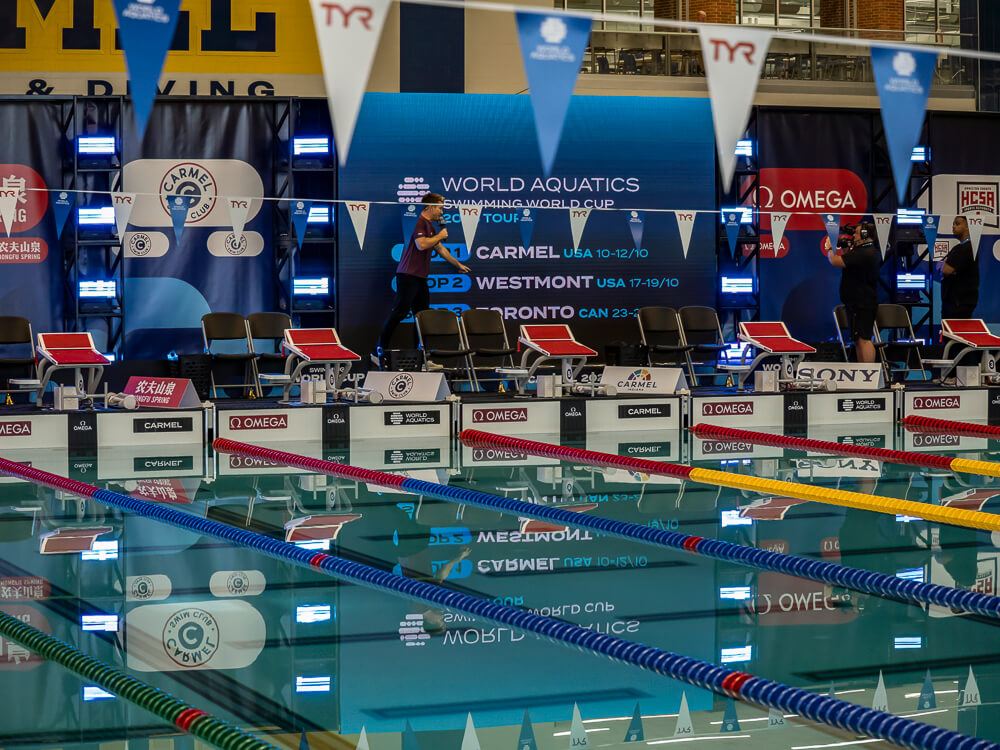
The titans that just returned from captivating our attention on the World Cup circuit and at the European Short Course Championships in Lublin are certainly not degrading these meets, so it is time to show the discipline more respect.
