Invisible Injuries in Artistic Swimming: Awareness, Resources, and Safety Measures
By Kate Mortell, MS
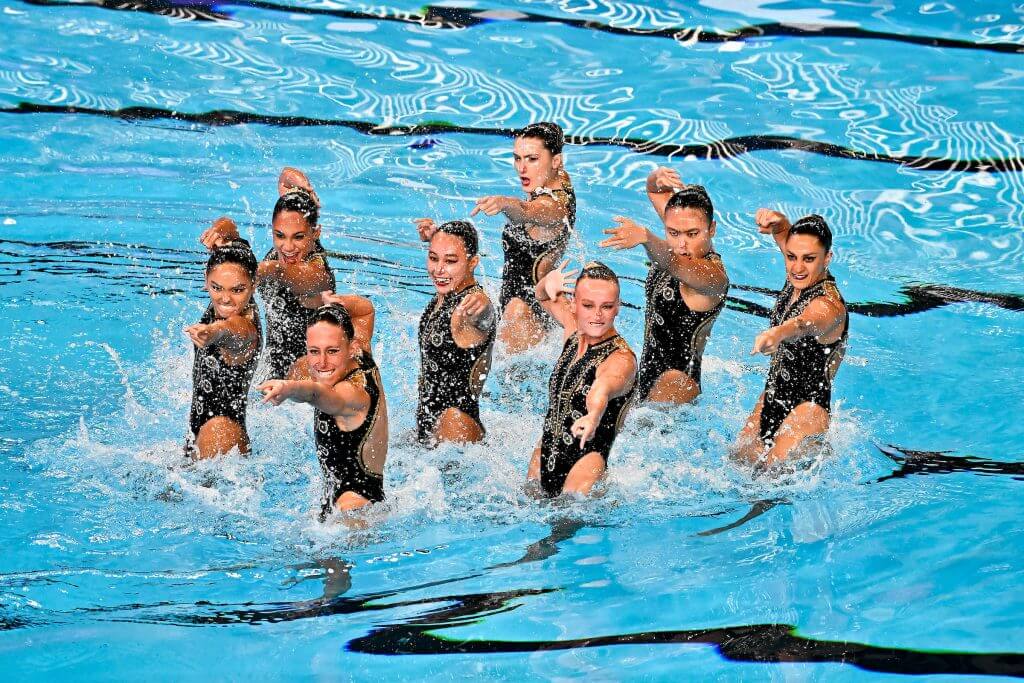
Artistic swimming (formerly known as synchronized swimming) on the surface appears as a harmless showcase of extraordinary poise and talent—a dramatic display of master showmanship and athleticism that’s nothing short of stunning.
Drawing from a plethora of different disciplines, artistic swimming combines fast swimming with ballet and acrobatics, all performed in perfect synch to carefully chosen music. This combination is what constitutes this magnificent sport. Far from being viewed as simply pomp and pageantry, artistic swimming has added a degree of athleticism that has earned the respect of coaches around the world.
Its international recognition was validated when it became an official Olympic sport in 1984 at the Summer Olympics in Los Angeles. The solo and duet events debuted, but these events were replaced by the team event (comprising eight swimmers) in 1996 at the Olympic Games in Atlanta. The International Olympic Committee (IOC)) reinstated the duet event in 2000 at the Sydney Games.
Per Bryanna Fogel, coach of the Madison (N.J.) YMCA Rays artistic swimming team: “Artistic swimmers have one goal and that is to take what’s difficult and make it look effortless.”
Constantly changing standards have made judging more objective than subjective. Swimmers need to be faster, stronger, and closer together while attempting riskier acrobatics. The demands include catapulting one or two swimmers out of the water, where they need to descend precisely back down into the hands of the throwers. Suspense and the element of surprise keep fans on the edge of their seats. Unfortunately, one minute error can lead to accidents, such as crashing into the pool wall, the bottom of the pool, or another swimmer. Such accidents commonly occur and often lead to a concussion.
Multiple smaller injuries to the head in succession, though not diagnosed as concussions, have the potential to cause permanent damage to the developing brain. Fogel is aware of the higher risks within the sport: “As the sport evolves and has become more difficult, concussions have increased.”
Research suggests that more than 50 percent of all youth sports concussions may go unreported. Time to sound the alarm! There are many reasons for this approach. At the top of the list is the fear of disappointing a coach, a parent or both, coupled with the athletes’ fear of losing their status on the team. Left to suffer in silence, while also putting teammates at risk, is the result of keeping injuries secret. All sports have a culture. In aquatic sports, whether spoken or not, “don’t stop, no matter what” and “don’t tell” are underlying expectations that contribute to the hesitancy in speaking up. As a former competitive swimmer, decades later, I hear these mantras ring in my ear when I swim.
USA Artistic Swimming is intensifying its efforts to minimize the risk of brain injuries and prevent delayed medical interventions. It has joined forces with TeachAids, an online educational resource for concussion awareness and support. TeachAids offers a free online course, titled CrashCourse, which is designed to take the mystery out of brain injuries—often referred to as the invisible injuries. Fogel states: “We often direct our swimmers to educate themselves by reading the material TeachAids provides.” Accidents are going to happen in any sport, and when they do occur, coaches and athletes need to follow standard protocols. These steps include knowing when a swimmer needs to stop, exit the pool, and seek immediate medical attention.
More, USA Artistic Swimming has teamed up with Hammer Head Swim Capsm, which manufactures and distributes silicone caps. These caps provide a thin, honeycombed layer of padding designed to prevent the full impact of a blow to the head.
Heather Olson, three-time USA Artistic Olympic gold medalist and Head Coach of the Walnut Creek Aquanauts, has stated: “Every effort to reduce head impact injuries means more time in the pool as a team maximizing competitive success. My swimmers wear Hammer Heads and say they feel safer and are especially beneficial for bases and flyers.”
Current research indicates that 70 percent of youth athletes drop out of organized sports by the age of 13. Though there are different reasons for these departures, developing athletes sometimes see the level of commitment that would be required if they continue and decide against it. Whether the young athletes stay with team sports or not, the increase of injuries that accompanies next level training is not lost on them.
As safeguards are more widely implemented, prospective swimmers will continue to be drawn to the sport. Current swimmers will increase the likelihood of achieving their goals and aspirations. Veteran coaches and swimmers set the tone and lead by example. Studies on concussions in artistic swimming have been minimal. However, on a positive note, TeachAids has opened up a new institute for Brain Research and Innovation. Its mission is to improve concussion reporting. Deeper research on the underlying causes and conditions is contingent upon more vigilant and consistent documentation from coaches.
Recommendations for when an injured athlete is prepared to re-enter the pool must come from a team or family physician. Re-entering too soon can cause re-injury and further setbacks. Fogel noted: “Our team requires both a statement from the doctor and school that the athlete is ready to resume practices.”
We can all contribute to a safer and more enjoyable experience for our athletes while preparing them for future successes. Secrets have no place in sports. Being available for open and non-judgmental conversation builds safe relationships. Ultimately, this approach opens the door to earlier interventions and better outcomes.
Let’s remember, it’s the athletes’ careers they are navigating, not ours.
Author Kate Mortell is a freelance writer and former All- American swimmer dedicated to the development of healthy youth athletes.
