Whether it’s the ball drop at midnight on Jan. 1 or the first pitch of Opening Day, we as a people like to celebrate the beginning of a new year/season/calendar/schedule by observing the movement of spheres.
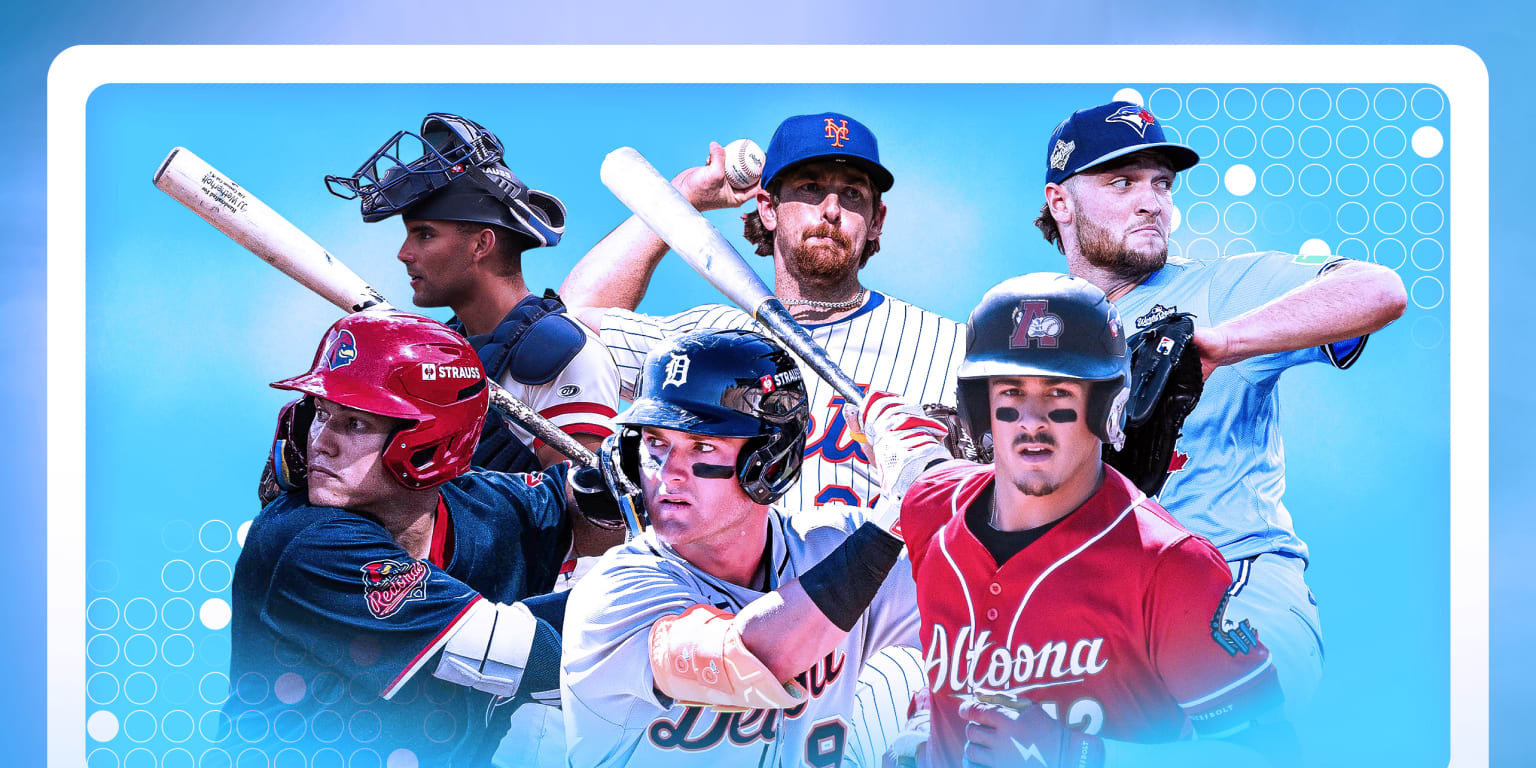
As we move from 2025 into 2026, we at MLB Pipeline are always keeping an eye on what’s coming in the future of baseball. Here are 26 storylines we’ll be following concerning prospects and the Minor Leagues in ‘26:
1. Konnor Griffin’s arrival
The Pirates shortstop has ascended to the top prospect spot in the MLB Pipeline prospect rankings on the strength of his five-tool profile and on-field success in his first full season. The Bucs are said to be considering him for an Opening Day spot. While that would be quite a leap for a player with only 21 games of Double-A experience, it would inject some much-needed excitement into the Pittsburgh lineup at a time when the starting rotation should be a major strength. Even if Griffin doesn’t come up until later in the summer, he could make a Nick Kurtz-sized impact as a rookie. Think of a taller Bobby Witt Jr. at the six as a 20-year-old, and you get the picture.
2. Can Kevin McGonigle hit his way to Opening Day?
We went with No. 1 at No. 1. Now, No. 2 for No. 2. Like Griffin, the Tigers’ top prospect lacks Triple-A experience, though he did win Arizona Fall League MVP honors. But McGonigle still has a lane to win a Major League job out of Spring Training as Detroit weighs its options at shortstop and third base. McGonigle has the bat to make an impression; his approach is as advanced as it comes in the Minors, and he hits the ball hard at optimal angles to make consistent impact. At a time when the club is clearly going for it, A.J. Hinch & Co. may not to leave McGonigle behind in Toledo, even if his glovework on the left side of the infield still needs improvement.
3. Rookie of the Year races
Trey Yesavage (Blue Jays) and Nolan McLean (Mets) should likely head into 2026 as the award favorites after the way they dominated down the stretch (and in Yesavage’s case, the postseason) in the American and National Leagues. But this is far from a two-horse race. Griffin and McGonigle certainly have ROY-level ceilings despite their age, and that could factor into their Opening Day assignments given the Prospect Promotion Incentives. Bubba Chandler (Pirates), JJ Wetherholt (Cardinals) and Sal Stewart (Reds) could all be factors from the NL Central, while Samuel Basallo (Orioles), Carter Jensen (Royals) and Colt Emerson (Mariners) look like possibilities in the AL. Don’t forget that Japanese players Munetaka Murakami (who recently signed with the White Sox) and the as-yet-unsigned Tatsuya Imai and Kazuma Okamoto are ROY-eligible, too (though not prospect-eligible as professional free agents).
4. Roch or the field
UCLA shortstop Roch Cholowsky heads into the spring as the clear No. 1 Draft prospect in the 2026 class. He hits for both average and power from the right side, and his defense grades out as plus from a premium position. Of course, a lot could change between now and when the White Sox pick first in July, whether it be an unexpected downturn from Cholowsky, a surge from another prospect or a decision by Chicago to go a different direction. This is still a rare case of there being a near-unanimous player at the top of the class this far out, and watching Cholowsky try to hold onto that status while playing in the Big Ten should be fun.
5. And if Roch is No. 1, who lands at No. 2?
The Rays fell just short of winning the Draft Lottery but still have the enviable position of getting the pick of the rest of the litter at No. 2. Do they go the college route with Alabama shortstop Justin Lebron, who earns plus grades for his power, speed and defense? Or do they aim for long-term upside with high-school shortstops Grady Emerson or Jacob Lombard? A shortstop hasn’t been taken second overall since 2019 (Witt), but given the depth at the position this year, that run could come to an end.
6. First 2025 pick to the Majors
Eight members of the 2024 Draft class made it to the bigs last year, including two on the Opening Day roster (Cam Smith, Ryan Johnson) and one Rookie of the Year winner (Kurtz). The Angels can never be ruled out of this race, and No. 2 overall pick Tyler Bremner could be the beneficiary if his mid-90s fastball and near-plus-plus changeup translate quickly in his first spring. Other collegiate arms Kade Anderson (Mariners), Liam Doyle (Cardinals) and Jamie Arnold (Athletics) can’t be ruled out, either. Don’t expect a Kurtz-style rush job on the hitting side as the 2025 class was lighter on college bats than its 2024 predecessor.
7. Nationals rebuilding the farm system
New Washington president of baseball operations Paul Toboni has already tasked the new-look Nationals front office with “creating a scouting and player development monster,” and within months of that comment, the club has already added intriguing prospects Harry Ford and Luis Perales in trades. Getting 2025 No. 1 overall pick Eli Willits off on the right step will be a huge priority, and developing breakouts, like the ones Toboni saw in Boston with Kristian Campbell and Payton Tolle among others, will be paramount to building a contender in the nation’s capital.
8. How the Cardinals build from here
St. Louis had one of the most improved farm systems in baseball last year with Wetherholt’s dominance, breakouts from Rainiel Rodriguez and Joshua Baez, and late trades that added Brandon Clarke and Yhoiker Fajardo helping matters. So what’s next? It’s no secret that Chaim Bloom and the front office could further pad the system with a trade involving Brendan Donovan, and the club could use some more popup performers under the relatively new player-development structure. Fourth-rounder Cade Crossland, who dealt with back issues last year, could be a good candidate.
9. Can A.J. Preller actually trade anyone else?
The Padres are consistently making big moves involving prospects to help the Major League squad, and 2025 is when Preller and his front office might have gotten their most aggressive yet in sending Top 5 overall prospect Leo De Vries to the A’s in a package for Mason Miller. Other deals have left the San Diego system dry for now, though Ethan Salas and Kruz Schoolcraft hold onto Top 100 status. The Padres pride themselves on developing talent and replacing what they lose in trades, but their work will be cut out for them in ‘26.
10. Ethan Holliday’s swing and miss
Ranked as the No. 1 Draft prospect in 2025, Holliday went fourth overall to the Rockies and then was aggressively shipped out to Single-A Fresno, where he hit .239/.357/.380 with two homers in 18 games. This was all about dipping the shortstop’s toes in the professional waters. But on a worrisome note, Holliday did strike out 39.3% of the time and whiffed on 41% of his swings in the California League, echoing some of the swing-and-miss concerns from the summer before his Draft year. Holliday’s power is undeniable, and he’ll get as much development time as he needs as he begins his pro career in earnest. But his contact rates will be closely watched across the industry.
11. Is there space for Bryce Eldridge?
Speaking of undeniable power, Eldridge’s pop rivals that of any current player in prospectdom. The 6-foot-7 first baseman has plus-plus power potential, and that helped him earn his first MLB look late last year. However, he plays in an organization that acquired Rafael Devers to play first base last year and one that might stay aggressive in pursuit of the postseason. Whether Eldridge can get 1B/DH at-bats or is better off as a trade chip will be a storyline worth following in the Bay Area.
12. Is there space for Samuel Basallo?
Similar deal here. Basallo, who also made his MLB debut in ‘25, would be in the discussion to become the Opening Day catcher in many other organizations, but the Orioles seem set on giving Adley Rutschman an opportunity to bounce back after his dip last summer. Pete Alonso’s massive contract also closes the first-base lane to Basallo for now. Getting more time to develop defensively at Triple-A isn’t the worst thing for the 21-year-old, but his bat is ready now. A good problem for the team, a potentially tough situation for the player.
13. Leo De Vries vs. Jesús Made
Both shortstops were signed as international prospects in January 2025. Both have already made Double-A in their age-18 seasons. A return to the upper Minors for both will add more fuel to the fire of who will be better long term. De Vries got off to a quicker start because of the Padres’ aggression with him before the trade to the A’s, but Made oozes promise in the Milwaukee system as a potential plus hitter with plus power from both sides and ample basestealing acumen. This may not be a debate that ends when both potential superstars graduate, either.
14. Make or break for Spencer Jones
Ask 10 evaluators about the Yankees outfielder, and you may get 10 different opinions. On one side, he’s a potential All-Star with huge power and more speed and center-field defense than you’d expect from a 6-foot-7 player. On the other, his mid-30s strikeout rates are hard to stomach and could explode against MLB-quality pitching, thus keeping him from reaching that ceiling. Jones will be in his age-25 season in 2026, and this will likely be the deciding year for whether he’s a big part of the future in the Bronx or if he can’t quite make enough contact to cut it in the big city.
15. New Minor League ballparks
Five new stadiums come to the Minor Leagues this year. Double-A Chattanooga, Double-A Richmond and High-A Hillsboro each replace existing structures and bring the excitement of something new to their respective communities. Single-A Ontario and Single-A Wilson will be completely new clubs in the California and Carolina Leagues, respectively, and will come with new ballparks as part of their moves. New stadiums mean new park effects, so it’ll be interesting to see how these new fields play for hitters and pitchers in year one.
16. New affiliations
Ontario’s move into the Cal League has caused carouselling among the club affiliations in that Single-A loop. Ontario becomes the new affiliate for the Dodgers, and the Angels take over in Rancho Cucamonga (with some cool hats to match). The Mariners move to Inland Empire in the Halos’ absence, as Modesto moves out completely. There will be a Pioneer League club, called the Modesto Glow Riders, at John Thurman Field in 2026.
17. The Dodgers outfielders
The World Series champs boast seven Top 100 prospects on our current list, and four of them ply their trades on the grass. Josue De Paula and Zyhir Hope are the best of the bunch with intriguing hitting profiles, and both reached Double-A by the end of 2025. They should open up back in Tulsa in 2026. Breakout star Mike Sirota could also open in the Texas League even after he was limited by a right knee injury, and Eduardo Quintero won’t be far behind at only 20 years old. A crowded outfield in the upper Minors isn’t a bad thing by any means, but the Dodgers will have some sorting to do. Their decisions, including using any of these prospects in trades, will tell us plenty about whom they value most.
18. The tip of the Phillies’ spear
The Philadelphia front office appears comfortable heading into 2026 with perennial .300 hitter and 40-steals man Justin Crawford as its Opening Day center fielder. The club would also love to see Andrew Painter finally break through to the bigs after he failed to do so in ‘25 (his first full season since Tommy John). Rounding out the Top 100 contingent, Aidan Miller turned around last season with an offensive surge (207 wRC+ in 173 plate appearances after Aug. 1) at Double-A and Triple-A. Because he’s blocked by Trea Turner at short, Miller will likely have to change positions for the first time in his Minor League career to find a path to Philly. It’s still possible all three are in the bigs by the All-Star break.
19. The Royals catchers
Since 2023, the Royals have had two quality catching prospects in their pipeline, and as we approach 2026, the coming year will be big for both. Carter Jensen has already arrived in the Majors and made an impact with a .941 OPS in 20 games. Kansas City is keeping Salvador Perez with a two-year, $25 million contract, but Jensen has shown the all-round potential (especially on the offensive side) to be more than just option 1B soon on the catching depth chart. Blake Mitchell missed significant time with a broken right hamate bone in 2025 and didn’t meet offensive expectations at High-A Quad Cities or in the AFL. Hamate issues can certainly take away power in the short term, and it’ll be on the backstop to prove in his age-21 season that last year was just an unfortunate unhealthy blip.
20. What’s the next pitching craze
At some point, it was the sweeper. Then, it felt like many arms were adding a sinker or a cutter. Last year, the kick change was all the rage with supinators. Will there be a pitch that becomes a Minors-wide fascination in 2026? In this age of the pitch mix, it always feels like something is on the horizon.
21. ABS advantage for rookies?
The ABS Challenge System is officially coming to the Majors in 2026, and even after last year’s Spring Training trial run, you can bet there will be some adjustment period for Major Leaguers across the board early next season. That might give recent Minor Leaguers a step up, considering they’re more likely to have gotten used to the automated system at Triple-A, the Florida State League or the AFL. Knowing when to challenge and who should challenge will likely be the rare skill where younger players have an upper hand.
22. Technology at large
Nothing has been officially announced on this front, but Eno Sarris of The Athletic reported (subscription required) that MLB is considering regulating in-game technology use across the Minor Leagues. As it stands now, some farm systems are well ahead of others in terms of data collection and usage. If enacted, it would level the playing field — a major step up for some orgs and a step back for others that had the foresight to invest early and often in tech.
23. Spring Breakout III
First introduced in 2023, Spring Breakout has already brought us memorable moments in Arizona and Florida, including Paul Skenes’ strikeout of Jackson Holliday two years ago and Roman Anthony’s massive homer against the Rays (quieting “overrated” chants) in 2025. Who could step up next? The action starts March 19; one day later is what already looks like a juicy matchup between the Pirates and Tigers, pitting Griffin and McGonigle against each other in Bradenton.
24. World Baseball Classic and prospects
The WBC appears to be headed toward its most exciting version yet, and a big reason for that is the quality of the rosters. While Aaron Judge (USA), Shohei Ohtani (Japan) and Francisco Lindor (Puerto Rico) generate plenty of hype on the MLB side, we already know a number of prospects will be competing internationally this spring. Among Top 100 prospects alone, there have already been confirmations for Michael Arroyo (Colombia), Travis Bazzana (Australia), Owen Caissie (Canada) and Nolan McLean (USA) and Harry Ford says he plans to play for Great Britain again. Other announcements — like Jonah Tong on the Canadian side — could still be coming as rosters are more fully fleshed out. Seeing these players in truly competitive environments isn’t only fun; it could give us even more insight into how their 2026 campaigns are shaping up.
25. The postseason
Jumping completely to the other end of the schedule, Trey Yesavage’s impressive playoff run north of the border, along with that of Cam Schlittler for the Yankees, showed us what was possible when teams trust rookies in the playoffs. The PPI incentivizes more than players getting Opening Day jobs; it also benefits clubs getting their best prospects late-season opportunities in order to prepare for a Rookie of the Year run (and a run at winning the org a draft pick) the following year. That could lead to the right chance for player and team to get the ultimate experience on the game’s biggest stage. Who’s got next?
26. The unexpected
We can sit here and enumerate all that we expect to happen this year in prospectdom — in fact, we just did — but what’s most exciting about baseball and sports at large are what we don’t see coming. As much prep as we do on prospects, breakouts happen every year because these players are human beings capable of drastic positive change, especially so early in their careers. So here’s to more surprises in 2026. May they keep baseball fresh and exciting for another year to come.
