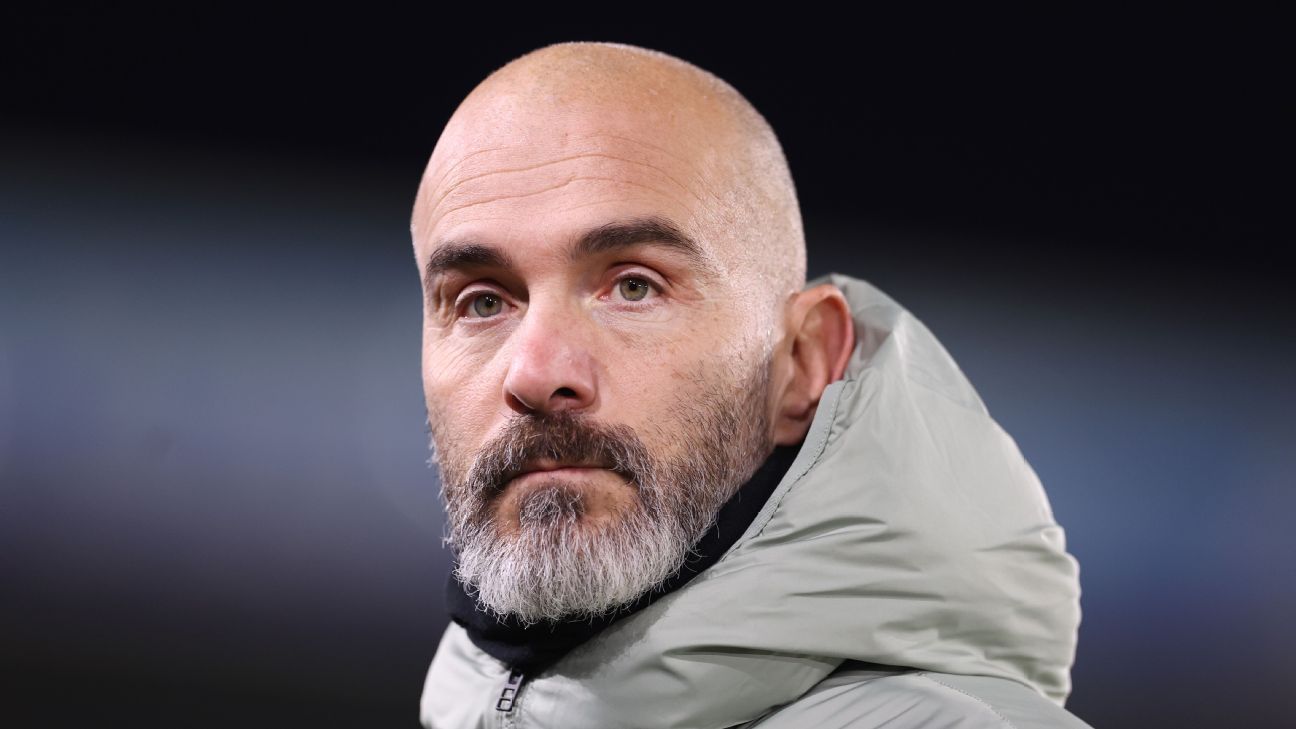
It’s one of the biggest jobs in football, a club that has — as their supporters sing at every game — won it all, but to be head coach at Chelsea, top-level experience and a proven track record are not required, so don’t expect an elite managerial name to replace Enzo Maresca. If you think that makes no sense — a view taken by many confused Chelsea fans right now — it is the reality of the “new” Chelsea under the control of Todd Boehly and Behdad Eghbali’s Clearlake Capital.
So don’t be surprised that former Hull City manager Liam Rosenior, now coaching Chelsea’s Ligue 1 partner club Strasbourg, is a leading candidate to take over from Maresca at Stamford Bridge. Rosenior is talented and well regarded, but his last job in English football ended with the sack at Hull, so his appointment is unlikely to be well received by the Chelsea fanbase, just as Maresca’s arrival was met with a lukewarm reception in 2024.
Maresca parted company with Chelsea on New Year’s Day after just 18 months in charge, despite delivering success in last season’s UEFA Conference League and FIFA Club World Cup, and also securing UEFA Champions League qualification with a fourth-place finish in last season’s Premier League.
But winning is no longer the primary consideration at Chelsea. It is also about fitting in with the ownership’s blueprint, and that involves young coaches with potential just as much as it revolves around recruiting the best emerging playing talent from all over the world.
It is a club with two owners, two sporting directors — Paul Winstanley and Laurence Stewart — and a raft of other prominent figures in its so-called “integrated football leadership structure,” including former Liverpool director of scouting and recruitment Dave Fallows and talent scouts Sam Jewell and Joe Shields. It is also a team that requires the head coach to heed the advice of medical staff rather than merely take it under consideration, so managing the team at Chelsea is a job that would likely lead an experienced manager to say, “Thanks, but no thanks” if an offer came his way.
But that’s Chelsea, and whether it is working or not is another matter. Measuring success at the modern Chelsea is no longer as straightforward as it used to be, and that is a big reason why Maresca is no longer in a job.
For almost 20 years, under the ownership of Russian billionaire Roman Abramovich, Chelsea were all about big spending and ambition to match, with José Mourinho, Carlo Ancelotti, Antonio Conte and Thomas Tuchel some of the blue-chip coaches hired by Abramovich.
Abramovich demanded success and he recruited the biggest names in coaching to deliver it. And it was an approach that worked, with Chelsea winning two Champions Leagues and five Premier Leagues during the Abramovich era (2003-2022) before UK government sanctions forced the oligarch to sell the club in May 2022.
Maresca would never have been hired by Abramovich, so his arrival as head coach at Stamford Bridge defined the changes at the club. At the time of his appointment, the 45-year-old had been a head coach for less than 18 months: six months with Parma in Italy’s Serie B before being fired for failing to put the team in contention for promotion, and then a full season with Leicester City, guiding the Foxes to the EFL Championship title and a return to the Premier League.
By hiring Maresca, Boehly and Clearlake reverted back to their original plan of identifying a bright, young coach who would develop a team of equally bright and hungry players.
The first attempt with Graham Potter, who replaced Tuchel just seven games into the new regime’s first season, was a short-lived failure, while the more experienced Mauricio Pochettino lasted just one season before leaving his post due to his call for older, more season players being rejected by the ownership group. But when Chelsea turned to Maresca, after considering the similarly inexperienced but highly rated Kieran McKenna from Ipswich Town, it signaled the determination of the club to do it their way.
An Abramovich-era coach would quickly push back on the requirements of the integrated football leadership structure and demand to be given the tools with which to do the job of winning. But by giving a young coach a huge opportunity ahead of his time, the thinking would be that he would be so grateful to have the chance of managing an elite club like Chelsea that the frustrations of a more senior coach would not be aired and he would happily embrace the collegiate approach laid down by the owners.
That works for only a short time, though, and Maresca perhaps felt emboldened enough by last season’s successes to push a little bit harder for the players that he felt he needed to take the team into title contention. That was what ultimately led to Pochettino leaving the club, just as Tuchel was gone within weeks of a chaotic summer transfer window that resulted in him urging the club not to make a move for Cristiano Ronaldo.
So when Chelsea hire a new coach, young, up-and-coming and malleable will be the key criteria for the successful candidate. The days of Chelsea hiring the cream of coaching are firmly in the past.
