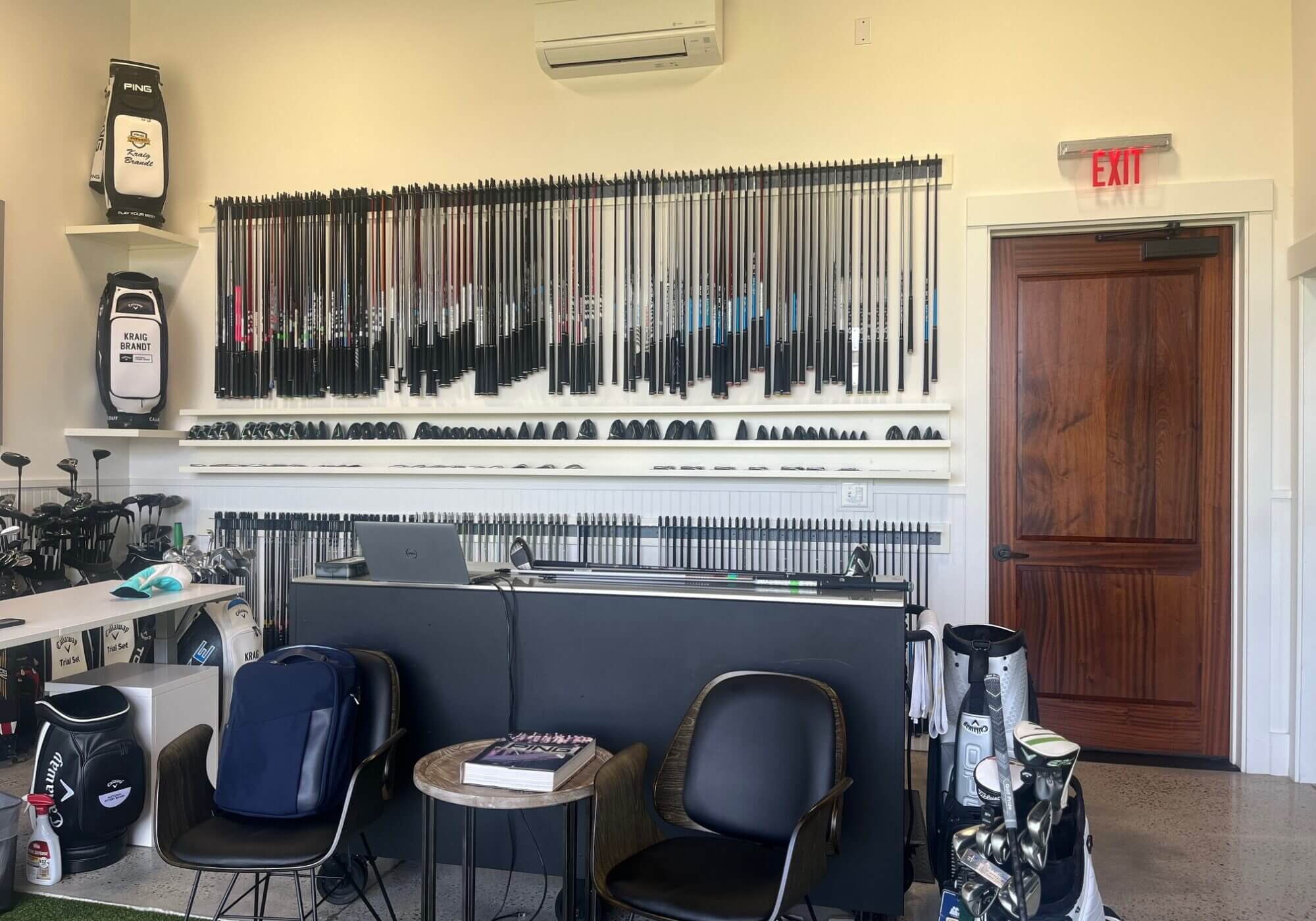
Club fittings can be one of the most effective ways to improve your golf game. They can also become an expensive mistake if you’re unprepared. The difference usually has less to do with the fitter or the equipment and more to do with how clearly you understand what you want to change.
The biggest mistake golfers make before a fitting is not being able to clearly identify the problem they are trying to solve.
Fix that first and the rest of the process becomes far more effective.
A good fitting starts with a clear problem
In 2025, I was fitted for a new set of irons. One of the first questions the fitter asked had nothing to do with distance or brand preferences. He asked what was not working with my current irons.
In one sentence, I explained that my launch and flight window were inconsistent, especially with mid irons. That answer shaped the entire fitting. Shaft weight, head design and loft gapping were all selected to address that specific ball flight issue.
What I see now that the new irons have been put into play is a noticeable difference/change in my game. The improvement came from matching equipment to a defined problem.
Why fitters need a pattern to create improvement
Most fittings start the same way. Golfers say they want more distance or they want to score lower. Those goals make sense, but they are outcomes, not problems a fitter can directly solve.
Fitters can bring consistency to a golfer’s game. However, meaningful improvement requires some consistency in the miss. When there is no clear pattern, the fitting becomes reactive and distance becomes the easiest number to chase even when launch and spin suggest the gains will not translate to the course.
While this may sound like golfers need a repeatable swing for a fitting to be effective, that is not the case. What matters most is a repeatable tendency. That gives the fitter something to work with and makes it easier to see meaningful improvement once the new clubs are in play.
Distance and feel are not the same as improvement
Many golfers judge fittings by distance or feel. Those elements matter but they are not where meaningful changes usually show up on the course.
Real improvement from a fitting is more likely to appear in:
- More consistent launch windows
- Better spin control through the bag
- Tighter dispersion
- Improved distance control
Why beginner fittings still matter
At this point, it might sound like having a clear ball-flight goal or repeatable tendency is a requirement before getting fitted. That naturally raises the question many newer golfers have: Are fittings even worth it if you are still learning the game?
The answer is yes, but the purpose is different.
For newer golfers, a fitting is less about fine-tuning launch and spin and more about getting the fundamentals right. Length, lie, shaft weight and forgiveness matter because they help put a golfer into equipment that fits their size and swing speed. That foundation makes it easier to develop consistency over time.
What beginner fittings are not meant to do is fully optimize ball flight. That level of refinement comes later.
How to avoid the mistake before your next fitting
These are the steps I would take before a fitting. With fittings costing anywhere from $75 to $500, walking in with a little awareness is not going to hurt.
- Write down what is not working with your current clubs. Keep it simple. One or two sentences is enough. Focus on ball flight rather than feel and distance.
- Identify your most common miss. Pulls, blocks, low flight, high spin or inconsistent launch all give a fitter something to work with.
- Decide what you want to change, not what you want to gain. Distance and scoring are outcomes. Launch, spin and dispersion are fitting inputs.
- Use the fitting to confirm patterns, not chase best shots. The goal is tighter windows and better control, not one perfect swing.
- Match the fitting to where your game is right now. Newer golfers should prioritize basics like length, lie, shaft weight and forgiveness. More detailed optimization comes later.
There is no perfect set of golf clubs. There is equipment that helps manage specific ball flight problems. When you walk into a fitting with a clear target, the process works the way it should and you’ll notice changes when you put the new equipment into play.
The post The Big Mistake Too Many Golfers Make Before A Club Fitting appeared first on MyGolfSpy.
