Home US SportsNASCAR Insider Echoes Richard Petty’s Peer As He Quietly Exposes Long-feared Theory Of Racing Economy

Insider Echoes Richard Petty’s Peer As He Quietly Exposes Long-feared Theory Of Racing Economy

by

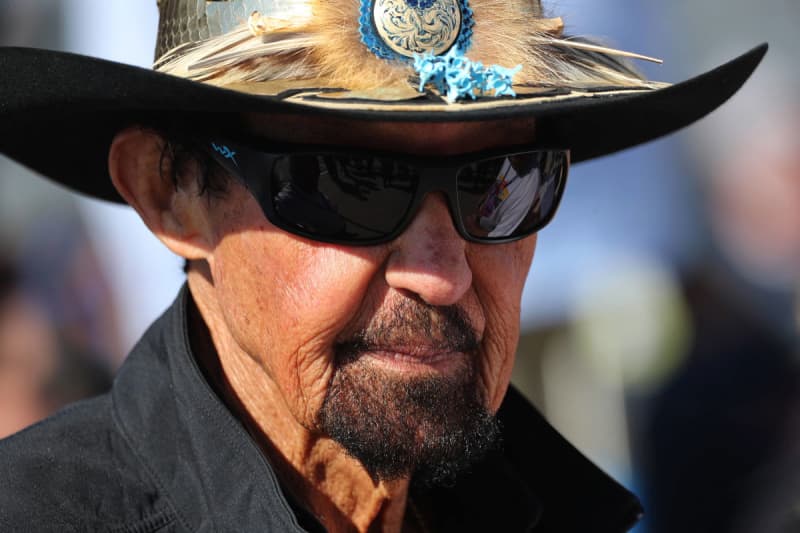
MARTINSVILLE, VA – NOVEMBER 03: 7 time Cup Series champion Richard Petty talks with fans prior to the running of the NASCAR, Motorsport, USA Cup Series Playoff Race Xfinity 500 on November 03, 2024 at Martinsville Speedway in Martinsville, VA. Photo by Jeff Robinson/Icon Sportswire AUTO: NOV 03 NASCAR Cup Series XFINITY 500 EDITORIAL USE ONLY Icon2411036868500 ©IMAGO/Icon Sportswire

NASCAR isn’t the same anymore, and Richard Petty’s son, Kyle Petty, knows it all too well. Earlier in the year, the duo pointed to NASCAR’s modernization, suggesting it may have gone too far, and noted rising costs for cars and tires. But this is just one aspect of the problem. Fast forward to today, and Petty’s concern about the racing economy has only grown, as one NASCAR insider reveals how the sport has evolved.

As the motorsports world buzzes with record car counts and growing participation, Kenny Wallace recently highlighted a perspective that has fans and teams talking.

“The real subject matter of the day: the economy is booming. Gas prices are way down,” he said. “Kyle Petty says you can follow the car counts in auto racing by the stock market, because everything we do in racing or in sports, including sponsorship, follows the stock market. So the stock market is basically like going to Vegas.”

Wallace wasn’t just observing trends. He was echoing the insights of Kyle Petty, who has long argued that motorsports reflects broader financial markets.

Speaking to Sports Business Journal in 2006, Petty explained, “Now you are part of a marketing platform. The driver, the car, and the sponsor are part of the activation, the marketing, and the sales.”

Petty’s insight highlights how motorsports has evolved into a complex business ecosystem. Drivers and teams are no longer just competing on speed. They sell exposure, performance, and branding, all of which are directly affected by economic conditions. When companies are doing well, they are more willing to invest in sponsorships, which in turn fuel larger fields and more competitive racing.

The connection is clear. Thriving car counts, robust sponsorships, and packed events do not happen in isolation.

Wallace’s recent comments show that dirt tracks, sprint car events, and even marquee NASCAR races feel the ripple effects of the broader economy.

Take the 2026 Chili Bowl Nationals as an example. The event has attracted an exceptionally large field of drivers, with entries reaching approximately 385 competitors ahead of the event.

That figure surpasses the previous record of 381 entries set in 2022 and reflects the continued growth and popularity of this indoor midget spectacle in Oklahoma.

“Like the way people want to live that, that, that’s always been crazy. But when it comes to finances, things are really good right now. Sponsors are doing well. And so I have just noticed that. And I wanted to bring that up that when you see gas prices as cheap as they are, that means these dirt teams, they can travel cheaper,” Wallace added.

This underscores that motorsports can serve as a barometer of financial confidence. When gas is cheap, companies are investing, and fans are spending, and racing booms on and off the track.

At the end, Petty and Wallace’s perspectives converge on one truth: racing is as much about economics as it is about engines. Understanding the financial landscape is of interest to team owners and sponsors; it explains why some seasons see explosive participation while others struggle to fill the pit gate.

In today’s market, the signs are more than clear. The economy is healthy, and racing is benefiting. However, NASCAR has been caught in the crossfire throughout theyear with the lawsuit and additional changes.

While fans are still recovering from NASCAR’s recent decisions, Wallace urges them to be patient with the organization.

Less than a month after settling their anti-drug lawsuit, NASCAR has already rolled out a trio of major changes aimed at winning back fans and insiders. While the details of the updated championship format are still under wraps, early signs suggest the sanctioning body is listening more closely than before.

Veteran Kenny Wallace sees these moves as a genuine effort to repair past mistakes. From next-gen car upgrades to schedule tweaks and competition updates, the changes signal a clear shift.

Horsepower will rise from 670 to 750 HP on short tracks and road courses, paired with a new short track aero package that emphasizes driver skill and tire management.

Meanwhile, the schedule says the season finale returned to Homestead-Miami, North Wilkesboro hosted a points race for the first time since 1996, Chicagoland joined the rotation, and Phoenix moved earlier in the playoff. Even Ram is returning via the truck series. Wallace praised the speed of the reforms.

“We’re 9 days into the new year, and NASCAR’s already announced three things. That’s how big a change this year is going to be… Do you see what NASCAR is trying to do? They’re trying to make things right. They messed up. They made a mistake, and they know it. But I’m excited that they’re trying to make it right,” he said.

Beyond these headline moves, NASCAR is also testing new venues, including a street circuit at Naval Base Coronado, following prior experiments in Chicago and Mexico.

Yet the championship overhaul remains the most pivotal change, one that could either restore NASCAR’s credibility or challenge it further in the eyes of fans.

The post Insider Echoes Richard Petty’s Peer As He Quietly Exposes Long-feared Theory Of Racing Economy appeared first on EssentiallySports.

Source link

You may also like

Leave a Comment