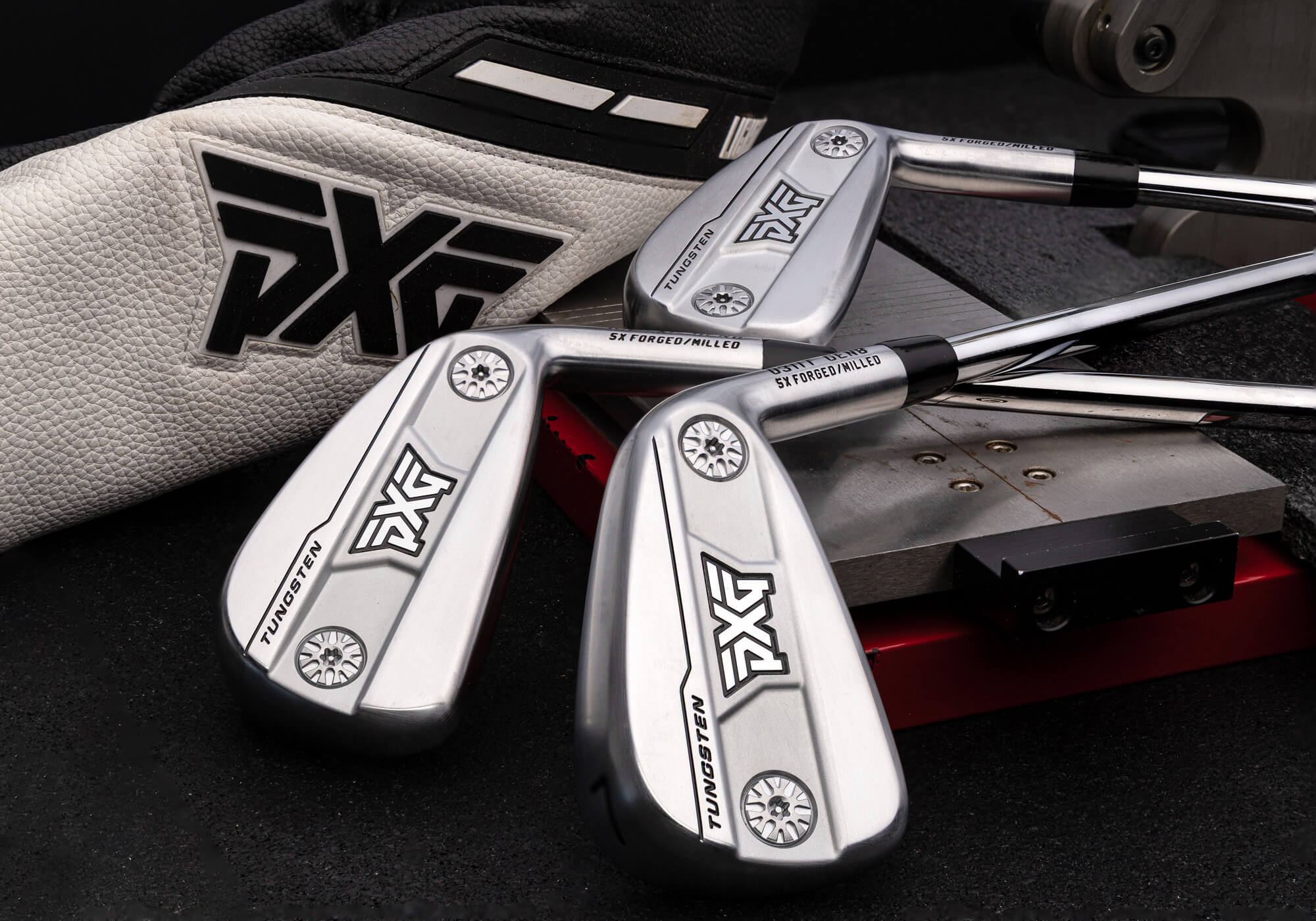
It’s hard to believe we’re more than 10 years (almost 11) into the PXG era. More than a decade in, a quick finger count (and also the product name) tells us PXG has arrived at the eighth generation of its flagship 0311 irons.
It’s the kind of thing you’d expect Bob Parsons to scream at you about through your TV but more than a decade of evolution and lots of screws later have brought us a slightly more subdued but no less innovation-focused version of PXG.
Kaboom, baby! (but quieter)
“The most adjustable irons PXG has ever made”
PXG is billing GEN8 as the most adjustable iron it has ever made. That’s not hyperbole. Frankly, there isn’t a whole lot of adjustability to be found in the iron category so any added adjustability represents some kind of step forward.
Were the last couple of PXG GEN models adjustable? To an extent, yes. Are GEN8 more adjustable? Inarguably.
So, yeah, the tagline checks out.
Beyond that particular claim, more surprising still is what you won’t hear. There are no bold speed or distance claims this time around. PXG says it’s already pushing the limits of what the USGA allow and there’s not much left to gain. Instead, across the board, the three models (that’s right, the “T” is back!) that make up the 0311 GEN8 family emphasis greater forgiveness, tighter dispersion and meaningful advancements in fitting.
“We’re already at the limit on ball speed. There’s nowhere left to go there,” says Brad Schweigert, PXG’s newly appointed Chief Operating Officer. “So, the question becomes: how do we make the misses better? That’s really what GEN8 is about: keeping speed but tightening dispersion and improving consistency.”
As you’ll see, all of the above is apparent in the PXG-provided data.
With the high-level stuff covered and before we break down the individual models, let’s take a quick look at the key technologies that define the full GEN8 lineup and what makes the latest models in PXG’s flagship lineup not just newer but actually better.
Your requisite bits of goo, steel and tungsten
The first notable point isn’t a change at all. PXG’s QuantumCOR polymer “goo” is unchanged from the previous model. What’s different is a change to the internal geometry of the clubhead that PXG has branded Deep Recoil Technology.
Ultimately, that’s just some branding to describe some shaping changes that create more space between the face and the back of the club. The extra bit of space allowed PXG to put roughly .200 of an inch of QuantumCOR polymer directly behind the impact area and .300 of an inch lower in the face.
The extra volume allows the face to flex deeper into the polymer. That does give better ball speed retention low on the face but that’s really the extent of the speed story. The real benefit is higher launch from the long irons and a softer, more muted feel.
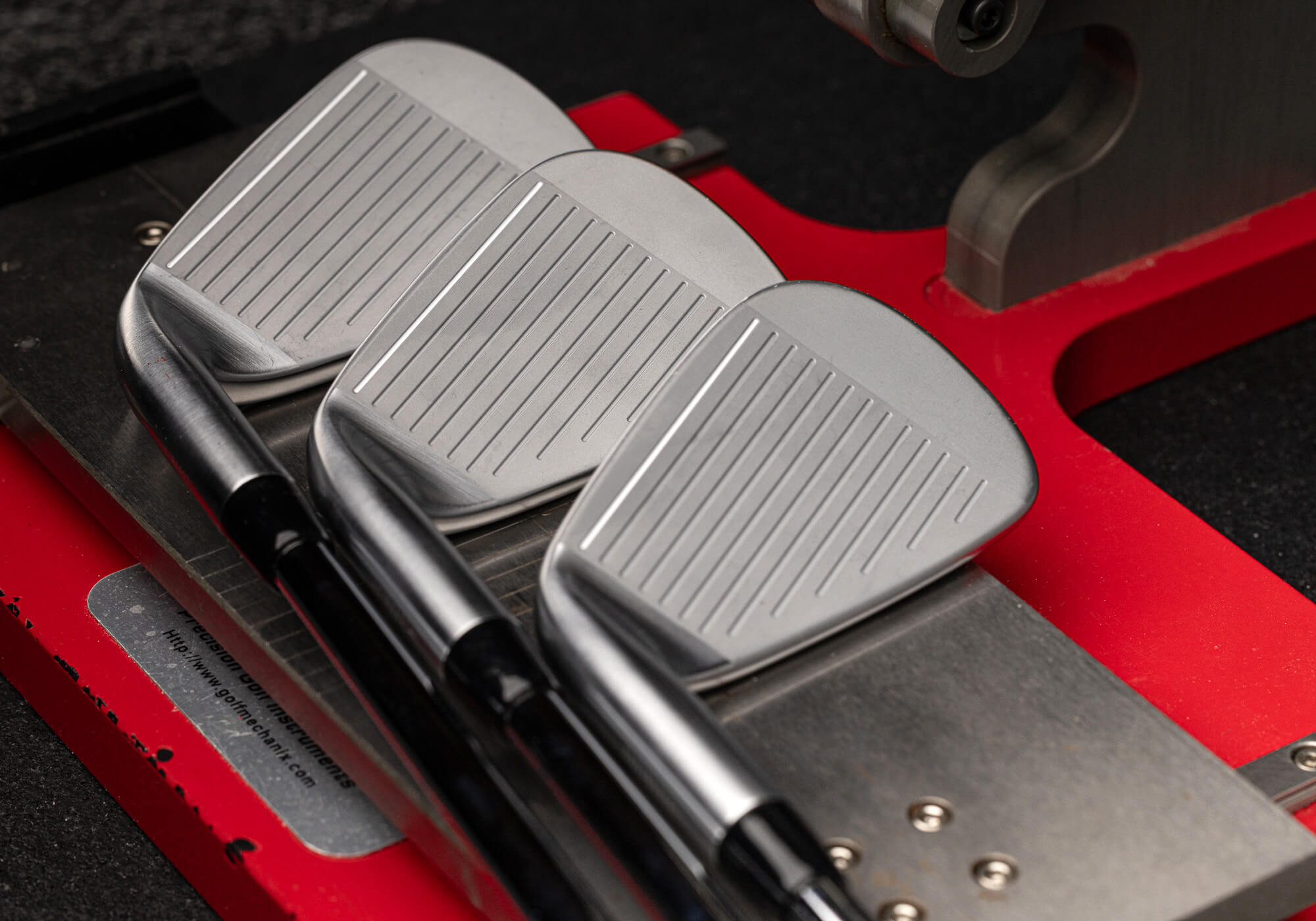
Across the lineup, GEN8 irons feature ultra-thin maraging steel faces: .050 inches in the XP and P models, thickened to .062 inches in the T. Nearly 11 years since the first PXG iron and the faces are still among the thinnest, if not the thinnest, in the industry. The faces are joined to 8620 soft steel bodies and robotically polished to ensure consistent geometry from head to head.
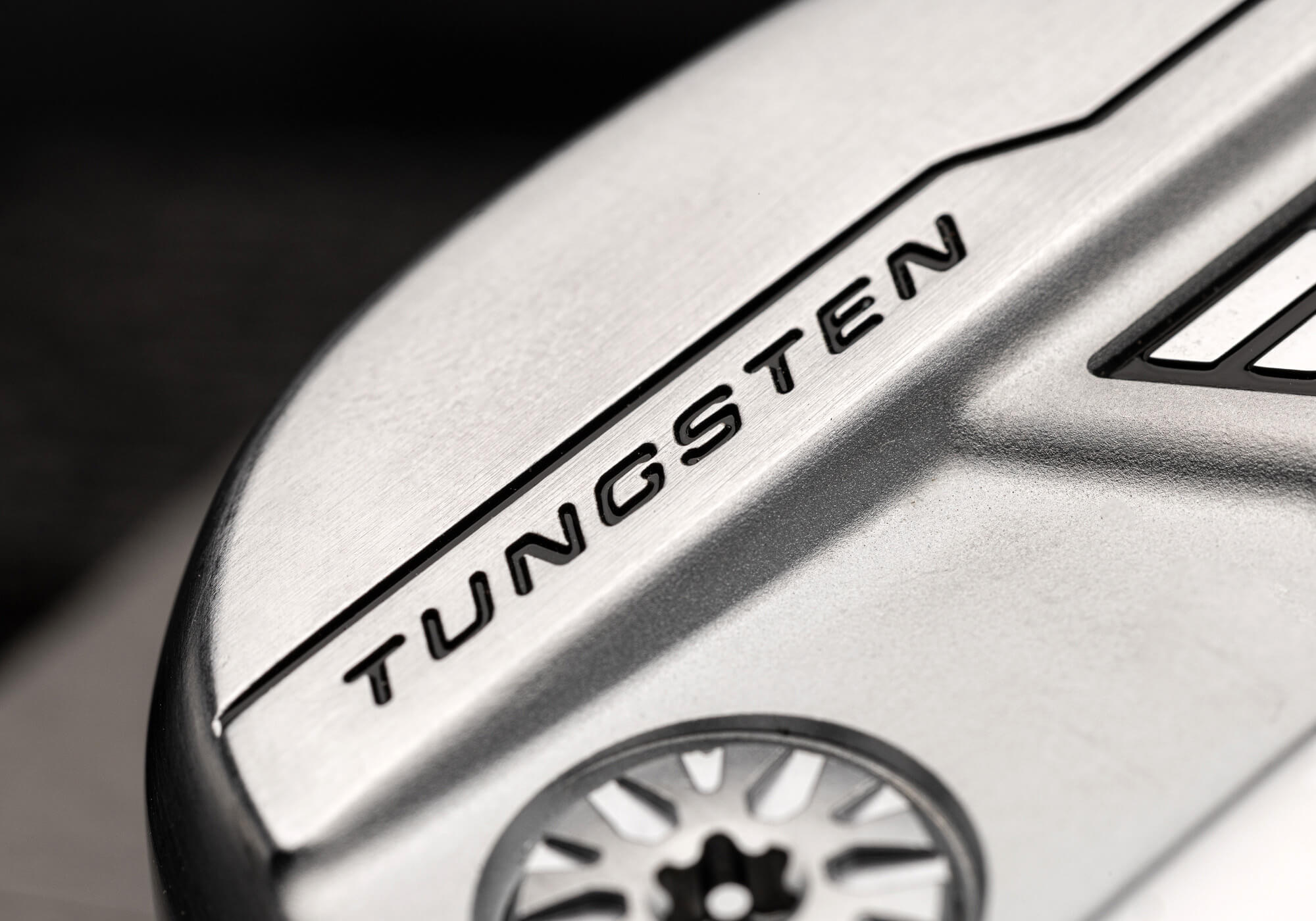
Rare is the iron story that doesn’t include some mention of tungsten. This isn’t one of them. While the amount of tungsten usage varies by model, there’s roughly 25 grams in the P, 20 grams in the T and 15 grams in the XP.
That internal weighting works in concert with the most important change in GEN8.
Dual Perimeter Weighting: The “game-changing” technology
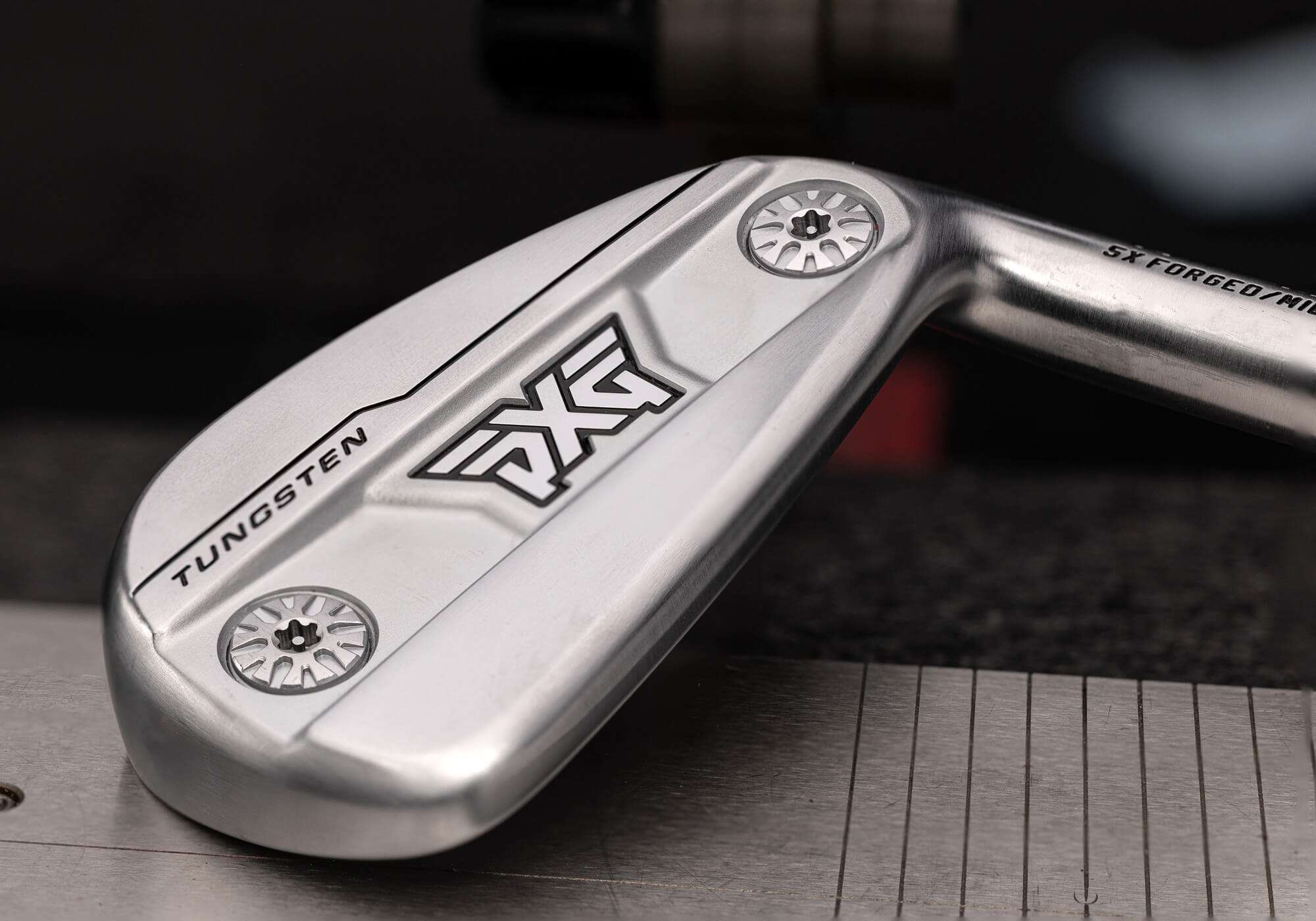
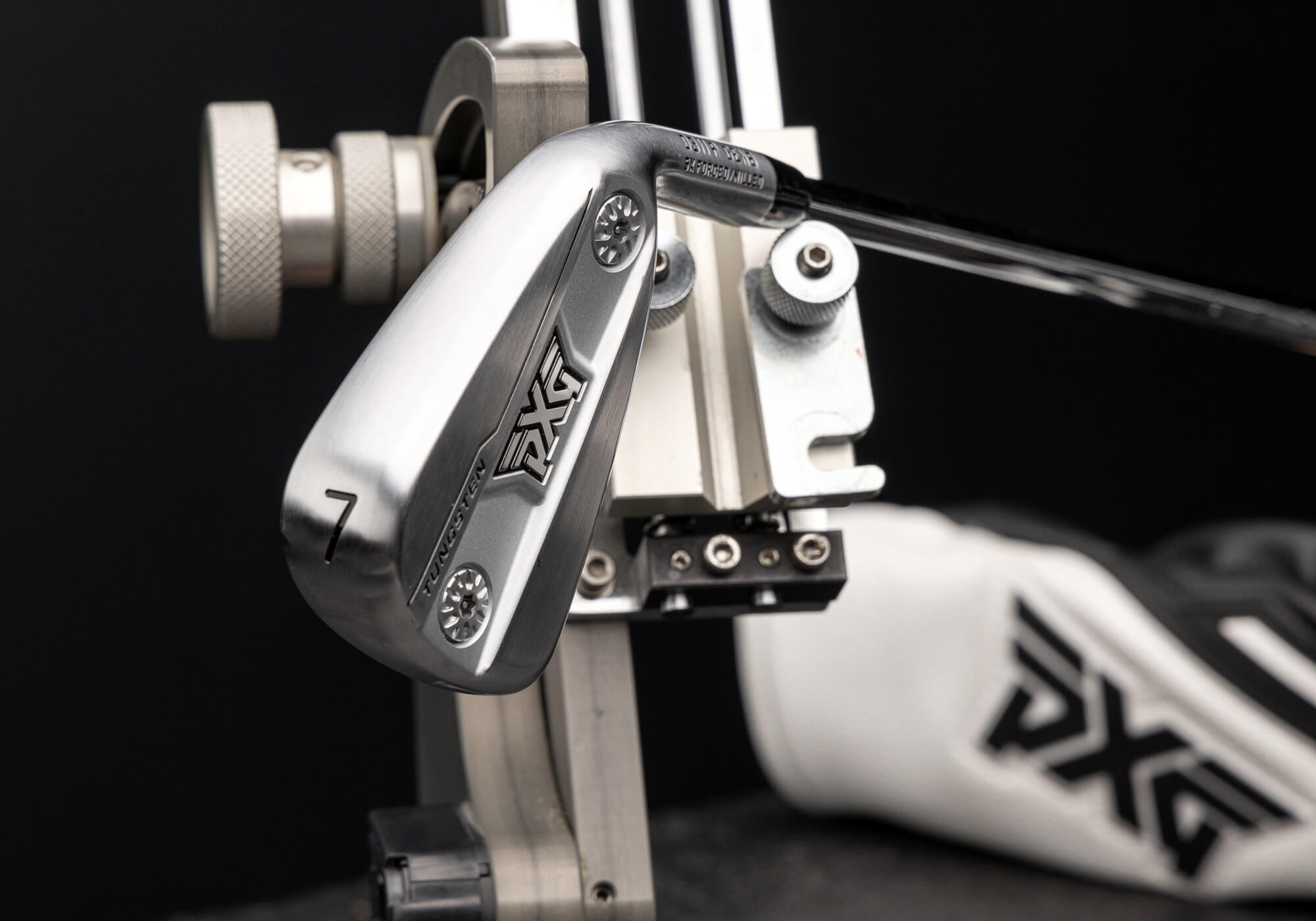
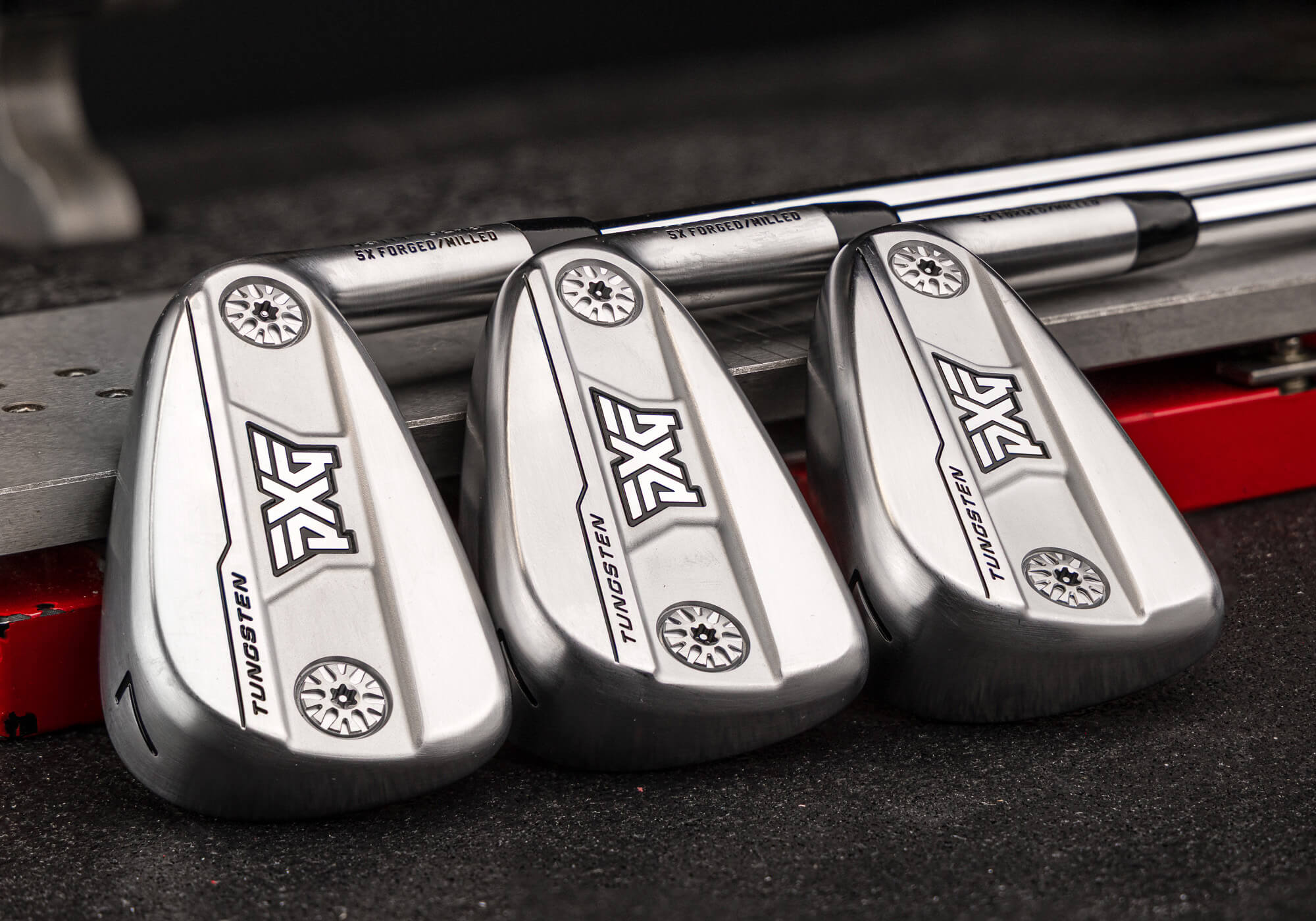
With GEN8, PXG has replaced the centrally located back weight with a dual perimeter weighting system. The change relocates approximately 11 grams of mass from the center of the head to the heel and toe extremes.
This accomplishes two things. First, it increases MOI by pushing mass farther from the center of gravity. Second, it allows heel-to-toe center-of-gravity tuning that measurably affects ball flight.
“We did a lot of player testing around this because we didn’t want it to be theoretical,” Schweigert told MyGolfSpy. “When we put different weight configurations in front of players, about 83 percent of them could actually feel and identify a difference between setups. More importantly, when we looked at the data, 100 percent of players showed a measurable change in face-to-path depending on where the mass was placed.”
If you’re struggling with the math, “100 percent” is everybody.
Even in a neutral configuration, simply moving that mass outward improves forgiveness. With heavier perimeter weights installed, MOI climbs further, especially in the T model (details below).
The elephant in the room
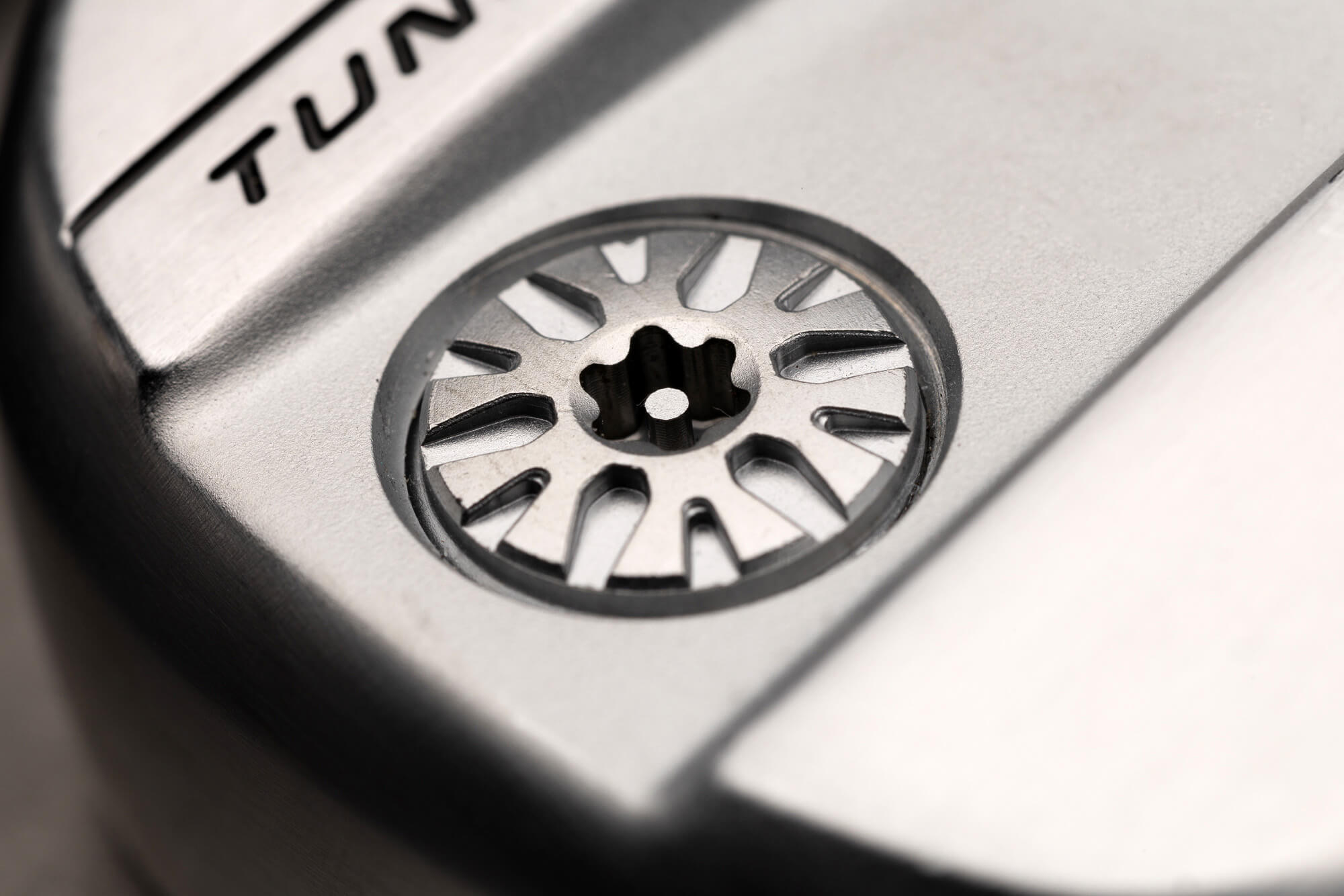
Astute readers will note that PXG isn’t the first to integrate movable weights into an iron design. Recently (and currently), Edel has explored movable weighting in irons and wedges. And, yes, it’s reasonable to suggest the approaches are similar but there are key differences.
The effectiveness of any movable-weight technology comes down to three things: how much mass is moved, how far it’s moved and how far that mass sits from the center of gravity.
PXG has the advantage in all three.
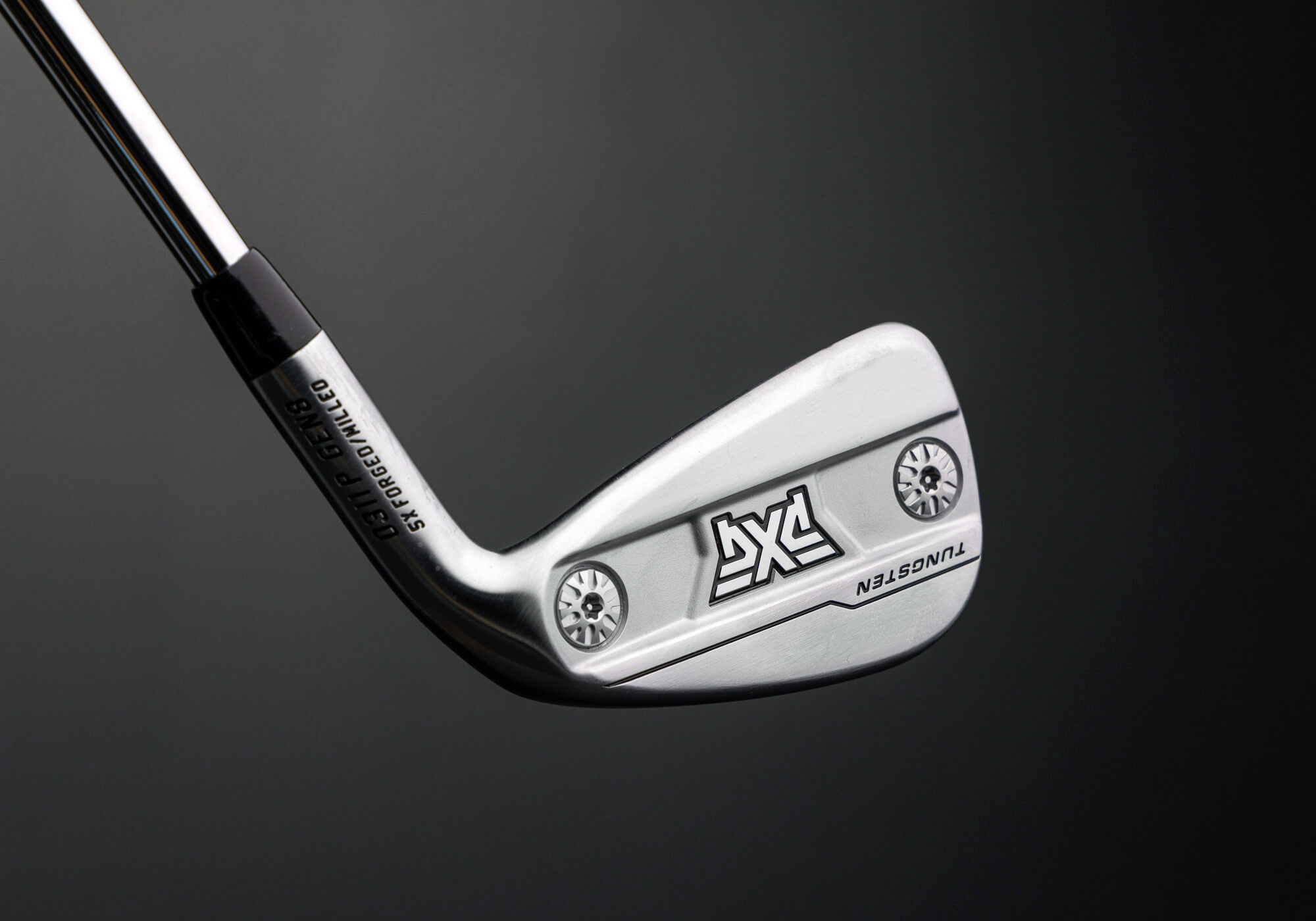
GEN8 moves more mass, moves it farther, and places it at true heel-and-toe extremes. The result isn’t theoretical CG movement; it’s measurable changes in face-to-path and start line, confirmed in player testing.
We’ve absolutely seen adjustable weighting in irons before but the math works best when you have enough mass and enough separation. Otherwise, you’re just moving grams around without impacting outcomes.
Said another way: similar idea, different execution.
But why?
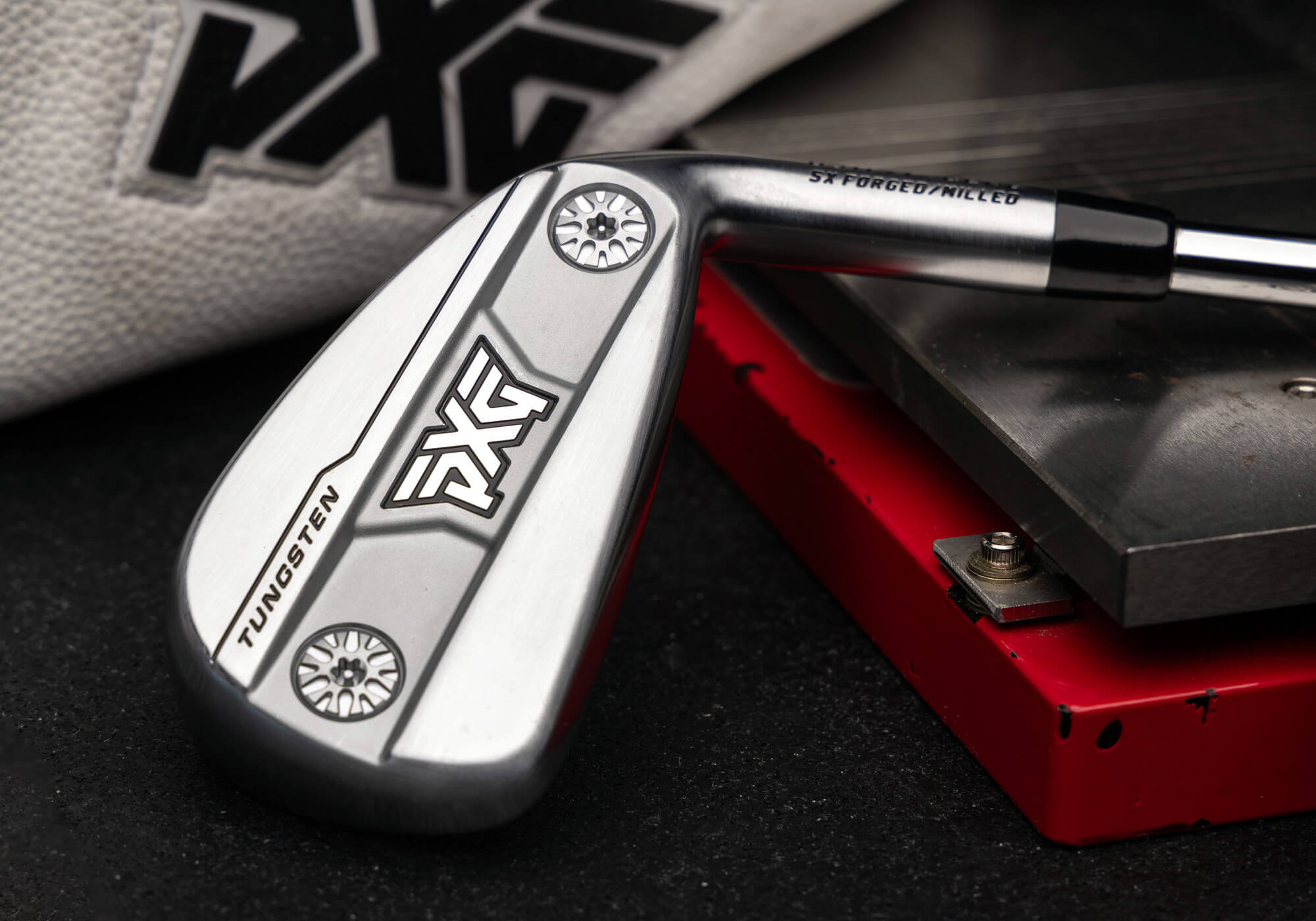
PXG didn’t just add adjustable weighting to give its fitters something else to do with their wrenches.
By redistributing mass inside the clubhead, fitters are able to change how the head wants to rotate through impact. Properly dialed, the GEN8 weighting system helps keep face-to-path relationships more predictable, especially when timing is off. You’re not suddenly swinging better; you’re just getting more playable results from the same swing.
The new weighting also gives fitters a new way to fix directional issues without overcorrecting elsewhere. Instead of chasing start line with extreme lie angles or heavier shafts, GEN8 lets the head do some of that work.
PXG 0311 GEN8 Irons – three models
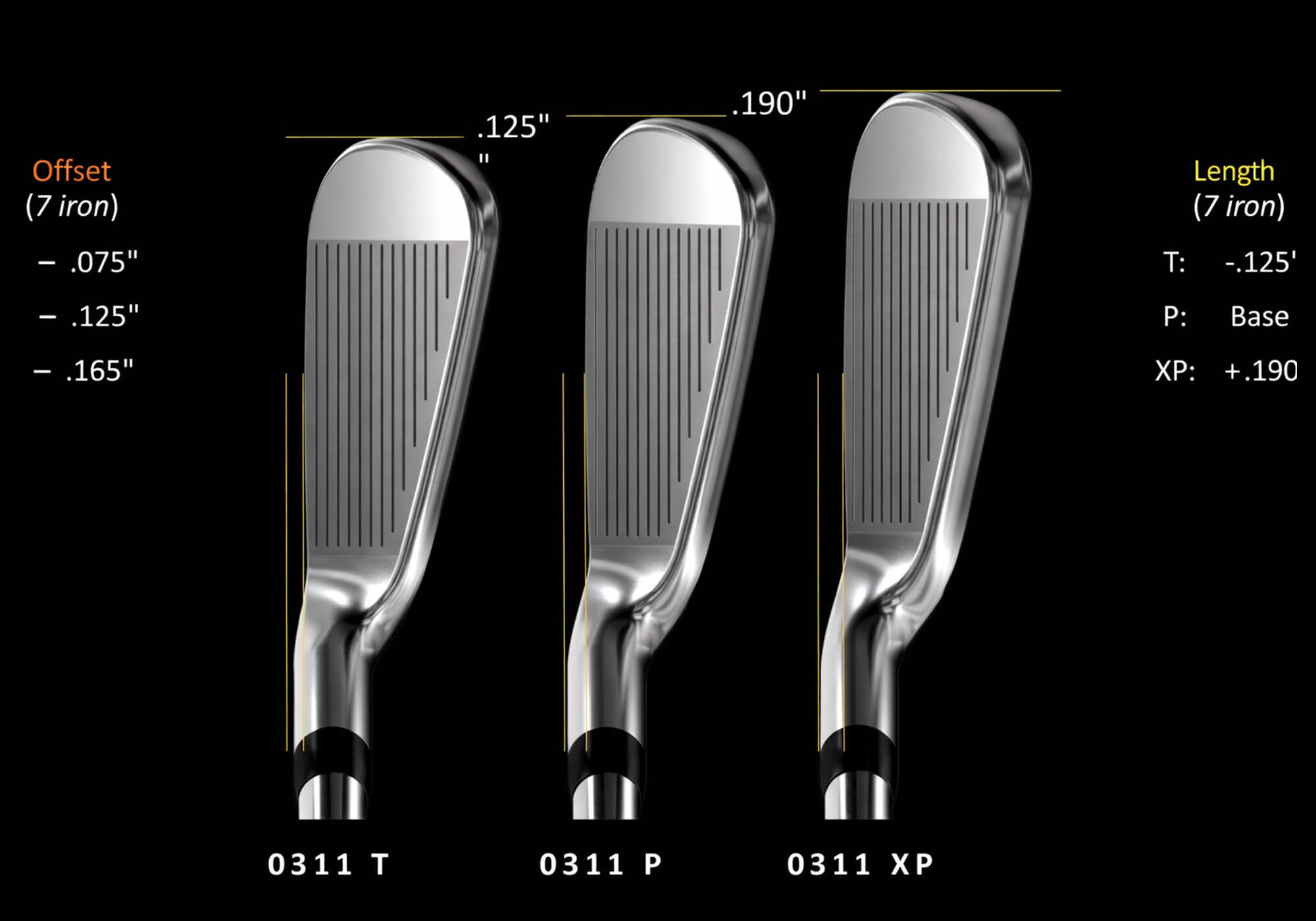
With that out of the way, let’s have a closer look at the three models in the PXG 0311 GEN8 iron lineup. One thing to note before we dig in, PXG has, again, done an excellent job of unifying the aesthetics across the three models. Other than the model designation on the hosel, the only thing that differentiates one from the other visually is their size.
PXG 0311 GEN8 XP
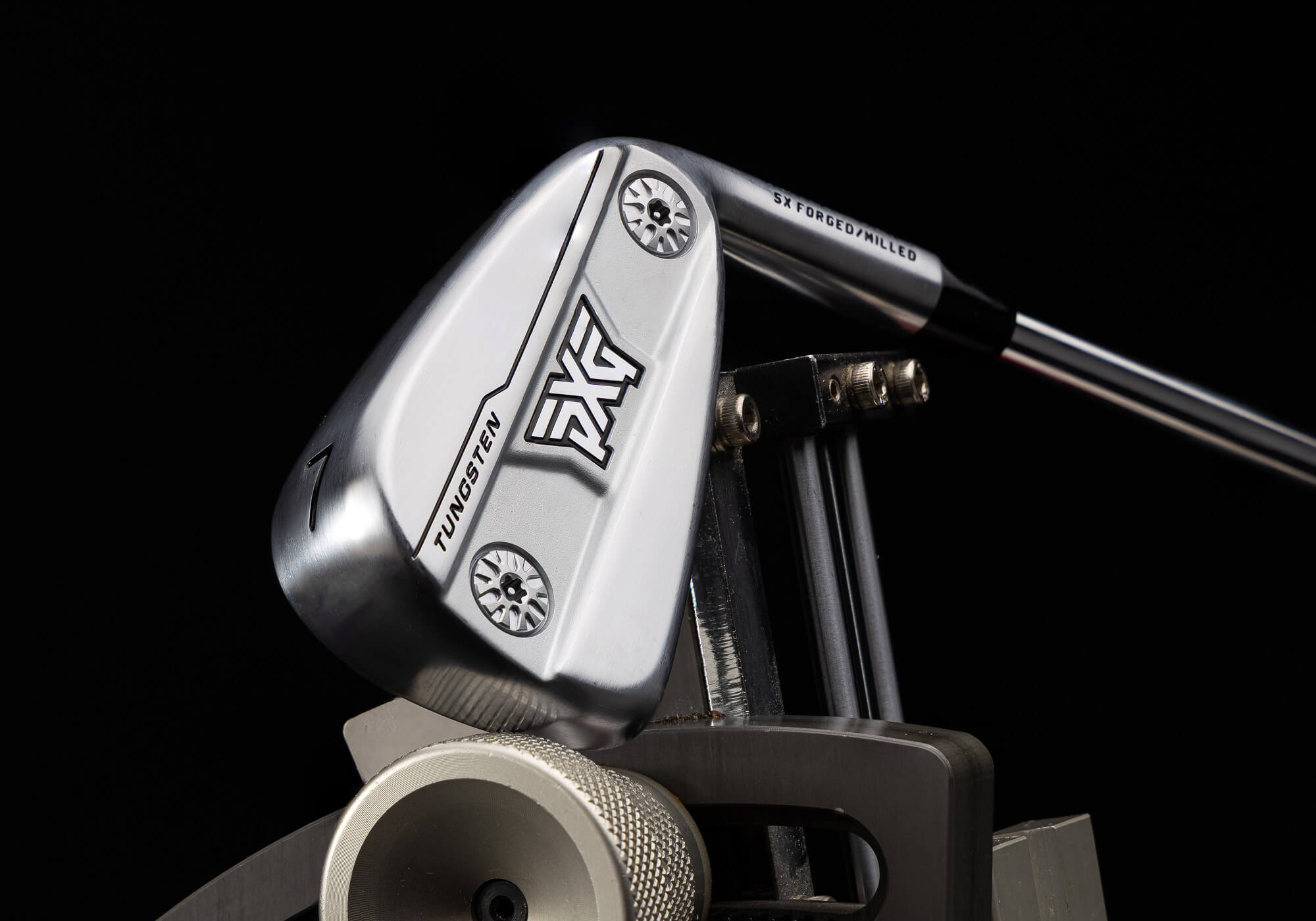
The XP remains PXG’s biggest, most forgiving, GEN-series iron. Relative to the other GEN8 irons, it has the longest blade length, the most offset, the widest sole and the thickest topline. Although, not for nuthin’, as I’ve said before, PXG is among the very best in the business at making big irons (particularly thick toplines) look less offensive.
Card-carrying members of Big Iron Nation (we need a theme song) will appreciate that PXG has maintained the XP identity while making a couple of measurable improvements.
As I noted at the beginning, there isn’t much of a speed story this time around so maintaining speed meets the objective.
Based on 7-iron testing, launch and spin are nearly identical as well but, again, crucially, you should see higher flight from the irons. You can expect a slight reduction in spin which explains why PXG’s data suggests the new model is about two yards longer.
Where the larger differences are found are in MOI and downrange dispersion.
PXG says GEN8 brings a six percent increase in MOI over GEN7. In robot testing, the company saw a roughly 33 percent decrease in dispersion. Tighter is better, folks.
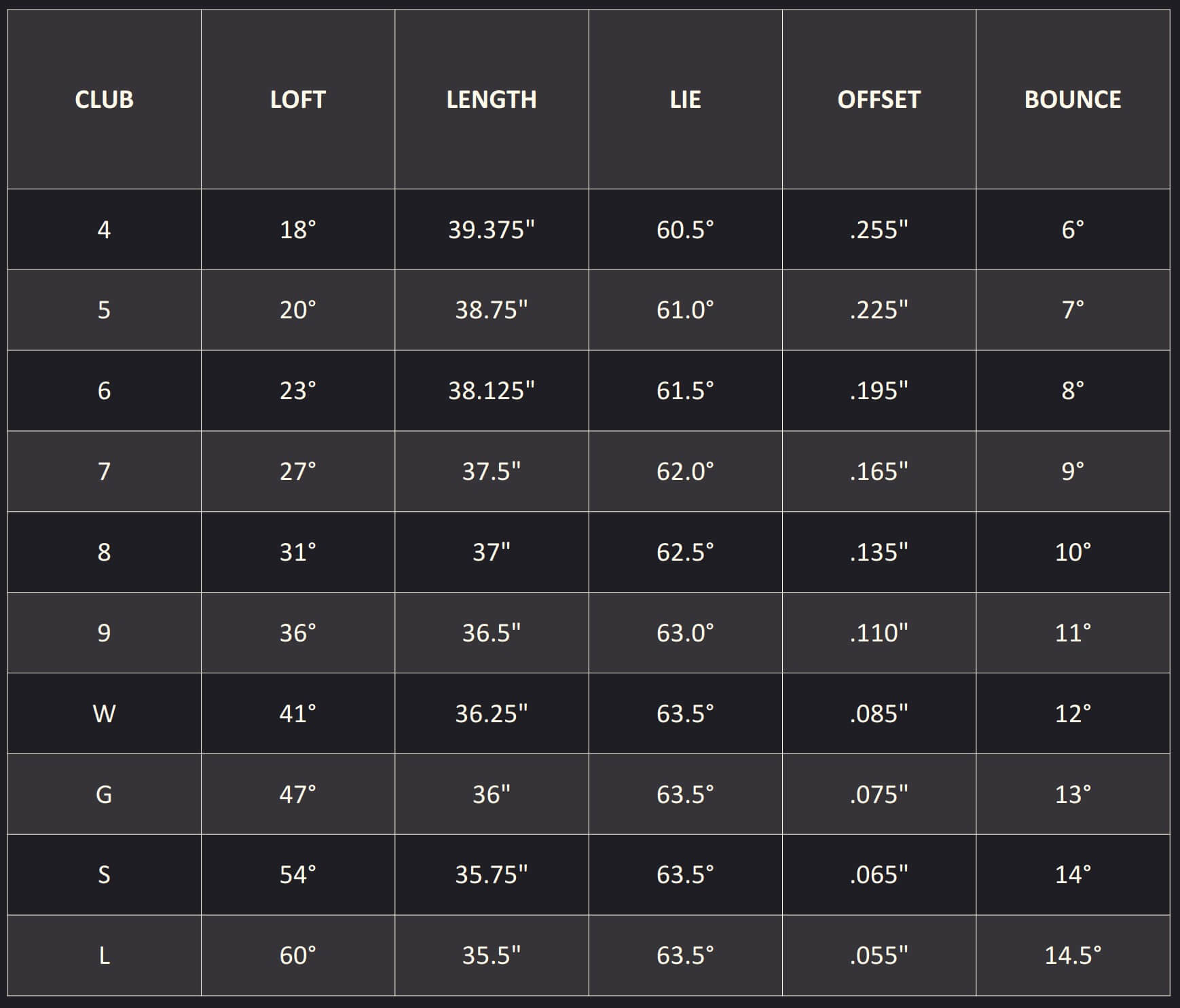
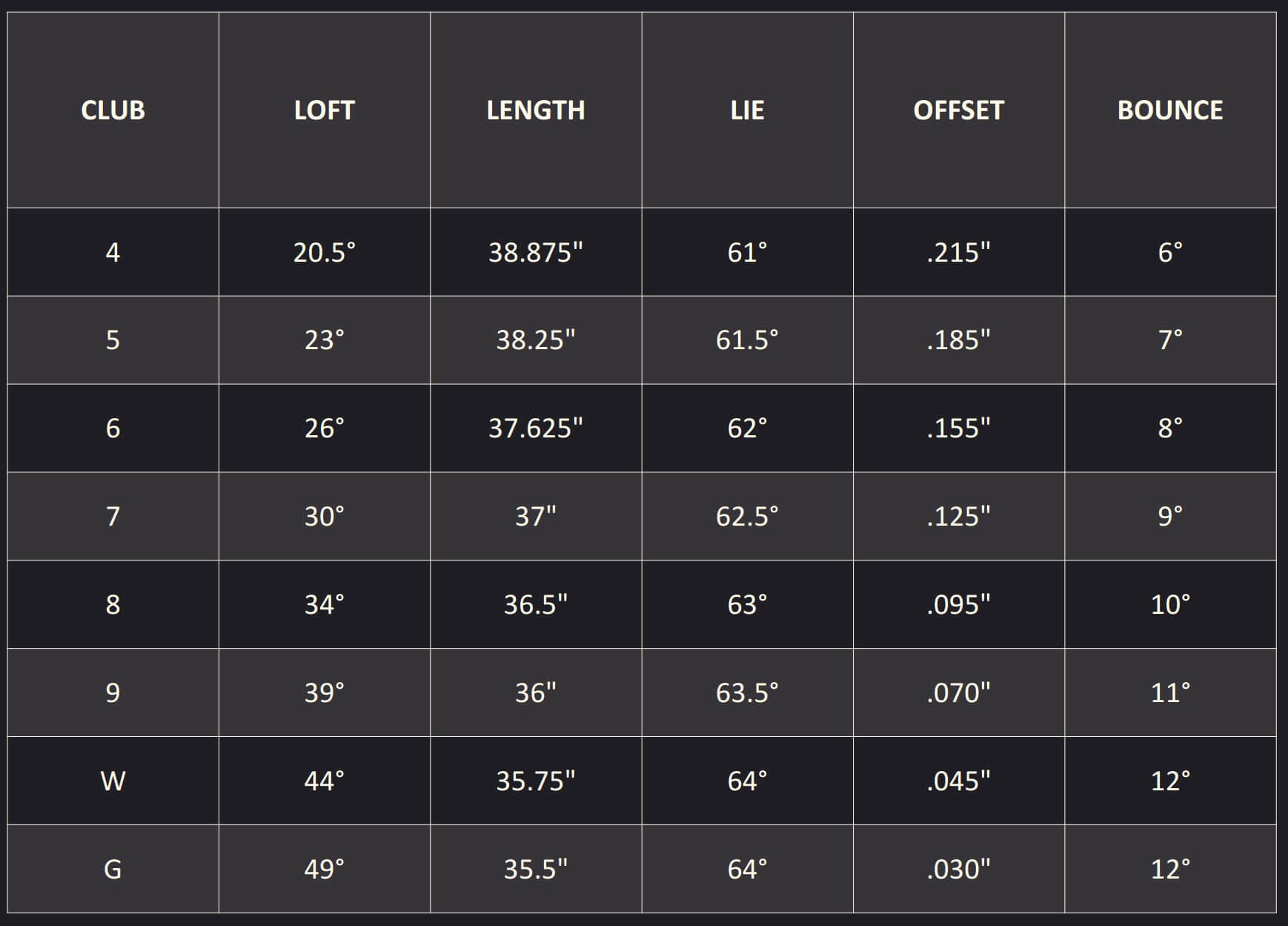
PXG 0311 GEN8 XP SPECS
PXG 0311 GEN8 P
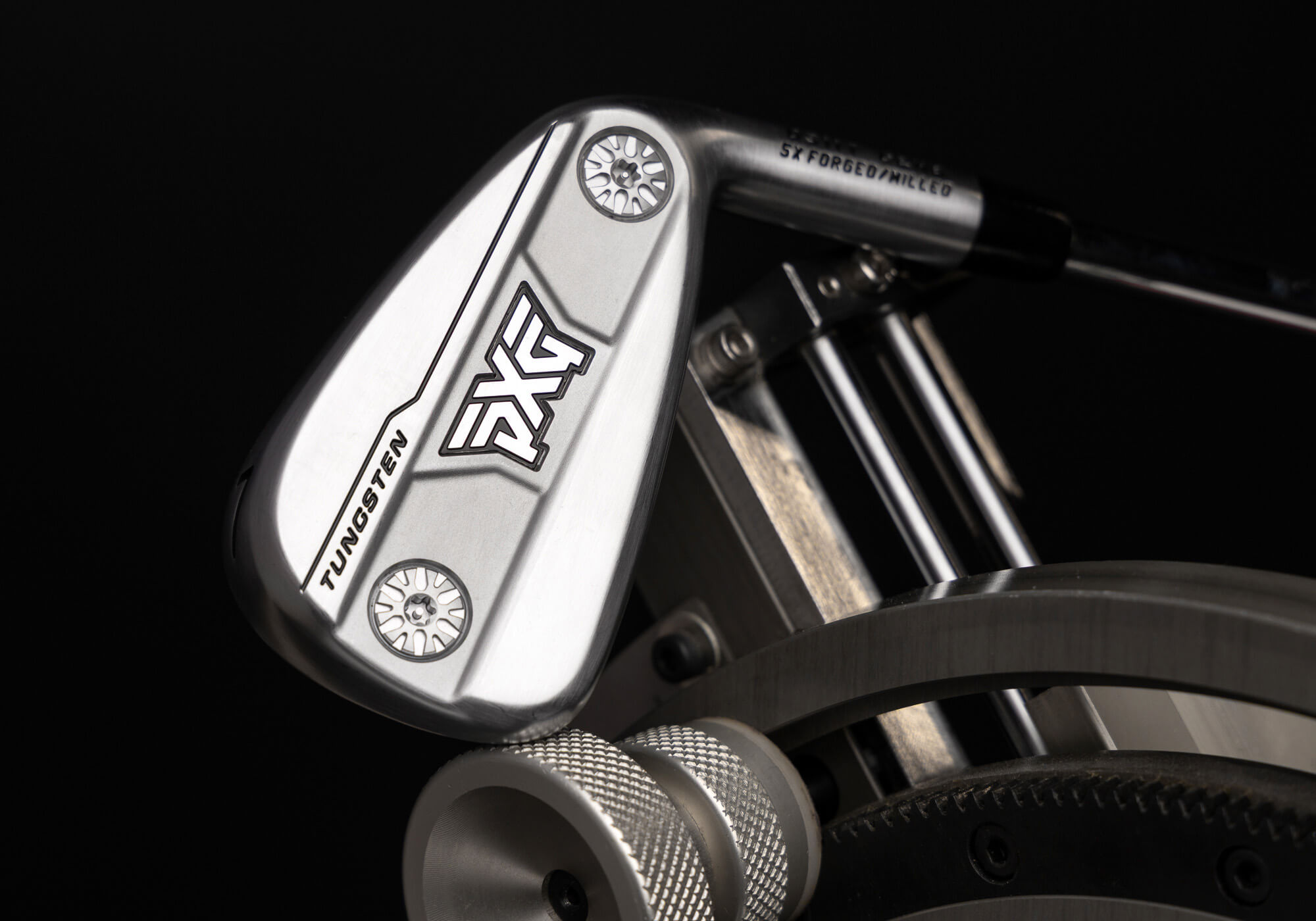
The GEN8 P is the evolution of PXG’s first iron and in many respects represents one of the prototypes for the category.
It’s the one in the middle and that means moderate blade length, medium sole width, average-adjacent offset and a mid-sized topline.
As with the XP, there aren’t any quantifiable speed gains. The GEN7 versus GEN8 launch story is similar (same in the mid irons, a bit higher in the long irons) and 7-iron spin is slightly lower which gets you an astounding one yard of additional distance.
No one, not even PXG, is suggesting that’s reason enough to upgrade.
As with the 0311 GEN8 XP, the real story here is increased MOI (four percent over GEN7) and improved dispersion. Similar to what the data shows with XP, PXG’s testing found the 0311 GEN8 P produced a dispersion area that’s roughly 32 percent tighter than the previous model.
PXG 0311 GEN8 P SPECS
PXG 0311 GEN8 T
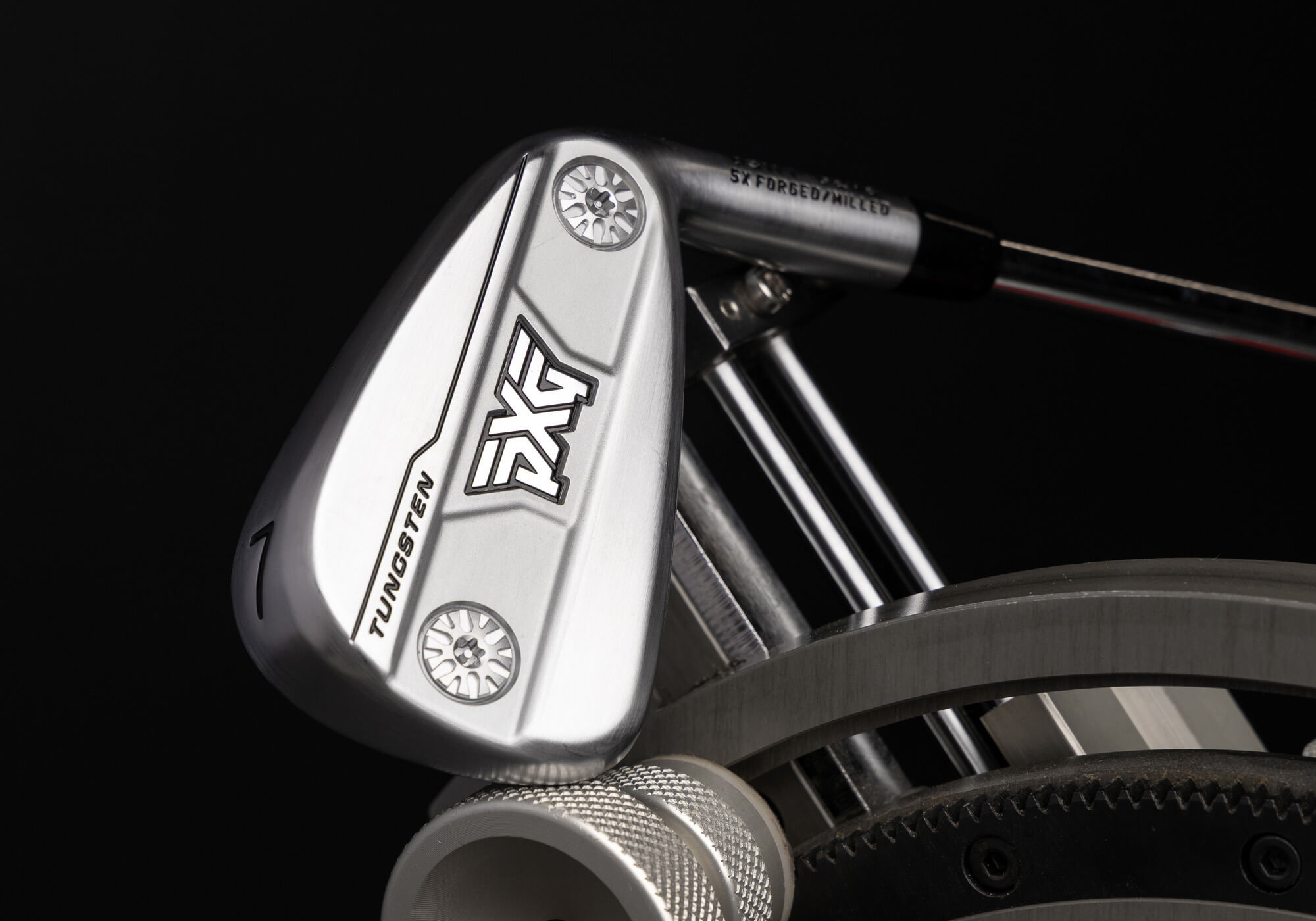
Beginning with GEN6 and carrying on through GEN7, PXG shifted what was the 0311 T into its better-player-centric 0317 lineup.
With GEN8, the T is back (where it belongs). It shares the same fundamental DNA with the rest of the GEN family (QuantumCOR, dual-weighting, shared aesthetic) so whatever the underlying business reason, putting it back where it started just feels right to me.
As it happens, the GEN8 T might be the most interesting of the three models.
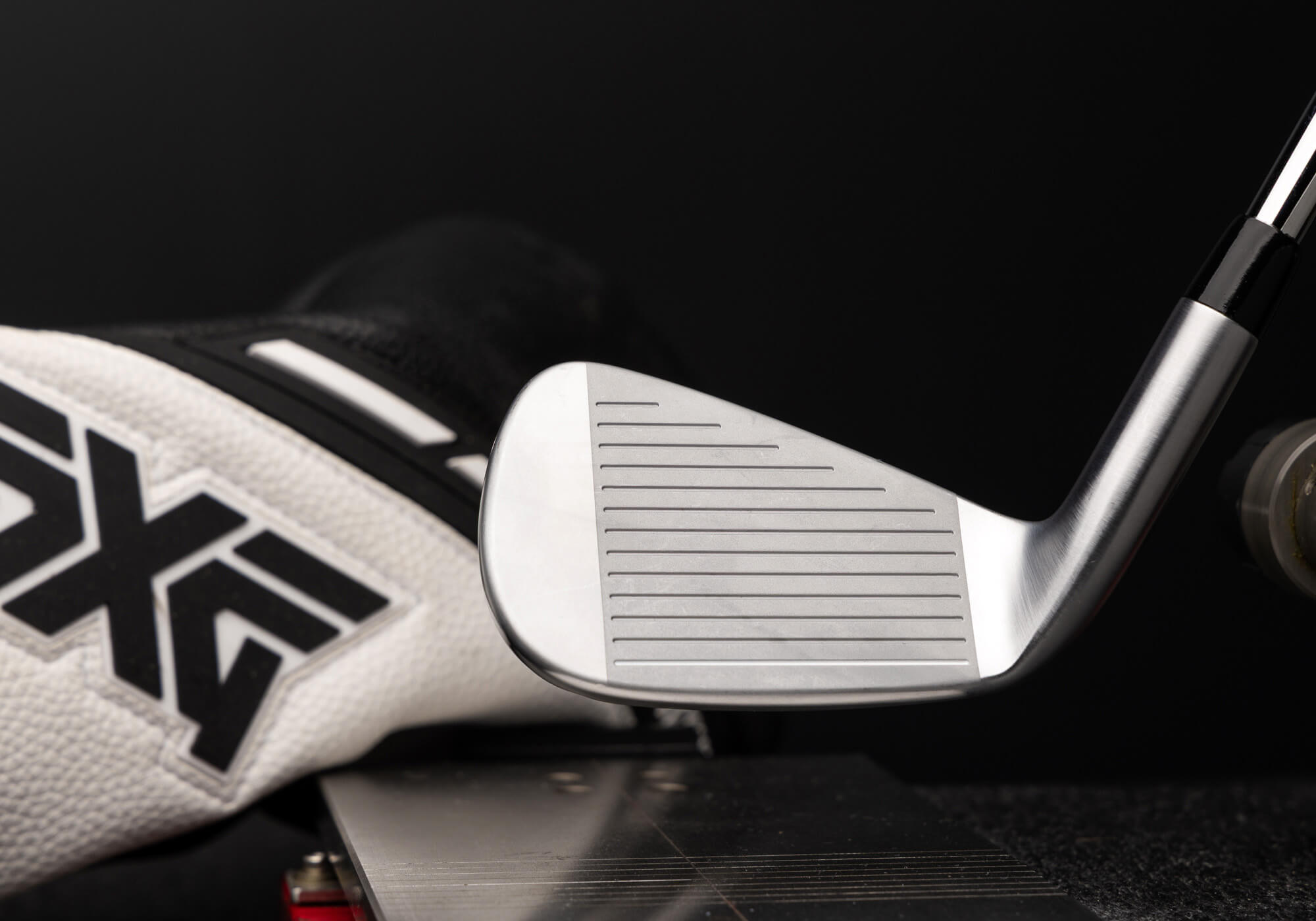
As far as the footprint goes, it’s the smallest in every meaningful respect—shortest from heel to toe, least offset, narrowest sole, thinnest topline. That said, I’ve always thought that by “Tour” standards, PXG’s T was more playable than most and was one of the few players designs that average golfers who want a more compact design could actually get away with.
I say that, in part, because I played GEN6 for a couple of seasons and played reasonably well at that.
Given that the new T is the evolution of an 0317 model, it’s not surprising that PXG is making slightly bigger performance claims.
The GEN8 T is just under one mile per hour faster than its predecessor, launches about half a degree higher, spins about 100 rpm less and flies just under two yards farther.
Nice but, again, not exactly game-changing.
Once again, MOI and dispersion are the story. The GEN8 boasts an impressive 17 percent jump in MOI. Dispersion is 38 percent improved with a good bit of that coming front to back (as opposed to right to left).
The 0311 GEN8 version of PXG’s T has quickly reestablished itself as one of my favorite Tour irons, even if my fitting experience suggests it’s probably not right for me.
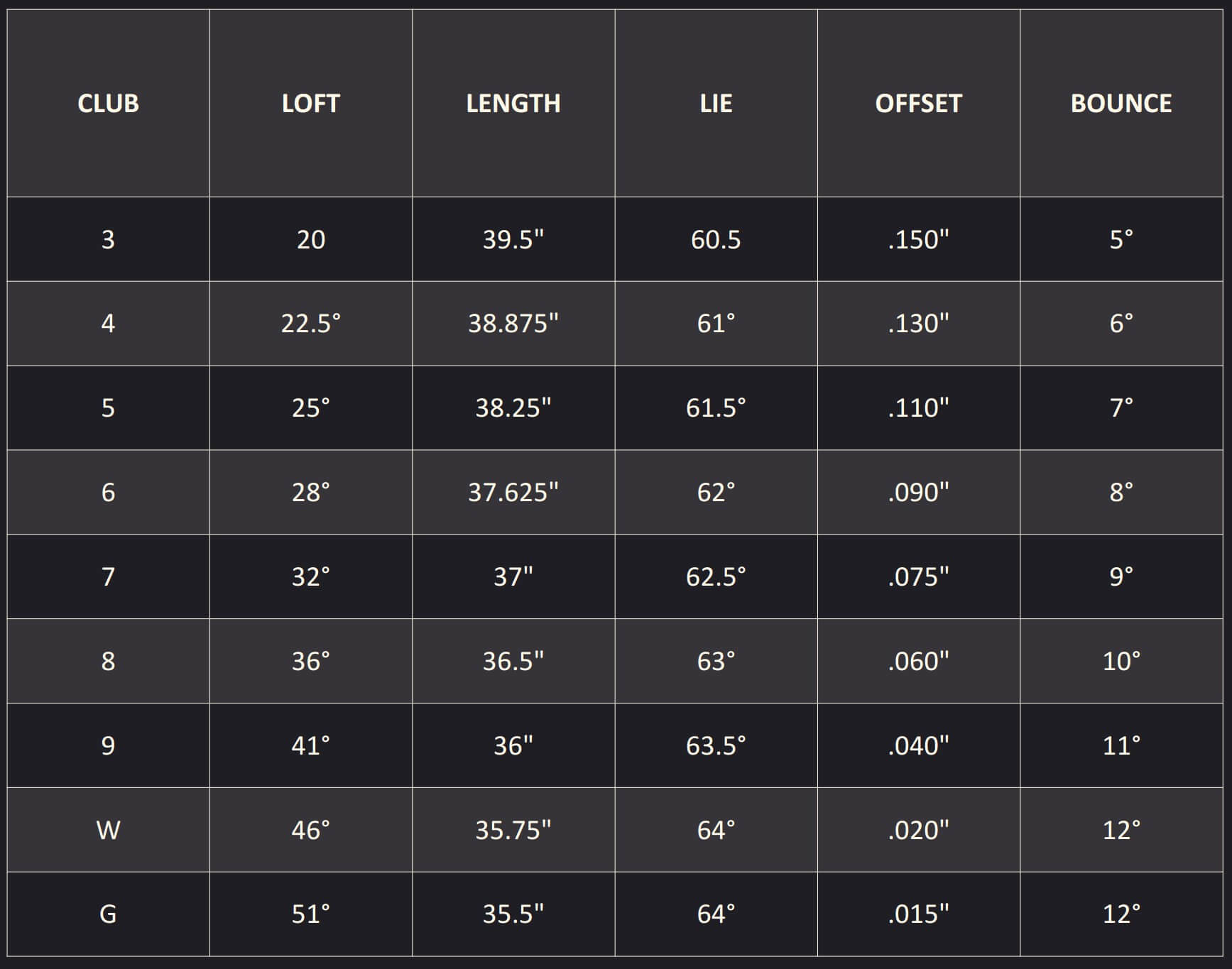
PXG 0311 GEN8 T Specs
Hands-on: My PXG GEN8 fitting experience
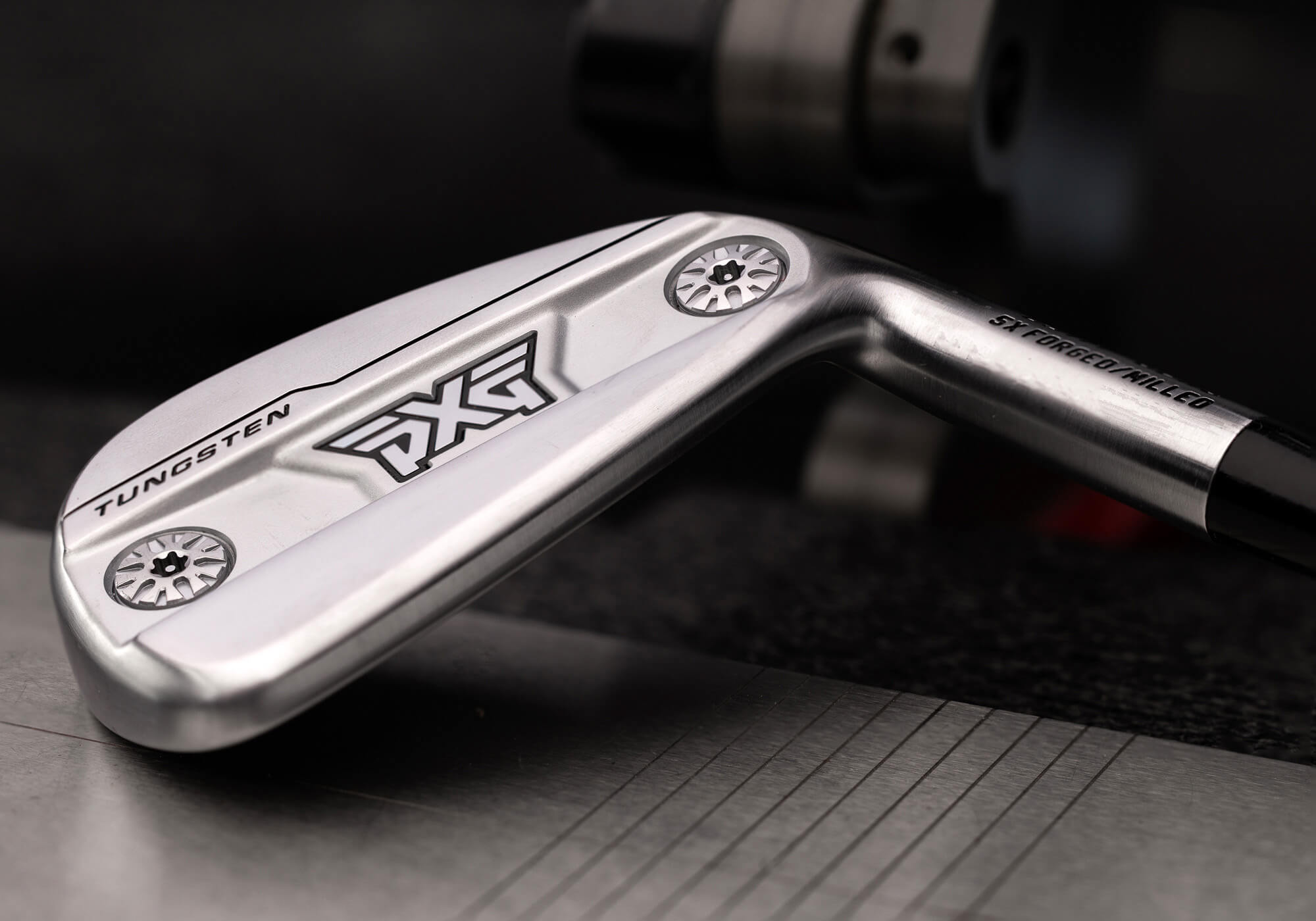
Over the years, I’ve played both P and T models extensively. I’ve dabbled with XP long irons as well but was never fitted into a full set. But, hey, with two generations worth of T350s in the bag, I’ve become a shameless “big iron” guy so it seemed reasonable enough to find myself fitted into XPs.
What surprised me wasn’t that I ended up in a big iron. Distance, launch and spin were what I expected as well. What changed the equation and ultimately the result of the fitting was the addition of movable weights to the fitting equation.
I’ve lived in the 120-gram shaft world for years: Modus 120X, Project X LS and KBS Tour before that. Every fitter I’ve worked with has wasted at least a few swings experimenting with lighter shafts but the result was always the same: light goes left. Hard left. Any speed gains from the lighter shafts were more than erased by the significant accuracy loss.
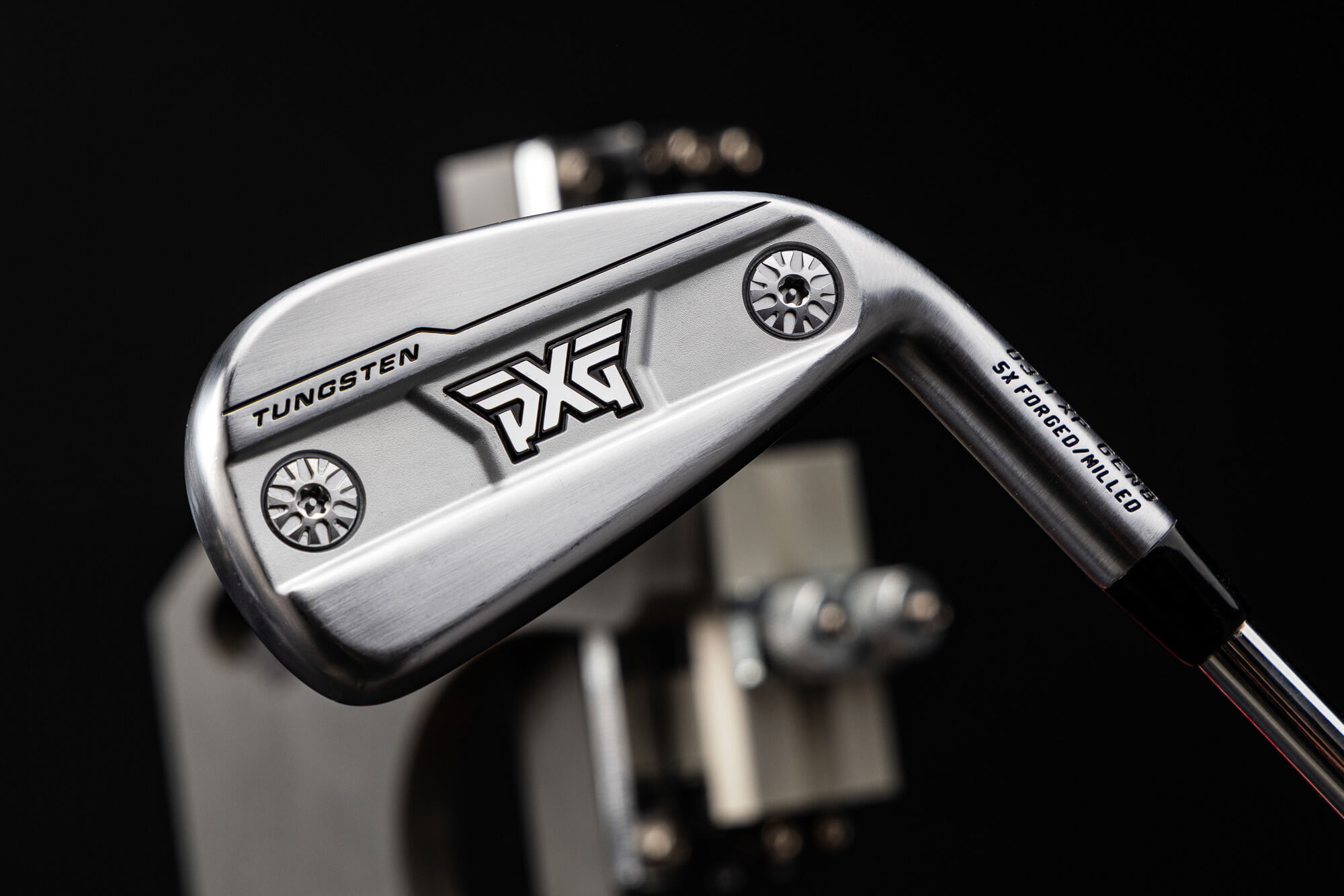
With GEN8, my fitter put a heavier weight in the toe to slow face rotation and, what the actual f*^k, I’m hitting DG 105s straight.
That’s never happened before.
Whether the fitting translates to the course remains to be seen. I managed just one round before winter arrived—a six-hour slog of an impossible-pin tournament that had all but convinced me that snapping a shaft and stabbing myself in the eye would be better than playing another hole. That hardly counts as any kind of actual evaluation but the implications are intriguing. Further exploration will come in a sim bay or in early spring.
And also … PXG 0311 X GEN8 Driving Iron
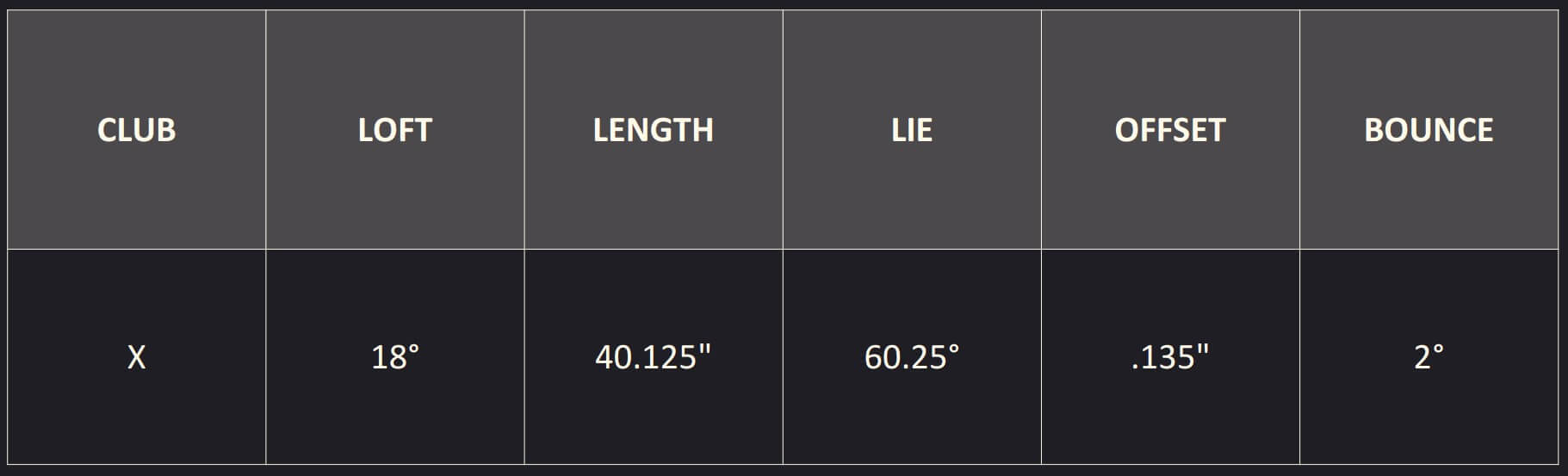
As part of the GEN8 launch, PXG is also releasing an updated version of their 0311 X Driving/Utility iron. Like the irons, the driving iron features the dual perimeter weighting system while also boasting improved MOI (just under eight percent relative to the previous model).
As with previous versions of the X, the GEN8 version is available in a single loft.
Final thoughts
GEN8 isn’t about chasing distance or even creating something entire new. It’s about doing something better in a way that’s meaningful for golfers.
Instead of focusing on speed, PXG worked on the things that separate good irons from great ones: tighter dispersion and enhanced forgiveness. Arguably, both are tightly correlated with the quality of the fitting. Moving meaningful mass, tightening shot patterns and putting more tools in their fitters’ toolboxes isn’t flashy but it’s a good bit of the way towards better golf.
After almost 11 years’ worth of PXG irons, GEN8 feels like the work of a mature golf brand that doesn’t feel like it needs to scream at golfers through their TVs. The products speak for themselves.
Pricing and availability
PXG 0311 GEN8 irons are available now in Chrome and Xtreme Dark finishes. Pricing is $229 per iron in Chrome and $249 for black. Custom fitting is available through PXG retail stores, fitting studios and PXG mobile fitters nationwide.
For more information, visit PXG.com.
The post PXG 0311 GEN8 Irons: The Most Adjustable PXG Irons Ever appeared first on MyGolfSpy.
