CONCORD, N.C. — Crowning a NASCAR champion will look different in 2026 than it did last season, and yet it will be strikingly familiar.
The Chase returns to NASCAR in the new year, the sanctioning body unveiled Monday at the NASCAR Productions Facility in Concord, North Carolina. Sixteen drivers will vie for championship glory over the final 10 races of the campaign. There will be no eliminations nor any automatic berths granted to race winners; only points will determine the champions of the NASCAR Cup Series, NASCAR O’Reilly Auto Parts Series and NASCAR Craftsman Truck Series moving forward.
Advertisement
RELATED: NASCAR unveils The Chase for 2026 | The Chase 101: How it works
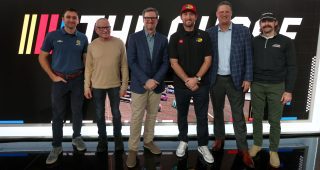
NASCAR Hall of Famers Mark Martin and Dale Earnhardt Jr. joined Chase Briscoe and Cup champions Chase Elliott and Ryan Blaney to unveil the new format alongside NASCAR President Steve O’Donnell Monday afternoon.
After a 12-year run of elimination racing that boiled the championship battle down to the final race, Martin beamed with support of NASCAR’s new direction.
“Everyone wins with this format,” Martin said. “Everyone. The fans win. They were heard. They win. The drivers, the teams win. NASCAR wins. Everybody wins.”
The inaugural iteration of The Chase format was used from 2004 through 2013, beginning with a 10-driver field in 2004 before expanding to 12 drivers in 2007, with all positions locked in based on points through the 26-race regular season. From 2011 through 2013, the final two berths in the 12-driver field were awarded to the two winningest drivers ranked 11th through 20th.
Advertisement
But in 2014, the sport shifted to a new system entirely — win a regular-season race as a full-time racer, and you were locked into the playoffs. Then, the task was surviving three rounds of eliminations, with four drivers left vying for the title in a one-race showdown — best finisher wins the championship.
After Monday’s announcement, all that matters are points: Accumulate the most points, and you will find yourself on the path toward winning a title.
“It makes it simpler for our fans to follow,” Earnhardt Jr. said. “I’m a fan of the sport, and now I’m compelled to plug in every single week because I know there’s a long-form objective for my driver to accomplish to be able to give himself the opportunity to win the championship. And so even though my driver may have success early on in the season, it does not assure him success in the postseason. So with the way that they’re going to stack the bonus points and everything else, it’s critical that these drivers have success every single week. Every single race, every single lap will have more importance. I think that’s fun for the driver to have a more clear objective now to get to the championship and easier for our fans to follow.”
Dale Earnhardt Jr. speaks on a NASCAR panel to announce the return of The Chase.
Martin made The Chase four times, with Earnhardt Jr. qualifying six times. Neither claimed the Cup Series championship in their pursuits, but they both lauded the merits of chasing a title organically. Both voiced support for a system that reverted back to a full-season points format with no playoff reset, but they also agreed The Chase was the best possible step forward for the sport.
Advertisement
“I think that this is the most perfect compromise that you could ever ask for,” Martin said. “It’s going to require our 2026 champion to be lightning fast and incredibly consistent, and that’s what we can all get behind. I’m really excited. I think it’s fantastic. And I just appeal to all the race fans, but especially the classic fans who say to me, ‘I don’t watch anymore.’ I say we need you. Come on back. We’re headed in the right direction. Come back and join with us, and we’ll keep making progress.”
The Chase coming back to NASCAR is the result of a process that neared 18 months of work, all headed by Tim Clark, NASCAR’s executive vice president, chief brand officer. Clark assembled a wide-ranging group of industry representatives from former drivers to current drivers and media representatives to form a committee that oversaw potential alterations to NASCAR’s championship format. The outcome of that committee’s work resulted in unified support Monday of NASCAR’s new direction — one with an already familiar road map, with help from drivers who competed under the original Chase format, the elimination-style playoffs and even those who partook in both.
Ultimately, Clark tipped his hat to Denny Hamlin, a runner-up in the 2025 title run, for his contributions to the playoff committee throughout the course of last season.
“I’ll call out Denny Hamlin in particular,” Clark said. “Denny shared some anecdotes through these conversations that were really impactful, that were real-time in the season. Conversations were happening in 2025, and he was referencing races and the playoff format in 2025. To be able to have that level of input from our competitors, especially at such a high level, and someone that’s been around this sport and competed at such a high level for such a long time, that is unbelievable feedback to have. And to be able to get that perspective balance with Dale Jr. or Kevin Harvick or Mark Martin, I mean, you couldn’t ask for anything better.”
Advertisement
MORE: Chase Elliott: ‘We’re making history’
Elliott, the 2020 Cup Series champion and driver of the No. 9 Hendrick Motorsports Chevrolet, strongly endorsed Monday’s announcement. Although he won the title in an elimination-style format, the 21-time Cup Series winner favors a format that rewards consistency week in and week out — exactly what The Chase demands. Elliott is fairly selective when to offer an opinion, often sticking to the belief that if it doesn’t make him faster on Sundays, he has no use for it. The championship format, however, was a matter too important for him to sit on the sidelines without offering input that could better the sport in the long term.
“I’m a fan, and that’s all I’ve really ever known, to be honest,” said Elliott, the eight-time reigning most popular driver and son of 1988 champion Bill Elliott. “So when I don’t say anything, it’s not because I don’t care. It’s just sometimes, you feel like that you can be spinning your wheels some days, and it’s a distraction of me doing whatever job that it is I’m looking at right now. But certainly from my perspective on this, this is something I can genuinely get behind and support and speak up about and me not be sitting here lying to you while I’m doing it.
“Proud of the change. Proud of everybody being able to come together. There’s a lot of folks that deserve a lot of credit for this, so let’s celebrate it because I think this is a good step for us. And I think there’ll be some extremely exciting moments throughout the year, and whoever ends up coming out on top, let’s celebrate who won a little more and complain a little less.”
Advertisement
Elliott’s belief in the system illustrates one of Earnhardt Jr.’s core priorities when it came to finding the right solution as NASCAR looked to pivot from its one-race title format.
“I said this in the first meeting in Daytona — the one thing that I think we need to prioritize is, how do we get this to really matter to the driver?” Earnhardt said. “This is the person that’s trying to win the championship. It’s important for fans, important for broadcasters. It’s important to me that we like it, right? But who is it mostly important to, and who values the overall outcome the most? That’s the driver. How do we get the driver to think this is the greatest way to do it? And how do we get that championship trophy and that accomplishment to be the most important thing they’ll ever do in their life in a professional sense? If we get that, the fans, the broadcaster, the media, everybody else follows, right? Everything else goes with it.”
Enthusiasm is plentiful heading into NASCAR’s next chapter. With that comes the close of another, with the elimination-style championship hunt now over after a 12-year run. The lessons learned from that decade-plus era, O’Donnell said, have helped shape the sport’s future.
“I think the legacy [of the elimination format] is certainly it taught us a lot, certainly changed how we even look at racing and winning,” O’Donnell told NASCAR.com. “It changed the dialogue within the industry of that ‘great points day,’ but I think it got us to where we are today, which is a great thing also. We rewarded legitimate champions under all those seasons that everyone knew the rules and went after it, but it also helped us get back to, I think, what feels right for the sport going forward, which is The Chase format, 26 and 10. So its legacy will be something that helped us continue to focus on our drivers, continue to focus on storylines and continue to focus on winning and how important that is to create not only champions but future stars in the sport.”
