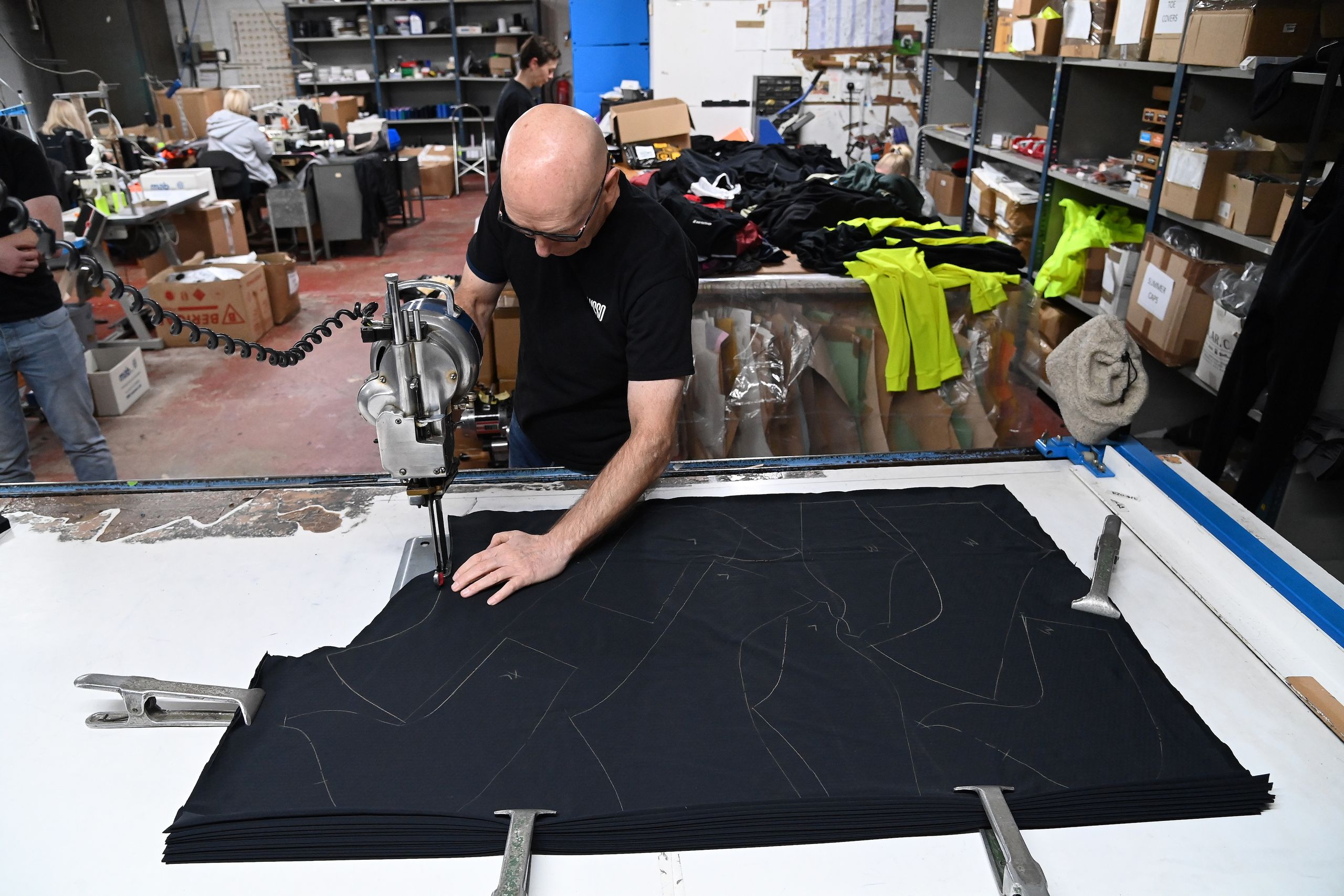
This month has not been a great one for cycle clothing manufacturers, with Rapha closing Clubhouses, Le Col losing its founder and Endura staff facing redundancies amid a location switch.
You could be forgiven for assuming that this particular part of the cycling industry is a poisoned chalice, but according to a number of manufacturers who spoke to Cycling Weekly in the past few days, that is not so.
British brands Lusso, NoPinz and Kostüme were all keen to emphasise that, with an approach that emphasised lean agility and slow-burning stability, there was a way forward for manufacturers, even during the current ‘headwind’, as Blake Pond of Nopinz calls it.
“You don’t attack a Strava KOM into a headwind,” the Nopinz founder says. “The market feels like that at the moment. You stay efficient, conserve energy, and save the effort for when it can really be maximised.”
As we enter 2026, cycling’s Covid boom is nearly six years in the past – and yet manufacturers are still paying for being overly optimistic. Those that have suffered the least, it appears, were the smaller companies that weren’t in a position to wage millions on the gamble that cycling’s popularity might last
Like Nopinz and Kostüme, based in Barnstaple and Bristol respectively, Lusso operates a direct to market business model, meaning profit margins can be that much smaller while still allowing a company to remain profitable.
Giving the Endura example, Wright explains: “They sell a lot into retail and distribution channels, so they need a really, really high margin. They were selling a lot to the likes of Wiggle and Evans Cycles, so you need the labour to be as cheap as possible [to create that high margin].
“Whereas we’re making stuff and then selling it, we don’t have those middlemen taking a cut, and that is why we survive. It costs us more to make it [and] we’re then taking less of a cut – but it’s the only cut there is,” he adds.
While Endura will no longer manufacture in the UK, its machines will, Wright informs us. In a quirk of fate, Lusso was able to buy up all the machines from Endura’s Scottish factory, and they will go on making clothing in Manchester.
“I was thinking, ‘they’re not going to like us trying to buy their equipment – they’re going to see it as competitors,'” says Wright, “but they were absolutely brilliant. We met the production manager and the warehouse manager and they took us around the place – huge facility, really impressive.”
Another aspect of selling which the smaller companies seem to be doing differently is discounting – and it’s a tale that we could probably all stand to pay attention to. Customers are so used to seeing products discounted that many don’t want to pay full price on anything, says Wright.
“One thing we struggle on,” he says, “is that some brands have super high prices, but then everything’s always on sale. It’s the sort of mentality of, ‘Oh, I’m getting a deal here’. But I think looking behind that, it was never supposed to be 200 quid. It was always supposed to be 80 quid.”
Rather than constantly discounting, Lusso opts to stay “lean and smart”, says Wright: “Bringing out a jersey in 20 colours in loads of trendy pastels might look good on Instagram, but you look on any major brand website in the sale period, and it’s all the trendy colours that are on sale. Your navys and your blacks are never on sale,” he says.
These widespread discounting practices are “theatre” and “incredibly damaging” to the industry, says Pond. “Over-discounting and fighting for customers has become a race to the bottom.
“We’ve always taken a no-bull approach to pricing. We don’t make a skinsuit, say it’s worth £400 and then discount it by 50%. We just make it at £200 and stand behind the performance and the value.
He adds: “Our riders know exactly what they’re getting race-proven kit at a fair price, without the theatre. In parts of the industry, discounting has become so normalised that nobody expects to pay full price anymore, and that’s incredibly damaging in the long term.”
Lusso and Nopinz both retain a certain amount of custom options, including club kit. But Kostüme takes the custom model a step further.
The company was founded during Covid by artist and entrepreneur Ed Bartlett with a view to providing the best long-distance kit possible. Its USP is that it sells its products in pre-ordered batches, meaning that everything is sold before it’s made and that nothing is wasted.
Kostüme also claims to spend more on making the kit itself – as opposed to marketing, middlemen, and other profit-sapping outgoings – than anyone else.
“The legacy apparel retail model is broken,” Kostüme says on its website, alluding to those brands like the ones that have been in the news this week. It only releases new lines, it says, “when we have something worth sharing… we are not tied to seasons”.
A small company it may be, but Bartlett tells Cycling Weekly, “My big plan, this could sound ridiculous, is to change the world. I don’t want to be Rapha – I want to be Patagonia. In fact, I want to be better than Patagonia… This is an attempt to rewrite the rules of retail in apparel.”
One hurdle Kostüme faces in this ‘everything now’ culture, is persuading people to wait longer than 24 hours for their product to be delivered. Quite a lot longer, in fact – the company lists its lead time as upwards of six to eight weeks.
But, says Bartlett: “I think this is the future. It’s not going to work for every brand, but it already happens a lot. When you order a new car, you spec it and order it months in advance. You know, there are other categories where that happens, and I think in cycling and in activewear, you don’t generally buy stuff on a whim.
“Most people buy stuff in advance, or they wait,” he says. “Actually, a lot of people wait now until the sales are on because they know there’s one coming down the line. But what we’ve seen from a lot of people is that it’s brought a bit of excitement back into the retail experience.”
Bartlett also represents the vanguard of a new business model prioritising minimal wastage – something he accepts is not necessarily a deal-maker for customers but that he feels strongly about on a wider level.
“When you see how much goes to waste [across the industry], you can’t unsee it,” he says. “The numbers [alone] just don’t have any impact. They’re so big that we just can’t compute how we can have any impact on that. And I think so we’ve got to be the ones to just make it the norm that that doesn’t happen – it should’t be done.”
He adds: “I don’t see other people really trying to move the needle on that front and that is frustrating, and I’m going to become more activist this year in terms of calling people out, yeah, because that’s the only way things are going to change.”
The wider issue of clothing wastage has been underlined only today in the UK with fashion retailer ASOS announcing that it will charge ‘problem’ customers who send too many items back. It makes sense that if cycling companies can cut down on how many items go unsold, returned or sold at a pittance, the model will work better all round and lessen the industry’s environmental impact.
It might mean there is less to flaunt on Instagram, but if it means our favourite companies are still around in a year’s time or more, perhaps we should all embrace it.
