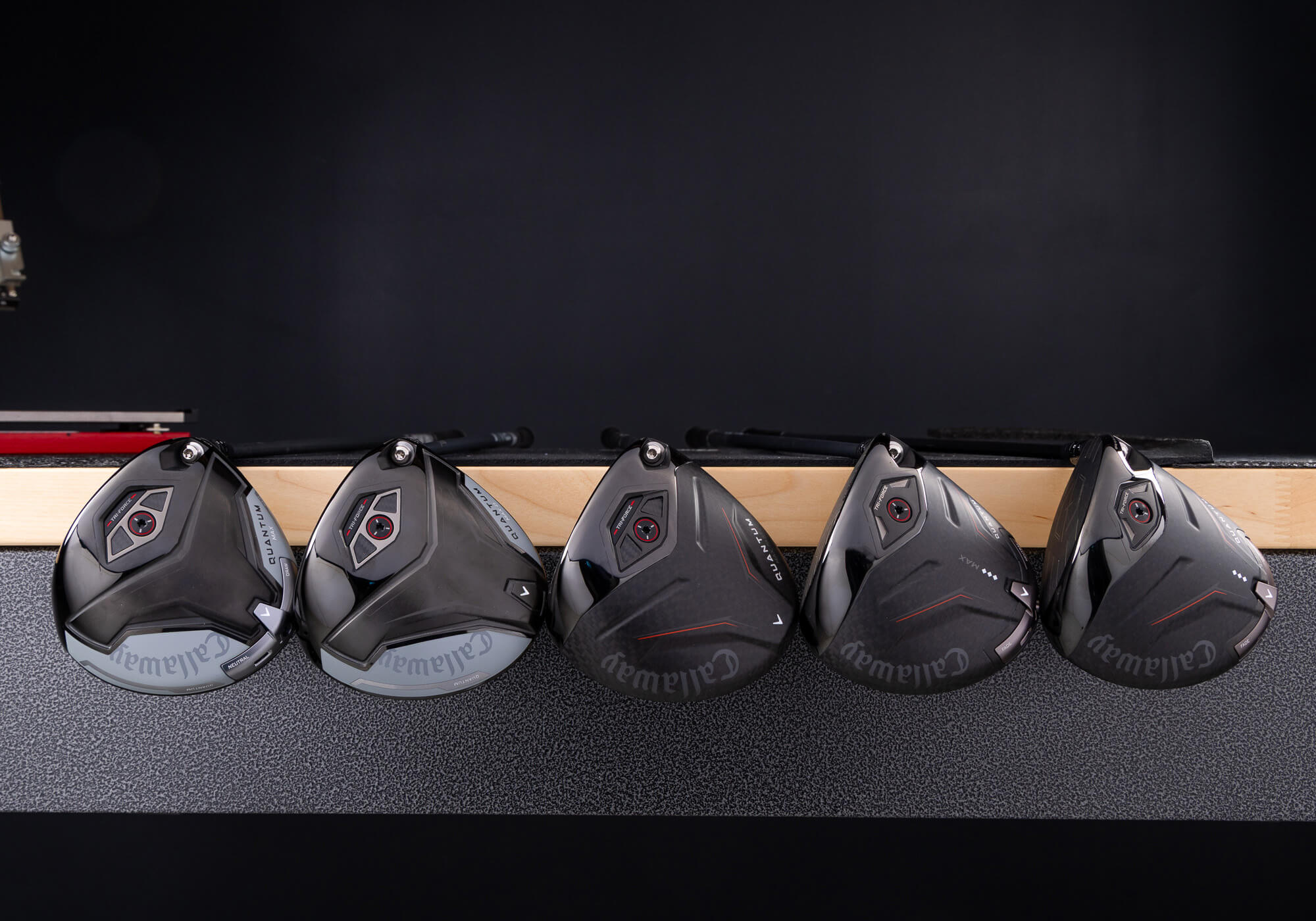
With the release of its Quantum driver family, Callaway is reaffirming that distance is everything. Not because it sounds good in a marketing deck but because the math says so.
In a Strokes Gained world, speed is leverage. More ball speed creates more distance. More distance leads to shorter approach shots. Shorter approaches lead to lower scores. That equation has been true since Old Tom Morris wandered the fairways at St Andrews and Callaway isn’t pretending otherwise.
What has changed is how Callaway believes the next generation of distance gains will be realized
Rather than continuing to chase speed through thinner titanium alone, manufacturing improvements or AI wizardry in isolation, the new Quantum drivers start with a more fundamental question: What if the driver face itself has become the limiting factor—and what if the “one material” approach has reached its limit?
Before we get to the particulars, I’d like to take a brief moment to publicly recognize Callaway’s renewed efforts to correctly spell the name of their product family. Rumor has it they hired the seventh grader who recently won the San Diego County spelling bee to help them to not only use the right letters but put them in the right order.
It’s not Qauntym. It’s Quantum and I, for one, certainly feel better about it. Well done.
Anyway …
Enter Tri-Force
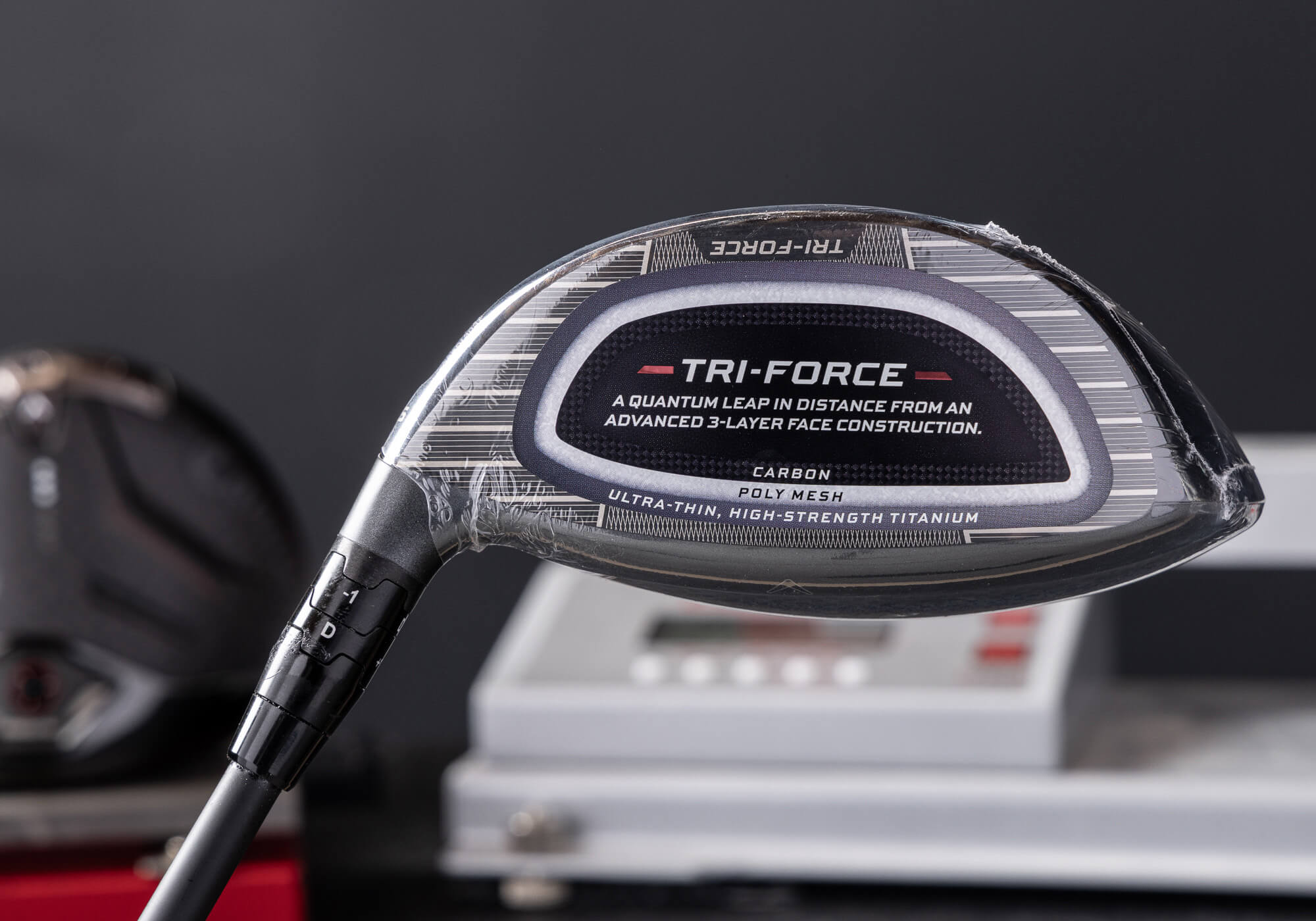
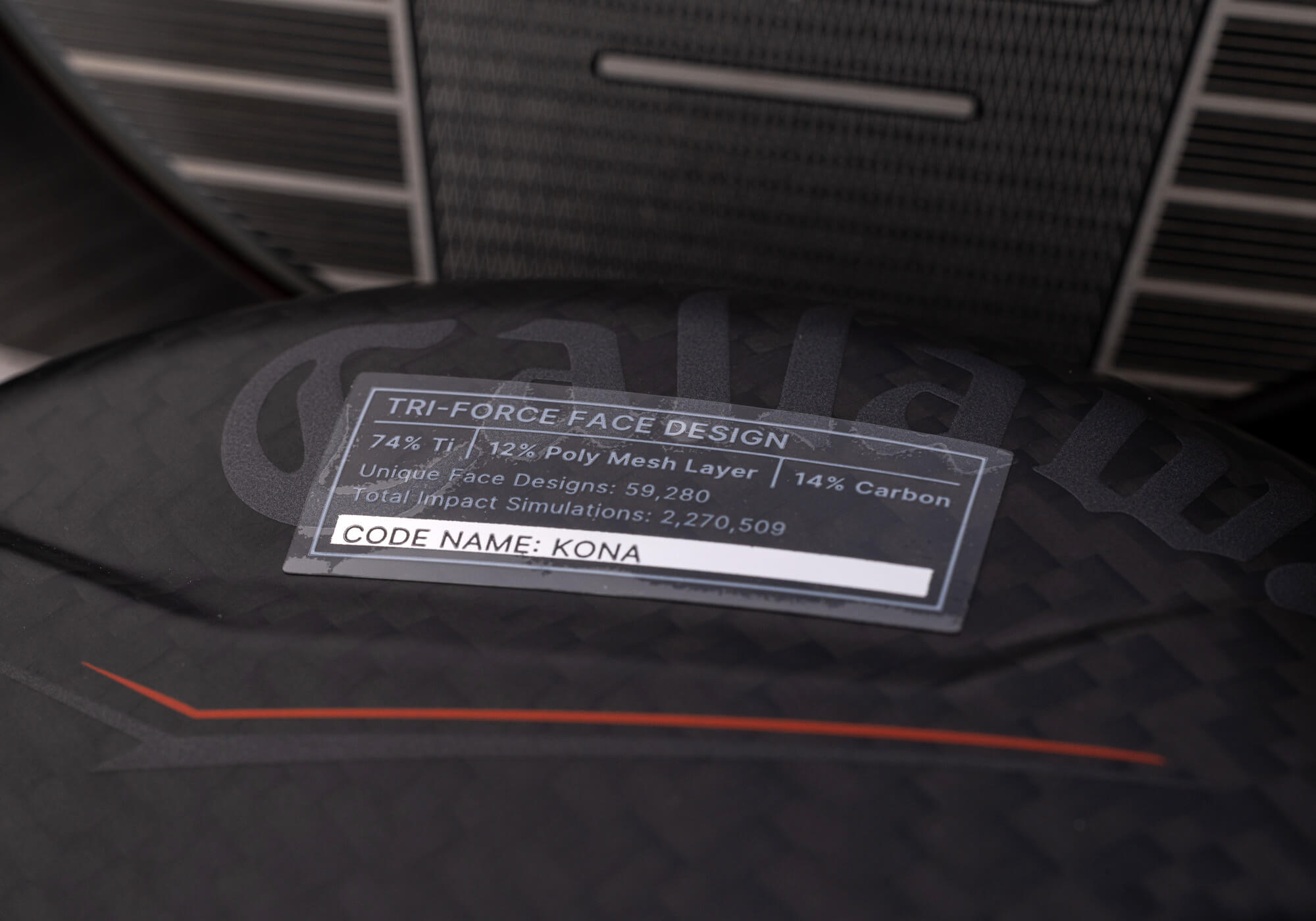
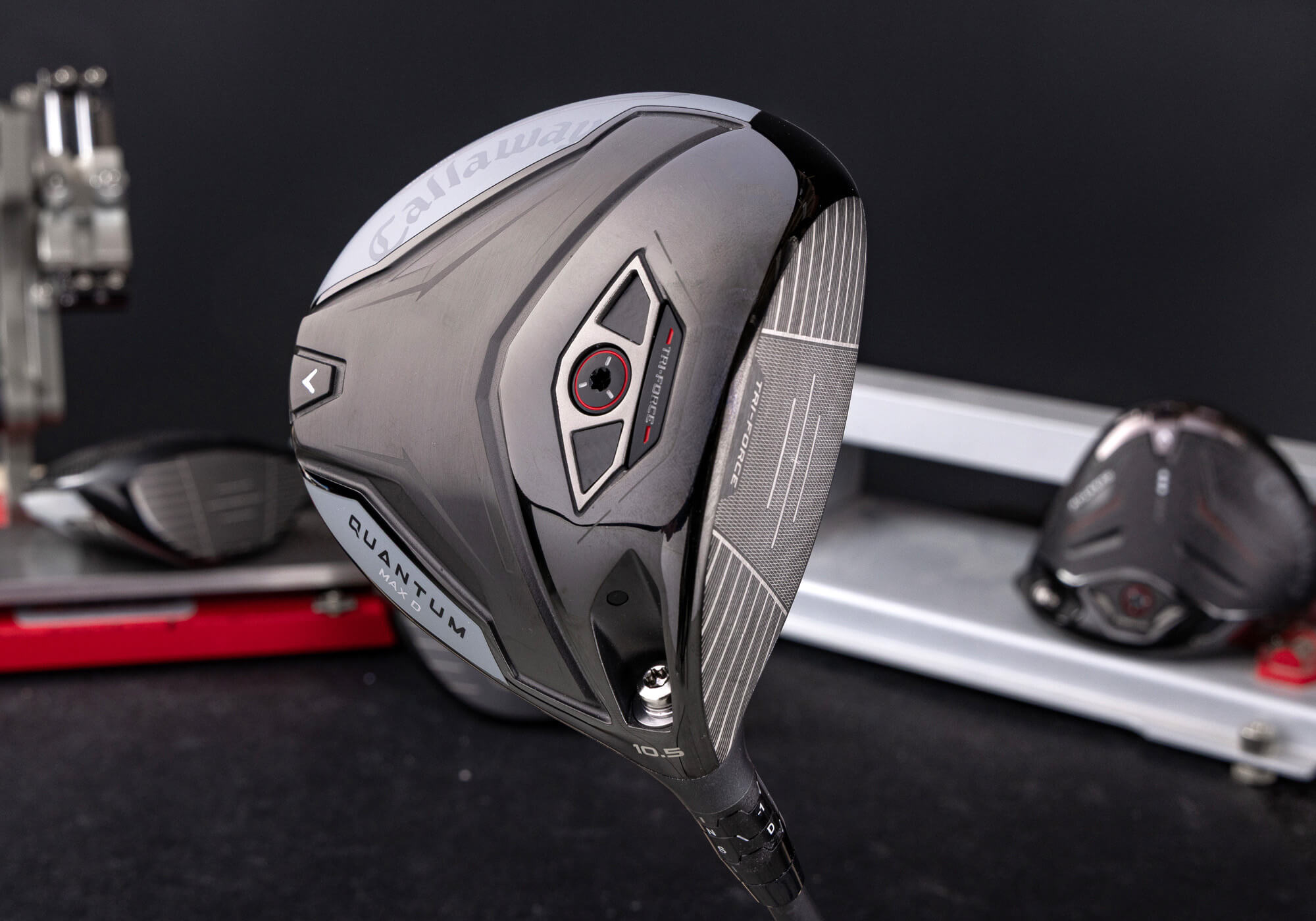
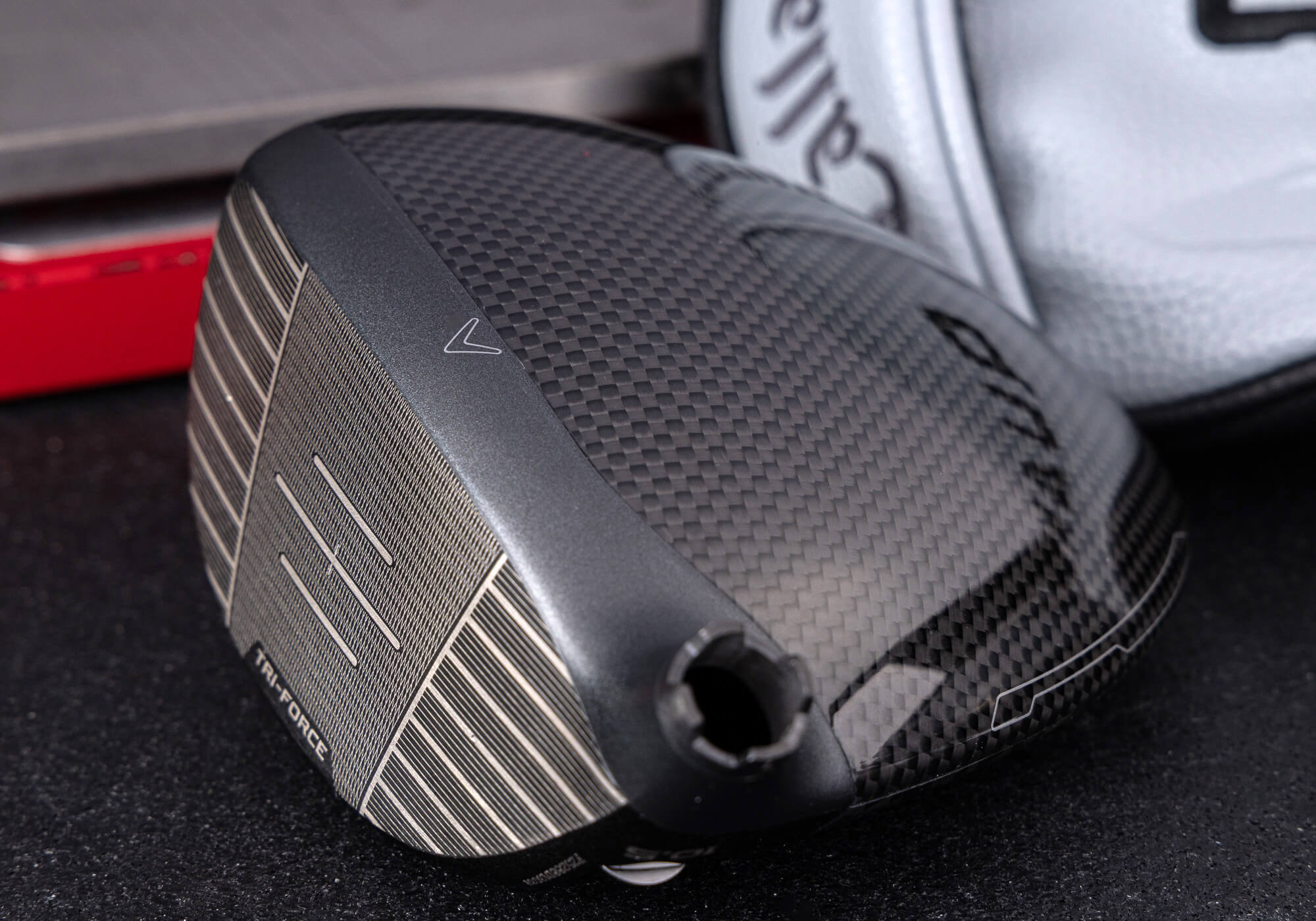
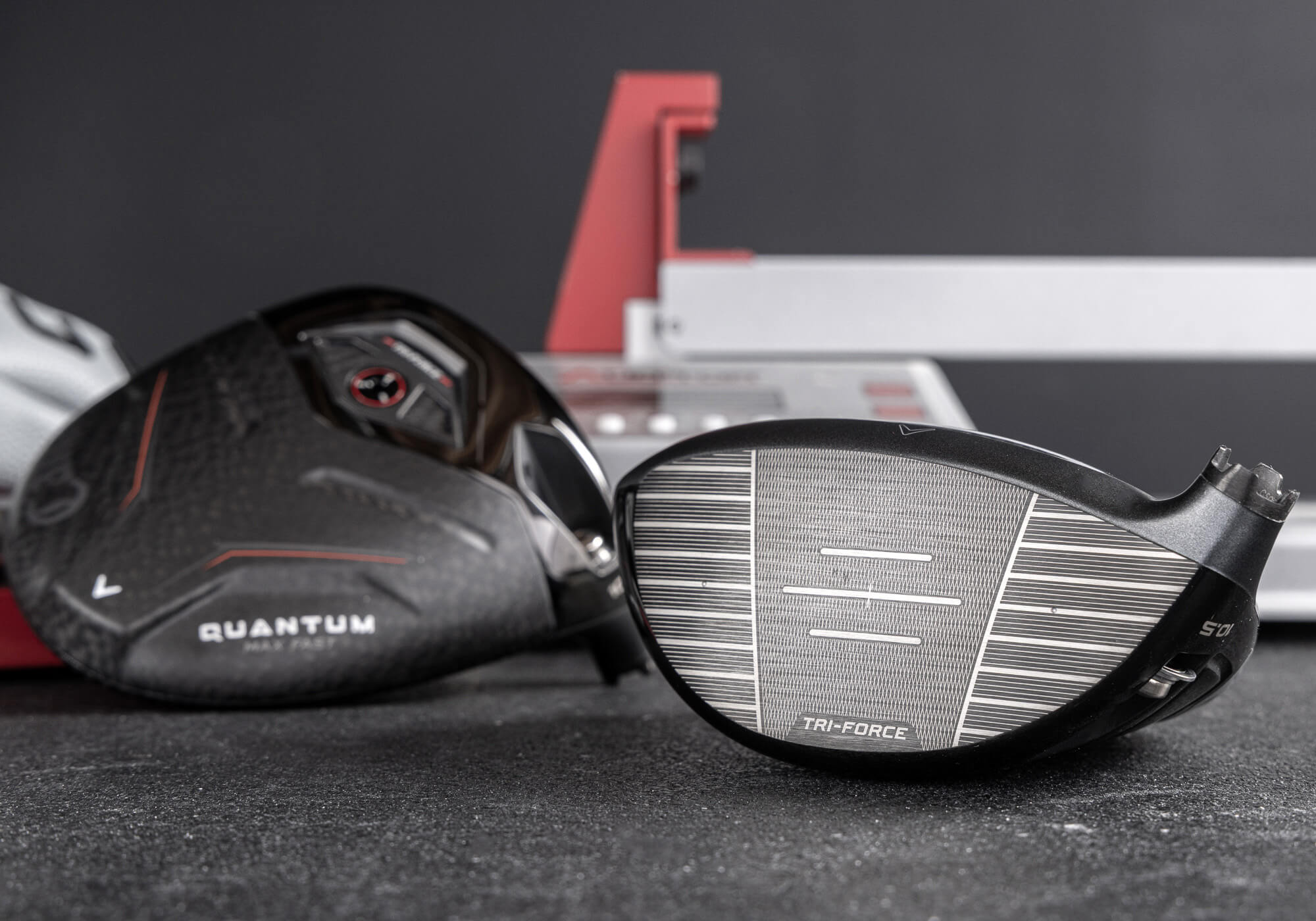
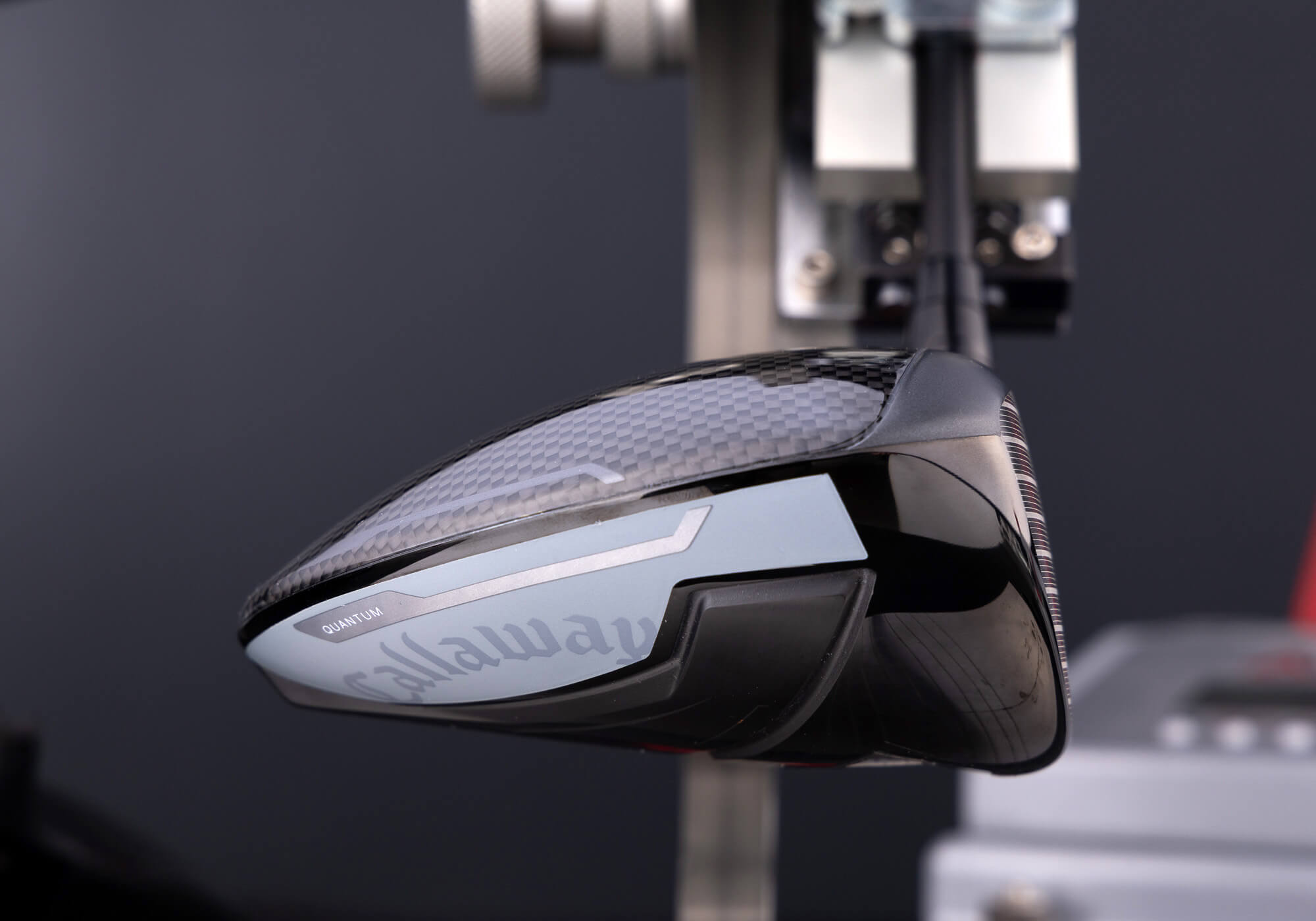
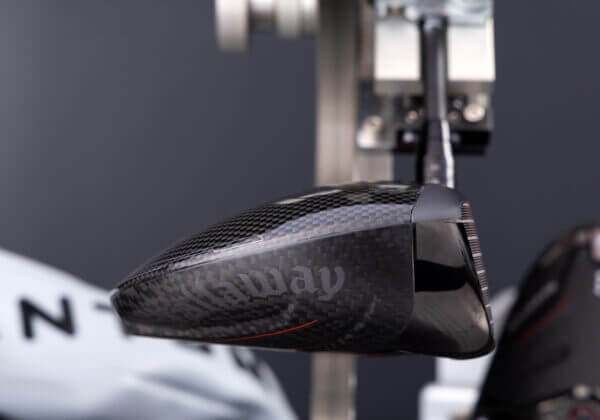
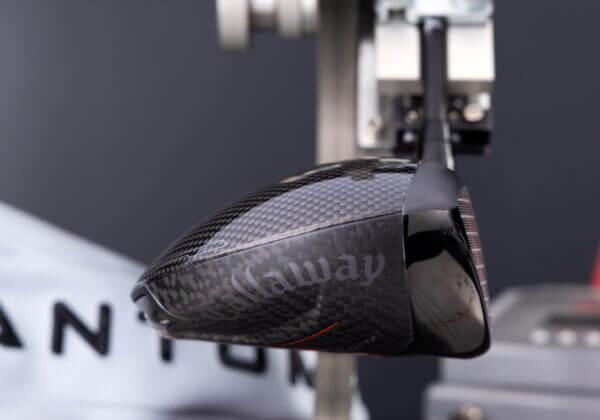
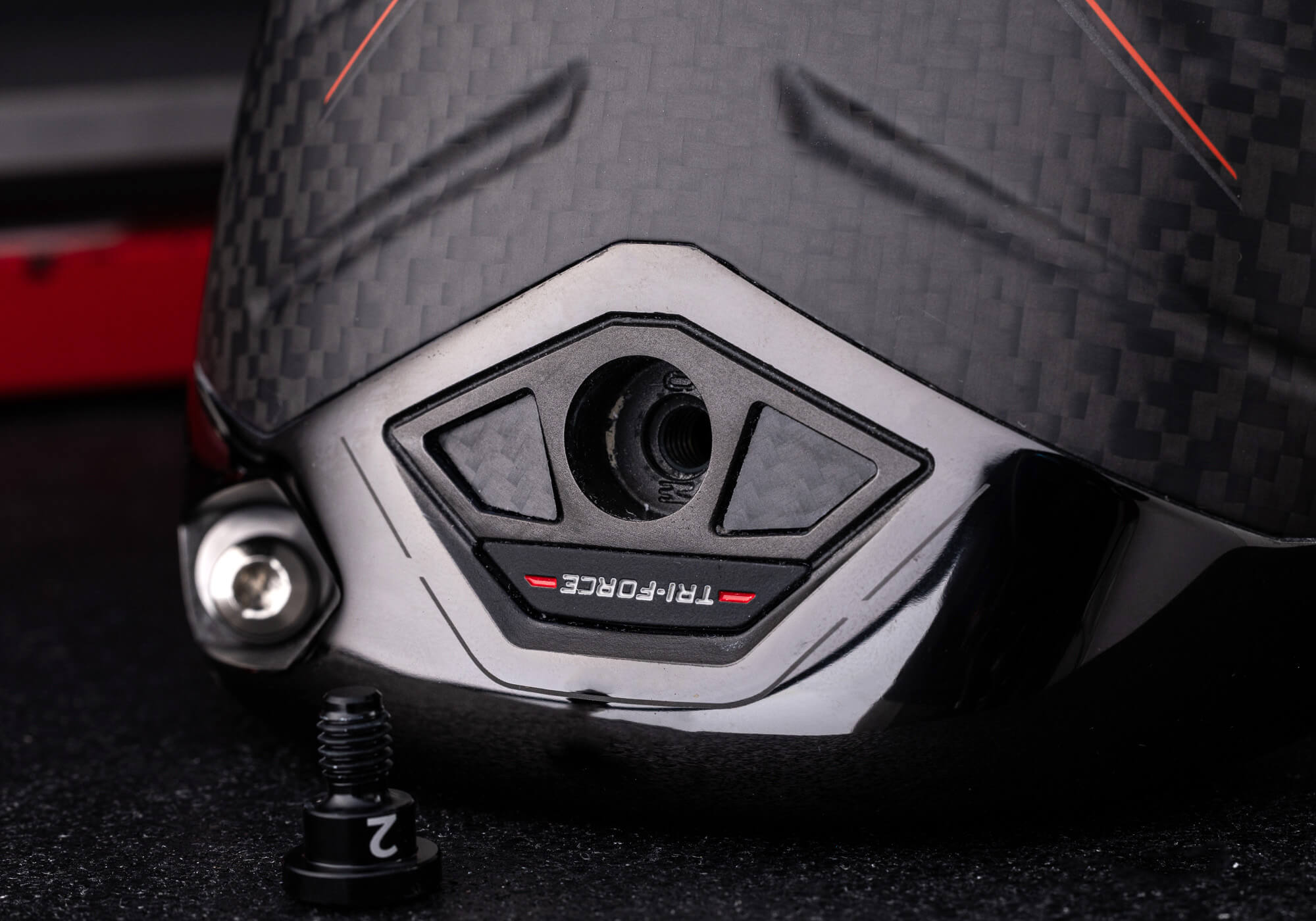
If a 100-percent titanium face is the problem, Callaway believes the solution is its new Tri-Force Face, a three-material construction that layers ultra-thin titanium, poly mesh and carbon fiber into a single fully integrated system.
Tri-Force isn’t Callaway pivoting to carbon like TaylorMade. It’s not Mizuno’s Nanoalloy approach rebranded, either. Tri-Force is Callaway’s multi-layer attempt to rethink how speed is created and sustained. All within the Rules of Golf, of course.
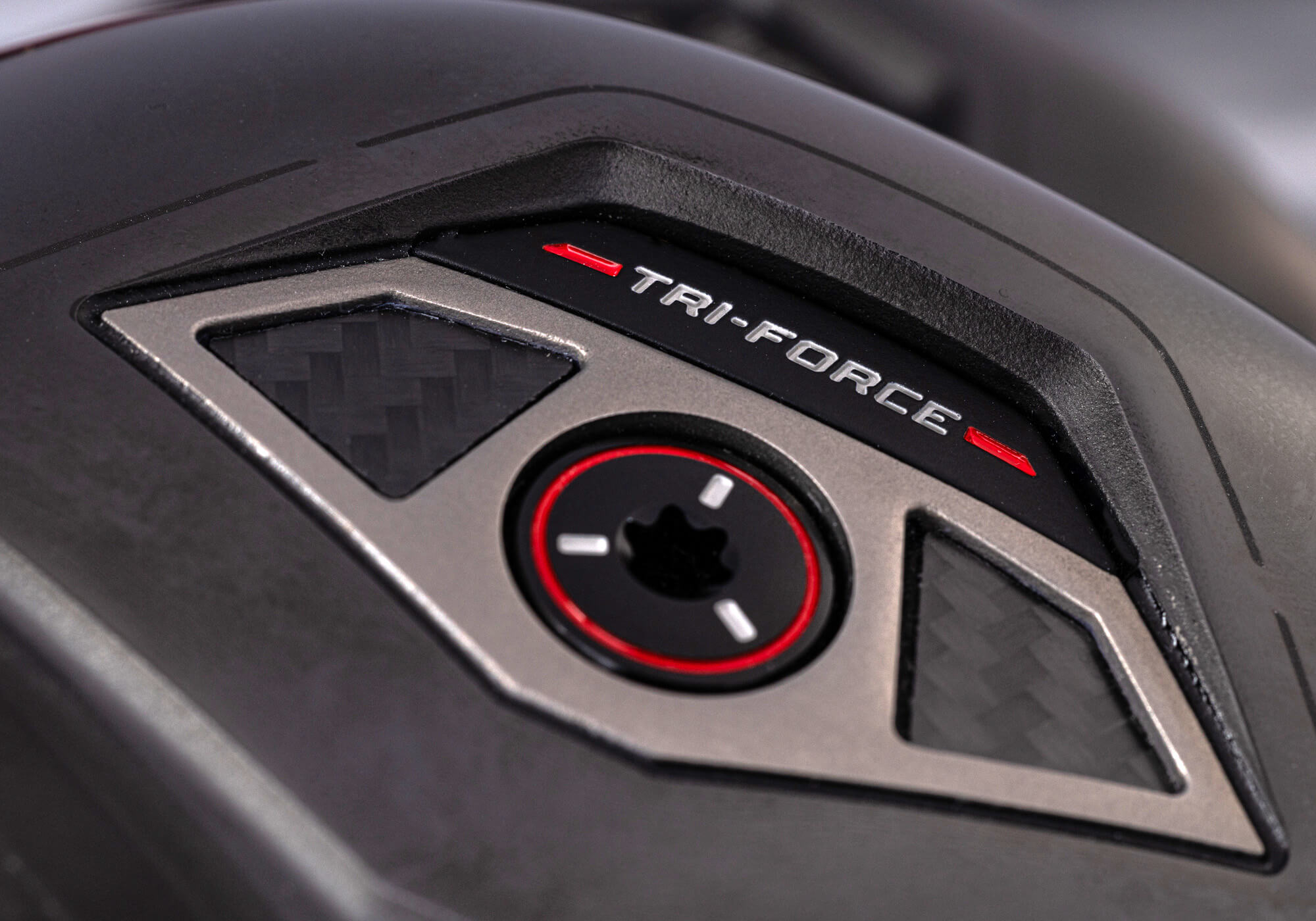
Like everyone else making drivers, Callaway still wants more speed, more distance and improved Strokes Gained off the tee. But instead of hanging everything on a single material, the Quantum driver family is built around changing the relationship between materials, allowing each to do what it does best.
With the Tri-Force approach comes complexity. As Zack Oakley, Senior Manager, Product Strategy at Callaway put it, “This is not a titanium face. It is not a carbon fiber face. It’s a fully integrated performance system.”
Emphasis on system. That framing sets the tone for everything that follows.
Titanium alone isn’t enough anymore
Tri-Force didn’t start as a materials experiment. It started as a problem.
As Callaway engineers continued pushing titanium faces closer to their practical limits, internal stress-mapping data began telling a familiar story. As faces got thinner, stress stopped distributing efficiently across the face and instead concentrated in specific regions—particularly low on the face and toward the perimeter.
“You can keep making titanium thinner but, at some point, you’re not really reducing stress—you’re just moving it around,” says Brian Williams, VP of R&D at Callaway.
That realization marked a turning point in Callaway’s thinking. Engineers weren’t running into a speed ceiling so much as a durability and reliability wall. Continuing down the titanium-only path meant greater risk of long-term deformation and less control over CT consistency.
Callaway’s conclusion: pushing titanium further would eventually require compromising either performance targets or longevity. Neither was acceptable.
The solution wasn’t to replace titanium but rather to give it a little help.
Carbon fiber emerged as the logical counterbalance. The challenge was getting the two materials to work together without introducing rigidity or deadening energy transfer.
That’s where poly mesh entered the picture—not as a headline material, but as a facilitator of sorts. Its flexible, non-rigid bonding properties allow titanium and carbon fiber to deflect differently yet function as a single system.
In other words, Tri-Force is the result of Callaway recognizing that the single-material model had reached a point of diminishing returns—and that meaningful gains would only come from fundamentally changing how the face behaved.
Are three materials better than one?
Titanium has long been the gold standard for driver faces and Callaway isn’t abandoning it. In fact, Quantum uses the thinnest titanium face Callaway has ever produced (up to 14 percent thinner in the Max model).
But thinning titanium comes with tradeoffs. Push it too far and you invite durability issues, CT creep and manufacturing challenges (it deforms or failes entirely). Lightweight carbon fiber offers mass savings but struggles under compressive loads like the ones generated when a golf ball meets a driver face at 150-plus mph.
Callaway says Tri-Force works because each material handles a different type of stress.
Titanium sits up front where it excels under compression. Carbon fiber sits behind it where it handles tension as the face deflects and rebounds. Sandwiched between them is poly mesh, a military-grade polymer originally developed for ballistic applications. Its job isn’t to provide stiffness; it’s to bring controlled flexibility.
“You can’t just glue titanium and carbon together,” Oakley explained. “That would actually slow the face down. The adhesive has to flex with the materials.”
Poly mesh (which, ironically, isn’t actually a mesh material) allows the titanium and carbon fiber to deflect differently yet harmoniously, creating what Callaway engineers describe as an entirely new deflection profile. Callaway says the new Tri-Force design is stronger, more durable and more responsive than any single-material face.
Worth a mention: Rather than rely on adhesive bonding to join face to body, the titanium portion of Tri-Force is slightly larger than the poly mesh and carbon layers which allows Callaway to weld the face to the body (as is done in traditional titanium construction). That should alleviate any significant risk of faces popping off.
What all of this gets you, says Callaway, is a face system that’s17 percent more resilient under stress, allowing more flex without structural failure. Translation: higher ball speed potential without flirting with durability or conformity issues.
What about the USGA rules?
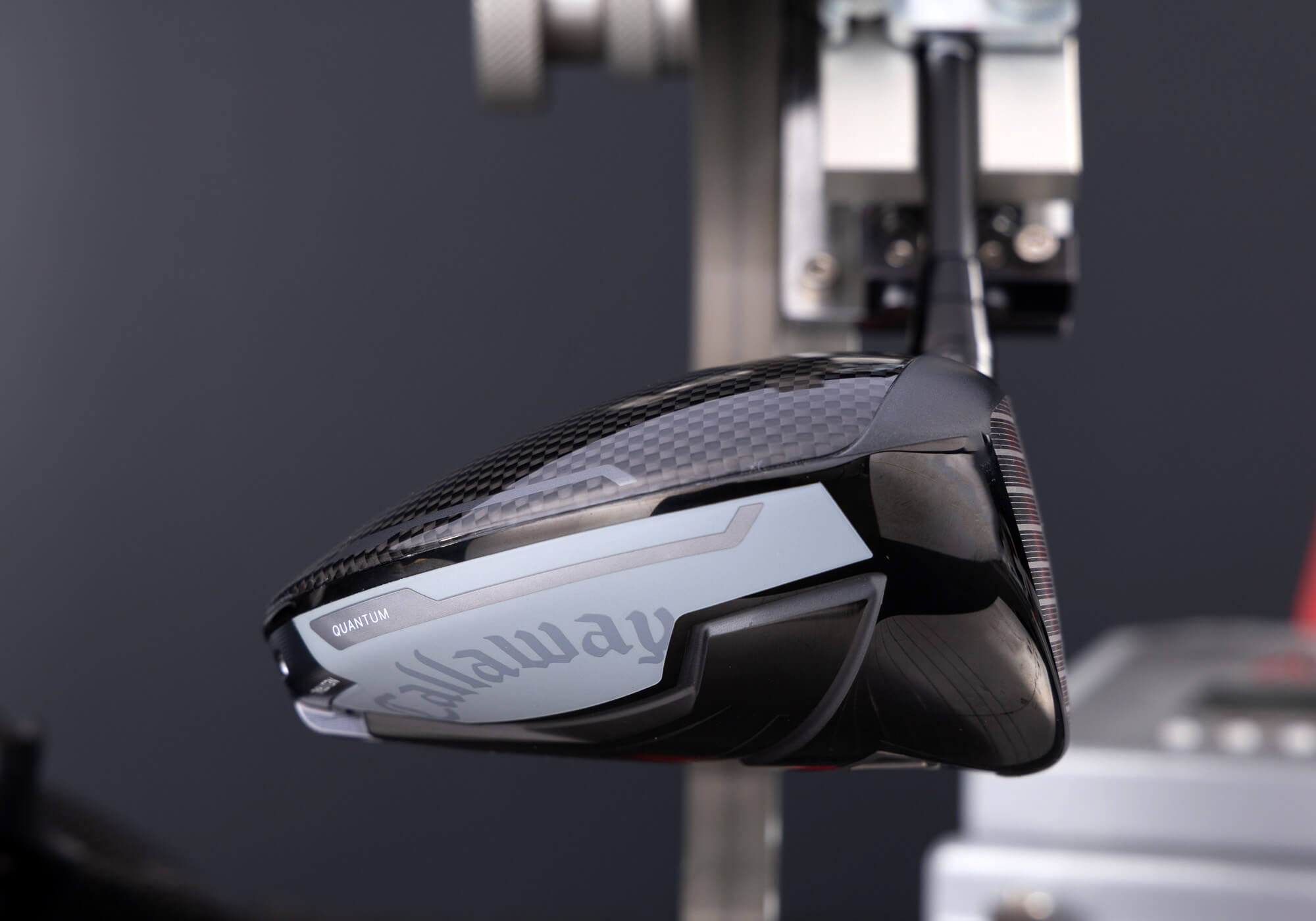
At its simplest, the USGA limits driver speed by enforcing a CT (Characteristic Time) threshold. The test involves a pendulum apparatus that’s meant to assess how long a face stays in contact with the ball during impact. Longer contact time generally correlates with higher ball speed, so CT acts as a governor.
In a purely titanium world, the relationship between CT and COR (for simplicity: speed) is well understood. As manufacturing has become more precise and more consistent, manufacturers have been able to push titanium faces increasingly close to the CT limit.
The important detail is that the CT test was conceived in a world where driver faces were made of titanium and only titanium.
The complication arises when new materials and new constructions enter the picture.
Materials like carbon fiber—or hybrid constructions like Callaway’s Tri-Force Face—don’t behave like titanium under load. They flex differently. They recover differently. And, critically, they can generate more speed at lower CT values than traditional titanium designs.
For context, an aggressively spec’d titanium face design will typically measure in the low to mid 240s for CT. Carbon fiber designs, despite producing ball speeds on par with titanium, will often measure in the 220s. Effectively, we’re talking about roughly equivalent ball speed from significantly lower CT.
Said another way: different materials have the potential to fundamentally alter the assumed relationship between CT and COR.
If a face produces higher ball speed without approaching the CT ceiling, it doesn’t violate the rule—but it does challenge the premise behind it. When that happens, the USGA is forced to respond by refining test procedures, tightening definitions or introducing additional guardrails. And, as history has shown, closing one loophole almost inevitably creates another.
We’ve seen versions of this cycle before—most notably with TaylorMade’s carbon face construction, very recently with Mizuno’s Nanoalloy developments and now Callaway’s Tri-Force system. Each represents a different way of extracting more speed without simply thinning titanium and creeping closer to the line.
With the Quantum driver’s Tri-Force face, carbon fiber supports the titanium during rebound, poly mesh harmonizes deflection between materials.
The result, says Callaway, is a face that remains comfortably conforming while still delivering measurable speed gains.

So how much speed am I getting?
If all of this Quantum Tri-Force stuff sounds like it should come with a bold claim—five yards, eight yards, 10, maybe even 17 more yards—it doesn’t
For Quantum, Callaway isn’t making any specific speed or distance promises. Not because the gains aren’t there but because the company believes such claims don’t resonate the way they once did.
Brian Williams put it bluntly: “You put a number on it and golfers don’t believe it—or worse, they feel disappointed if their experience doesn’t match the headline.”
Said another way, we’re all pretty much over what often feels like unfulfilled distance promises.
Instead, Callaway wants golfers to experience the speed for themselves through a fitting, a demo or time on the range.
That confidence comes from internal testing, player feedback and early Tour results. As Williams explained, “We’re seeing ball speed go up across the board. I’d expect you to find at least a mile an hour and I wouldn’t be surprised if you see more than that. But I don’t want to cap expectations by putting a number on it.”
The philosophy is simple: Let Quantum’s performance speak for itself.
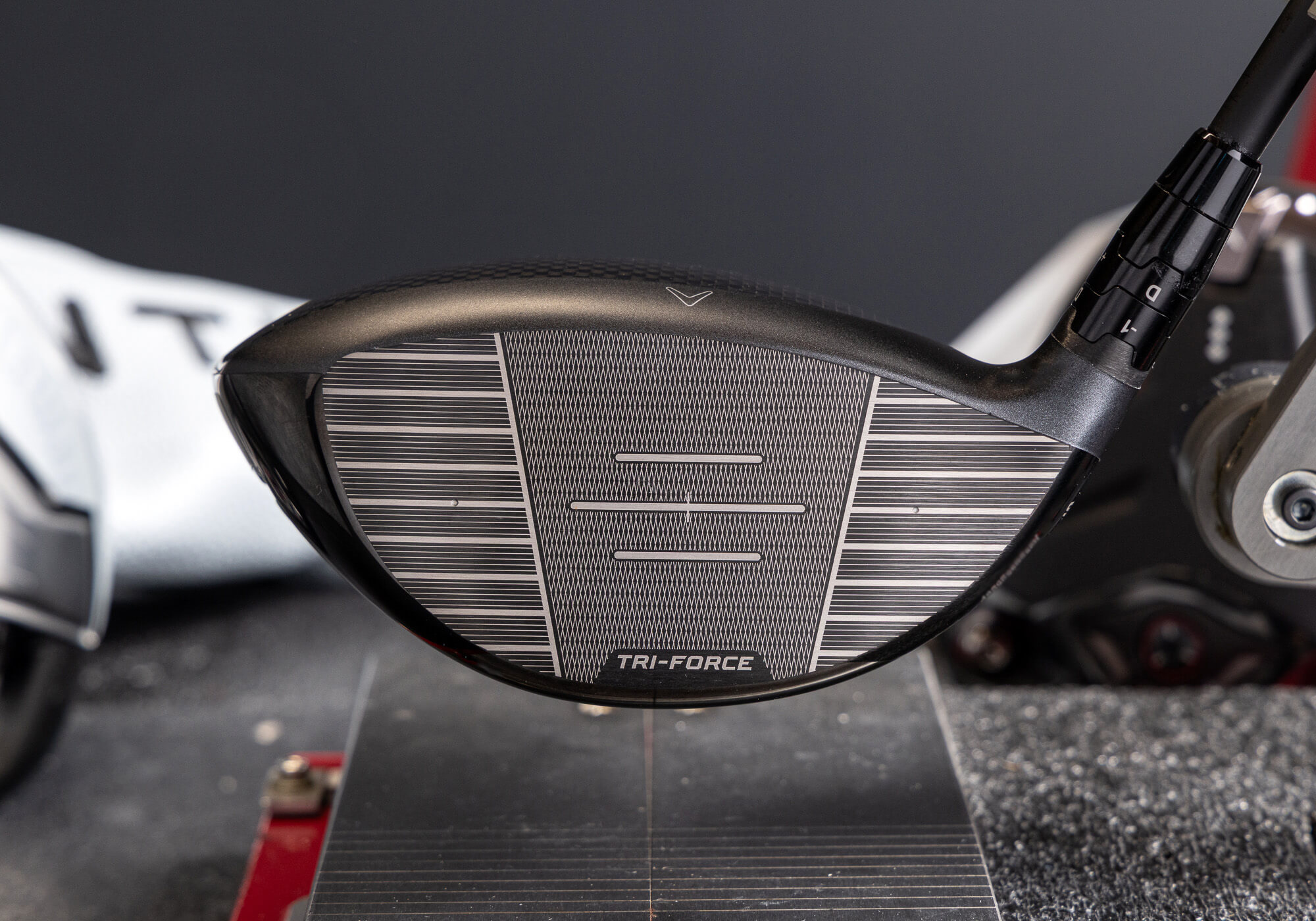


The Updated AI Face: enhanced spin consistency
It wouldn’t be Callaway without an AI-story, so here you go.
Quantum’s next-generation AI-optimized face mapping doesn’t just look at where golfers hit the ball. It accounts for how three different materials deflect together across thousands of real-world impact scenarios.
That gives Callaway more tuning levers than ever, particularly when it comes to spin optimization.
The new design is built around enhancing spin consistency. Those low-face strikes don’t produce as much spin as they might have with previous designs. Those high-face strikes don’t produce precipitous drops in spin.
The AI-integration is about increasing spin consistency. Callaway is compressing the spin window to provide more consistent results.
Thinking of it as added forgiveness without increased MOI.
And about that MOI
If you’re looking for Callaway to slap a 10K MOI badge on Quantum, you’ll be disappointed—and Callaway is fine with that.
MOI is only one part of forgiveness and chasing a single number often comes at the expense of speed, spin control or fitting versatility.
While Callaway’s Quantum offerings aren’t low MOI, the overriding engineering philosophy behind Quantum prioritizes a balanced equation: face efficiency, spin consistency and playable forgiveness.
Not much has changed this year. Callaway still believes forgiveness extends far beyond an MOI value.
5 Quantum models
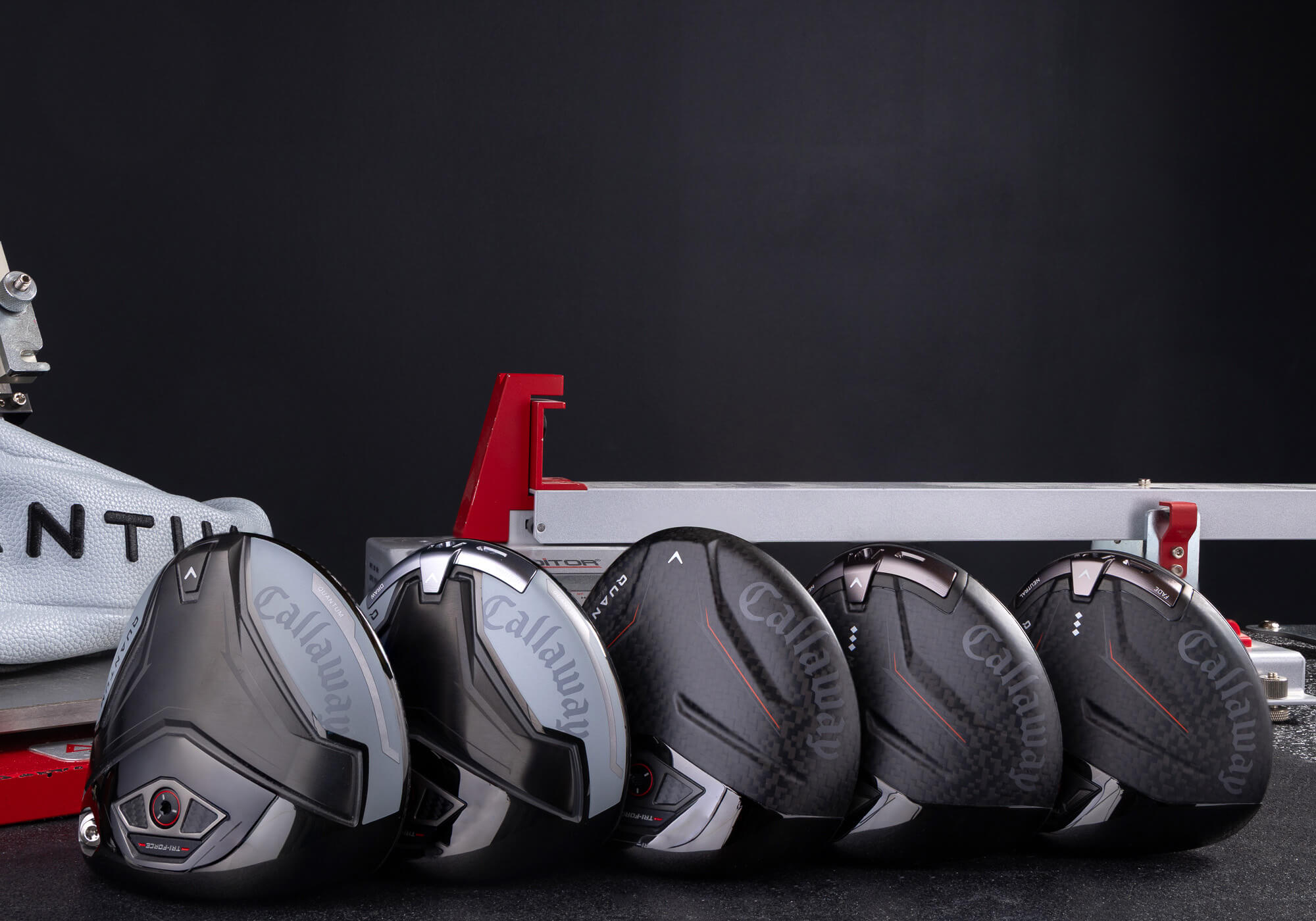
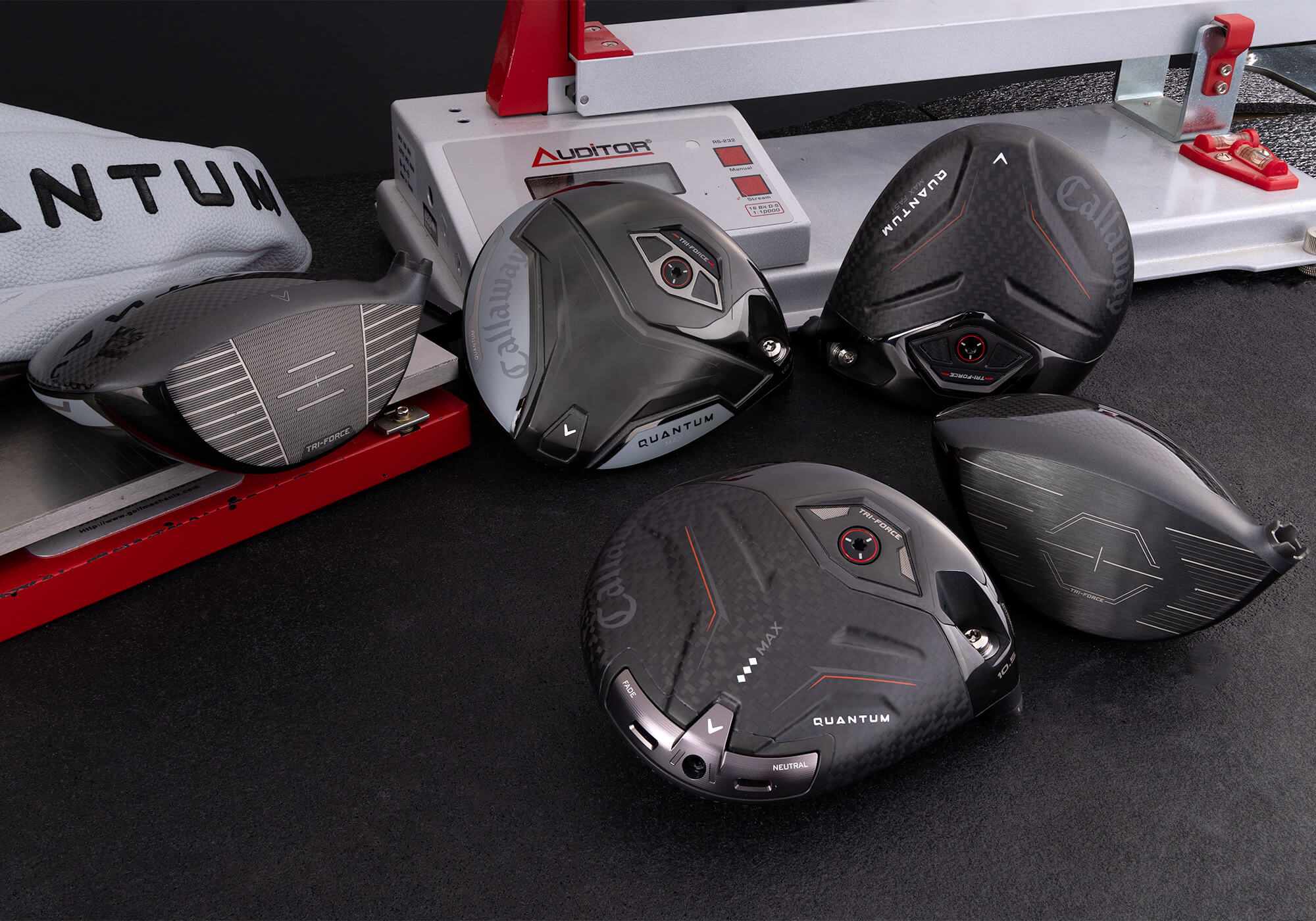
With the deep dive into Tri-Force (and related technologies), let’s look at the five (yup, FIVE) Quantum models hitting retail in February.
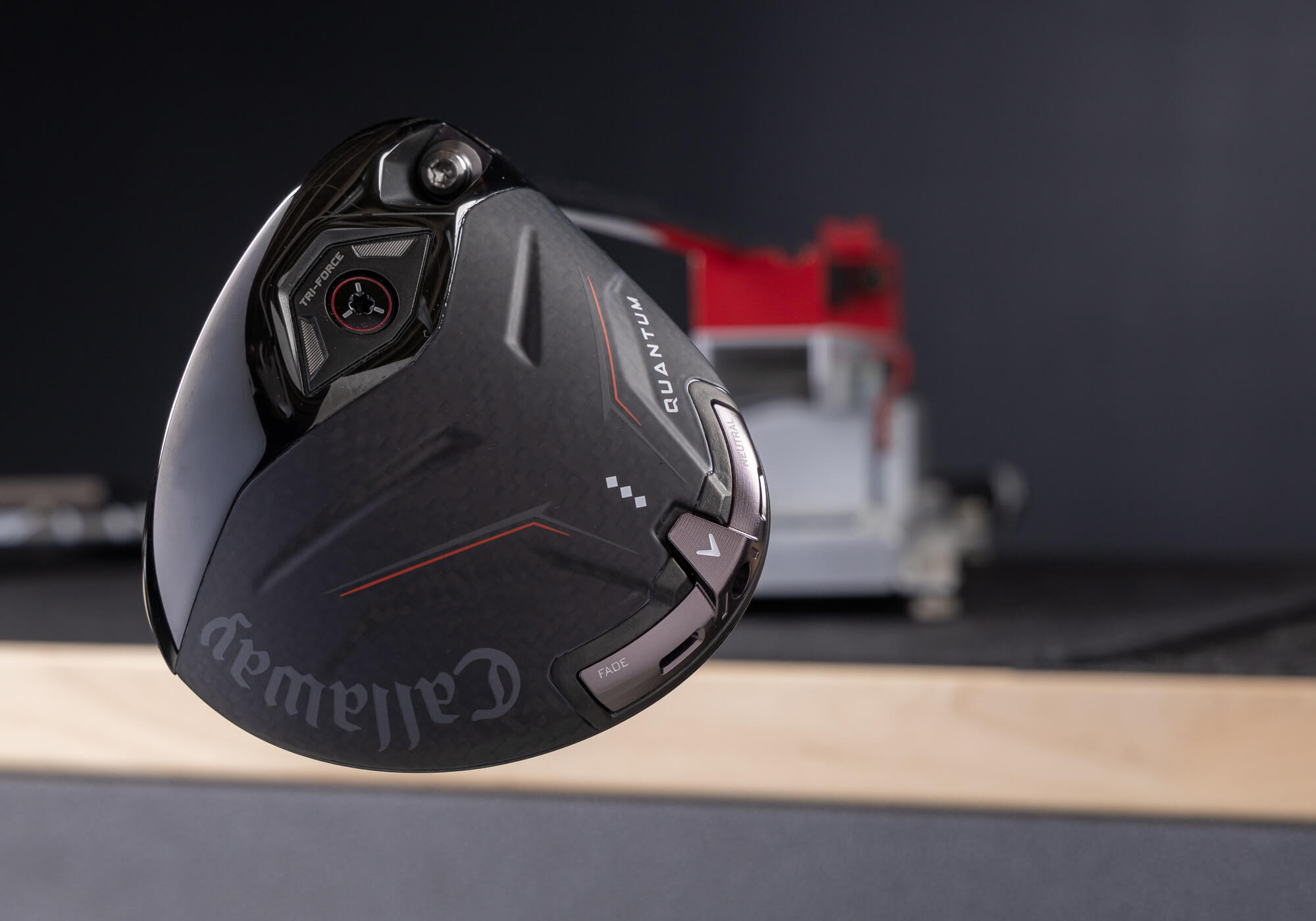
Quantum Max: The core model
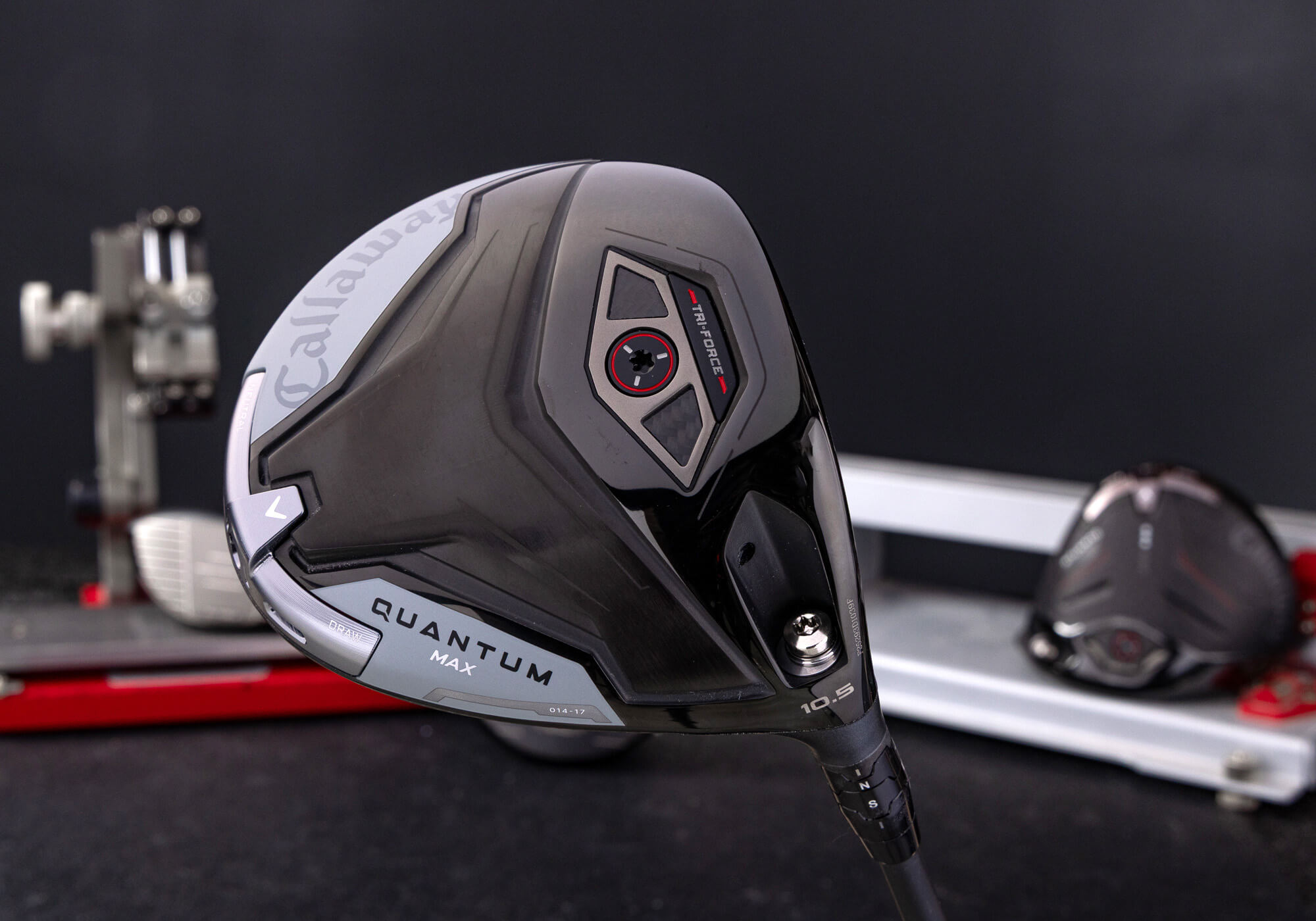
Quantum Max is the centerpiece of the lineup and the one designed to fit the widest range of golfers.
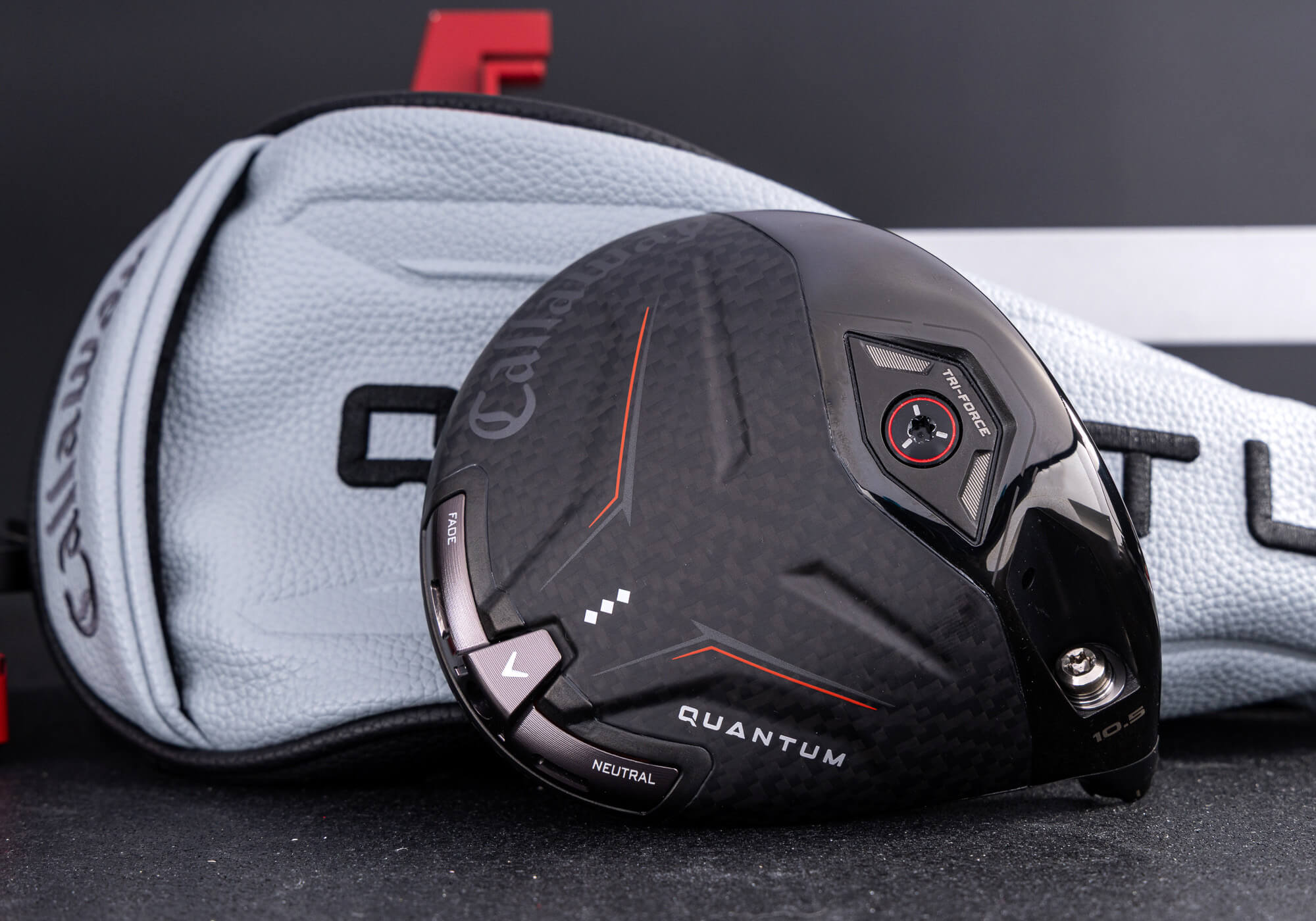
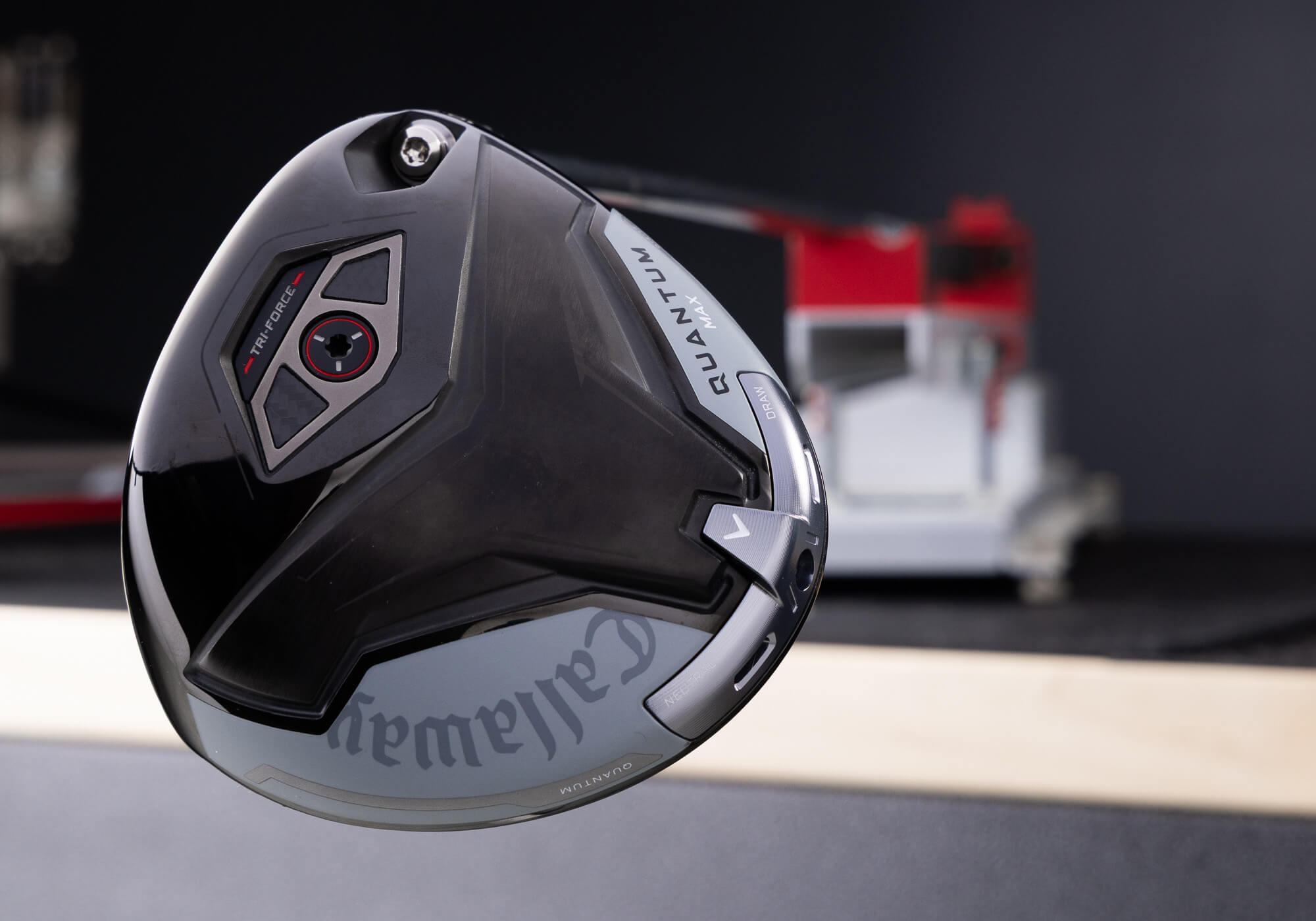
The Quantum Max pairs the Tri-Force Face with a neutral center of gravity, a confidence-inspiring shape (I think that means it’s neither too big nor too small) and Callaway’s updated weighting system. The new discrete two-position system leverages two rear weights (10 grams/2 grams) that can be swapped to create either a neutral flight or draw bias.
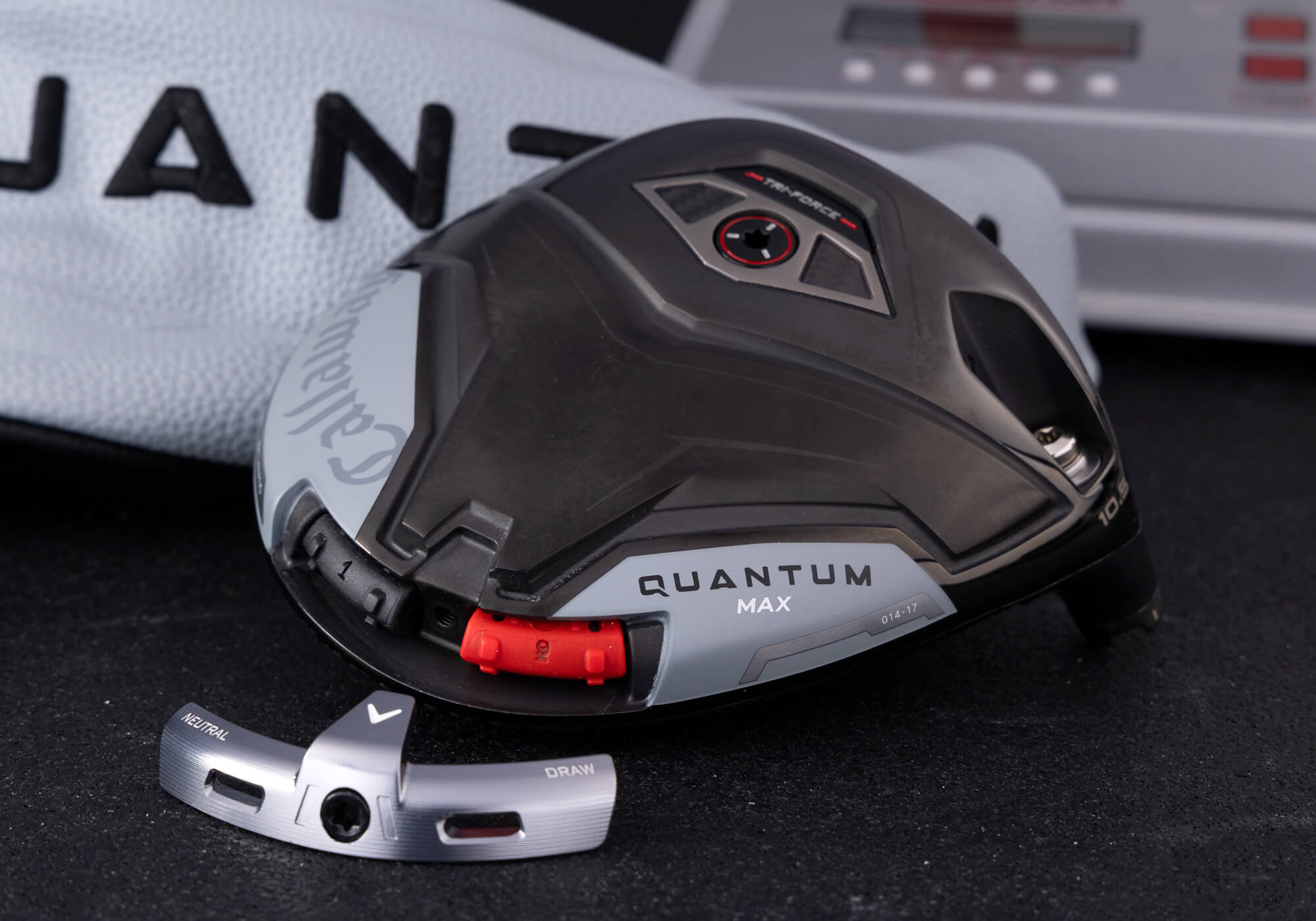
Who it’s for: As the middle-of-the-market offering, the Quantum Max is for golfers who want a blend of speed and forgiveness, with adjustability.
Available lofts: 9°, 10.5°, 12°
Stock shafts: Mitsubishi Chemical Vanquish 40g (R2), True Temper Denali Frost Silver 50g (R/S), 60g (S/X)
Retail Price: $649
Quantum Max D: Draw-biased
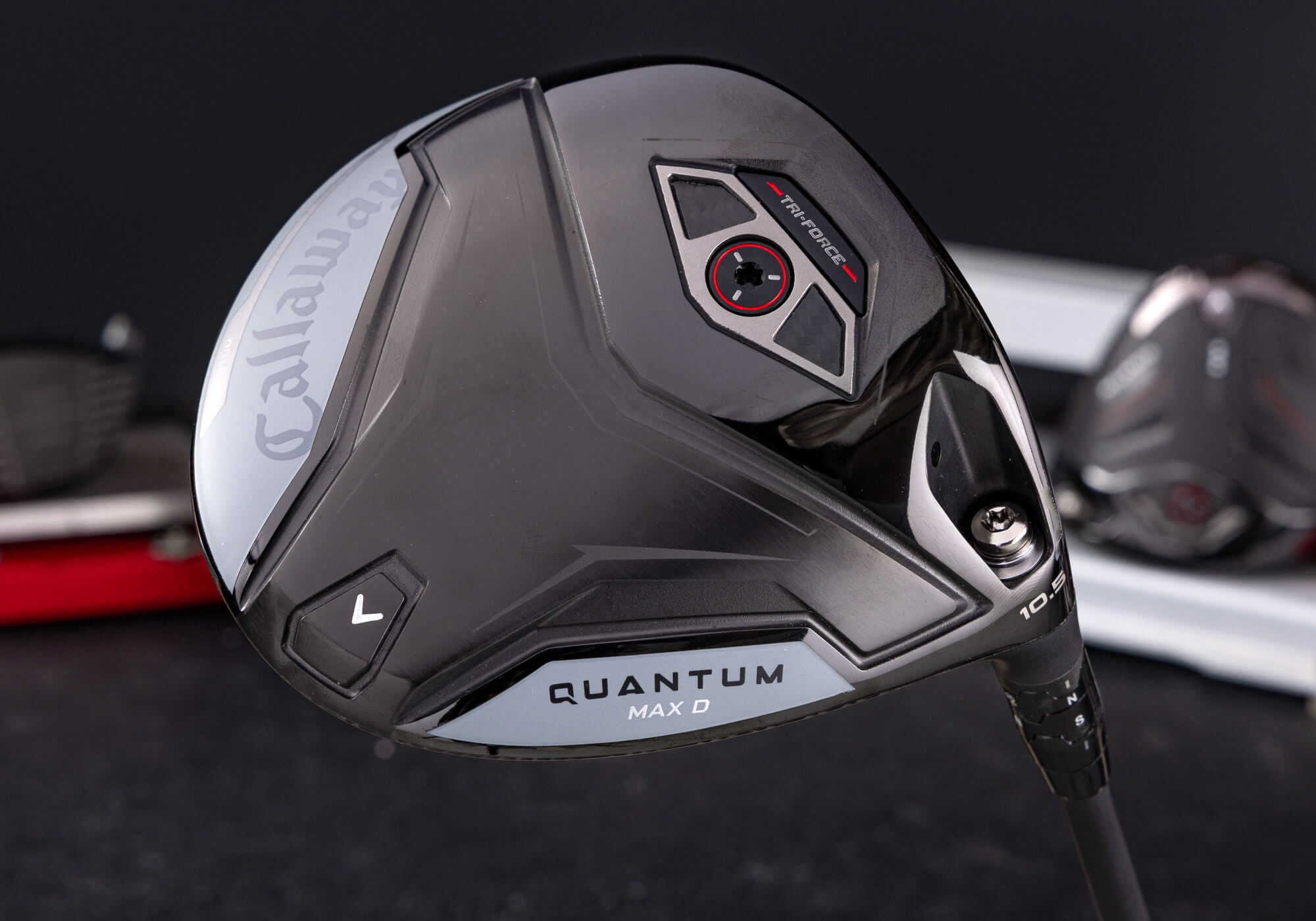
Max D takes the Max platform and adds internal heel weighting to promote a slight draw bias. That’s it. That’s the story.
Who it’s for: Golfers who fight a slice and want maximum forgiveness. Admittedly, Callaway’s take on maximum forgiveness is quite a bit different than PING and others who play in the ultra-high MOI space.
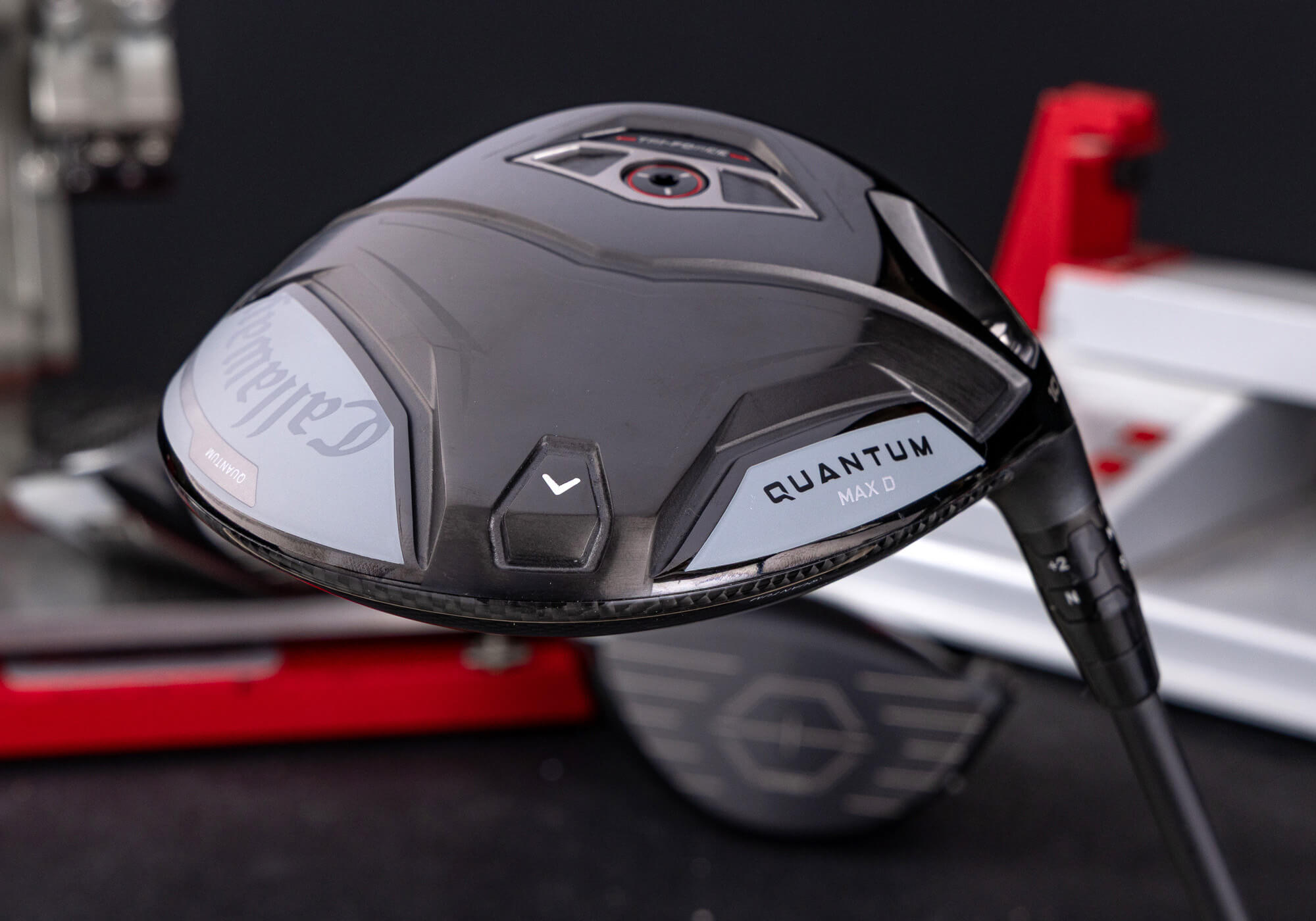
Available lofts: 9°, 10.5°, 12°
Stock shafts: Mitsubishi Chemical Vanquish 40g (R2/R), True Temper Denali Frost Silver 50g (R/S), 60g (S)
Retail Price: $649
Quantum Max Fast: Lightweight and easy to hit
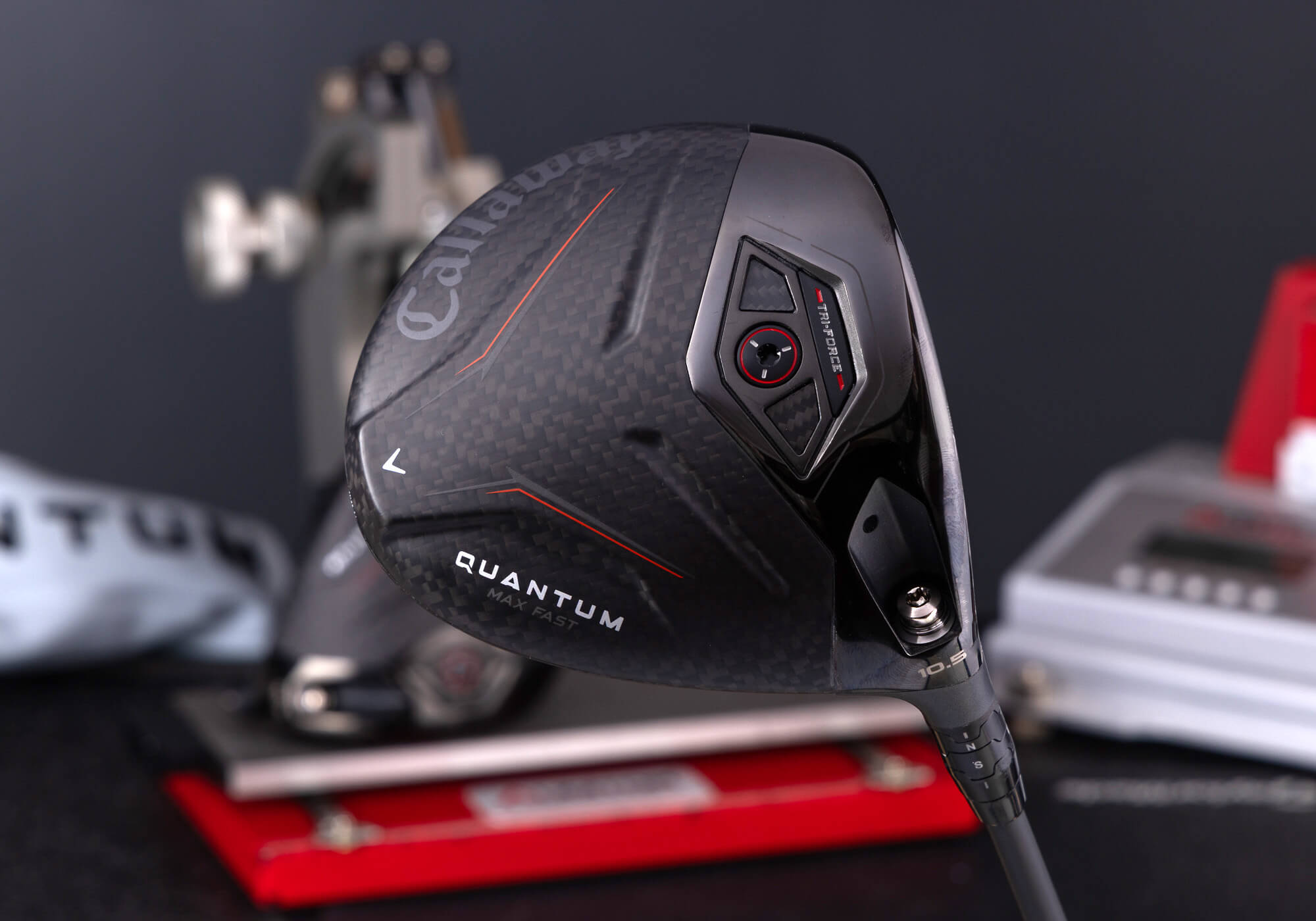
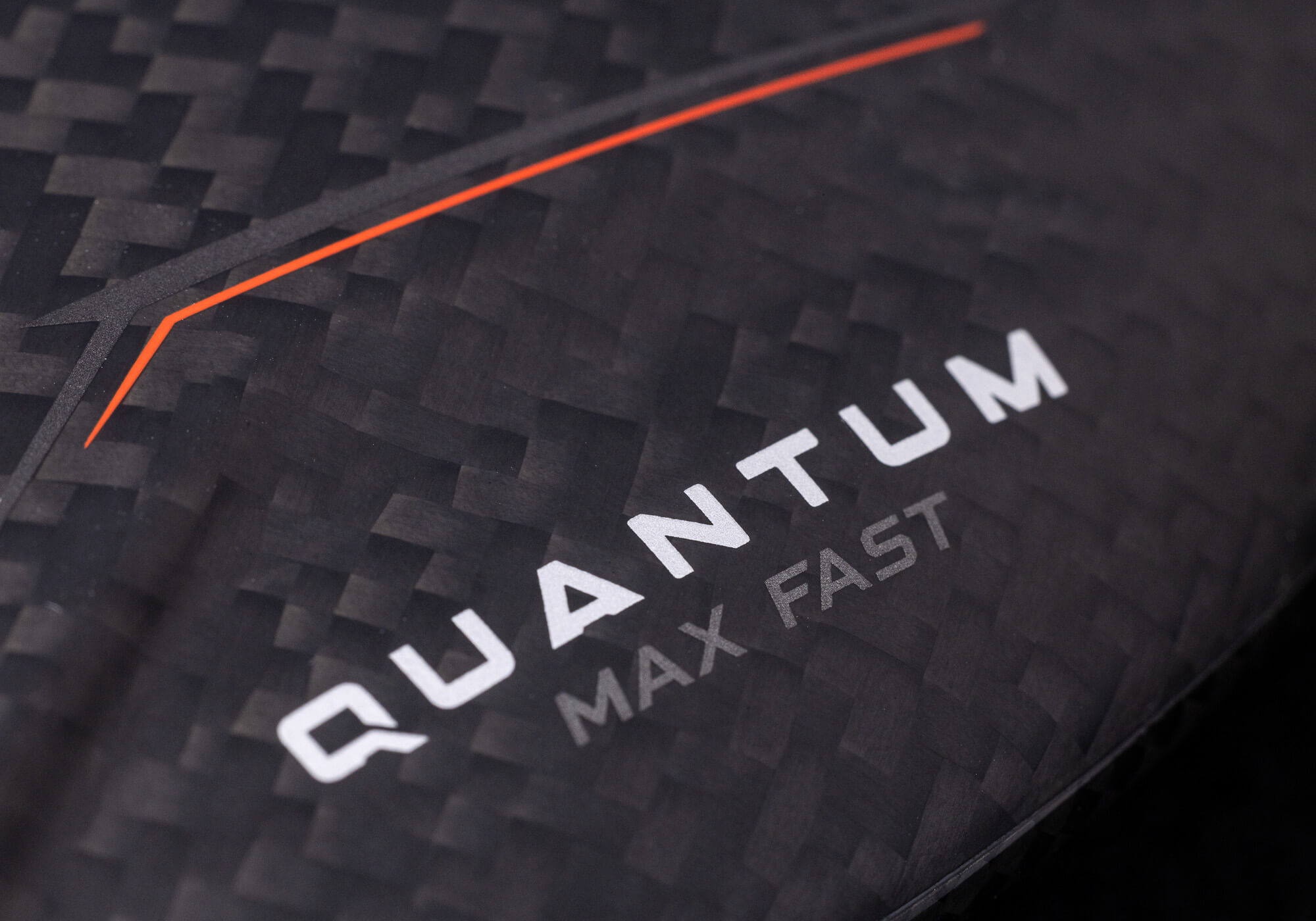
Max Fast is the lightest, easiest-to-launch Quantum driver. With weight savings in the head, shaft and grip, the Max Fast is 15 percent lighter than the standard Max model. As with other Quantum models, Callaway says it offers a confidence-inspiring shape and while I’m still not entirely sure what that means, you’ll probably like it.
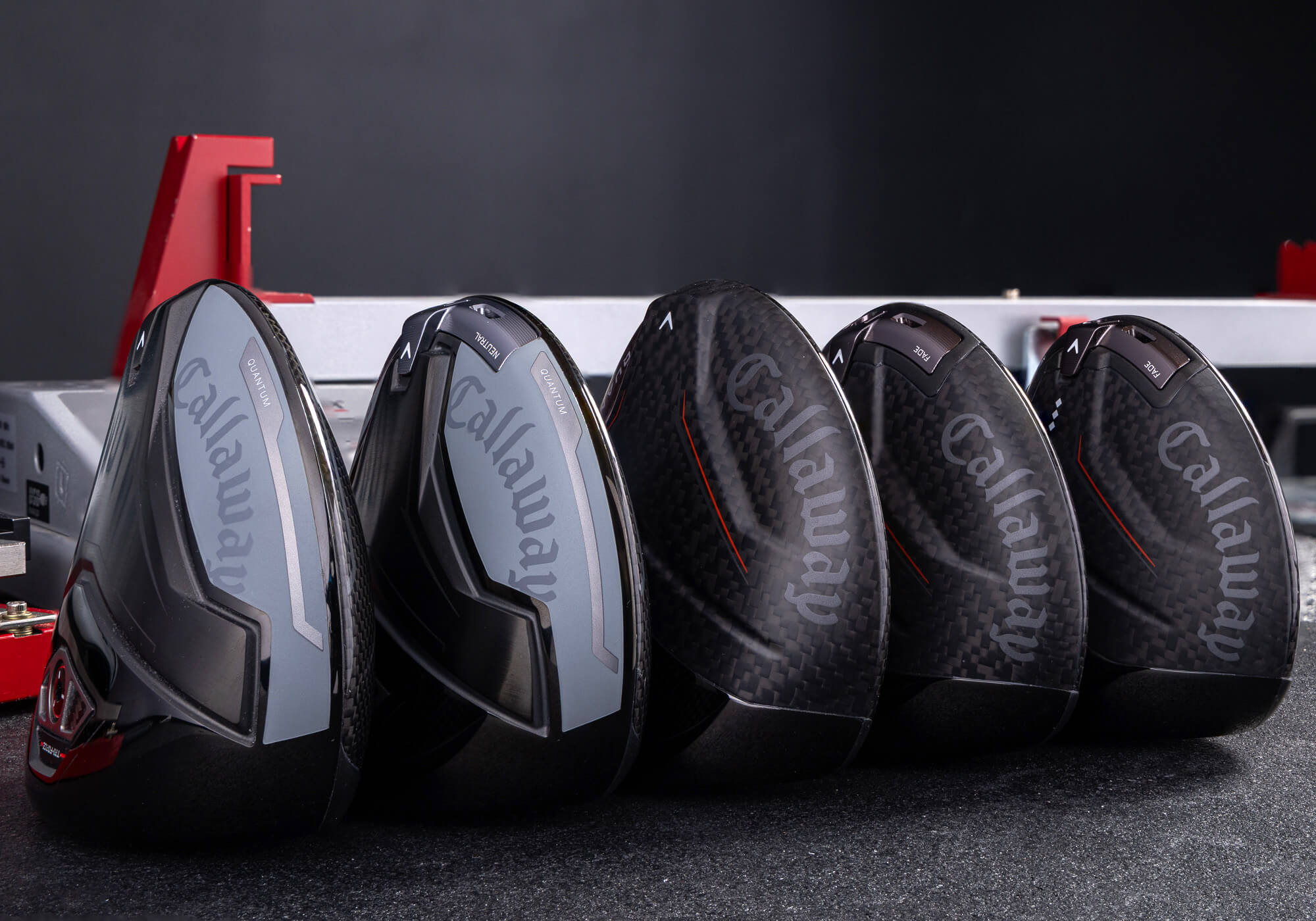
Like the Triple Diamond models, this year’s Max Fast features weight-saving 360° Carbon Chassis construction.
Who it’s for: Moderate swing speed players looking to be a bit less moderate.
Available lofts: 10.5°, 12°
Stock shafts: Mitsubishi Chemical Vanquish 40g (R2), Mitsubishi Chemical Eldio 40g (WMS)
Quantum Triple Diamond Max: Tour speed, more stability
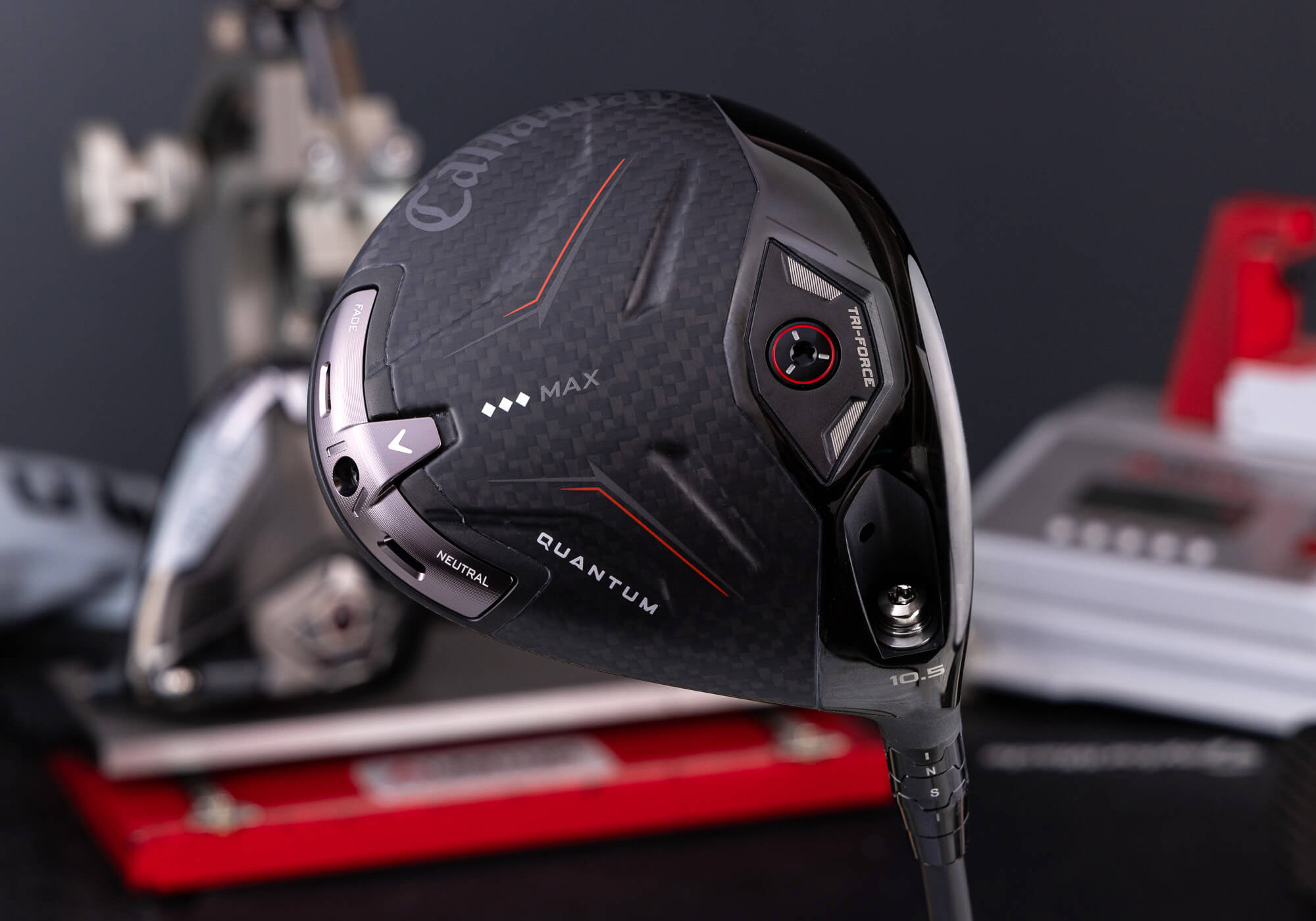
Callaway’s Triple Diamond Max models have garnered a bit of a cult following among golfers who love the Triple Diamond shape but want a bit more forgiveness.
With Ai Smoke and Elyte, Callaway launched the TD Max model in early spring. This time around, Callaway is launching TD Max alongside the full family.
Nice.
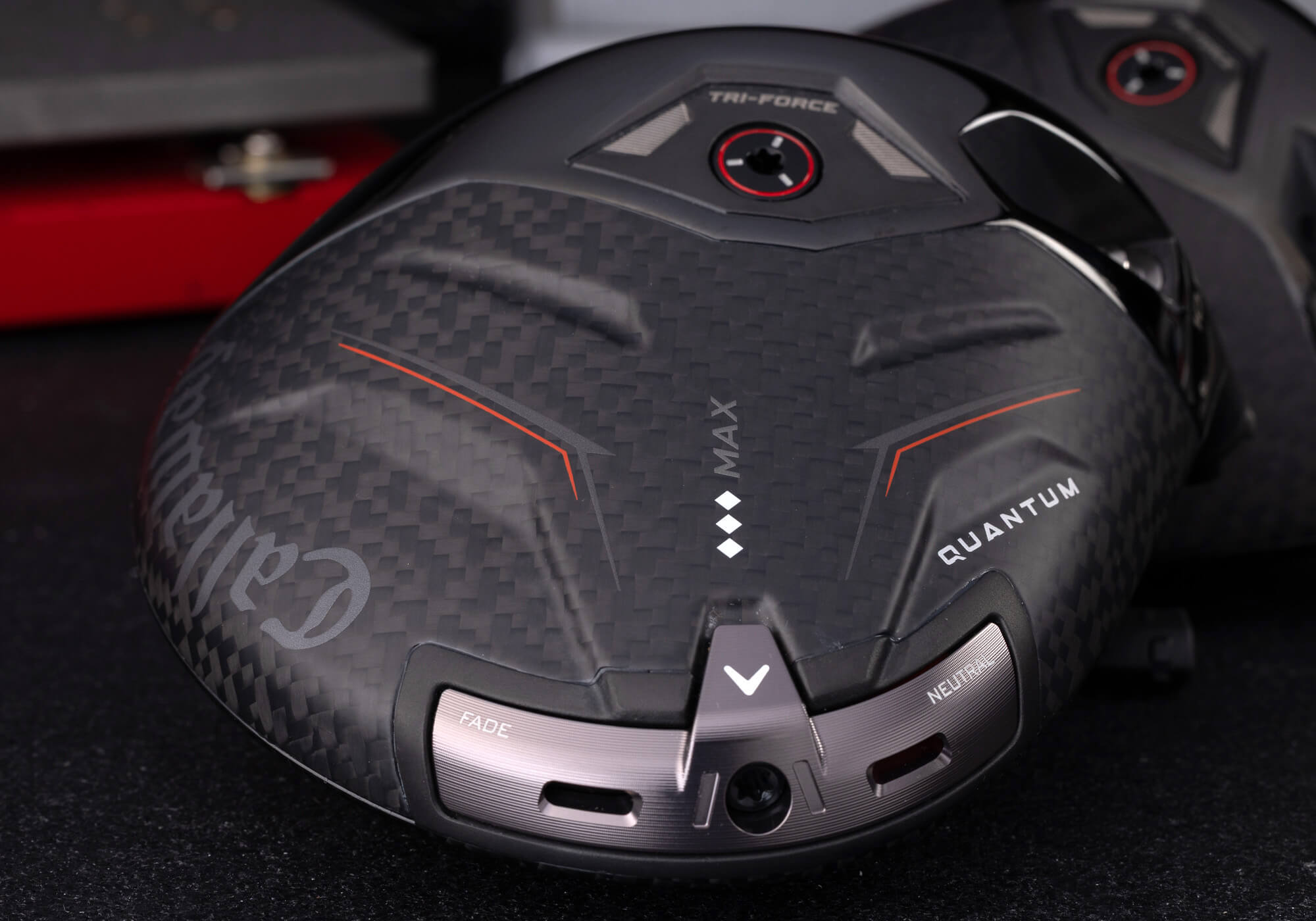
Who it’s for: Golfers who prefer the shape of the Triple Diamond but would benefit from slightly higher spin rates and additional stability.
Available lofts: 9°, 10.5°
Stock shafts: Fujikura Ventus Black/Charcoal 60g (S/X), True Temper Denali Frost Silver 50g (S)
Retail Price: $649
Quantum Triple Diamond: Compact, fade-ready
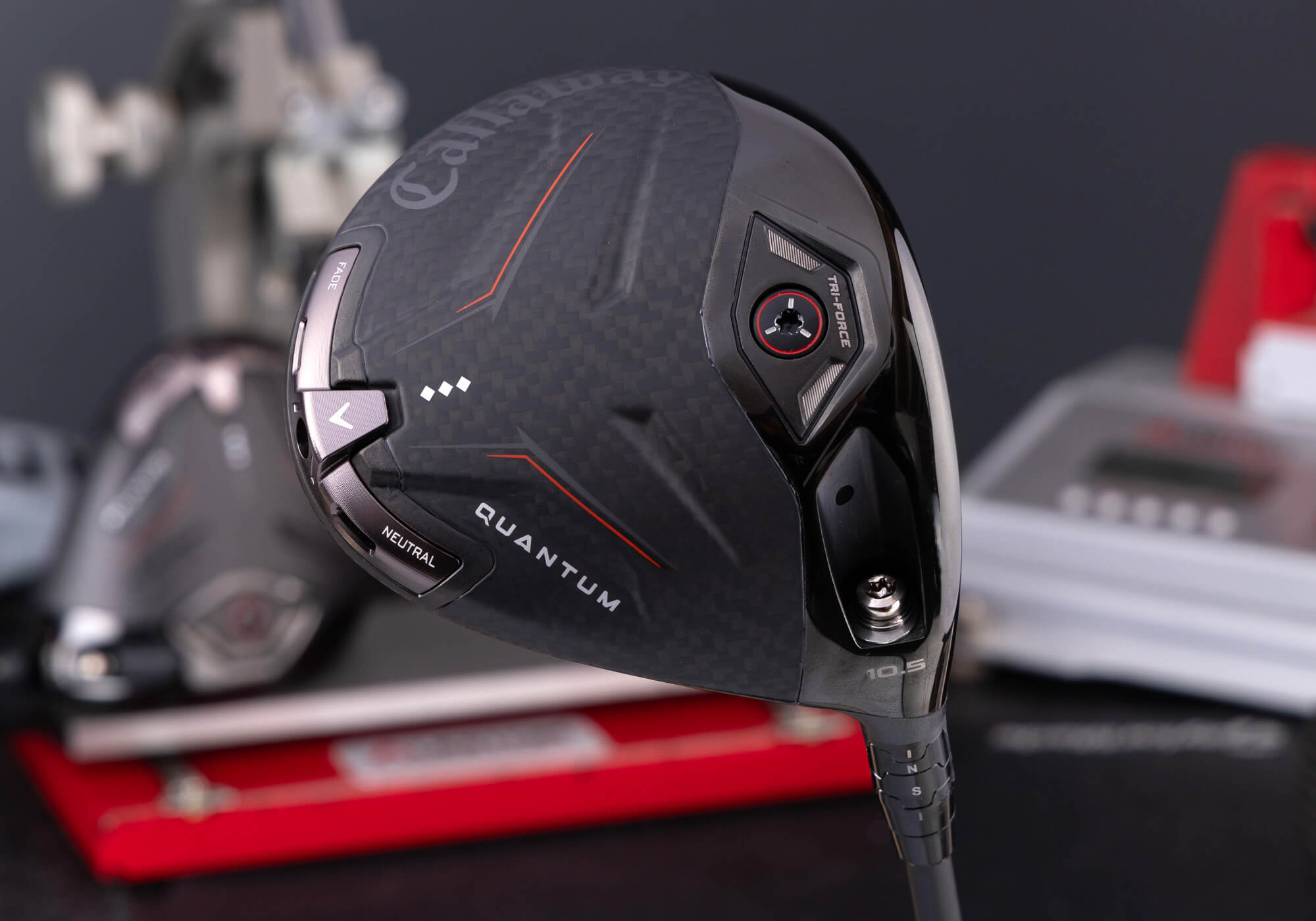
Triple Diamond remains Callaway’s most tour-played shape. It features 360° Carbon Chassis construction. For the updated model, Callaway says it took what players loved about last year’s Elyte Triple Diamond and the previous year’s Paradym Ai Smoke and integrated them into the new model.
Like the Quantum Max, it features two discrete weight settings. In the Fade setting, flight should prove similar to the “fall right” trajectory golfers experienced with the Ai Smoke while the neutral position should mirror the flight of last season’s Elyte TD.
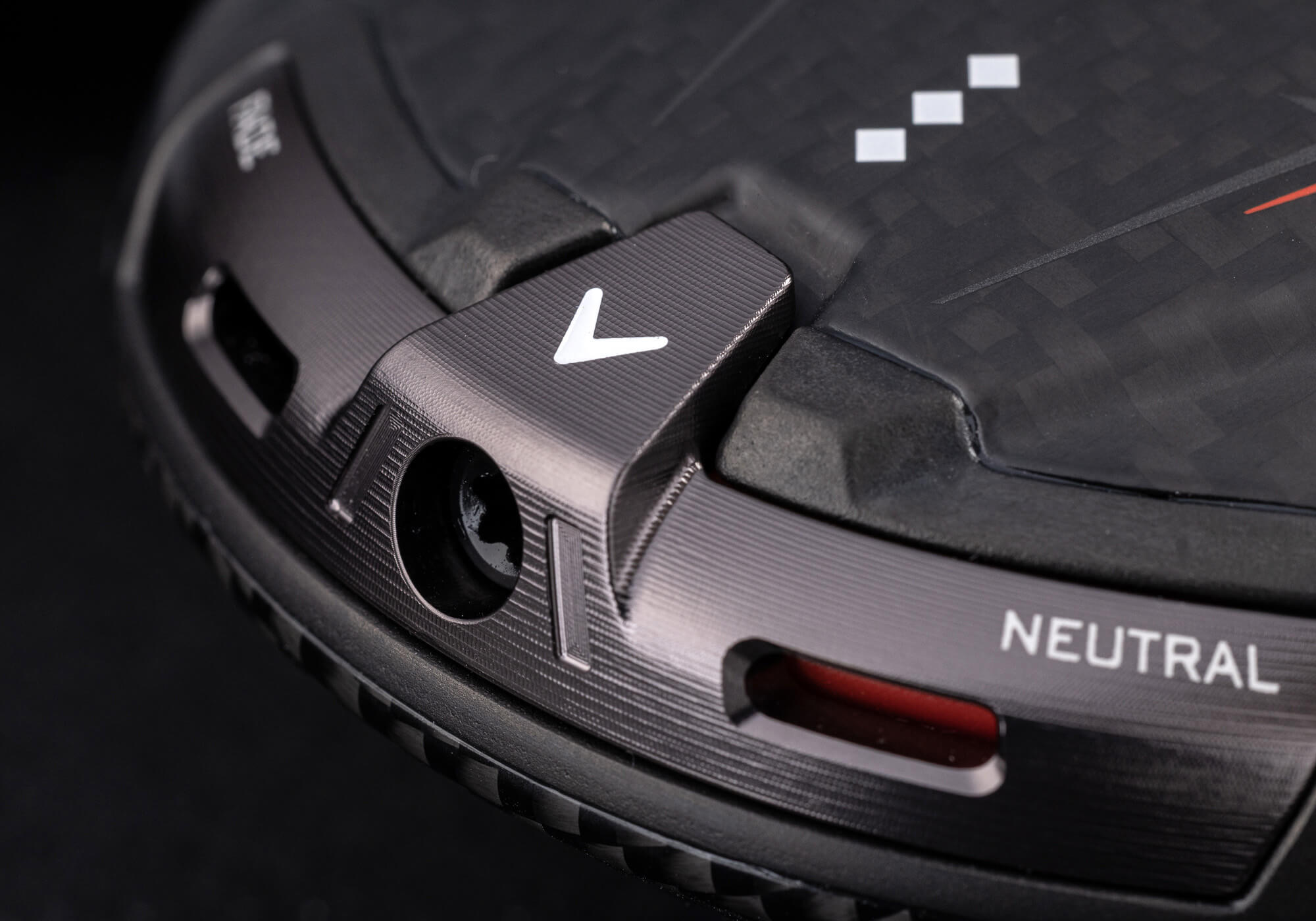
Who it’s for: Better players and other golfers seeking lower spin with more workability.
Available lofts: 8°, 9°, 10.5°
Stock shafts: True Temper Denali Frost Silver 50g (S), Fujikura Ventus Black 60g/70g (S/X)
Retail Price: $699
What about the Quantum Triple Diamond TD?
If you’ve been paying attention to the USGA conforming list, you may have noticed a Quantum Triple Diamond TD listed. Yes, it exists.
Last spring, the Elyte Triple Diamond Tour Draw launched alongside the Triple Diamond Max. This time around, Callaway says the Quantum TD has been developed primarily for tour use. Officially, there are no plans to bring it to retail.
With Triple Diamond and Triple Diamond Max in the lineup, Callaway believes the better-player category is already covered. TD remains a tour and testing option.
Will Callaway change its mind? Put me down as a maybe.
About that “Ventus Black” stock shaft
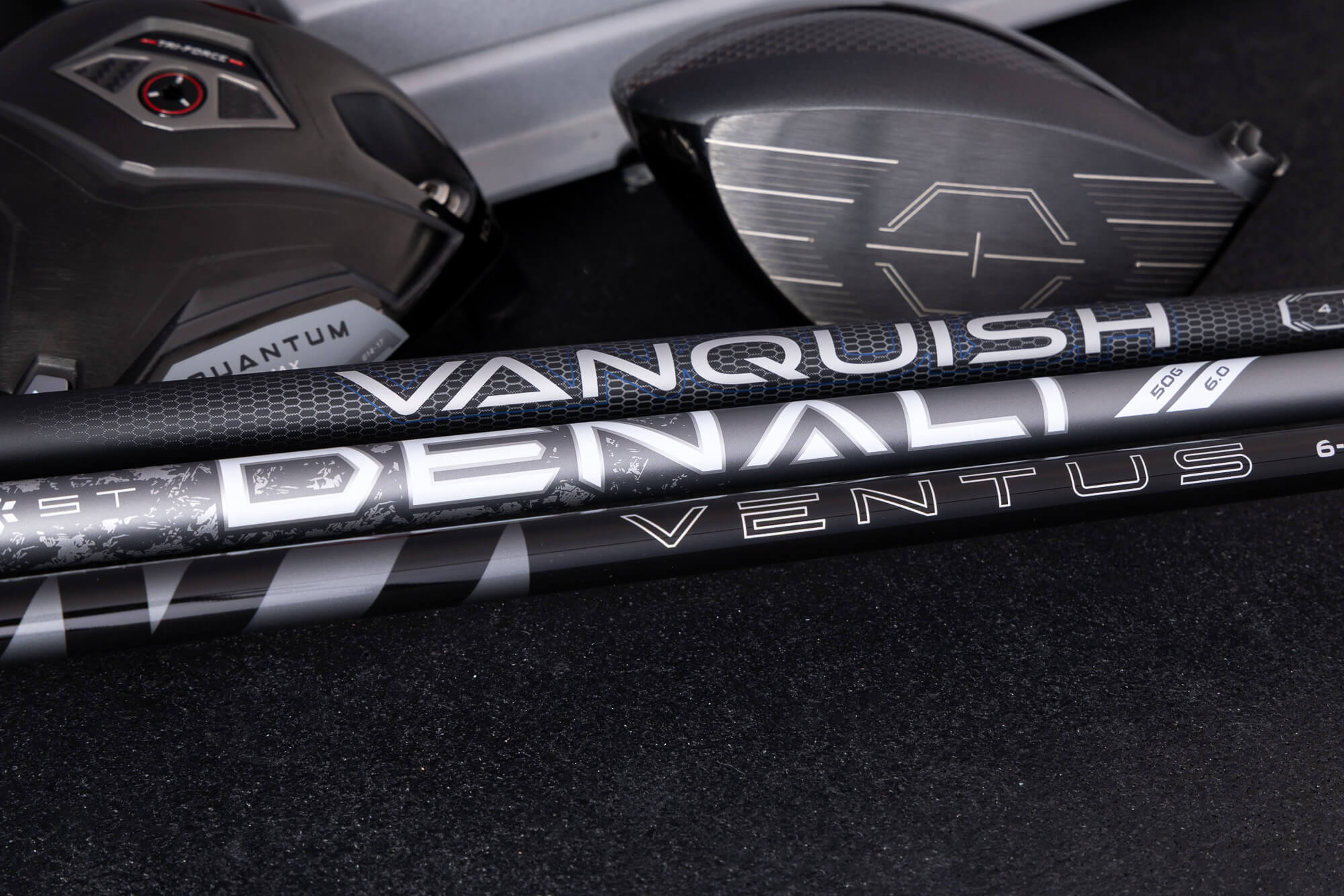
Filed under Not this shit again, you may have noticed that one of the stock shaft offerings in Triple Diamond models is a “Ventus Black.”
Bottom line: It’s another in a line of fake Ventus offerings (I’m sorry, no VeloCore, no Ventus) and not for anything, nobody in their right mind would offer Ventus Black stock. If you know, you already know, but if you don’t, it’s yet another case of trading on brand recognition to sell something that’s most definitely not that thing. I’ve shared my feelings with Callaway. Hopefully, it will be one and done and we won’t have to discuss it next year.
Refined design
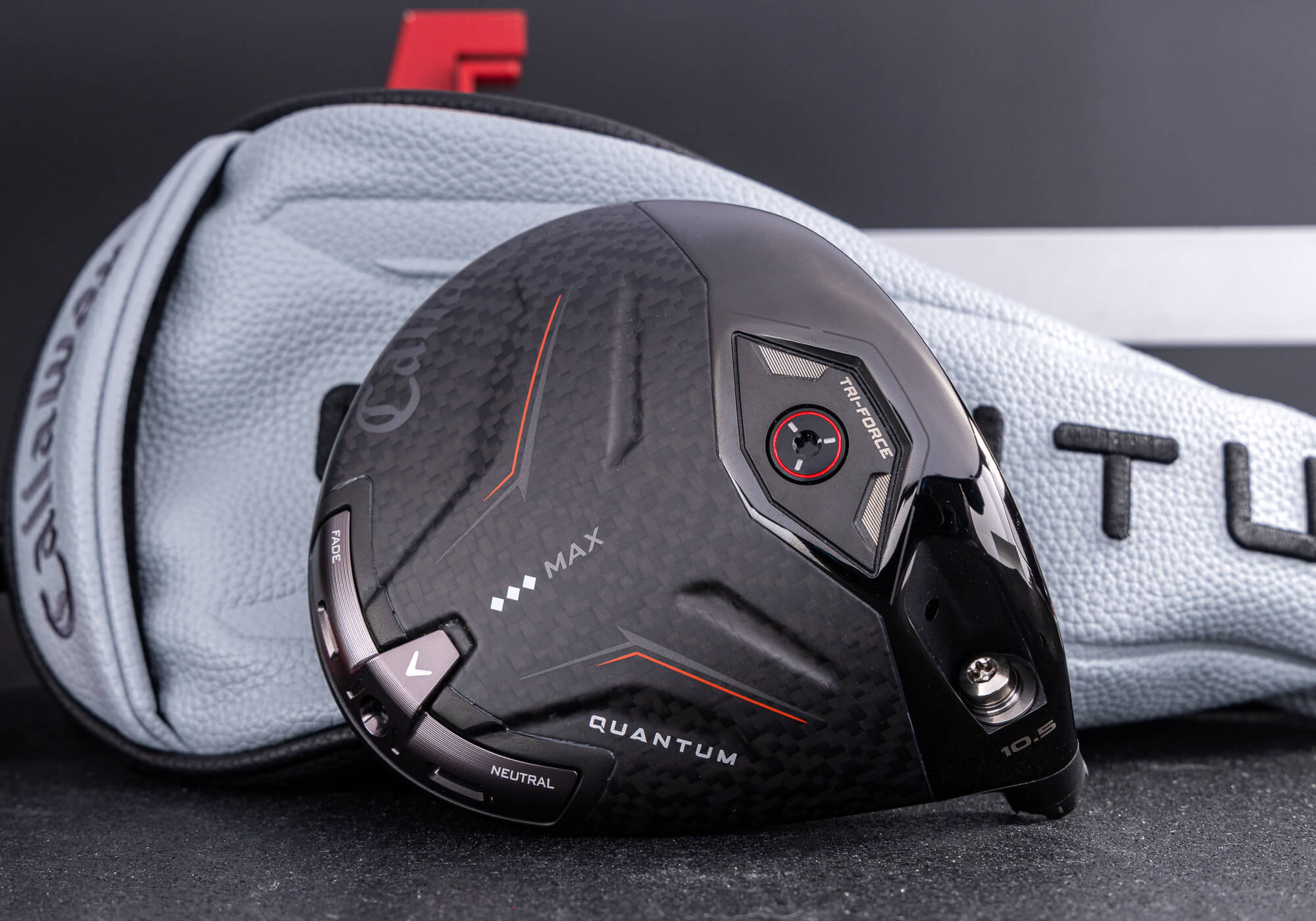
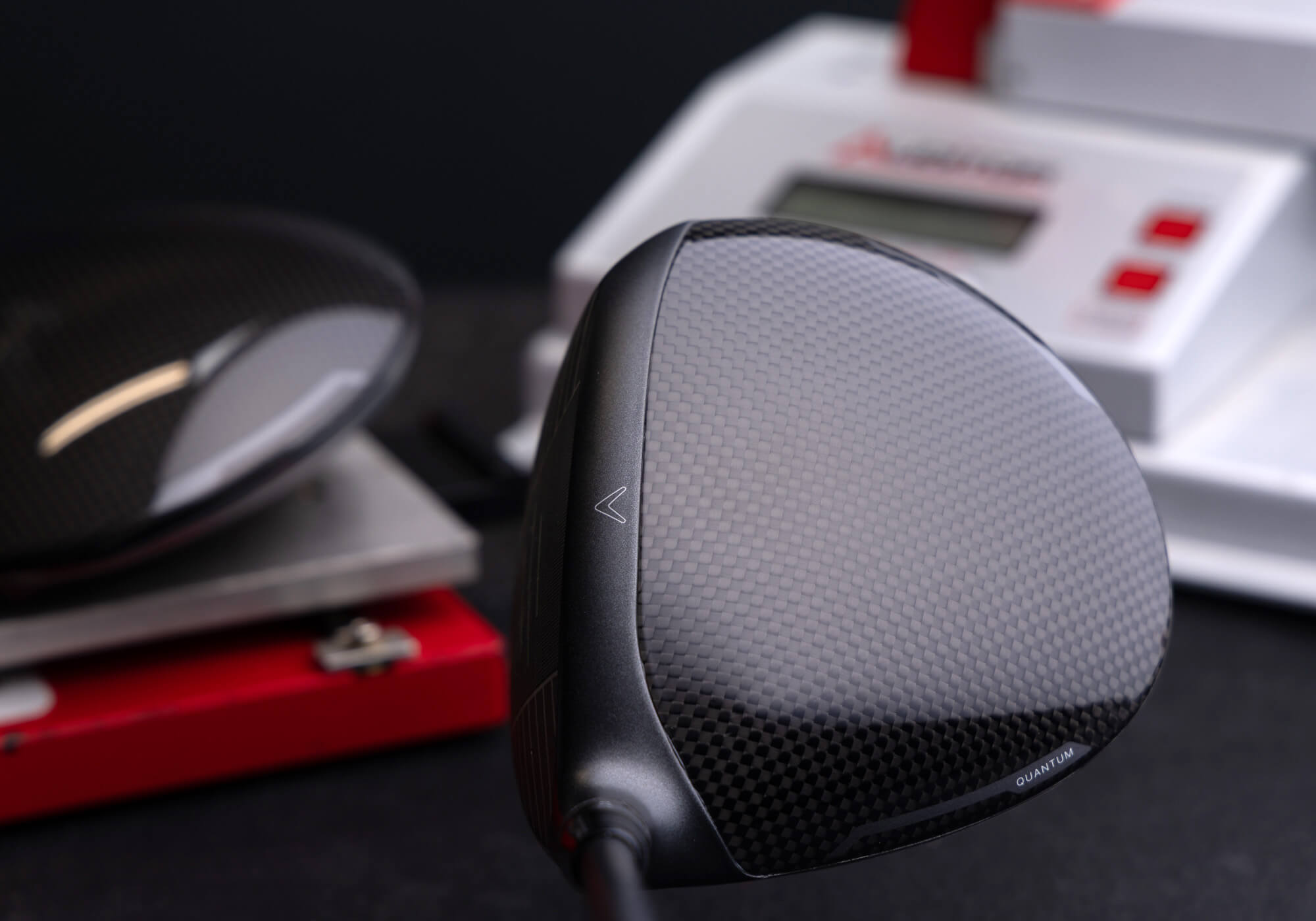
Suffice it to say that Callaway didn’t nail the industrial design elements of Elyte. Outstanding performers, sure, but the curb appeal was lacking, especially sitting on the shelf between the modern but eye-catching TaylorMade’s Qi35 and the classically timeless good looks of the Titleist GT lineup.
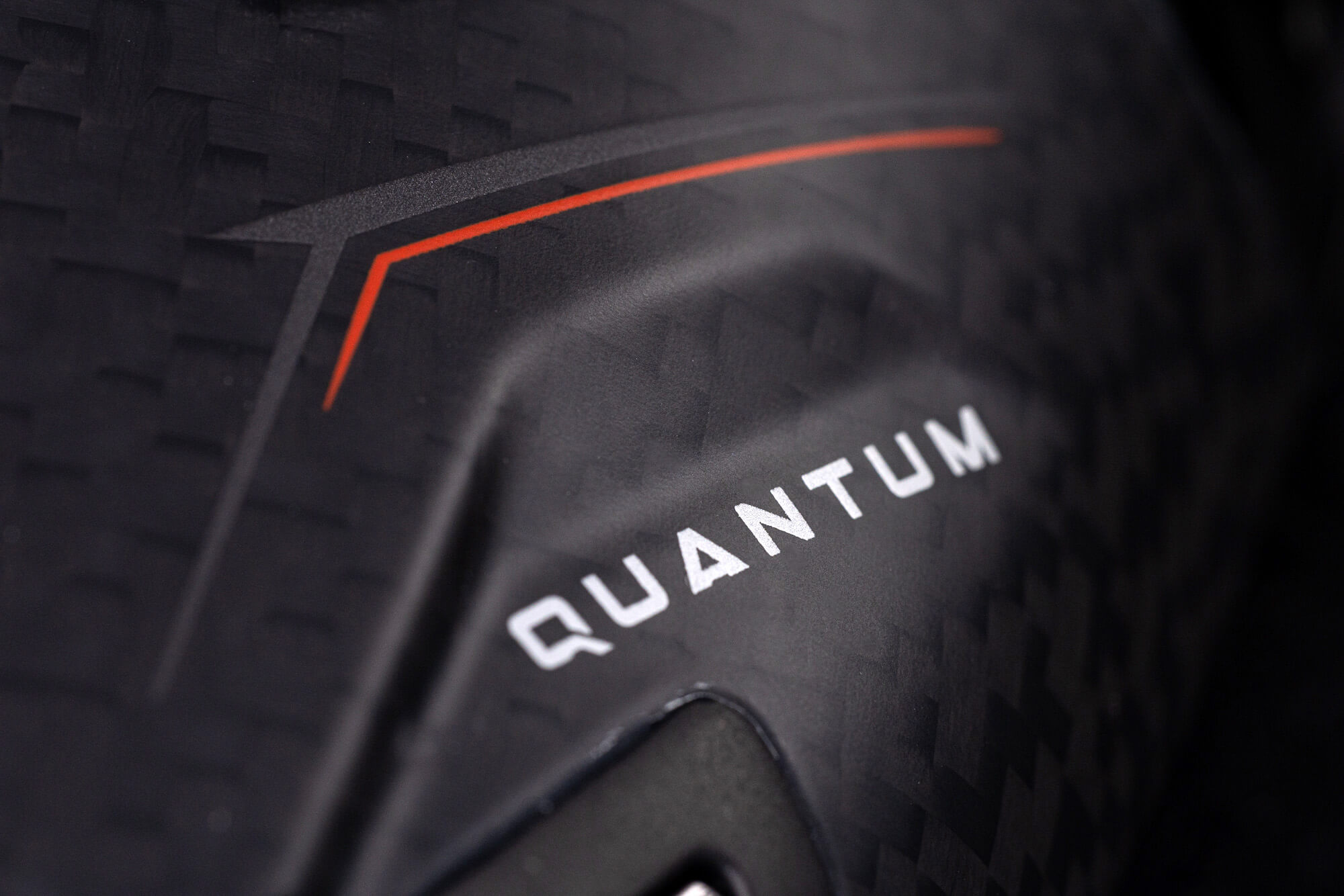
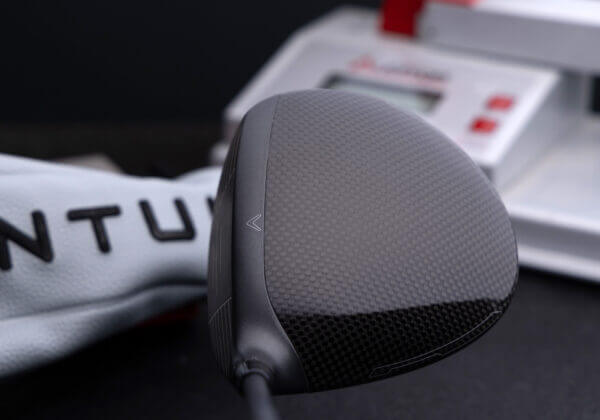
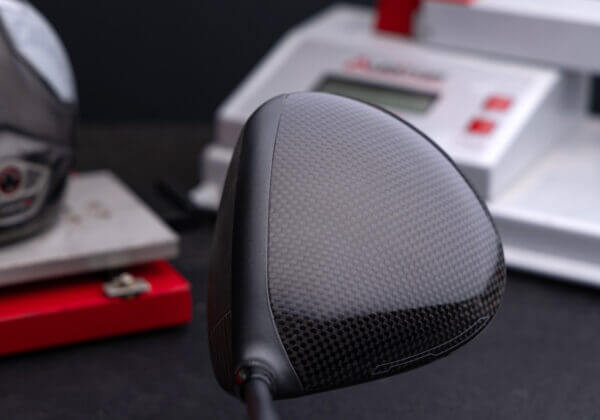
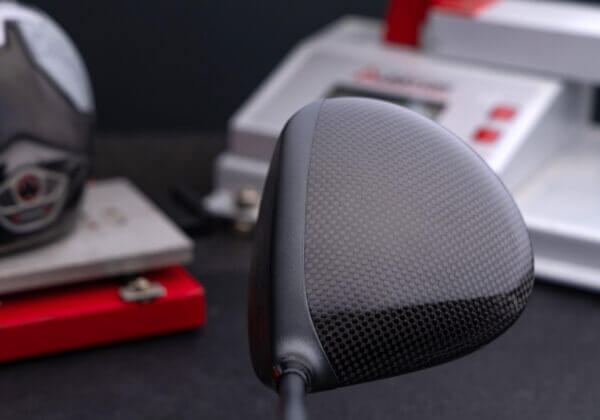
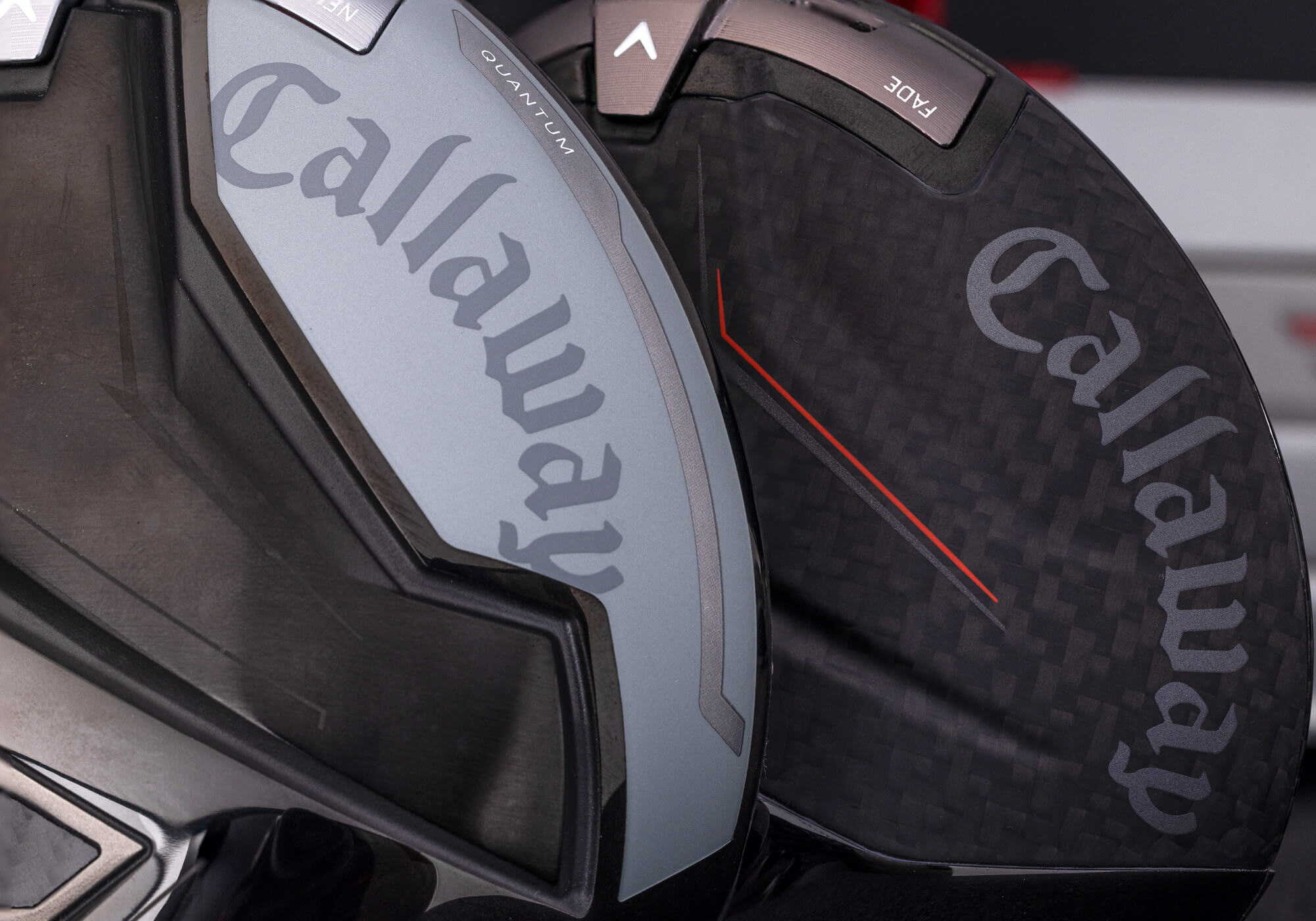
With Quantum, Callaway has borrowed heavily from Paradym Ai Smoke (the carbon crown patterns will feel familiar) while adding some new elements (including the new weight system).
And, sure, while I might say that at first glance the new weight system could be mistaken for USB ports, overall, the design is simultaneously bolder and easier on the eyes.
Nothing is ever going to be universally recognized as the best-looking driver on the market, but with Quantum, Callaway hasn’t excluded itself from the conversation. That detail alone is a win.
The bigger picture
Quantum isn’t about chasing a single number. It’s about rethinking the driver face as a system.
Tri-Force Face gives Callaway more control over speed, spin, durability and conformity than any previous design—and the early feedback suggests golfers are seeing it without being told what number they’re supposed to believe.
Sometimes, the most confident move is letting performance speak for itself.
Pricing and availability
Retail price for the Callaway Quantum Max and Quantum Max D drivers is $649. The Quantum Triple Diamond, Triple Diamond Max and Max Fast feature 360° Carbon Chassis construction which brings with it a higher price point. Retail price for those models is $699.
Ahead of launch, last season’s Elyte drivers have been discounted to $499 and $549, depending on the specific model.
The post Callaway Quantum Drivers Seek to Change How Distance is Built appeared first on MyGolfSpy.
