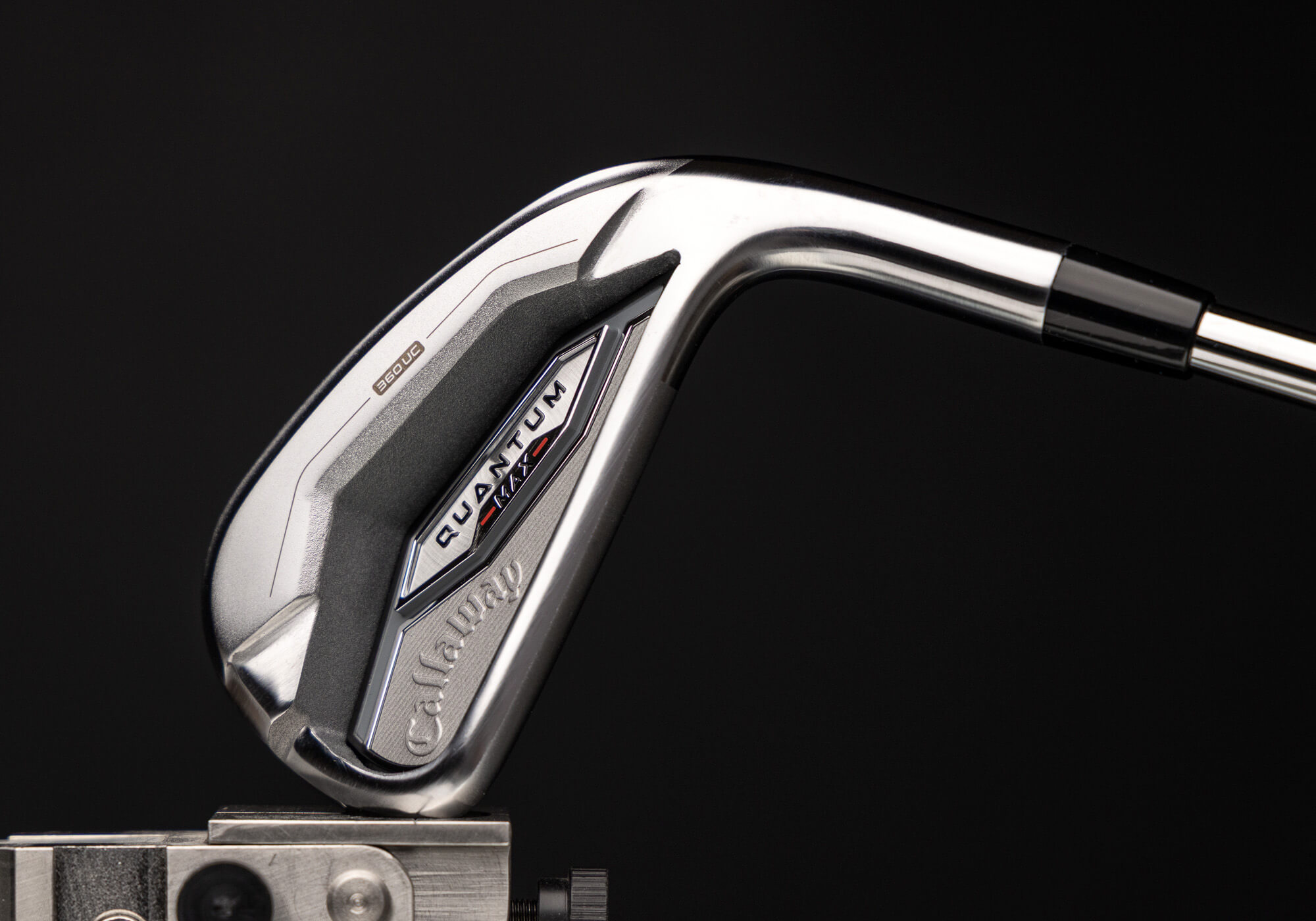
If the new Callaway Quantum irons make you think things you’ve thought before, that’s on purpose.
I wouldn’t call them nostalgic or throwbacks or anything trite like that but Callaway is very intentionally reversing an industry trend. Hold on to your buttons, people, because this is about to get weird: Callaway is making a game-improvement iron that actually looks like …
… a game-improvement iron.
Crazy, right?
(Trust us, it gets crazier)
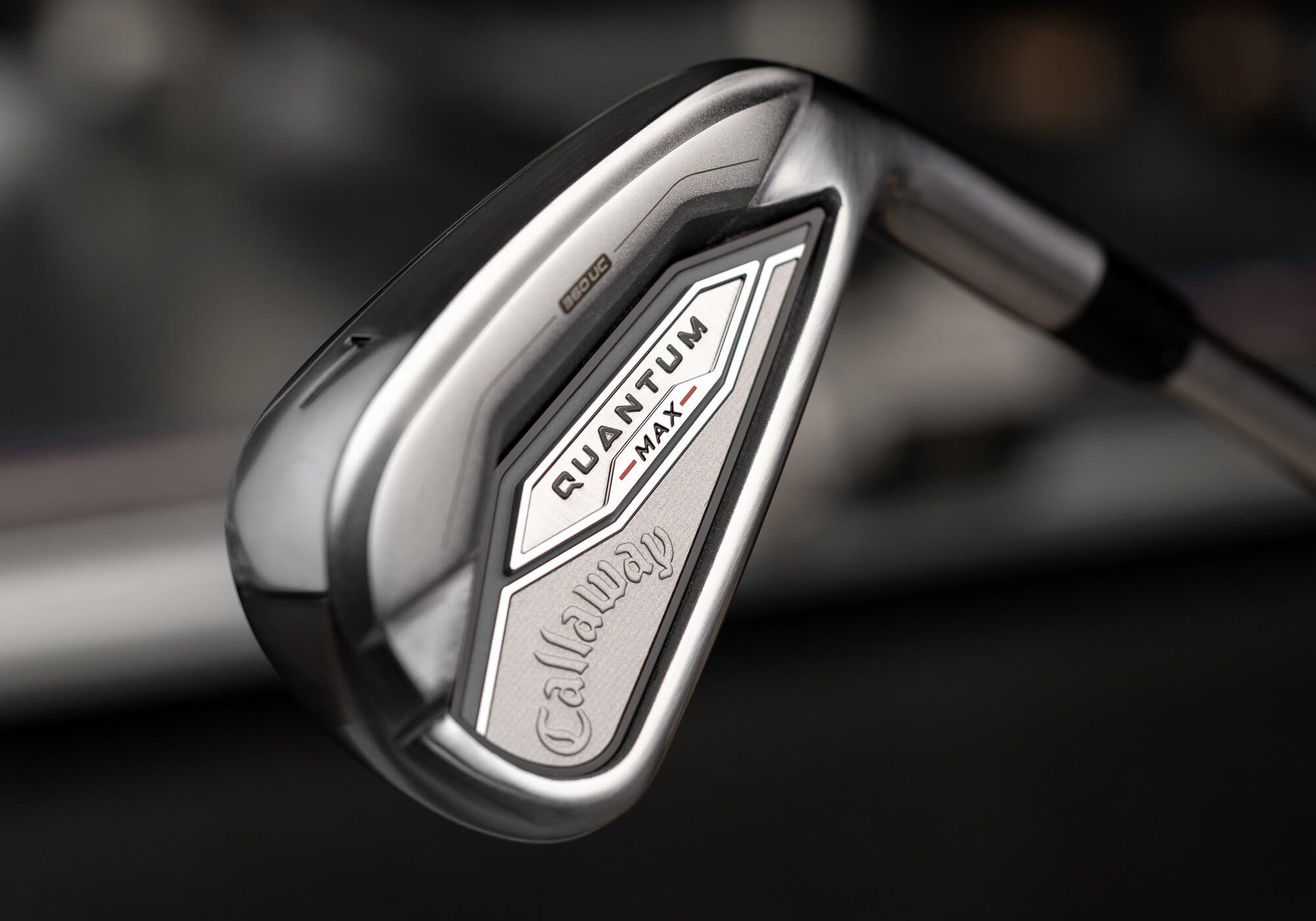
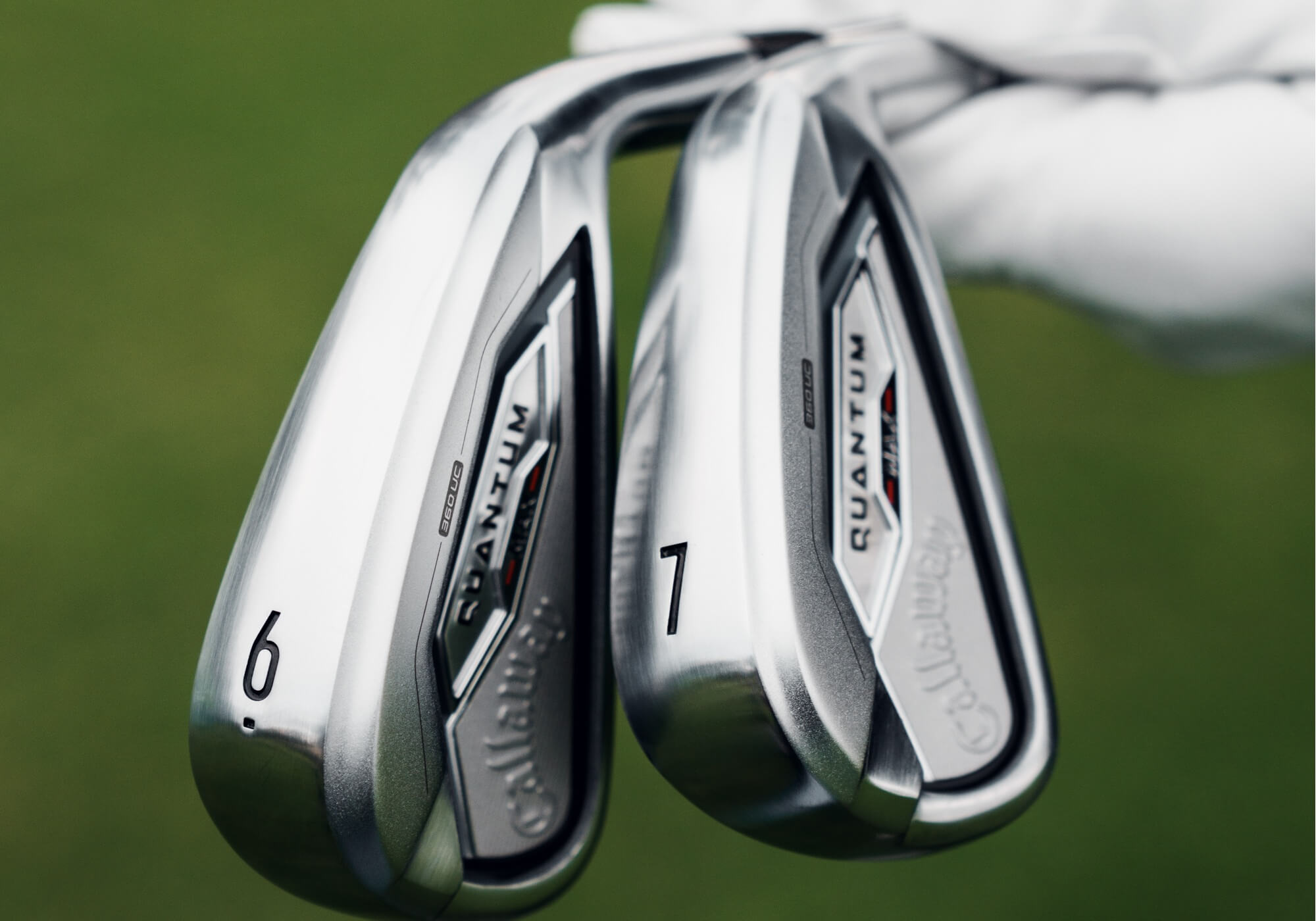
The new Callaway Quantum irons mark a return to unapologetic forgiveness. They’re big. They have a pronounced cavity and they’re easy to hit. They are what they are and they’re not trying to look like something else.
I don’t know about you but I find something refreshing about that. There’s something to be said for authenticity.
But are they right for you? Let’s take a look, shall we?
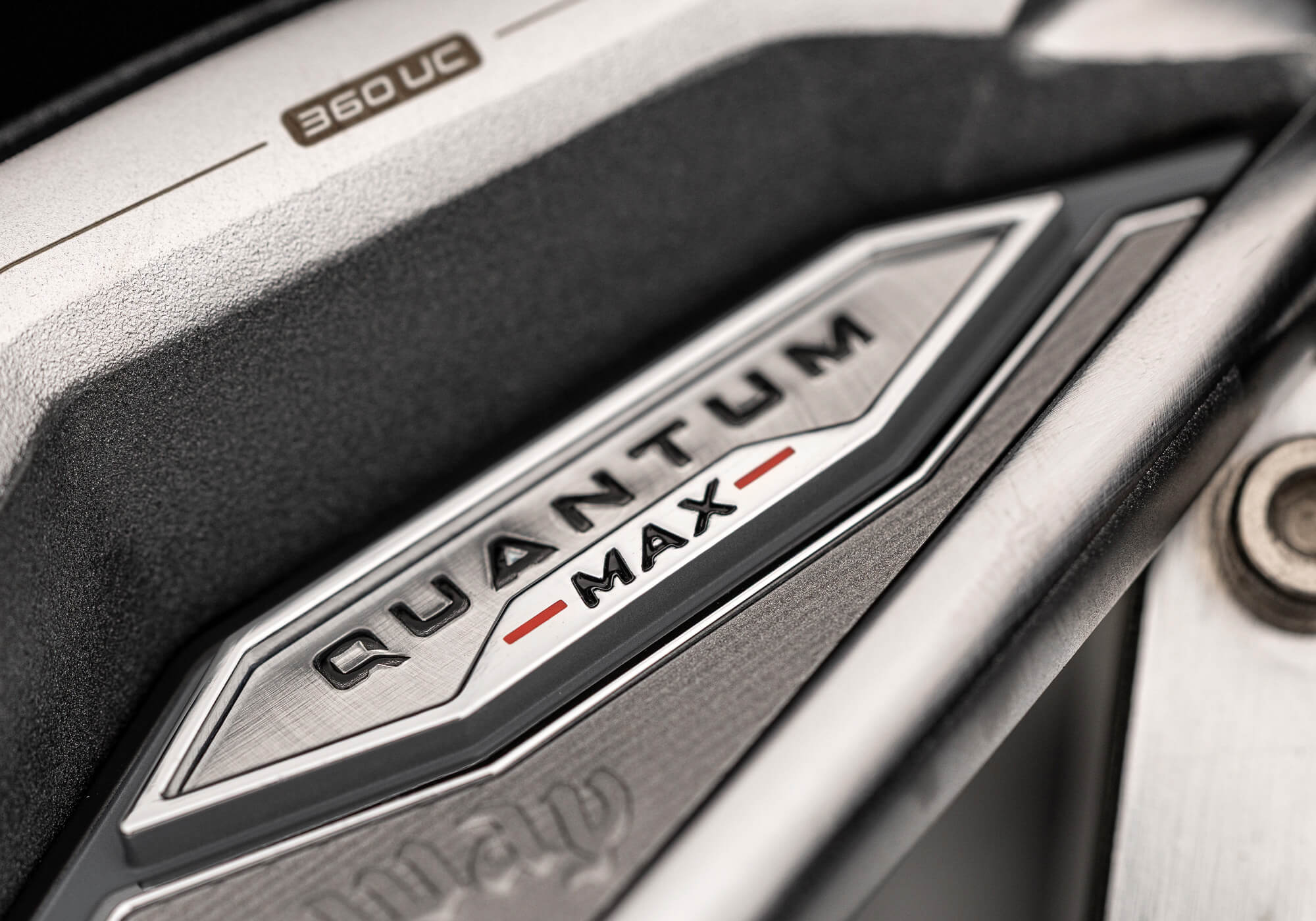
Callaway Quantum irons: A forward reversal?
Want to have some fun at the golf media’s expense today? Check out all the Callaway launch stories today and keep track of how many “Quantum Leap” references are made. Some, I’m sure, will be creative. Most, I fear, will be lame.
The over/under is 36.5.
The one I just made is the only one you’re getting in this story. I hope.
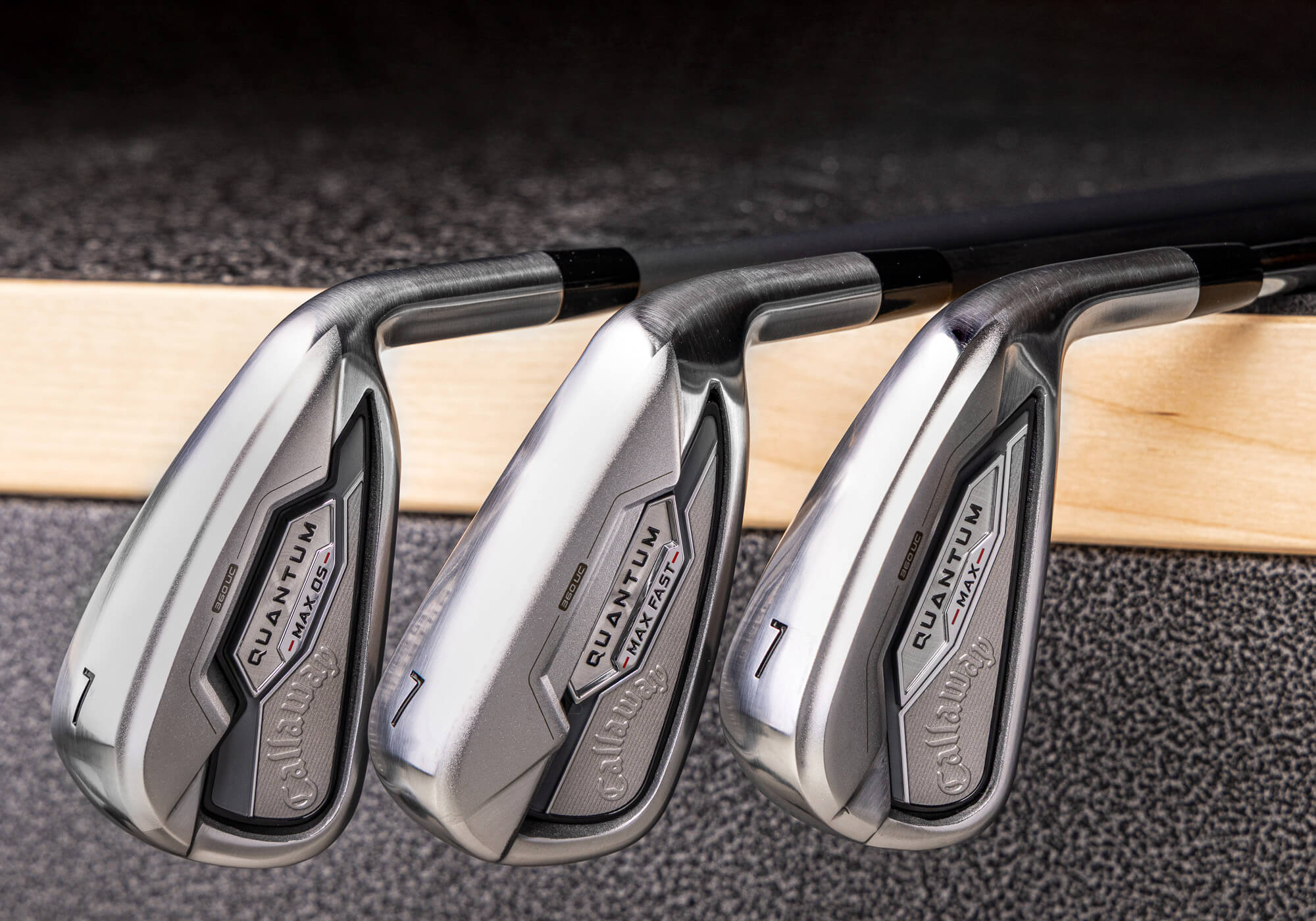
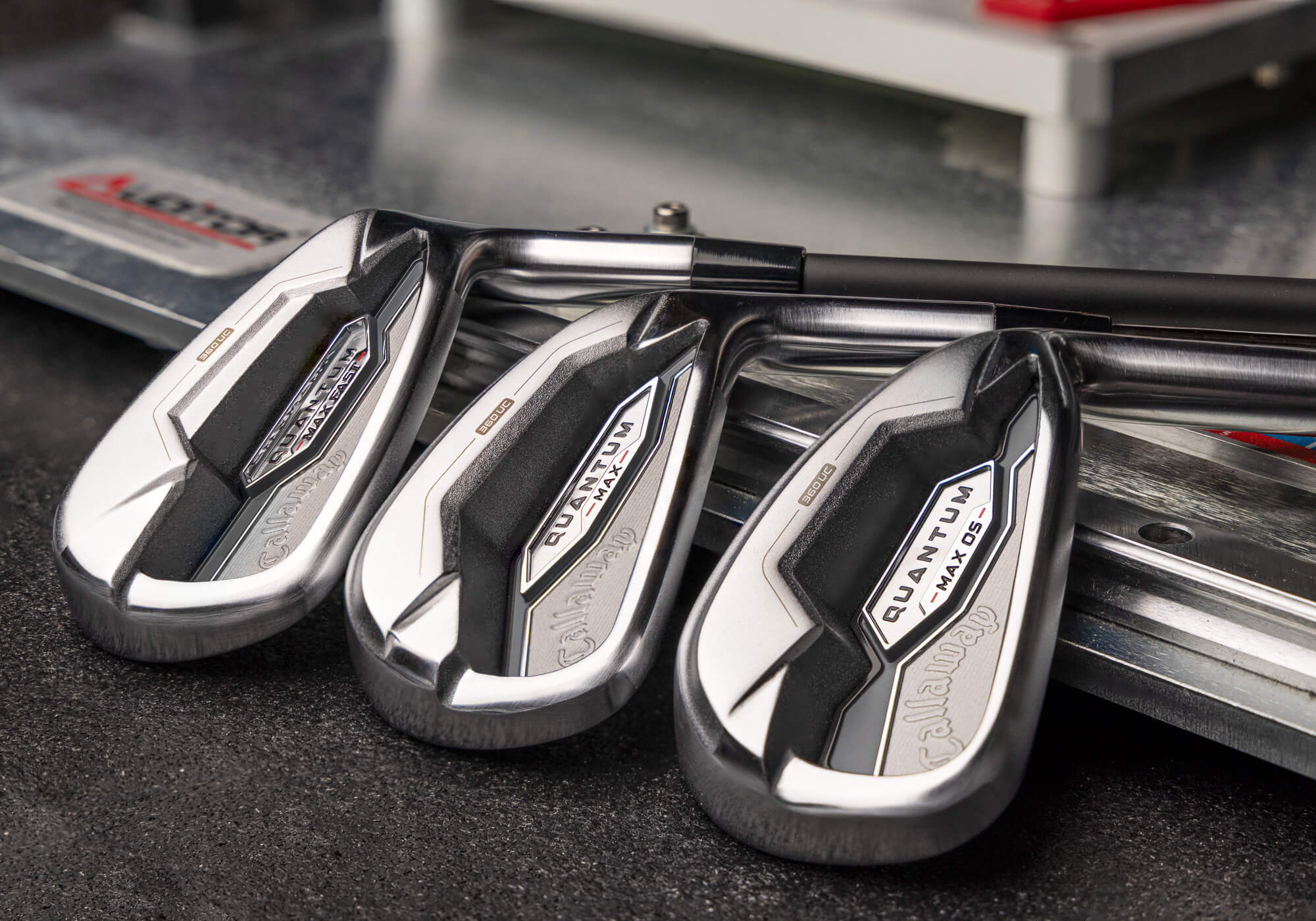
Anyway, Callaway says the new Quantum Max along with its bigger, more forgiving brother, the Quantum Max OS, and its lighter brother, the Quantum Max Fast, signify a return to the company’s original mission of making the game easier.
“A lot of our core irons got too ‘better player’ looking,” Patrick Davis, Callaway’s R&D Director for Irons, tells MyGolfSpy. “They got small. The cosmetics looked good but I think we scared off a lot of consumers who just wanted some help and wanted something easy.”
If you think about it, that’s kind of a remarkable statement for an OEM to make. As much as better players tend to scoff at those “big, ugly-ass shovels,” there’s a sizable group of golfers who want and need those utilitarian utensils. They don’t think of them as big, ugly-ass shovels.
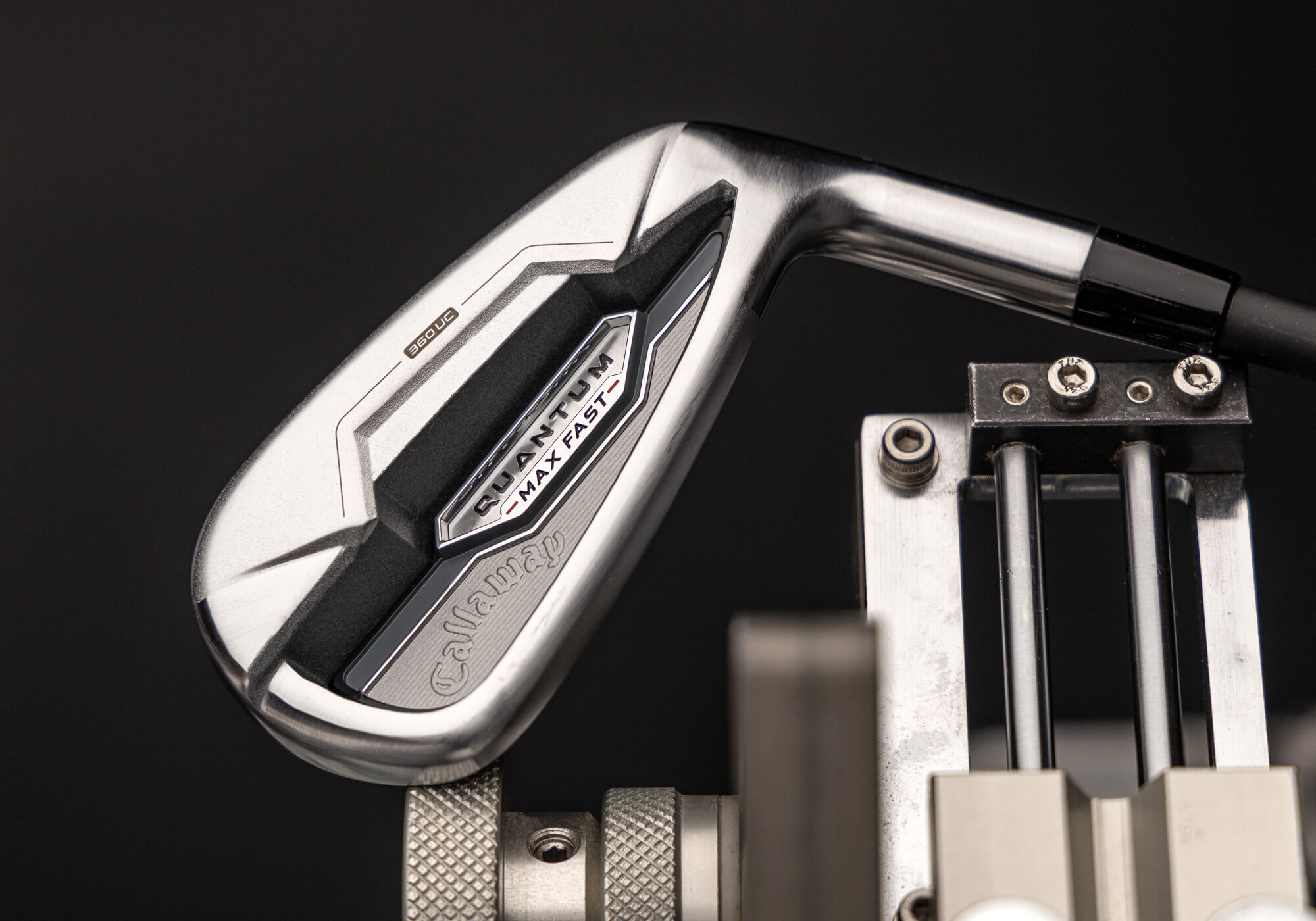
“We found some heritage features from the Big Bertha irons,” says Davis. “It’s not as ugly as the Big Bertha when you put it down, though. It’s confidence-boosting.”
Callaway Quantum: Key technologies
Despite their throwback appearance, Callaway is throwing plenty of new tech at the Quantum series. The goal, of course, is the Holy Trinity of game-improvement irons: equal servings of distance, playability and forgiveness.
“It’s not about hitting it farther with on-center strikes,” says Davis. “It’s about more consistent distance and hitting more greens.”
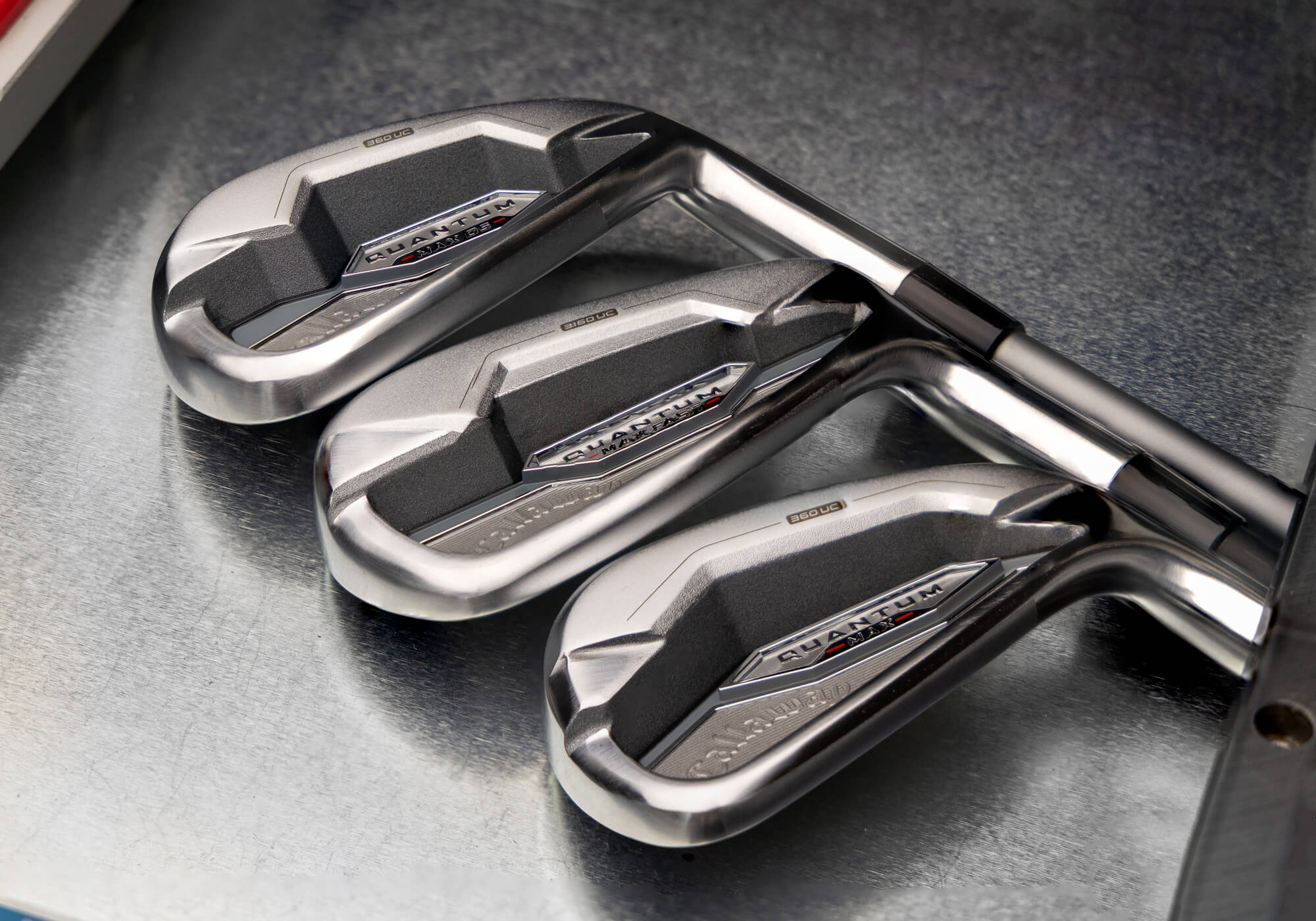
To achieve those goals, Callaway is serving up what it’s calling a Modern 360 Undercut with a next-generation AI-optimized face as well as a new sole design called Tri-Sole.
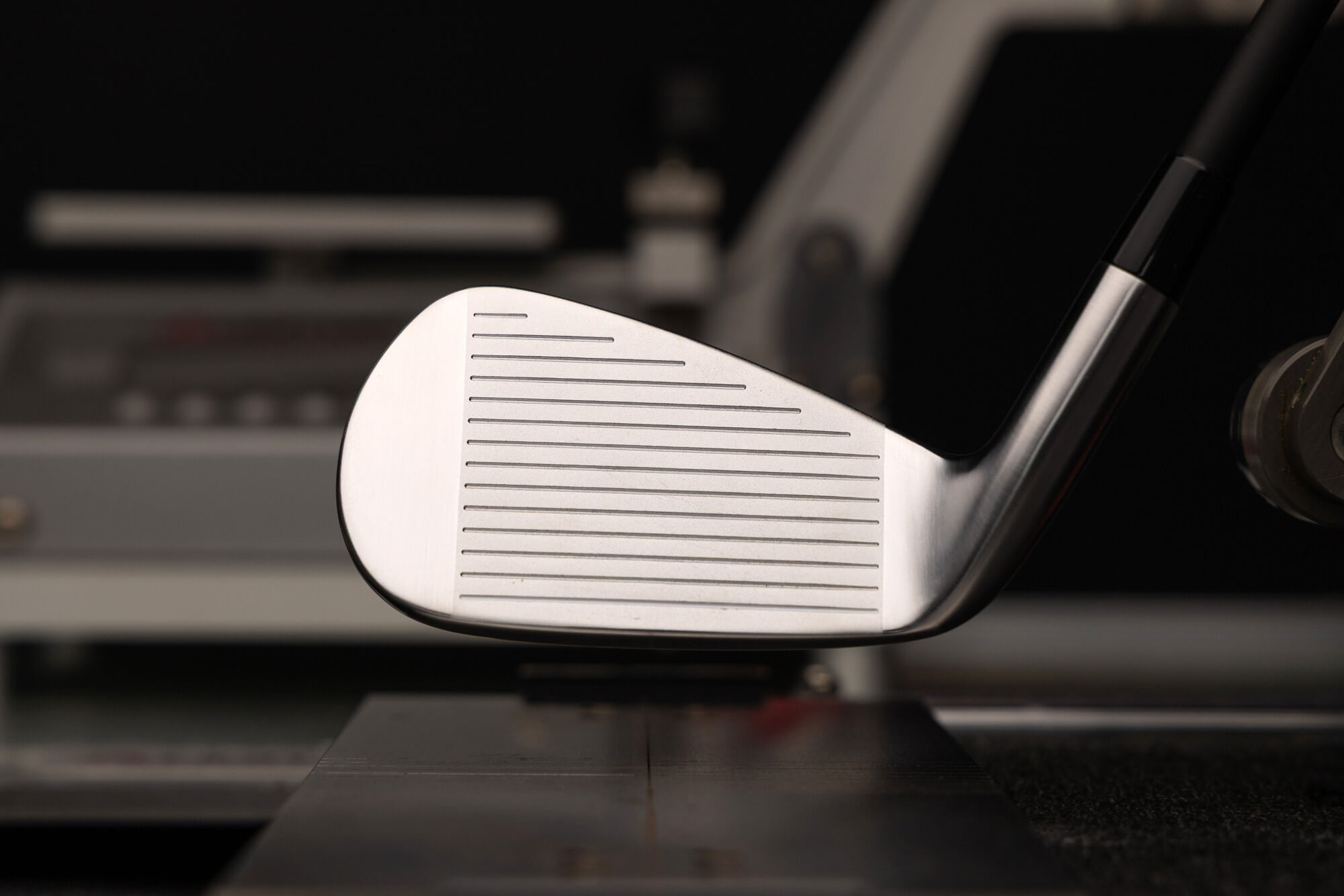
Callaway can legitimately claim to be the pioneers of cup-face technology. Cup face is exactly what it sounds like: a face that extends around the leading edge at the bottom before welding onto the club head. The idea is to create a more flexible face which translates to more ball speed.
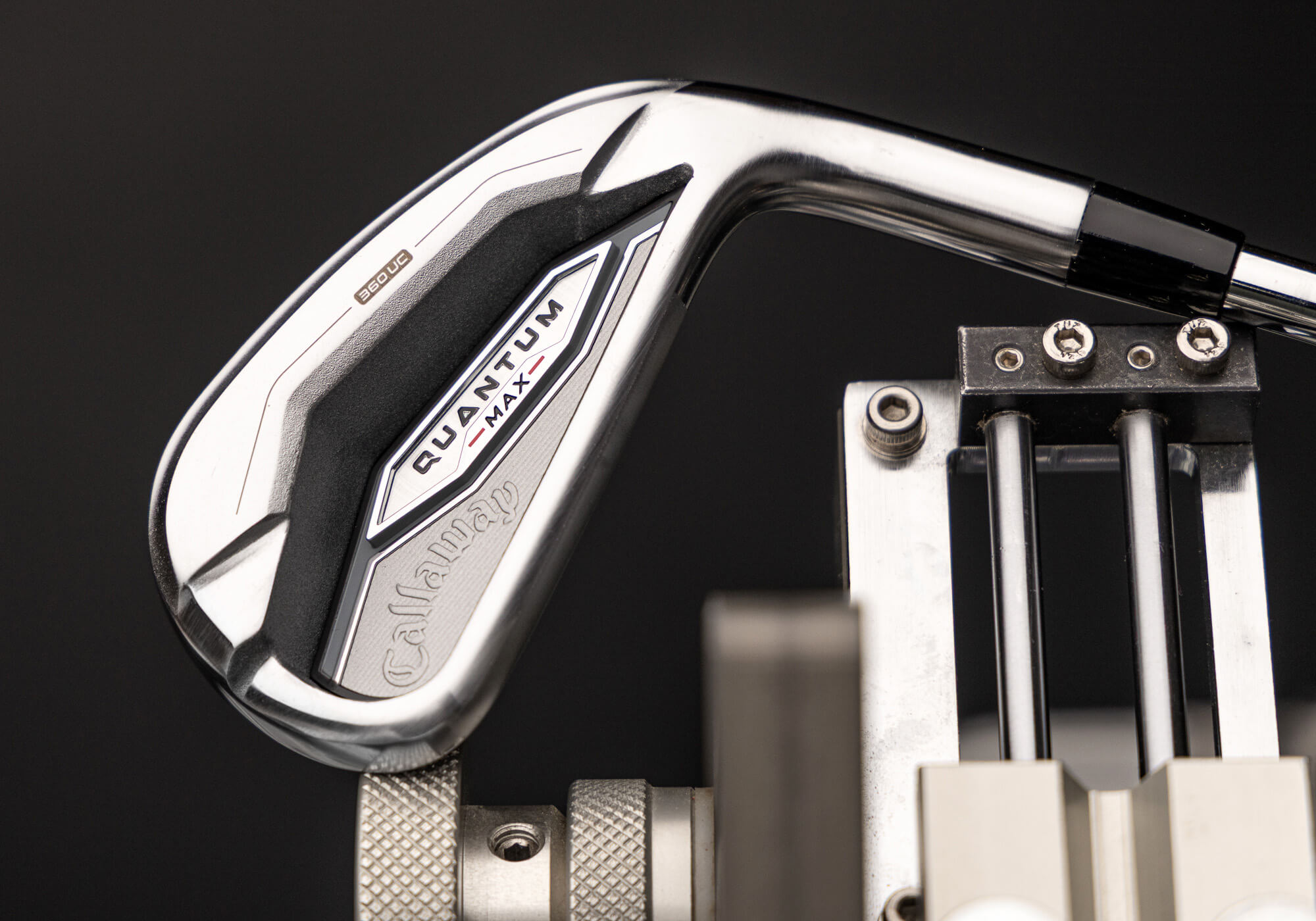
The Modern 360 Undercut is a cup face on steroids. The hosel and the face are actually one piece and the cup itself is extended into and is part of the new Tri-Sole (more on that later). The back piece is then welded on and the cavity filled with Callaway’s urethane microspheres to improve sound and feel.
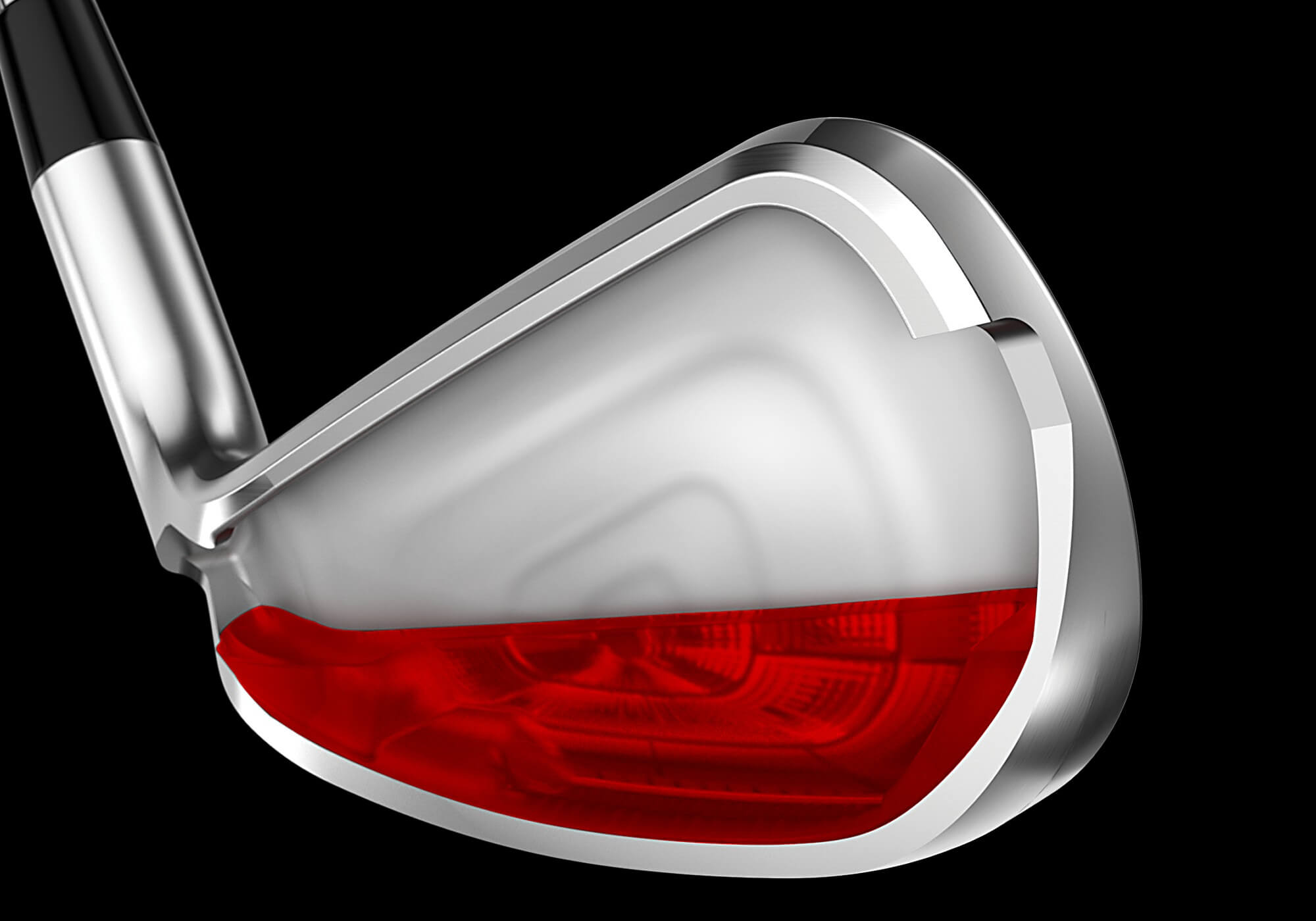
“The undercut runs all the way around the perimeter,” says Callaway R&D Director Brian Williams. “It gives us a more active face with more deflection and allows us to return a lot of energy through the face.”
Where mere mortals miss
It’s no secret that game-improvement golfers miss the center when they swing. A lot. Callaway says it’s as high as 80 percent of the time with the most common miss low and towards the toe. In terms of ball speed, that miss can cost you up to four miles per hour.
With an iron, that translates to anywhere from five to eight yards, roughly the difference between the front part of the green and the fat part of the bunker. And for the typical game-improvement golfer, that front bunker might as well be the inner ring of the Seventh Circle of Hell.

“This new design helps get more face deflection to drive more ball speed,” says Williams. “More face flex is great but what’s important is where we’re getting more flex and how we’re using it.”
The extended undercut allows for more face flex on the bottom half of the face. When combined with its latest AI-Optimized variable thickness face, Callaway is seeing better launch and considerably more ball speed on those low-toe strikes.
“It’s really unlocked low-face ball speed for us,” Williams explains. “It’s cutting ball speed loss in half on low-center and low-toe strikes. You might not be pin-high but you’ll be on the green.”
Sweet Tri-Sole music
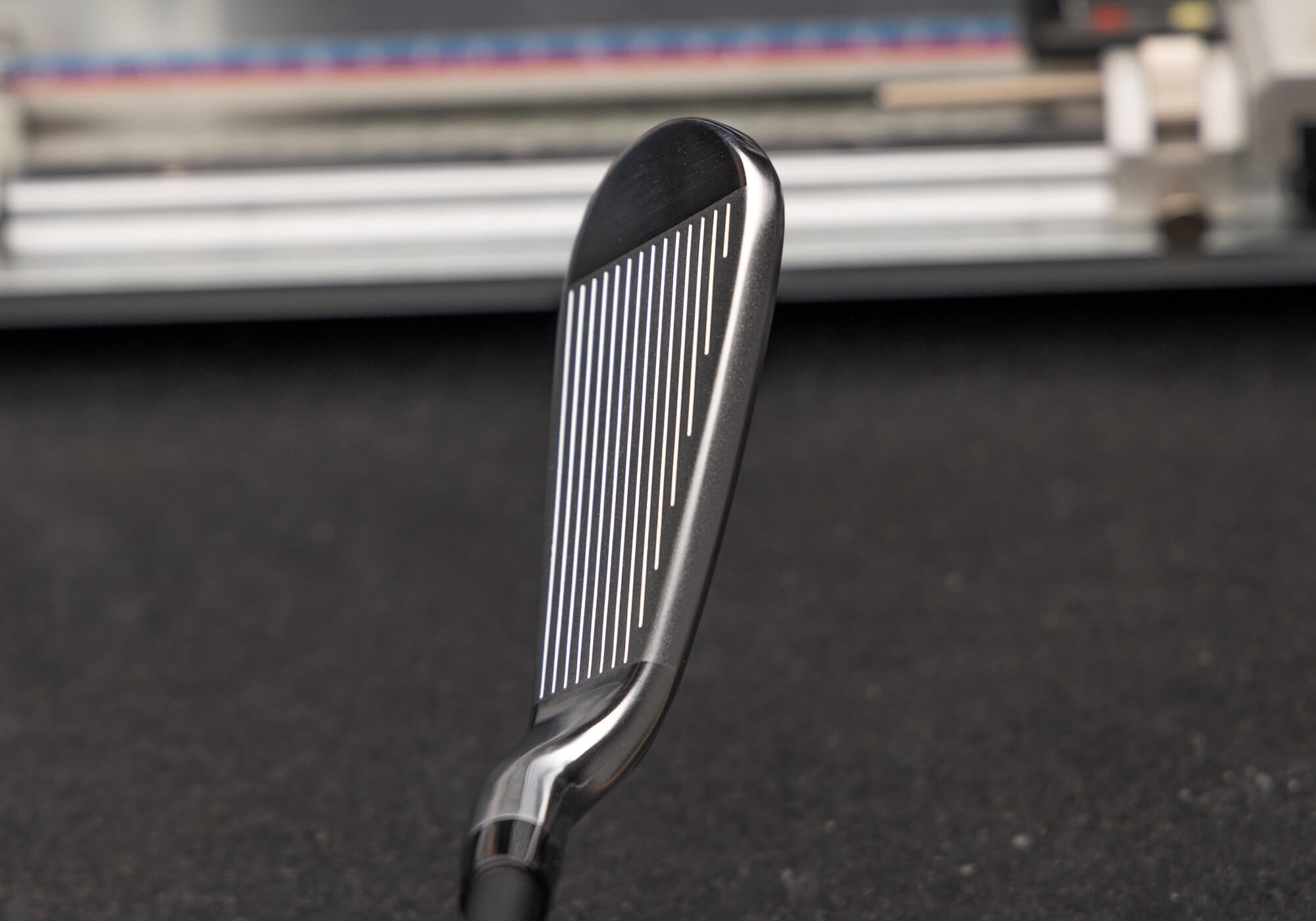
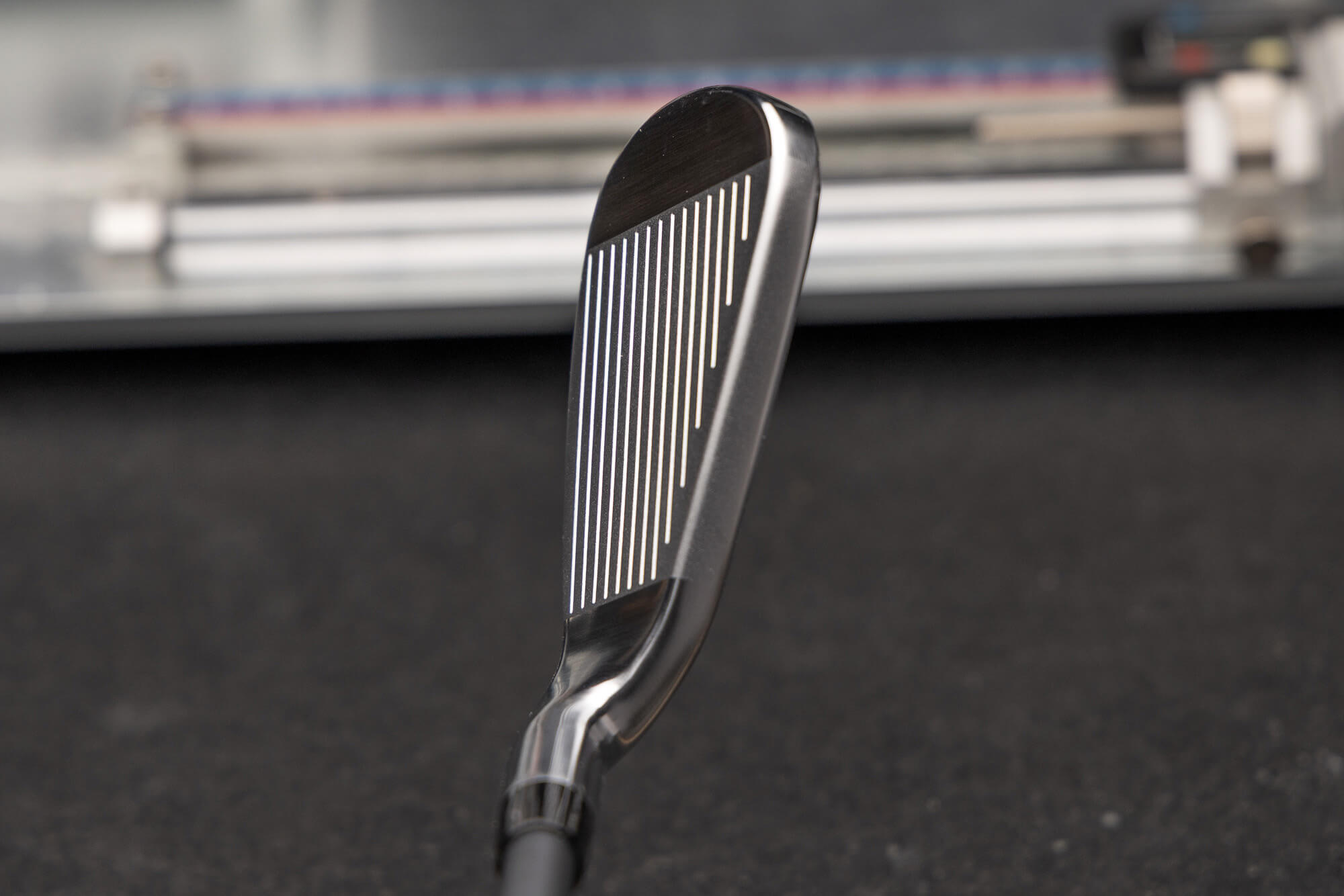
The new Tri-Sole design is Callaway’s take on improving turf interaction. We usually see this sort of design in better player irons but Callaway says its testing shows it can help players of all abilities, swing types and speeds.
“We’ve designed in different bounce angles at different points, moving from heel to toe and front to back,” Williams explains. “The sole is unique per product and unique per loft.”
For players who come in steep, the idea is to keep the leading edge off the ground so it doesn’t grab. If the player is more neutral and gets flippy at impact, early onset bounce helps the club skip through the turf instead of chunking or taking a giant divot.
“It builds confidence,” says Davis. “When you talk to the player, they feel like they can swing freely, like they can get down on it without chunking. That goes a lot further than just the dynamics of the club going through the turf better.”
The new Tri-Sole also shares headlines with the new 360 Undercut in normalizing ball speed across the face and improving forgiveness.
“Players end up hitting the ball higher on the face,” Davis adds. “Getting this impact up makes a big difference in performance. It gets impact closer to the sweet spot and improves launch conditions.”
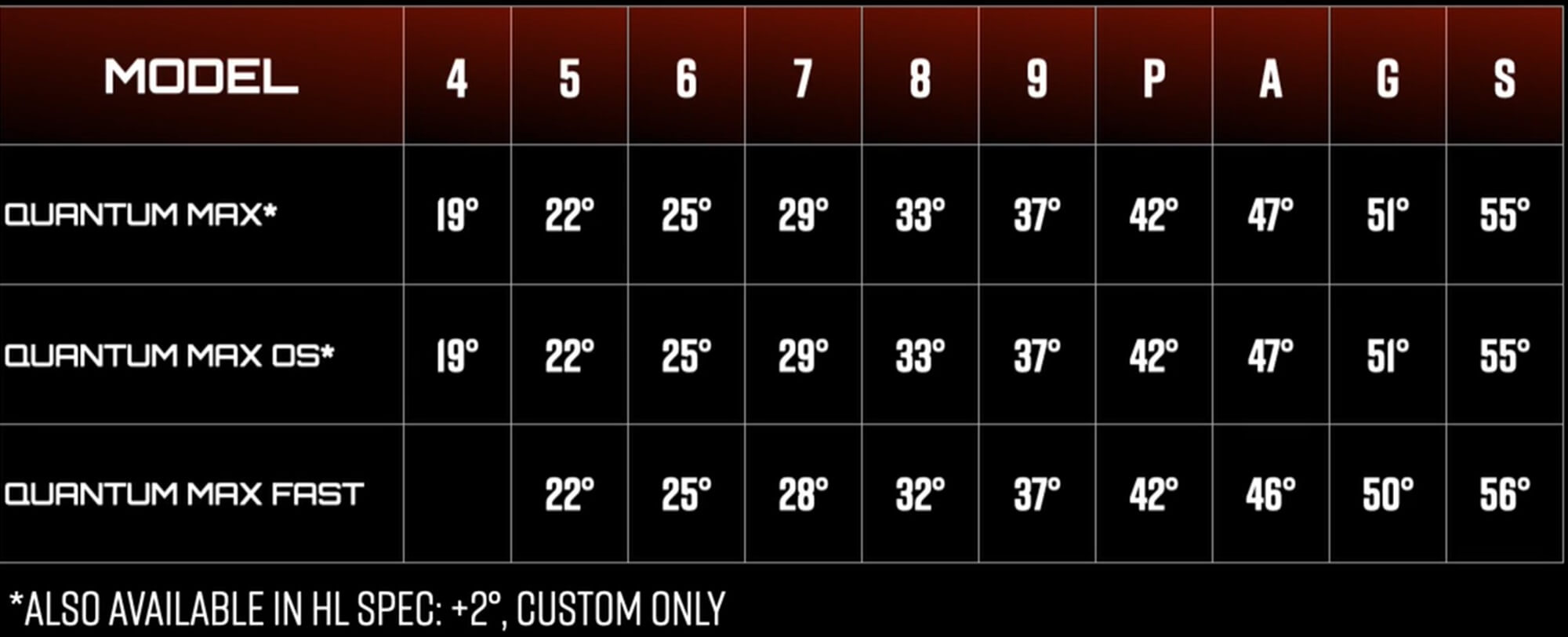
Those improved launch conditions allow Callaway to do something seriously crazy: actually weakening lofts across the Quantum board.
“If you put them in a robot, you’ll get more launch and spin but they’ll come up short in distance,” explains Davis. “Put the same club in a real person’s hands, it’ll test every bit as long as a stronger-lofted package because you’re getting speed back at those likely impact locations.”
Didn’t have that one on your bingo card, did you?

Isn’t something missing?
Here’s another one you didn’t have on your bingo card: the Quantum line includes only three iron sets, not the usual four. What’s missing?
There’s no “HL” or high-launching model.
Is Callaway thumbing its nose at the latest OEM trend in the name of reducing SKUs? Well, yes and no.
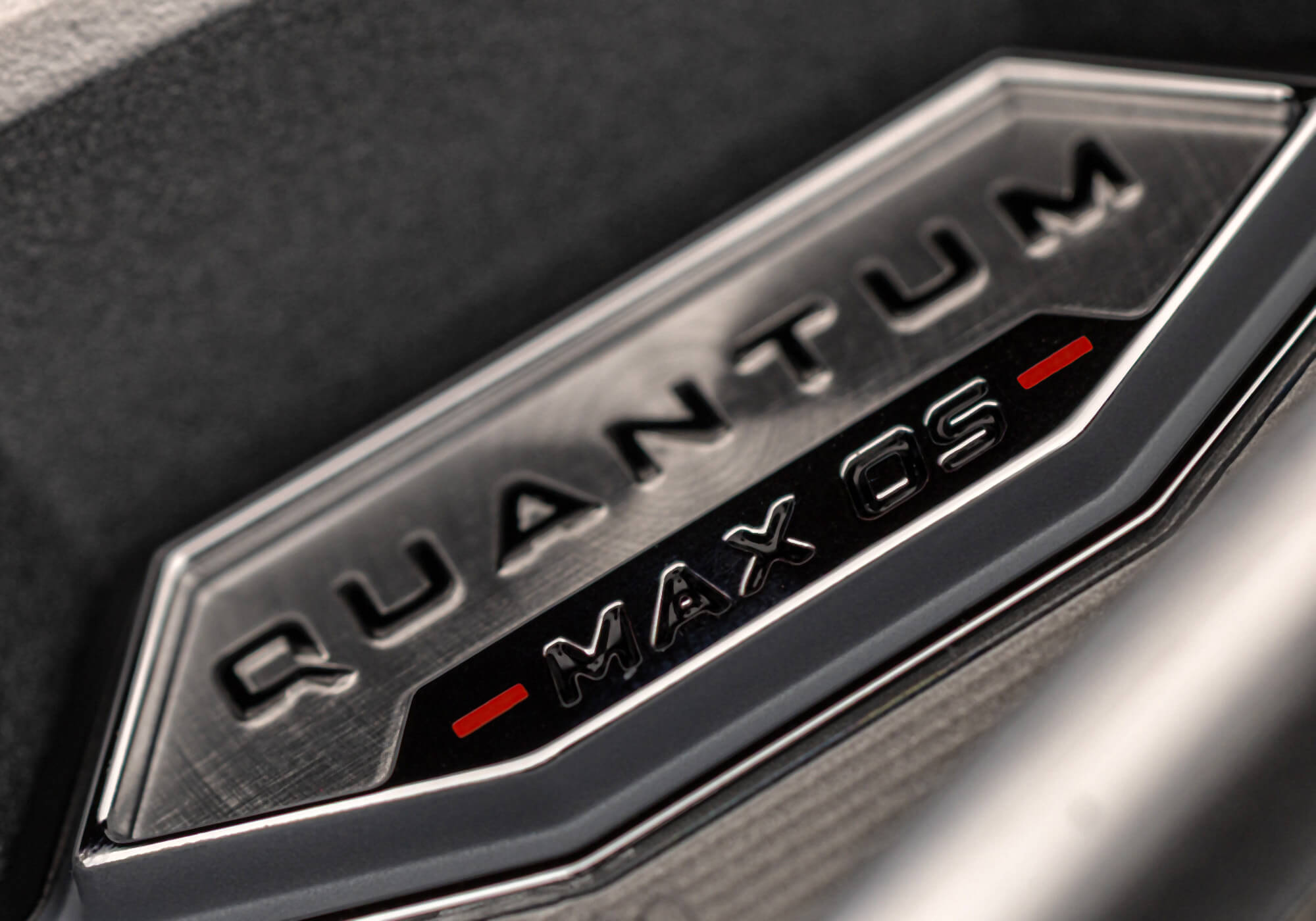
While the new Quantum Max carries the “Max” nomenclature, Callaway considers it to be its core game-improvement model (TaylorMade did the same thing with its Qi Max). The Max is bigger and more forgiving than last year’s core Elyte game-improvement iron. The Max OS is a lot bigger than last year’s Elyte X super game-improvement iron. As mentioned, you might find some Big Bertha hints in its design, specifically in the hosel transition and top line.
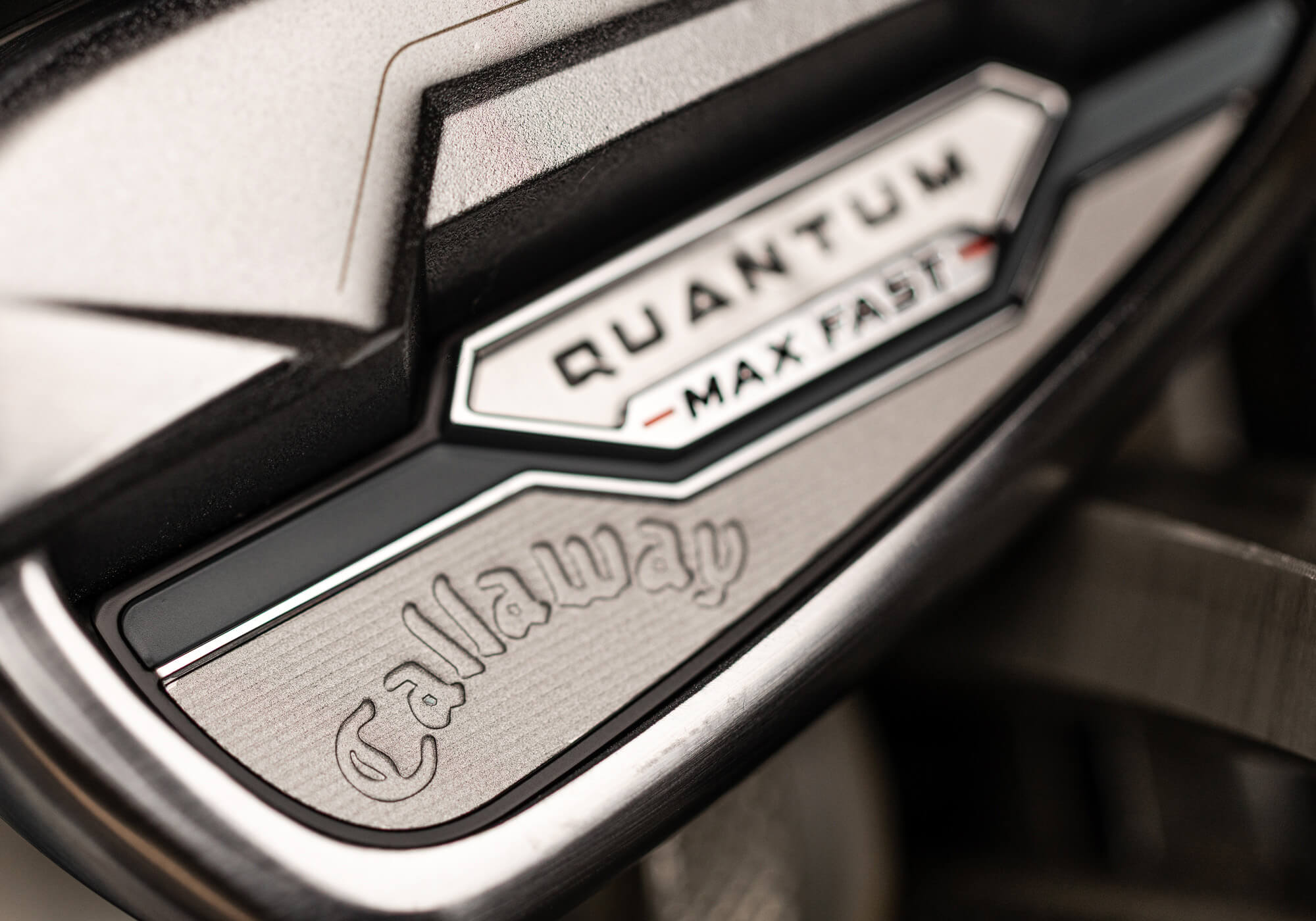
The Max Fast, as you’d guess, is a lighter-weight version of the OS designed for slower swing speed players.
What Callaway found was that the combination of distance and forgiveness provided by the new 360 Undercut design and the new Tri-Sole, even at the new, weaker lofts, made a specific HL model superfluous. It is, however, offering an optional “HL Spec” for the Max and Max OS.
“It’ll be available through custom order; it just won’t be on the rack,” says Williams. “The loft structure of these irons is expected to provide plenty of descent angle.”
Final thoughts
This has been an interesting launch season for irons so far, hasn’t it? TaylorMade is on a two-year launch cycle and now Callaway is cutting its lineup by 25 percent.
Also interesting is the not-so-subtle shift away from raw distance for game-improvement irons and more toward balanced performance and – here’s the new buzzword – playability.
What’s also interesting is watching how OEMs balance that with the raw distance message, because they know raw distance sells. Raw distance is sexy but we know things like accuracy, dispersion, descent angle and spin are keys to iron performance. The problem is that those things are kinda like kale.
Everyone knows kale is good for you. It’s loaded with nutrients and antioxidants, it supports heart health, boosts your immune function and maybe even fight cancer. The problem is that no one gets excited to eat kale. You never hear anyone raving about that new kale restaurant and no one brings anything kale-related to a Super Bowl party.
At least, not if they want to get invited back.
Callaway, like every other OEM, knows kale is good for you. The challenge is to get you to eat your kale. You know kale is the right thing to do but distance is like a deluxe pizza. The short-term delight kicks the snot out of the long-term virtue. Both Callaway and TaylorMade – and we suspect to see the same thing from COBRA next week – are making a concerted effort to make kale more appetizing by smothering it in pepperoni, cheese and oregano.
It’s a trend so it’s not a question of whether golfers will accept kale laced with pepperoni. It does, however, signal that the curtain might be coming down on the stronger-lofted race for more distance.
That should be a welcome sign.
Callaway Quantum irons: Specs, price and availability
Make no mistake, the new Callaway Quantum Max, Max OS and Max Fast irons are strong-lofted. Even though all three sets feature 7-irons in the 28- to 29-degree range, they are weaker-lofted, on average, than previous Callaway game-improvement sticks.
The Callaway Quantum Max and Max OS irons are available in a 4-iron through a set with matching sand wedge. The Max Fast is available in a 5-iron through sand wedge.
Stock steel shafts include the KBS Max 90 for the Quantum Max and the True Temper Elevate 85 for the Max OS. Both irons feature the Project X Denali Frost Blue as the stock graphite.
The Quantum Max Fast features the lightweight Mitsubishi Vanquish graphite shaft while the women’s models will feature the Mitsubishi Eldio White. The Tour Velvet 360 is the stock grip for the Max and Max OS while the lighter-weight Lamkin Crossline 360 is stock with the Max Fast. Women’s models will feature the Lamkin ST Soft.
Both the Max and Max OS will retail at $164 per stick in steel with a seven-piece set running $1,149.99. Graphite will run $178 each and $1,249.99 for a seven-piece set.
The lightweight Max Fast sells for $192 each and $1,349.99 for seven pieces.
Meanwhile, deals can be had on last year’s Callaway Elyte lineup starting at $849.98.
The new Callaway Quantum irons will hit retail on Feb. 27.
The post The New Callaway Quantum Irons: Days Of Future Past? appeared first on MyGolfSpy.
