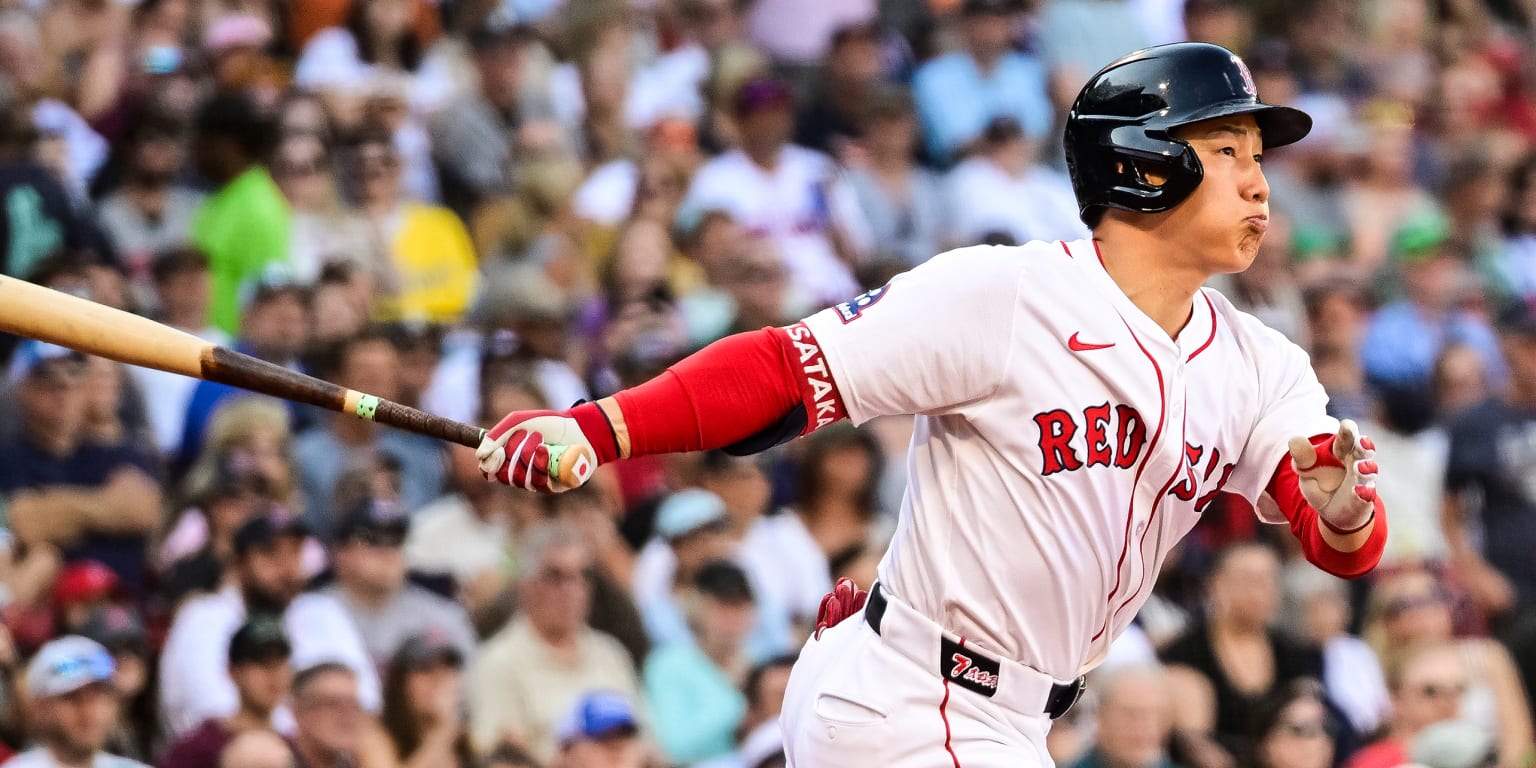
A little more than three years ago, the Red Sox (led by then-chief baseball officer Chaim Bloom) introduced Masataka Yoshida, a 29-year-old outfielder from Japan whom they reeled in with a five-year, $90 million contract. Boston sent an additional $15.375 million as a posting fee to the Orix Buffaloes of Nippon Professional Baseball.
Quite a bit has changed in Boston since then, including the team’s front-office leadership — Bloom is now executing trades with the Sox instead of for them — and the perception of Yoshida’s value, along with his expected role on the team. In 2026, Boston is overflowing with stellar outfield options, a situation that also impacts the availability of DH at-bats, along with the acquisition of first baseman Willson Contreras and the expected return of Triston Casas.
Even though Alex Bregman and Bo Bichette landed elsewhere, the potential addition of another infielder via free agency (Eugenio Suárez?) or trade (Nico Hoerner? Brendan Donovan?) would only serve to further close off avenues to playing time for Yoshida. Now 32 years old, the left-handed-hitting Yoshida still has two seasons and $37.2 million left on his deal, and current FanGraphs projections have him pegged for just 189 plate appearances this season, 12th most on the team.
Yet it’s not as if the Red Sox were entirely wrong in their evaluation of Yoshida. In three Major League seasons, he’s batted .282/.337/.425, good for a 109 OPS+ (or 9% above MLB average, on a park-adjusted basis), thanks in large part to low whiff and strikeout rates. That’s a useful bat, if not spectacular.
Over the same span, Yoshida’s OPS+ is not far behind those of three players connected to the Red Sox this offseason: Donovan (116), Suárez (115) and Bichette (114). He even had the biggest hit of Boston’s lone postseason win of 2025, a go-ahead two-run single in the seventh inning of AL Wild Card Series Game 1 at Yankee Stadium.
Of course, there are other factors here as well, which help explain why Yoshida’s star has fallen. His defense in left field as a rookie was rough (minus-11 Run Value, per Statcast), and he’s spent nearly all of his time since as a DH. A left thumb strain (2024) and right shoulder labral tear (2025) have cut into his availability during that span as well.
And perhaps in part because of those health issues, Yoshida is coming off his worst offensive season in MLB, dropping from a 116 OPS+ to a below-average 93. But even if Yoshida’s bat bounces back to its previous level, an OPS+ around 110 looks a lot different coming from a DH than it does from, say, a capable up-the-middle defender.
So, what are the Red Sox to do here? Let’s run through a few potential options:
1) Maintain the status quo
While some might view Yoshida’s situation as untenable, one could also make the case that the Red Sox would benefit from holding on to him, even if $18.6 million is an exorbitant rate for a part-time player or bench bat. Why? Depth has a tendency to come in handy. All it takes is one injury in the outfield — just last season, Wilyer Abreu and Roman Anthony both missed time — to free up more DH at-bats.
It’s also far from certain that Casas comes back healthy and productive, and the rest of the team’s projected Opening Day bench does not project to provide the same sort of offense as Yoshida. For a team with championship aspirations, carrying an expensive insurance policy and source of professional at-bats on the bench is hardly the worst idea.
2) Create more space
The Red Sox have addressed needs in their starting rotation and at first base this offseason, but questions remain about their plans at second and third base, with Bregman departing for the Cubs and Bichette going to the Mets. That could make a trade more likely, unless Boston is willing to stick with its internal options for those two spots, which would include Marcelo Mayer, Romy Gonzalez, Kristian Campbell and David Hamilton, among others.
Should Craig Breslow’s front office pursue a trade for someone like Hoerner or Donovan, the Sox’s newfound starting pitching depth could be the key to getting a deal done. On the other hand, if they were to dangle either an outfielder or Casas in such a swap, Yoshida would once again become a more important part of the team’s lineup plans.
3) Find a trade partner — if possible
Speaking of trades … what if Yoshida himself were part of one? The Red Sox almost certainly would be open to that, given the combination of Yoshida’s salary and current role on the team, even if they would be taking the risk of selling low. But that salary also figures to be a major stumbling block in making a deal happen, given Yoshida’s lack of production last season, as well as his age and lack of a defensive home.
On the other hand, Yoshida’s projected wRC+ of 110 (wRC+, like OPS+, is built around a league average of 100) could improve a lot of lineups. Going by FanGraphs’ projections, a full one-third of MLB teams have no more than three hitters projected to match or exceed that wRC+ in 2026: the Rockies, Marlins, White Sox, Nationals, Reds, Pirates, Guardians, Royals, Brewers and Phillies.
That doesn’t automatically make all of those teams a fit for Yoshida — far from it — but someone could be willing to take a chance on his bat bouncing back, especially a club looking for a more contact-oriented approach. Of course, that might require the Red Sox to both eat a significant portion of the remaining financial commitment and accept a minimal return, much as the Cardinals recently did in order to move Nolan Arenado to the Diamondbacks.
If a trade doesn’t materialize, Boston’s only other course of action would be to release Yoshida. But that would leave the club on the hook for his entire salary, without netting anything in return, only serving to open a roster spot.
