
In a sense, putting is the great equalizer in golf. Even Tiger, universally recognized as one of the best putters of all time, and certainly the most clutch, attributed a cold putter as the reason for his only major loss after holding a 54-hole lead at the 2009 PGA Championship. If I can sum it up in a simple, albeit inadequate, sentence: putting can be and is brutal.
You can strike the ball beautifully, flight your irons exactly how you want, and even surgically navigate your way around a course through shrewd management, but when the putter goes cold, everything can feel empty. From a simple eye test, putting actually looks like it should be the easiest part of the game, but that couldn’t be further from the truth. Golf rarely meets the expectations of the eye test, which is ironic because sight is the most dominant human sense, providing the brain with about 80 percent of its input. The connection between sight and mind is a powerful and intimate one and why, when it breaks down, the effects are keenly acute.
Zack Miller knows that feeling intimately.
The rise, the fall, the experiment
Like his Stanford predecessor, Tiger, Miller grew up on public courses, places that, for him, represented freedom and total immersion in the game. “It was the coolest thing where it was one of the few places my parents would feel comfortable leaving me alone with some of the older kids just to practice all day,” Miller said. “So they would just drop me off at the local public golf course and I remember thinking, ‘I can be here all day without parent supervision.’”
Miller emerged as one of the top junior players in Northern California, earned All-American honors on the AJGA circuit and was recruited to Stanford where his profile continued to rise. He became a first-team All-Pac-10 selection, third-team All-American and a three-time individual winner, capturing titles at the Gopher Invitational, The Prestige and the CordeValle Classic. By the time Stanford lifted the trophy at the 2007 NCAA men’s championship, Miller was team captain and the program’s Biff Hoffman Outstanding Male Senior Award recipient.
Miller’s game was predicated on elite ball-striking but while at Stanford, the putter started to betray him.
“How many putts I would make just became so variable … I developed the yips and I just tried everything. Left hand low, claw, low, a lighter putter, different balances. There was just nothing that would really just fix it. It was just a Band-Aid here for two weeks, and then the yips would come back. I would hit it great in a golf tour tournament and miss putts and get frustrated, and then it would just snowball.”
It was Stanford’s legendary coach, Conrad Ray, who stepped in with what was, at the time, a radical solution. He handed Miller a PING B90, PING’s first long putter. The grip was worn clean and to this day the exact length and specs of the putter are unknown. What mattered was what happened next.
“There was something about getting my hands separated and just turning my shoulders and the bigger muscles, and the yips just disappeared. It was the only time I had ever tried something that fixed a problem in the first hour. That really changed the trajectory of my career.”
New beginnings, reinvention and invention

After graduating from Stanford with a long putter in the bag, Miller turned professional and spent two years on the international circuit, competing on the Korean Tour and picking up two wins on the Gateway Tour. The real breakthrough came in 2010, when he qualified for the Nationwide Tour. He finished 56th in the season standings, good enough to earn his PGA Tour card by year’s end. For Miller, it was validation that committing to the long putter was not a last resort. It was an alternative style of putting that fit his game better than a short putter.
In that sense, Miller was a trailblazer. He committed fully to long putting at a time when the stigma surrounding it was far stronger than it is today. While Bernhard Langer had been using a broomstick since 1996, its presence on the major tours was still rare. Around the time of Miller’s ascent, that began to change. Keegan Bradley’s win at the 2011 PGA Championship using a belly putter marked a turning point. Two years later came the crescendo, when Adam Scott won the 2013 Masters with a broomstick putter, becoming the first player to win a major with one.
Even as alternative putting styles became more common across professional golf, the results on Tour never quite lined up for Miller in the way he had hoped. Around the same time, life began to shift. He got married, started a family and as competitive golf faded into the background, relocated to Baltimore. There, he found himself in almost a mirror image of his days growing up on the course, meeting, practicing and playing with new golfers.
This time around, however, Miller and his method of putting became a source of constant fascination. “I would play well because, well, I’m a good player, and people would always ask me, ‘Where can I try a long putter? Do you think it would work for me?’”
Once again, time was seemingly on Miller’s side when in 2013, the PGA Tour announced the adoption of the anchoring ban.
After the anchoring ban, long putters effectively disappeared. For Miller, the realization came through personal experience.
“I found myself on eBay looking for old putters because I couldn’t go to a local pro shop or Golf Galaxy anymore. The inventory had just dried up. After the anchoring ban, manufacturers basically said, ‘No more long putters, let’s focus on other things.’ I remember trying to bid on a $125 PING putter that was 20 years old and thinking, ‘There has to be a better way.’”
That dilemma came to a head when he began giving away his own backup putters to friends who were struggling on the greens. The demand was unmistakable. As a golfer, Miller has always been a problem-solver of sorts and, to him, the solution was clear: if the equipment no longer existed, he would build it himself.
“How great would it be if I could just offer them something new, something I helped design? That’s really how Longbow started.”
Bringing an idea to life: The birth of Longbow Putting

While Miller knew he wanted to build best-in-class long putters, he ran headfirst into the same question every founder eventually faces: how do you actually bring an idea to life? To him, it all started with finding a great partner and putter designer. This inevitably led him to David Frisch, the man behind Goodwood Golf Company, a putter company specializing in small-batch handcrafted putters.
“I had to sell him that long putters had a future and that it was worth his time to help me design putters together to where we are today,” said Miller.
Taken by the idea, Frisch said yes. Miller had his designer. The next question was what to call the company and that part came easily.
“I have my six-year-old son. His name is Bo. We were focusing on long putters. That’s what we specialize in. Between the name, specializing in long putters, and my son’s name being Bo, it just worked perfectly.”
The result was Longbow Putting and the launch of the LP-Series, a line of long putters that look nothing like the vintage broomsticks Miller was hunting down on eBay. Rather than relying on welded necks or multi-piece construction, each LP head is machined from a single block of metal, giving it a solid feel that immediately sets it apart. By redistributing mass outward and low, the LP Series creates natural stability through the stroke.
It began with two distinct shapes that reflect Miller’s own understanding of how golfers see and feel putters at address. The LP-1 leans into a more traditional fang-style design, a shape that will feel immediately familiar to anyone who has spent time with classic heel-toe weighted blades or modern fang putters. The twin prongs frame the ball cleanly, creating a natural channel for alignment while keeping the visual mass pushed outward. It’s a shape that rewards golfers who like to see some structure behind the ball, and it speaks directly to players who want stability but still value a clear sense of face orientation through impact.
The LP-2 moves in a different direction. It’s more of a crescent mallet, fuller through the back and more imposing at address, designed for golfers who want the putter to do as much of the work as possible in terms of alignment and consistency. It’s the kind of head that encourages you to set it down, square it up, and trust it.
After finding early success with the LP Series, Miller and Frisch turned their attention to what would come next. Rather than chasing a new shape for the sake of novelty, the focus shifted to feel, materials and adjustability.
“From what we learned with the LP series, the biggest thing was feel,” Miller said. “With the next putter, we wanted the front piece to be stainless steel, no matter what. All of your irons are stainless steel and we wanted that same feeling with the putter.”
That decision became the foundation for what followed. The front portion of the putter would remain stainless steel, finished with different PVD treatments, while weight would be redistributed elsewhere.
“To offer a bigger head that’s more common with a long putter, we needed to take weight off the back,” Miller explained. “So the backside is made from aircraft-grade aluminum. You’ll see that material used elsewhere in the industry but, for us, the idea was very specific: stainless steel up front, aluminum in the back.”
The real breakthrough, however, came in the middle.
“The keystone piece is where David really deserves credit,” Miller said. “He came up with the idea of an interchangeable aluminum center section where you could swap different shaft options and balance configurations.”
That modular concept would eventually become the defining feature of Longbow’s next evolution, giving golfers something the long-putter space had rarely offered: meaningful adjustability without having to buy a whole new putter.
The Explorer: Designing a putter that adapts
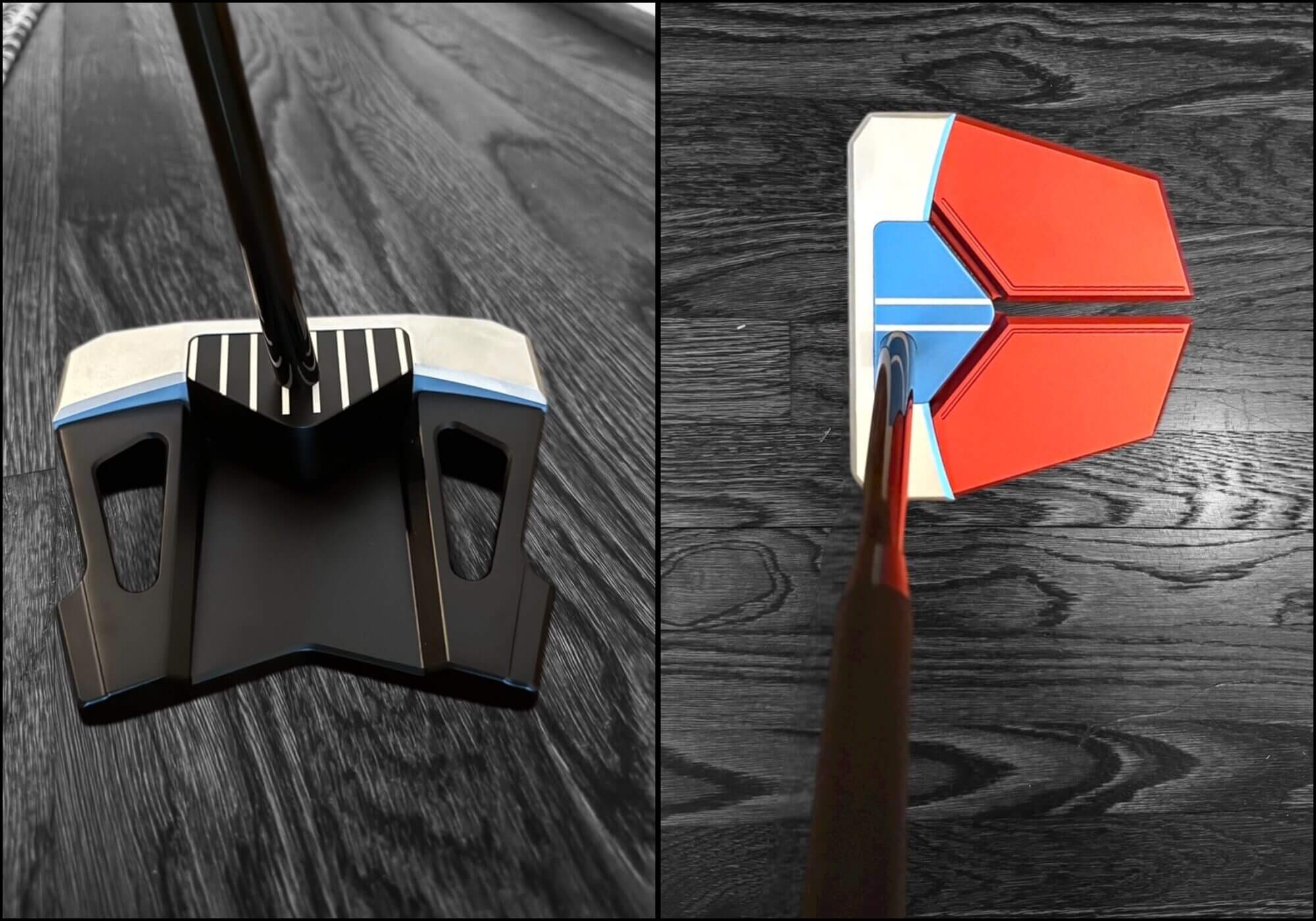
That line of thinking eventually moved from concept to execution. In September 2025, Longbow introduced the Explorer, a putter designed around adaptability rather than prescription. Miller and Frisch had been watching the rapid rise of low-torque putter heads and, more importantly, listening to their customers.
“We kept getting the same feedback,” Miller said. “People were asking when we’d offer something with less torque bias, something like L.A.B. but without having to spend that kind of money.”
Instead of locking golfers into a single setup, the Explorer was built to evolve with them. Through its interchangeable keystone system, players can experiment with different balance profiles and shaft options, then revert back just as easily if it isn’t the right fit.
“If it works, great, keep it that way,” Miller explained. “If it doesn’t, you can go back with a common torque wrench. The goal was to put the power in the golfer’s hands and let them get to their ideal setup faster.”
In other words, the Explorer wasn’t designed to tell golfers how they should putt. It was designed to meet them where they are and give them the room to figure it out.
That same thinking extends beyond head design and balance into one of the fastest-changing areas of modern putting: shafts. According to Miller, the way golfers think about putter shafts has fundamentally shifted over the last decade.
“Gone are the days of the $9 or $12 chrome shaft being good enough. That was fine when Tiger was winning all those majors but now there’s an entire market for $300 graphite shafts.”
Rather than asking golfers to sink that kind of money into a single, static putter, the Explorer was built to make that investment last. Through the keystone system, a golfer can upgrade into a premium shaft once, then carry it forward as the platform evolves.
“This is a great way for someone to spend that type of money and not just lock it into one putter,” Miller explained. “When we come up with different back pieces or different front-side options, you can keep that keystone and that shaft and continue using it.”
That philosophy is what ultimately led Longbow to partner with YUMI. For Miller, the decision wasn’t about chasing trends so much as solving a very specific problem unique to long putting. Long putters demand extreme stiffness, especially at lengths north of 45 inches, and sourcing chrome shafts that could meet those requirements consistently had become increasingly difficult. At the same time, golfers were beginning to expect more from their equipment, not just in performance, but in feel, aesthetics and longevity.
YUMI offered a solution that aligned with Longbow’s broader approach. Their full carbon shafts provide the rigidity long putters require while also allowing for modern finishes and a more refined feel than traditional steel. Just as importantly, they allowed Longbow to offer a high-end option without forcing golfers into the kind of pricing that has become common elsewhere in the category. It wasn’t about selling a $300 upgrade for the sake of it but about offering something purpose-built, durable and scalable within the Explorer system.
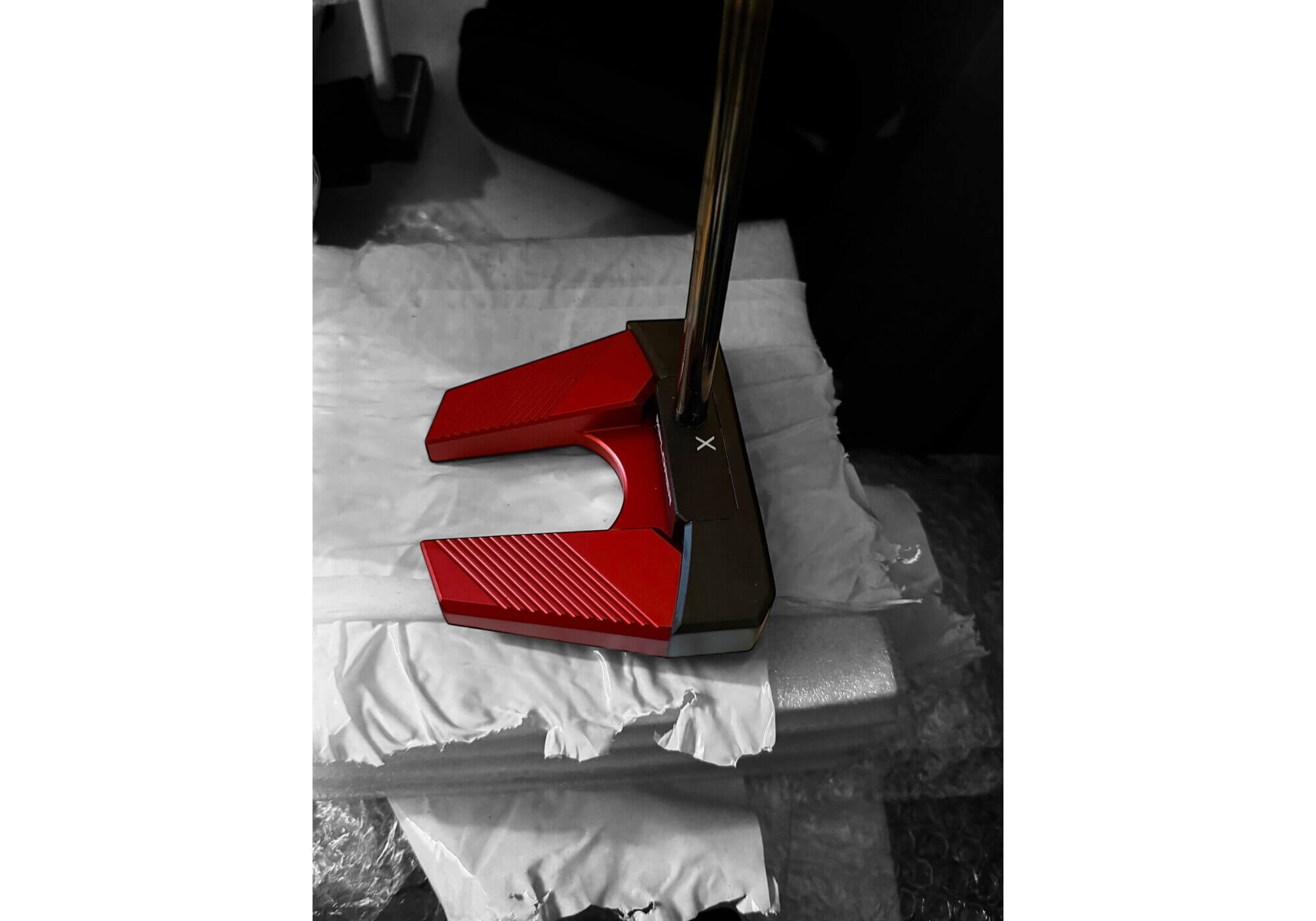
In an industry increasingly defined by escalating prices and short product cycles, The Explorer reframes the equation. Instead of replacing an entire putter every time preferences shift, Longbow built a platform that allows golfers to refine, reuse and progress over time. Whether that evolution comes through balance changes, head configurations or shaft upgrades, the goal remains the same: keep golfers in control of their putting rather than feeling the need to buy a new putter whenever new technology says so.
What’s important here is that Miller isn’t selling the Explorer as a cure-all. He’s explicit about that. A long putter won’t magically fix poor fundamentals and it won’t do the work for you. What it can do, and what the Explorer is designed to do, is remove unnecessary variables from the stroke, particularly under pressure. When nerves creep in, wrists tend to tighten, tempo gets rushed, and feel disappears. The long putter’s structure naturally encourages a simpler, more repeatable motion, which is often exactly what struggling putters need.
That’s why Miller believes so strongly in customization. Golfers don’t all miss the same way. They don’t react to pressure the same way. They don’t see lines the same way. The idea that everyone should use a nearly identical 34-inch putter with a single sightline is increasingly hard to defend.
Looking ahead
“Part of me wants to say, let the people who’ve found performance with it keep that advantage for a while,” Miller said. “People think a long putter is just the same head with a longer shaft but that’s not the case at all.”
What often gets missed, he explains, is how fundamentally different the geometry is. Long putters use heavier heads and significantly higher lie angles, pushing right up against the limits of what the USGA allows. “There’s a reason the rule caps lie angle at 80 degrees,” Miller said. “Ours sit at 79 or 79.5 for a reason. There’s an advantage there.”
For Miller, that advantage isn’t about exploiting a loophole. It’s about using the rules as written to create something that feels more stable, more repeatable and ultimately more playable for the golfer standing over the putt.
Looking ahead, Miller sees Longbow as a home for alternative putting styles more broadly. Long putters, counterbalanced options, modular designs and deeper personalization aren’t fringe ideas anymore.
He says giving a long putter a fair chance means committing to it beyond the practice green. It means playing rounds, feeling the weight and geometry under pressure, and allowing the stroke to settle naturally.
“It’s not like flipping a switch. You’ve got to give it some time and believe there’s a future with it.”
That philosophy extends to how Longbow approaches fittings. Rather than forcing golfers into rigid specs, Miller prefers conversation and accessibility. Longbow putters are available in select Golf Galaxy and DICK’S Sporting Goods locations, as well as through 2nd Swing, but Miller is also directly involved in helping customers find the right setup.
“When someone emails us or reaches out on Instagram, they’re talking to me. We’ll walk through height, posture, setup, and make personalized recommendations.”
For golfers who don’t yet have access to a fitting, Miller even offers a simple frame of reference. A standard driver length, roughly 45 to 45.5 inches, approximates many long putter builds, while a 3-wood can help visualize a slightly shorter setup. In some cases, Longbow will also send demo putters, allowing golfers to try before committing.
For Miller, the most validating moments haven’t come from sales numbers or product launches. They’ve come quietly, weeks after a conversation, when a golfer reaches back out with something simple to say.
“The coolest moments are when someone comes back and says, ‘I’ve never putted like this before,’ or ‘the yips are gone,’” Miller said. “That’s the total validation. Seeing someone excited about putting again, knowing you helped them get there—that’s what gets me going.”
That perspective explains why Longbow feels different from most equipment brands; It was built from lived experience, from frustration, and from a very specific belief that putting doesn’t have to feel hopeless. Miller knows firsthand what it’s like to lose trust on the greens, and he also knows how transformative it can be to get it back.
When asked what he hopes Longbow’s legacy will be over the next decade, Miller didn’t talk about market share or innovation cycles. He talked about control. About confidence. About joy.
“I want people to feel like they have control over their putting again. For golfers who feel like they’ve lost their way, I want to give them access to something high-quality and affordable that brings the joy of golf back. In short, I just hope it brings more happiness to their passion.”
It’s a simple goal, but one rooted in empathy. In a game where frustration often comes easier than progress, that might be Longbow’s most meaningful contribution of all.
The post The Long Way Back: Zack Miller, Longbow And A Different Way To Putt appeared first on MyGolfSpy.
