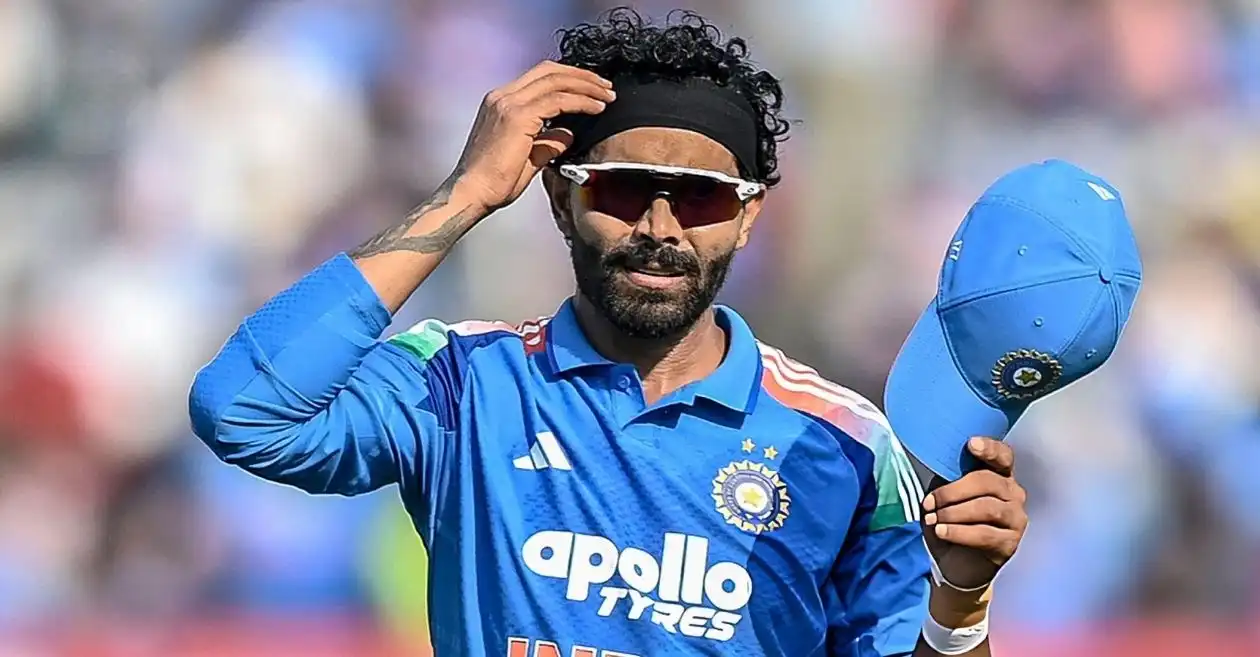
For over a decade, Ravindra Jadeja has been synonymous with India’s white-ball success. His electrifying fielding, deceptive left-arm spin, and gritty batting have made him an indispensable asset. However, as India grapples with a recent ODI series loss to New Zealand and a looming generational shift, questions are mounting: Is Jadeja’s time in the 50-over format drawing to a close? Recent performances and the emergence of fierce competition suggest that the once-automatic selection now faces an uphill battle to retain his spot.
The alarming numbers for Ravindra Jadeja
Jadeja’s recent statistics paint a concerning picture, a stark contrast to the all-rounder who once dominated both ends of the pitch. Once celebrated for his ability to pick up crucial wickets in the middle overs, Jadeja’s bowling has become increasingly defensive, focusing more on containment than penetration.
The wicket drought: No longer a threat with the ball
In the recently concluded three-match ODI series against New Zealand, Jadeja failed to take a single wicket across all three games. This is an unprecedented slump for a bowler of his calibre. Expanding further, Jadeja has managed a paltry one wicket in his last five ODIs. This includes the New Zealand series and the final two matches against South Africa, where he also struggled to make an impact.
While his economy rate remains respectable, it’s no longer accompanied by the wicket-taking threat required to break partnerships. Analysts like Zaheer Khan have pointed out that he has become a “containing bowler” – a role that might not be sufficient for a team aiming for World Cup glory.
Batting woes: The finish that never comes

Jadeja’s batting, once lauded for its ability to anchor an innings or provide late impetus, has also seen a significant dip, especially on home soil.
Shockingly, Jadeja has not scored an ODI half-century on Indian soil in 13 years, with his last one dating back to 2013 that came against England in Kochi. This statistic alone highlights a prolonged struggle to consistently contribute with the bat in conditions he knows best. Overall, his last fifty came in 2020, against Australia at Canberra.
In the recent series against the Black Caps, Jadeja averaged a dismal 14.33 with the bat, failing to provide the crucial late-innings acceleration or stability that India desperately needed.
Jadeja’s inability to consistently score quick runs at the death is a glaring weakness. Ajinkya Rahane recently commented on the team needing “more acceleration” from their lower-order all-rounders, a role Jadeja currently struggles to fulfil.
The “Axar Factor” and the rise of new talent
Perhaps the most significant threat to Jadeja’s ODI future is the relentless emergence of younger, in-form alternatives, particularly Axar Patel.
- Direct competition: Many former cricketers, including Irfan Pathan, believe that Axar is currently “way ahead” of Jadeja in white-ball cricket. Axar’s ability to bowl effectively in the powerplay and his superior power-hitting prowess make him an incredibly appealing option for selectors.
- Washington Sundar’s ascent: The dynamic Washington Sundar also presents a strong case, offering control with the ball and handy contributions with the bat. The competition for the spin-bowling all-rounder slots has intensified dramatically, pushing Jadeja to the periphery.
- Youthful energy: With the 2027 ODI World Cup still a year away, the management might be inclined to invest in younger players who offer a longer-term solution and more aggressive white-ball attributes.
NZ vs IND: Zaheer Khan and Ajinkya Rahane raise questions over Ravindra Jadeja’s ODI impact
World-class fielding, but is it enough?
It’s undeniable that Jadeja remains one of the greatest fielders the game has ever seen. His stunning aerial catch in the 3rd ODI against New Zealand, which instantly went viral, was a testament to his unparalleled athleticism.
However, in modern white-ball cricket, especially for an all-rounder, exceptional fielding alone cannot secure a spot if primary skills with bat and ball are diminishing. The team needs consistent contributions in all three departments, and currently, Jadeja’s bat and ball returns are simply not cutting it.
Time is running out for Jaddu
With India not scheduled to play another ODI until the tour of England in July 2026, Jadeja faces a crucial period. His performance in the upcoming IPL 2026 for the Rajasthan Royals, where he makes a return, will be vital. Additionally, strong showings in domestic tournaments will be essential to force his way back into contention.
At 37, time is not on his side. While his legacy as an Indian cricket legend is secure, the cold hard facts and the compelling rise of alternatives suggest that the end of the road for Jadeja in ODI cricket might be closer than many fans are ready to admit. The selectors have tough decisions ahead, and it remains to be seen if Jadeja can defy the odds one more time.
Jadeja has so far played 210 ODIs, scoring 2905 runs with 13 half-centuries and 87 being his best score. With the ball, he has taken 232 wickets with 5/33 being his best performance.
Also READ: Irfan Pathan explains why Axar Patel is ahead of Ravindra Jadeja in ODIs
