For more than two decades, the third Monday of January has been widely dubbed “Blue Monday,” named to reflect its status as the so-called most depressing day of the calendar year.
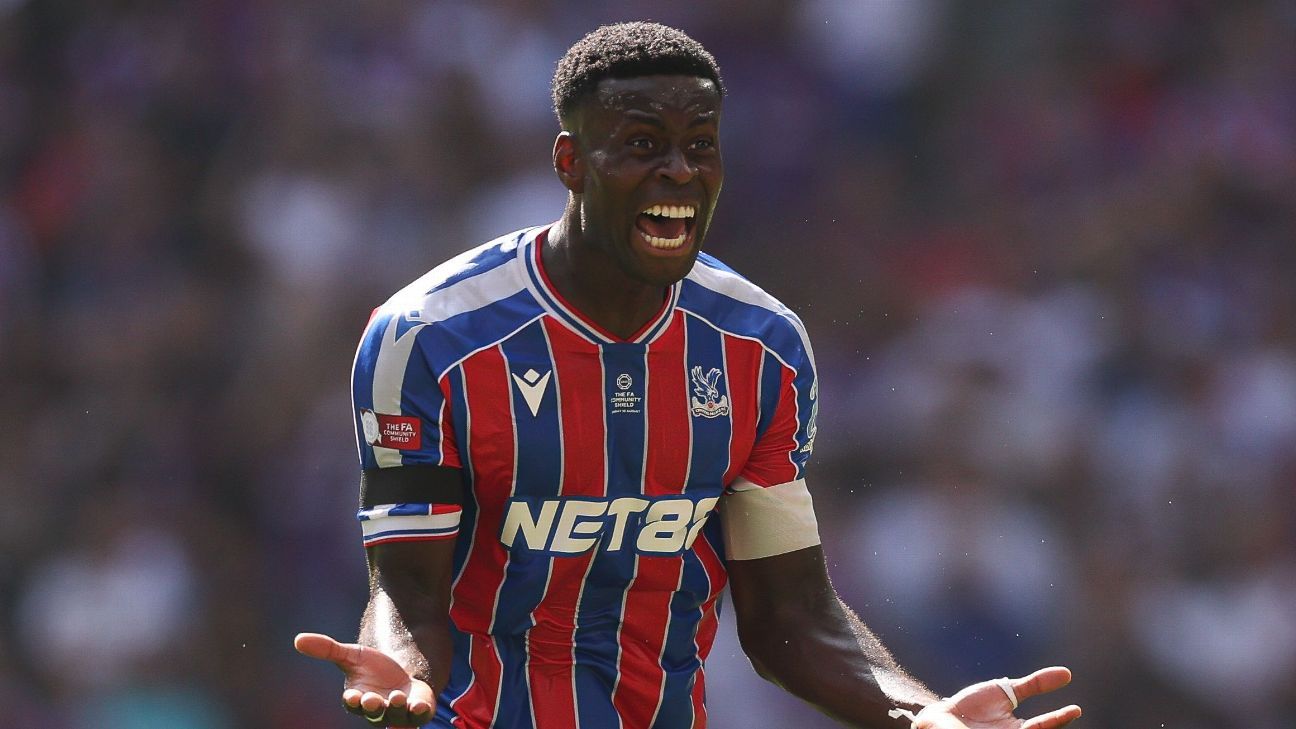
While skeptics would argue the occasion is nothing more than a marketing ploy, Liverpool supporters will certainly have felt glum on Monday afternoon, after Marc Guéhi‘s £20 million transfer from Crystal Palace to Manchester City was finally confirmed.
“When they asked if I wanted to come to City, there was only one answer,” Guéhi said in the announcement video posted to the club’s social media channels. For Liverpool, the fact that City even had the opportunity to pose such a question this month represents a fundamental flaw in their transfer strategy.
The Premier League champions looked to have laid the foundations for a dynasty at Anfield when they embarked on an unprecedented spending spree in excess of £400 million last summer. They twice broke the British transfer record with the signings of midfielder Florian Wirtz (whose fee could yet rise to £116 million with add-ons) and £125 million striker Alexander Isak, and yet their costliest bit of business arguably came with the failure to get Guéhi’s signing over the line on deadline day.
Of course, there is a school of thought that the fault for the defender’s collapsed move to Merseyside lies solely with Palace after chairman Steve Parish pulled the plug on the deal at the 11th hour. By that point, Liverpool had seen their £35 million bid to sign Guéhi accepted, with the player having already undergone part of his medical when Palace reneged on their word having been unable to find a suitable replacement for their talismanic captain.
– Liverpool’s Szoboszlai confirms contract talks after ‘tough’ week
– Why Prem clubs keep signing each other’s players for the same fee
– Lindop: Margin for error quickly vanishing for uninspiring Liverpool
Whether such an eventuality could have been avoided if Liverpool had moved earlier in the window is impossible to answer. The Anfield hierarchy would likely argue that Guéhi was not a priority last summer but a market opportunity, with the arrival of teenager Giovanni Leoni from Parma in August having already bolstered Slot’s defensive ranks (before he suffered a serious knee injury soon after).
Still, it is hard not to wonder how different Liverpool’s fortunes might have been this season had they only been more aggressive in their pursuit of a player who is among the most accomplished defenders in European football. Would Slot’s side still have been embroiled in a battle for Champions League qualification? Or would the signing of Guéhi have helped them to keep pace with league leaders Arsenal in the race for the title?
Clearly, Liverpool’s decision makers felt that reigniting their interest in the defender this month did not make financial sense. City agreed to a fee of £20 million with Palace, but sources told ESPN that Guéhi is set to become one of the club’s top earners, with wages in the region of £300,000 a week.
It is a financial package that Liverpool — who have always employed a strict wage structure under owners Fenway Sports Group (FSG) — were simply unwilling to match. Slot’s side had always planned to move for Guéhi in the summer, when he would have been available on a free transfer following the expiration of his contract.
But, with the defender now off the table and Liverpool’s summer to-do list growing by the week, failing to turn to alternatives in the transfer market this month could have repercussions that extend far beyond the end of this season. Liverpool are a team in transition, with last summer’s squad overhaul having at times presented more questions than answers for Slot and his staff.
The club’s recent 12-game unbeaten run has offered some cause for optimism, with Wirtz starting to thrive after a slow start, and fellow new recruits Milos Kerkez and Jeremie Frimpong improving with every game. Striker Hugo Ekitike has been a revelation since his £69 million move from Eintracht Frankfurt, while Isak had shown glimpses of his quality before his season was derailed last month by a broken leg that is expected to keep him out until March at the earliest.
But if Liverpool had been hoping for a quiet summer in 2026, those plans have surely been altered by a campaign which has lurched from the sublime to the ridiculous to the deeply demoralizing. Where last season there was order and calm at Anfield, uncertainty now reigns, both on the pitch and in the dugout.
Just a few short months ago, it seemed one of Liverpool’s biggest priorities was tying down head coach Slot to a new contract after his stunning debut season on Merseyside. Now though, it seems a distinct possibility that the Dutchman may not even make it to the end of his current deal, which expires at the end of the 2026-27 season.
Sources have told ESPN that Slot has retained the backing of FSG and the Liverpool hierarchy, even after a torrid autumn run in which the Reds lost nine out of 12 games in all competitions. However, the smattering of boos that greeted the full-time whistle at Anfield following Saturday’s 1-1 draw with newly-promoted Burnley reflected the current disillusionment within the fanbase, with a number of supporters clamoring for a change on the touchline.
That din is only likely to grow louder now that former Liverpool midfielder Xabi Alonso is back on the market following an ill-fated stint at Real Madrid. Liverpool sporting director Richard Hughes and FSG’s CEO of football Michael Edwards are also out of contract in 2027, further adding to the landscape of ambiguity behind the scenes.
On the field, too, there are a number of issues to address. The failure to replace forward Luis Díaz — who pushed for a move to Bayern Munich last summer — is looking increasingly ill-advised, with Cody Gakpo struggling for form and 17-year-old Rio Ngumoha having to be carefully managed in terms of first-team minutes.
On the other flank, Federico Chiesa‘s limited cameos continue to suggest that his long-term future lies away from Anfield, while there are also question marks around Mohamed Salah following his explosive December outburst in which he accused the club of throwing him “under the bus” after a run of games where he was dropped to the bench. Salah’s impending return from the Africa Cup of Nations will be a boost to an attacking unit that has been hampered by Isak’s extended absence, but it remains to be seen whether the Egypt international will be able to re-find the scintillating form that saw him named PFA Player of the Year last term.
In midfield, Liverpool still lack a specialist No.6, with Ryan Gravenberch requiring more assistance in helping to shield the backline and Alexis Mac Allister‘s performances having failed to hit the heights of previous campaigns. But it is the Reds’ defense that is most in need of major surgery.
At right back, Conor Bradley is set to miss the rest of the season with a serious knee injury sustained at Arsenal earlier this month, while Frimpong’s services continued to be required further up the pitch. Veteran left back Andy Robertson is out of contract in the summer, meaning Liverpool will need to find a deputy to Kerkez if an extension is not agreed.
At the heart of defense, center back Ibrahima Konaté will also see his deal expire at the end of June, with no indication that a renewal is imminent. The France international has struggled for form at times this season — with Slot admitting in December that he had too often been at the “crime scene” of issues — but he is still capable of genuine excellence and is a big personality in the dressing room.
Elsewhere, Joe Gomez has endured another campaign marred by injury and himself was the subject of transfer interest from a number of European clubs last summer. Captain Virgil van Dijk will turn 35 in July and is out of contract in 2027. The return to fitness of 19-year-old Leoni next season will be greeted almost as a new signing, given that the gifted Italian has been sidelined since September with an anterior cruciate ligament (ACL) injury. Nevertheless, it is no exaggeration to suggest Liverpool could need to sign as many as six or seven players this summer, depending on outgoings.
With that in mind, surely it would make sense to expedite plans and reinforce this month, particularly considering preseason will be affected by this summer’s World Cup. Of course, the January market is notoriously difficult, and Liverpool are wedded to the philosophy that they will only make a signing if they feel it genuinely improves the squad.
Still, if Liverpool’s decision makers are seeking a cautionary tale, they need only go back to the January of 2021, when the club’s unwillingness to sign an elite center back nearly cost them UEFA Champions League qualification. Despite having lost both Van Dijk and Gomez to season-ending injuries in late 2020, the Reds maintained that they would not look to remedy their center back crisis by entering the transfer market, before a January injury to Joel Matip forced a late rethink that resulted in defenders Ozan Kabak (on loan from Schalke) and Ben Davies (£1.5 million from Preston) joining the club on deadline day.
Neither move could be termed a success, with Kabak returning to his parent club the following summer and Davies failing to play a single competitive minute for Liverpool before joining Rangers in 2022. Instead, it fell to academy defenders Nathaniel Phillips and Rhys Williams — plus a staggering, stoppage-time header from goalkeeper Alisson Becker against West Bromwich Albion — to secure the Reds’ place in the top four.
Fast forward to the 2022-23 season and Liverpool paid the price for failing to address a clear gap in the squad, this time in midfield. The club resisted calls to add to their ranks in the middle of the park in the summer of 2022 before a glut of injuries forced their hand, with Arthur Melo joining on loan from Juventus on deadline day.
However, the Brazil international made just one substitute appearance for the club totaling 13 minutes, with both form and fitness preventing him from making an impact in a dismal campaign in which Liverpool failed to qualify for the Champions League.
That season-long exile from Europe’s premier club competition resulted in Liverpool posting a £57 million loss in their annual accounts for 2023-24, partly due to a decline in media revenue. At present, Slot’s side are in fourth place and may even have the buffer of an additional Champions League spot for English clubs to boost their hopes of avoiding a similar fate next term. But, with rivals Chelsea and Manchester United both seemingly rejuvenated by a mid-season managerial switch, it feels like Liverpool’s reluctance to dip into the transfer market this month is an unnecessary gamble.
Considering the importance of Champions League football and the amount of squad building left to do, it is one that could end up costing the club dear.
