Scan the country for teams that have exceeded expectations this season, and a common thread emerges: Georgia Tech transfers are doing work.
The Yellow Jackets transfers haven’t gotten the same attention as the breakup of Oregon State — a.k.a. “America’s Team” — last season because they didn’t make the Elite Eight and weren’t victims of conference realignment. But head coach Nell Fortner’s retirement created a gold rush in the portal. Georgia Tech’s 2024-25 roster dispersal has made a massive impact.
Advertisement
Dani Carnegie, a sophomore guard, has been a workhorse for Georgia. She leads the surprising Bulldogs with 18.9 points per game, scoring with red-hot efficiency from every area of the court. Carnegie put up back-to-back 30-point performances in wins over No. 16 Ole Miss and Arkansas last week. Then, when No. 11 Kentucky tried to take away her jump shot, Carnegie responded with a career-best eight assists in another upset.
Those K-State Wildcats have risen in the rankings because of Tonie Morgan, the point guard transfer from Georgia Tech. Coach Kenny Brooks had the same point guard running his system for the last five years, and all Morgan has done stepping in for Georgia Amoore is lead the SEC in assists with 8.6 per game.
Another high-ranked team has benefited from Yellow Jackets’ perimeter infusion. Chazadi “Chit-Chat” Wright has been a perfect fit in Iowa. Considering how much the Hawkeyes operate out of the post, they need someone who can create shots outside the paint. Kylie Feuerbach and Taylor McCabe are mostly spot-up 3-point shooters, but Wright can do just about anything with the ball. She excels in pick-and-rolls, isolations, handoffs and entering the ball to her bigs. Now 9-0 in the Big Ten, the Hawkeyes are off to their best start in conference play since the 1995-96 season.
And though this season has been mostly disappointing for USC, Kara Dunn has topped the 20-point mark in six straight games, propping up the Trojans offense that is desperate for any consistent shooting (though the less said about the defense, the better).
Advertisement
The ACC has seen better days, but understated in that talent drain has been the breakup of what could have been a special Georgia Tech team.
|
Rank |
Team |
Previous rank |
|---|---|---|
|
1 |
UConn |
1 |
|
2 |
South Carolina |
2 |
|
3 |
UCLA |
3 |
|
4 |
Texas |
5 |
|
5 |
Vanderbilt |
4 |
|
6 |
Louisville |
6 |
|
7 |
Iowa |
9 |
|
8 |
LSU |
7 |
|
9 |
Michigan |
10 |
|
10 |
Ohio State |
8 |
|
11 |
TCU |
11 |
|
12 |
Baylor |
14 |
|
13 |
Tennessee |
15 |
|
14 |
Maryland |
12 |
|
15 |
Michigan State |
16 |
|
16 |
Kentucky |
13 |
|
17 |
Ole Miss |
17 |
|
18 |
Oklahoma |
20 |
|
19 |
Georgia |
22 |
|
20 |
Princeton |
18 |
|
21 |
Duke |
19 |
|
22 |
Washington |
23 |
|
23 |
Alabama |
24 |
|
24 |
Texas Tech |
21 |
|
25 |
West Virginia |
NR |
Dropped out: Notre Dame (25)
Also considered: UNC, Nebraska, Minnesota
Clara Strack misses Teonni Key more than anyone
Kentucky is not deep, so it’s not surprising that the Wildcats would be ill-suited to weather the absence of Teonni Key, one of their six players to average at least 15 minutes per game. After starting the season 15-1, they’re 2-4 during Key’s injury absence. What has been a little concerning is how much Clara Strack has suffered in Key’s absence. The reigning all-SEC performer is shooting 30.7 percent from the floor in six games without Key, and her scoring average has dropped from 15.5 to 11.8 points.
Advertisement
Strack’s only offensive saving grace is that she’s earning 5.8 free throws per game in this stretch (up from 3.9), but she’s making only 63 percent from the line. Defenses can lock in on Strack, and they’re forcing her away from the rim, limiting her to 11 attempts inside the charge circle over six games.
Kentucky’s defense also has fallen off a cliff without Key. Although Strack has been similarly effective as a rim protector, the Wildcats have doubled the amount of zone defense they play to try to protect Strack from foul trouble, and it hasn’t gone well. They’re giving up .889 points per possession when playing zone in the last six games, significantly worse than the .689 PPP prior to Key’s injury.
They’re less active at forcing turnovers; they also just have less length with 5-foot-8 Asia Boone taking the 6-5 Key’s minutes). The zone has killed Kentucky on the defensive glass, and the Wildcats are surrendering about 11 second-chance points per contest over this span.
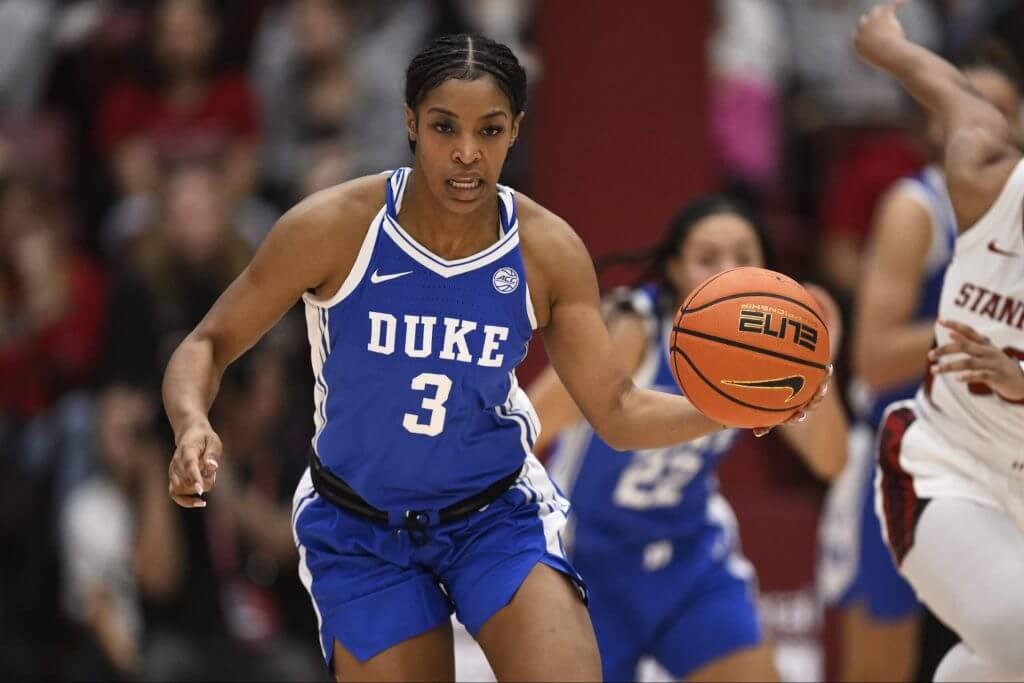
Is Duke’s run just a scheduling quirk?
Duke has won 11 straight and is tied at 9-0 atop the ACC standings with Louisville. It appears the Blue Devils have turned a corner after losing four straight during their nonconference schedule. The new starting lineup, with Riley Nelson in place of Jadyn Donovan, has a plus-32.4 net rating, as Nelson’s 41.3 percent 3-point shooting has been a big boost for Duke’s spacing.
Advertisement
But the Blue Devils have just two Quad 1 wins during the win streak. Their NET rating against Quad 1 opponents is minus-10.7 points per 100 possessions for the full season. They’re not putting up many 3s, they don’t shoot well from the foul line and their paint defense has been a little too accommodating (30.7 paint points allowed per game). A team like Pitt — which is 1-8 in the ACC and suffered a loss to a DIII opponent — isn’t going to challenge Duke on those shortcomings; upcoming games against Louisville, NC State, North Carolina and even Clemson should.
One positive for the Blue Devils as the schedule intensifies is that their shooting is on the uptick. In addition to Nelson, who is making 47.4 percent of her 3s over the last 10 games, Taina Mair is making 41.4 percent of her 3s during that span. That has given Toby Fournier the room inside to make 62.2 percent of her 2s. Fournier is now the ACC’s third-leading scorer at 17.7 points per game. Duke is also collectively shooting 73.6 percent from the free-throw line during the ACC schedule, a significant jump from the 62.9 percent mark during nonconference play.
South Carolina’s preemptive lineup change
Under Dawn Staley, South Carolina has become known for its frontcourt players. Staley runs everything through the paint, and the Gamecocks’ identity is centered on how it controls the area directly around the basket on both ends of the floor. The last time the Gamecocks started a game without two frontcourt players was 2019, incidentally the last time that the program lost two consecutive contests.
Advertisement
That’s what made it so surprising that South Carolina opened its matchup against Vanderbilt Sunday with a four-guard lineup alongside 6-3 forward Joyce Edwards. Not only did the Gamecocks preemptively change a starting lineup that was outscoring opponents by 37.5 points per 100 possessions, but also they did so to go … small, replacing 6-6 center Madina Okot with 6-foot wing Agot Makeer.
It’s hard to argue with the results. South Carolina was flying all over the court to start the game, completely flustering freshman guard Aubrey Galvan and forcing three Commodores turnovers in 30 seconds to open an 11-2 lead in less than two minutes.
Even when Vanderbilt responded by bringing in traditional post Aiyana Mitchell with its first substitution, the Gamecocks doubled down on their philosophy, using guard Maddy McDaniel as their first player off the bench. They won the first quarter by 17, scoring 14 points off of turnovers. The Commodores were overwhelmed by South Carolina’s speed. Even after the element of surprise wore off in the second half, South Carolina still blitzed by 15 in the third quarter.
This is a card that Staley doesn’t normally play, but she was more flexible than usual as her Gamecocks executed a new situation to perfection.
Advertisement
Tennessee freshman is new steadying force
The Lady Vols are chaotic by design: constant line changes, an evolving starting lineup and a hectic pace intended to take teams out of their rhythm. Within the chaos, however, coach Kim Caldwell found a security blanket in Tennessee’s most recent win over Kentucky: freshman Mia Pauldo.
Senior Janiah Barker was out with injury and veteran guard Talaysia Cooper was struggling, so Caldwell deviated from her usual rotation patterns and rode with Pauldo for 36 minutes. She is the only Lady Vols player to exceed 33 minutes in a single game (including overtime) since Caldwell arrived last season.
Pauldo’s night didn’t start off well against the Wildcats. She missed her first five shots and was too quick to settle for pull-up 3-pointers. But she had a short memory, and in time, her specific strengths helped Tennessee stay ahead and maintain its undefeated SEC record. Pauldo is the Volunteers’ second-best catch-and-shoot threat behind Cooper, giving an outlet for her teammates’ drives.
Advertisement
She and freshman Jaida Civil make a particularly good pairing. Pauldo also has some lateral wiggle to get past her defender in isolation, which she used in the fourth quarter, leading Tennessee with nine points. Her comfort in the midrange means she doesn’t necessarily have to get all the way to the hoop, which is probably for the best considering her slight stature.
The passing has yet to really pop for Pauldo — she’s still a little more “points guard” than point guard — but the Lady Vols need her scoring, and she has proven able to rise to the occasion.
Princeton’s clutch demon
Lost in the drama of the Coretta Scott King Classic on Monday was an Ivy League barn-burner between Princeton and Harvard. The Crimson had an upset within their grasp, taking a 3-point lead with 4.9 seconds to play on the Tigers’ home court, but then lost Ashley Chea on the wing for the tying 3 thanks to Madison St. Rose’s screen. Harvard ultimately fell in overtime.
There is likely no player Harvard fans dislike more than Chea, who also had a buzzer-beating game-winner against the Crimson last season. She’s become a clutch-time demon for Princeton, adding another game-winner against Seton Hall earlier in the Tigers’ 15-game winning streak. A higher seed will be loath to see Princeton in its NCAA Tournament draw come Selection Sunday given the magical run Chea is putting together.
Advertisement
This article originally appeared in The Athletic.
USC Trojans, Princeton Tigers, Duke Blue Devils, UCLA Bruins, Tennessee Lady Volunteers, South Carolina Gamecocks, Kentucky Wildcats, Iowa Hawkeyes, Connecticut Huskies, LSU Lady Tigers, Women’s College Basketball
2026 The Athletic Media Company
