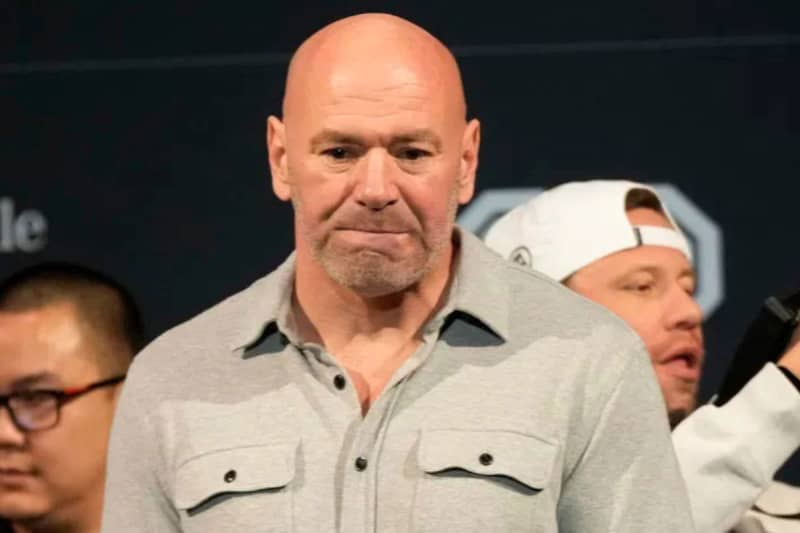
WhenDana White announced the UFC’s new bonus structure, it was supposed to feel like a win. A tangible sign that the promotion’s landmark partnership with Paramount would finally trickle down to the fighters. Instead, it has reopened an old debate, one that refuses to go away no matter how many zeroes get added to a fighter’s paycheck.
Once the math is laid out, the celebration starts to look a little thin. At UFC 324, Dana White officially rolled out the revamped bonus system: $100,000 Performance of the Night and Fight of the Night bonuses, plus a new $25,000 bonus for every finish that doesn’t land one of the six-figure awards.
Advertisement
But when Ariel Helwani stepped back and zoomed out on an episode of his show, the bigger picture came sharply into focus. The veteran journalist challenged the framing entirely with, “We get so hung up on the bonus. And like, first of all, that’s four people. It’s so discretionary. Okay, now I know you’re adding the finishes. Great.”
Even with the new finish bonuses added, he wanted to know where the actual formula was. So he did the math himself.
There are 43 UFC events per year. With four $100,000 bonuses per event, that’s $400,000 per card, totaling roughly $17.2 million annually. Then came the new $25,000 finish bonuses; even if you assume an extremely generous scenario of every fight ending in a finish across roughly 550 fights per year, that adds about $14 million.
“So that’s roughly $31 million that we’re all going crazy about,” Helwani said, before delivering the comparison that sparked the debate. “Reminder: they’re getting $1.1 billion from Paramount+ alone.”
And that’s just one deal. Helwani went further, listing what wasn’t included in that comparison: international broadcast agreements in the UK, Ireland, Canada, and beyond; cage sponsorships like Venom and Crypto.com; and the global expansion of UFC Fight Night cards and even Zuffa Boxing, all now housed on Paramount+.
Advertisement
Against that backdrop, the applause for bonuses felt misplaced. “It is absurd that we get hung up over this and we start going crazy and cheering and stuff like that,” Helwani said, especially, as he noted, when there’s still no universal bump in base pay.
According to him, managers across the sport are hearing different things. Some fighters received minor adjustments. Others didn’t renegotiate at all. A few had their old pay-per-view upside “offset” using past numbers. But as he put it, it’s all “very willy nilly seat of the pants, you know, back of the napkin type of stuff.”
Dana White, for his part, defended the move by explaining that these bonuses replace smaller discretionary checks that were previously handed out behind the scenes. On an individual level, the bonuses help, especially if you are an up-and-coming fighter on the $12k to show and $12K to win contract. On a systemic level, they barely move the needle.
Helwani summed it up bluntly: “It was nice to see, but it’s not that far off from what they were doing 12 or so years ago.”
Advertisement
Bigger numbers invite bigger questions. And once the math is public, it becomes harder to clap without also asking what’s still missing, and according to Eddie Hearn, that question may soon turn into something much louder and far more uncomfortable for Dana White.
Eddie Hearn warns Dana White about impending “revolt” from UFC fighters
The Matchroom Boxing boss believes White’s two flagship ventures, the UFC and Zuffa Boxing, are on a collision course. Not competitively, but culturally. Speaking to iFL TV, Hearn suggested the real tension won’t come from promoters, it’ll come from fighters comparing paychecks.
According to him, “I think one of the really interesting things when I look at the business is going to be how the UFC talent roster reacts to the amount of money that these guys are paying fighters.”
Advertisement
Hearn pointed directly at UFC 324, headlined by Justin Gaethje vs. Paddy Pimblett, noting that Paramount was paying “huge licensing fees” for the product. Yet, as he put it, “Paddy and Justin are making considerably less than a fighter that is nowhere near the draw or bringing nowhere near the commercial revenue that they are.”
The veteran promoter explained that he wasn’t really comparing entire cards, but rather the top UFC stars to Zuffa Boxing’s current biggest name, Jai Opetaia.
In his view, even at the highest level, UFC fighters like Gaethje and Pimblett draw far bigger audiences and generate significantly more revenue than anyone currently headlining Zuffa Boxing.
That’s why he thinks trouble is coming, because once UFC fighters see boxers earning more despite the UFC bringing in larger crowds and licensing fees, Hearn believes, “I think there will be a revolt from the UFC fighters.”
Advertisement
If UFC fighters begin measuring their pay not against past norms but against what boxers under the same corporate umbrella are earning, the applause will fade quickly. Whether the UFC and Dana White address that tension with real reform or more surface-level incentives may define how stable this new Paramount era truly becomes.
The post Dana White’s $31 Million Bonus Move Under Scrutiny in $1.1 Billion UFC-Paramount Debate appeared first on EssentiallySports.
