There are a number of positive trends for Major League Baseball as we approach a new season.
MLB’s attendance improved for a fourth consecutive full season in 2025. That trend coincides with rules changes – notably the addition of the pitch clock – designed to quicken the game’s pace, and promote more action.
On the field, the caliber of play has never been stronger. Players’ skill levels keep increasing, and we have the Statcast data to prove it. Yes, Adam Ottavino would likely dominate Babe Ruth if he stepped out from a time machine. (To be fair to the Babe, he did not have access to Trajekt pitching machines and other modern training tools.)
The baseball world also just witnessed a riveting postseason, capped by an unforgettable World Series. Game 7 produced the greatest television audience for an MLB game since the 1991 Fall Classic. New media deals this offseason help address issues related to fissures in the cable ecosystem.
There are plenty of green shoots entering the 2026 season.
But there is one big thing trending in the wrong direction, a gray cloud hanging over the sport that becomes a discussion point too often each offseason. It’s holding the sport back from even greater momentum. That issue? Growing payroll disparity.
There has always existed a wide range in spending between top- and lower-ranking payroll clubs. There have always been great local revenue differences between market sizes, with geography often tied to destiny.
But even in the age of the competitive balance tax, which was implemented to reduce the divide, payroll disparity continues to widen.
In fact, the gap stands at a record level.
In 2025, the average of the top-five payrolls compared to the bottom-five increased to a multiple of 4.8, the largest divide since at least 1985. In other words, for every dollar the bottom-five clubs allocated to player payroll, the top-five teams spent $4.80.
The previous record ratio of 4.4 set in 1999 precipitated the implementation of the multi-tiered luxury tax system in 2003.
As recently as 2018, the ratio stood at 2.6 before a steady increase began.
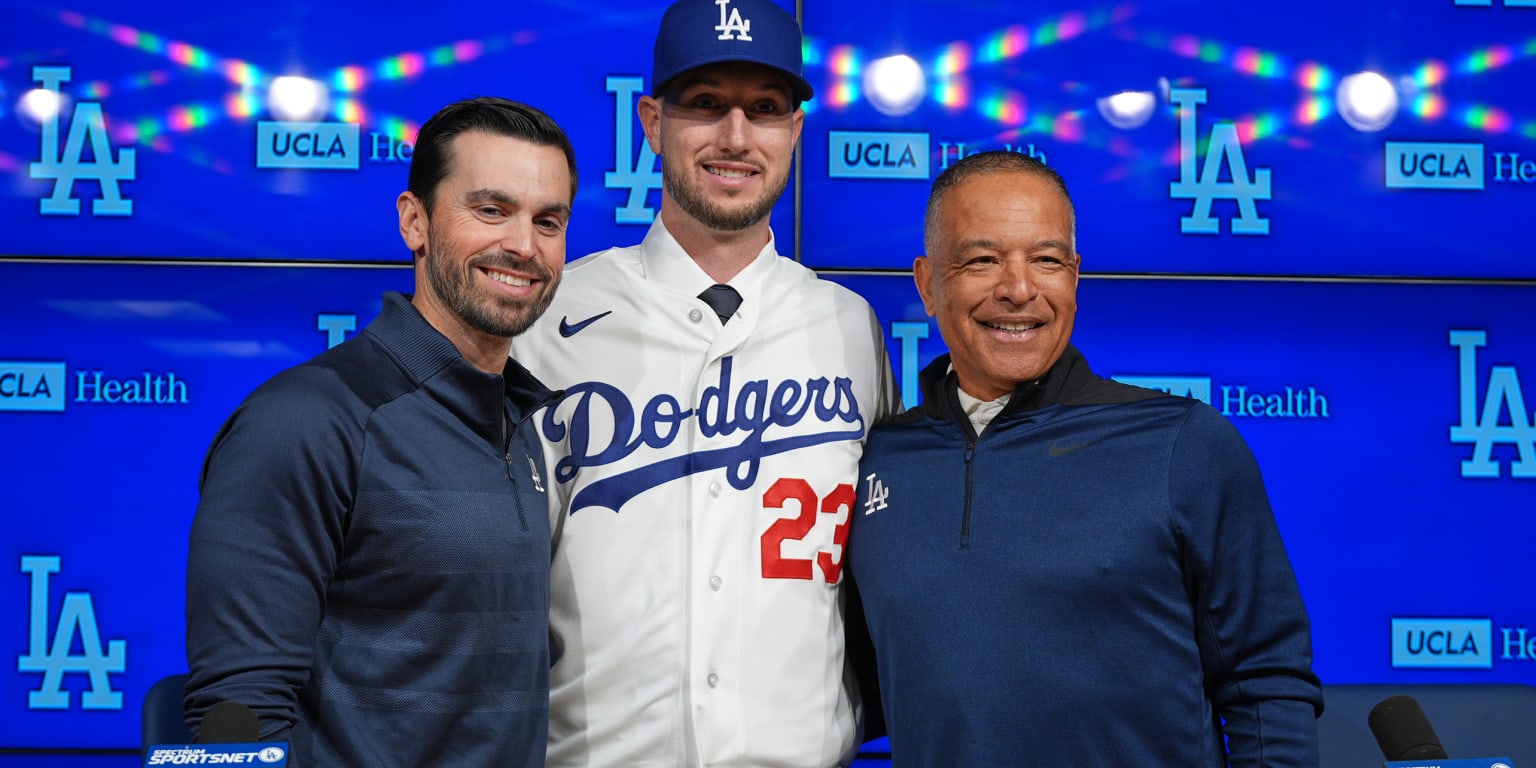
And with transactions like the Dodgers adding Kyle Tucker to a lucrative deal last week, the spending gulf will potentially grow in 2026.
The additional tax tiers and penalties included in the 2022-26 CBA have not reduced the spending gap. It’s only widened.
While scouting and player development are keys in sustaining success as an organization, and while spending does not guarantee winning – it helps. Disparity does tilt the playing field.
From 1998-2024, top-five payroll teams averaged 89 wins per season. The bottom five? Seventy-four wins.
Since 1998, teams with top-10 payrolls have won 20 of 28 World Series titles.
And when a club enjoys scouting and development brains combined with financial brawn? Such a club becomes nearly unstoppable.
Consider the Dodgers. While the Dodgers are excellent operators in a number of areas, they are playing a different game than almost all clubs in terms of finances. They spent more on 2025 player payroll than the bottom six clubs combined. The Dodgers spent $515 million, including a record $169-million luxury tax payment, while the bottom six clubs combined for $510 million in payroll spend.
Their tax payment alone was greater than the payrolls of 16 clubs, more than half the league.
A similar imbalance will exist again in 2026.
The growing divide is not just an in-season issue: it’s also tied to building hope during the hot stove season.
Hope, that enthusiasm for what could be, is so important for fandom.
Consider the following headlines that appeared within one day of the Brewers and Tigers being eliminated from the playoffs this past fall:
“Will Tigers trade Tarik Skubal this offseason? Here’s what Scott Harris said” — Detroit Free Press
“Tarik Skubal offers intriguing comment on future as trade speculation swirls after Tigers’ ALDS exit” — New York Post
“Why the Milwaukee Brewers will consider trading All-Star pitcher Freddy Peralta after NLCS defeat” — The Athletic
“Will Freddy Peralta be back in 2026? Brewers have taken different routes with players entering the final of year contract” — Milwaukee Journal Sentinel
The Brewers have built a model organization. The Tigers have made great strides as a club. But having such headlines appear the day after the season ends is perhaps not the best way to build enthusiasm within a fan base.
Trade speculation regarding Skubal and Peralta continued into the winter, and Peralta ended up getting traded to the Mets — who are projected to again have one of the game’s highest payrolls — in late January for a pair of prospects.
The widening gap means only a handful of large-market clubs are involved in a meaningful way in the offseason when it comes to adding headline-generating talent This is a departure from the other major North American pro sports, where no team is priced out of any tier of player. In those leagues, success and failure is about execution, not the club’s market size.
Fans in smaller markets continue to feel the playing field is stacked against them. And it’s become more tilted.
What is behind the growing divide?
The collapse of the RSN model in certain markets plays a role in driving more local revenue disparity. The Dodgers did not lose their lucrative deal.
For the clubs that lost their RSN deals, the broadcast deals replacing them have, on average, paid out about 50% of what clubs had received from their former cable deals. Local TV revenue matters more to MLB clubs than any other major sport.
There are also outlier ownership groups like with Steve Cohen in New York, and Guggenheim Baseball Management in Los Angeles.
While one popular argument is lagging teams should simply spend more, the majority of owners in baseball — or any business type for that matter — maintain very similar margins.
For some insight on those margins we can examine the Atlanta Braves. They are the only publicly-owned team in the U.S., meaning they are subject to public financial reporting. The Braves have generally reported negative operating and net margins over the last two years. (The Blue Jays are owned by Rogers Corporation, but their finances are consolidated with Rogers’ broader media and sports division).
Local revenues explain much — not all, but much — of payroll disparity.
What to do about the growing gulf is complicated and requires cooperation and compromise between a number of parties.
But removing that cloud, discarding that talking point, would take interest in the game to another level.
Imagine removing, or at least reducing, the perception of unfairness. Imagine an alternate reality with more teams being involved in a meaningful way during the hot stove season. Imagine more enthusiasm, in more markets, entering a new season.
A future something like that would grow the breadth of fan interest, and thereby revenues, which would be a rising tide lifting all ships. The game enjoys significant momentum and addressing the divide would accelerate it.
