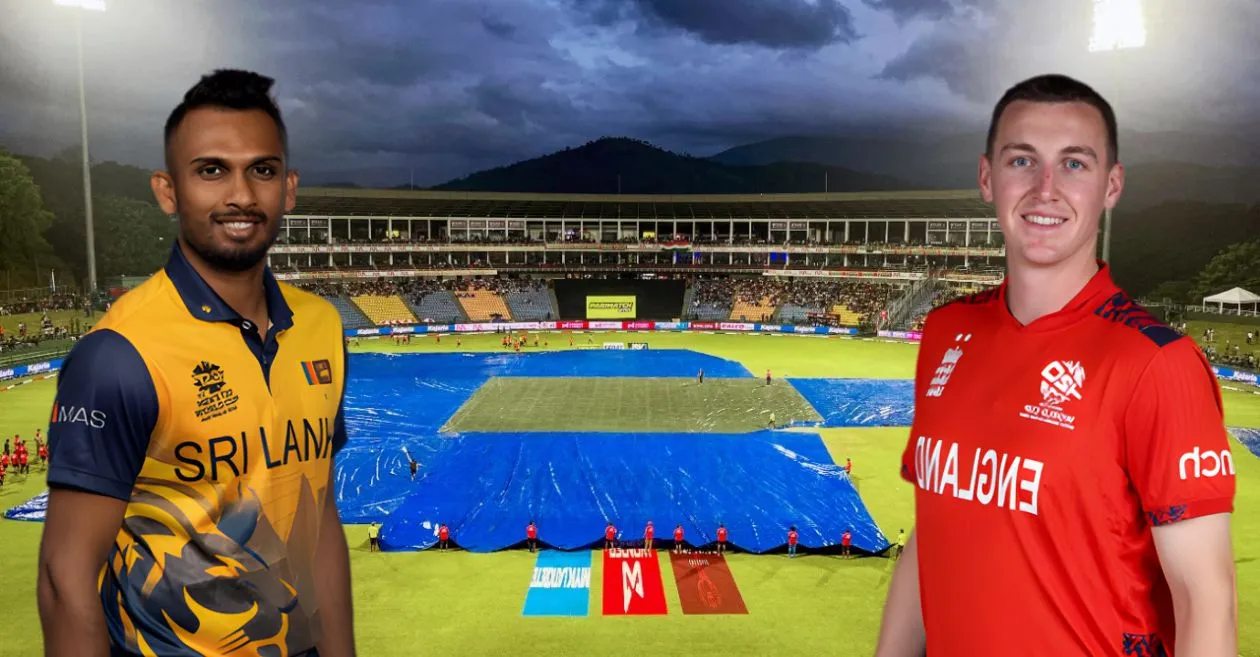
The countdown to the ICC Men’s T20 World Cup 2026 moves into top gear as Sri Lanka and England shift focus from a tightly contested ODI series to the shortest format. With the World Cup, co-hosted by Sri Lanka and India, just over a week away, this three-match T20I series represents a final proving ground for both sides as they fine-tune combinations and roles.
England arrive in Pallekele riding confidence after sealing the ODI series 2–1, capped by a decider win in Colombo. But the T20 format presents a different challenge altogether. Sri Lanka, ranked well above England in T20Is, will look to capitalise on familiar conditions and a spin-oriented attack tailored for home success.
Led by Dasun Shanaka, Sri Lanka have chosen continuity, sticking largely with the group that recently took on Pakistan. The return of experienced campaigners Kusal Perera and Dushmantha Chameera, who missed the ODI leg, adds depth and balance to the side.
Their biggest weapon remains spin. Wanindu Hasaranga, Maheesh Theekshana, and emerging all-rounder Dunith Wellalage are expected to dictate the middle overs, especially at Pallekele, where the surface tends to slow down and offer increasing assistance as the game wears on.
England, meanwhile, continue under Harry Brook’s leadership in the absence of a specialist white-ball captain. The squad blends power and pace, with Jofra Archer being rested ahead of the World Cup. The inclusion of debutant Josh Tongue and Brydon Carse underlines England’s intent to test their high-pace, hard-length approach on slower tracks.
While Jos Buttler and Phil Salt remain the headline act at the top, attention will also be on Jacob Bethell and Rehan Ahmed, both seen as key pieces in England’s plan to counter Sri Lanka’s spin threat in challenging conditions.
SL vs ENG, 1st T20I: Pallekele Weather Forecast
For the 1st T20I in Pallekele, the weather forecast for Saturday, January 31, 2026, indicates scattered thunderstorms during the day with a high temperature of 24°C. There is a significant 65% chance of rain during the daytime, which could potentially impact the pre-match preparations or the start of play. However, conditions are expected to improve by evening, becoming mostly cloudy with the precipitation chance dropping to 20% and a low temperature of 19°C. Humidity will be high at 87%, and northeast winds will blow at 6 mph, potentially aiding some swing early on.
SL vs ENG, 1st T20I: Dew Factor
In Pallekele, the dew factor typically becomes a significant variable for night matches starting at 7:00 PM. High humidity (often exceeding 80%) and cooling temperatures after sunset create conditions where moisture settles on the outfield, making the ball increasingly difficult for bowlers to grip and control. For Sri Lanka, this poses a tactical risk to their spin-heavy attack, as a wet ball limits the ability to impart revolutions or find sharp turn. Conversely, the “skidding” effect of a damp ball allows England’s power hitters to time their shots more easily, often making chasing a preferred and statistically advantageous strategy at this venue.
Also READ: Sri Lanka announce strong 16-member squad for the T20I series against England
SL vs ENG, 1st T20I: Toss Prediction
In Pallekele, the toss winner will likely elect to bat first, driven by three critical factors:
Scoreboard Pressure: Unlike flatter coastal tracks, Pallekele historically favours teams setting a target. With an average first-innings score of 168, statistics show that chasing becomes significantly harder as the game progresses. Teams batting first have won 14 of the last 27 T20Is here, as the pressure of a required run rate often leads to miscued shots against the slowing surface.
Surface degradation: The pitch is a classic “two-paced” deck that starts off true but tends to grip and slow down after the first 10–12 overs. This transition makes stroke-making difficult for the side batting second, especially as Sri Lanka’s specialized spin attack can exploit the added friction and variable bounce under lights.
Neutralized dew: While evening dew is a factor in Kandy, it is rarely heavy enough to completely tilt the advantage toward the chasing side. Captains often prioritize having a dry ball for their spinners during the middle overs of the first innings to build pressure, banking on the pitch slowing down enough to offset any minor skidding in the second half.
Also READ: SL vs ENG, 1st T20I Match Prediction: Who will win today’s game between Sri Lanka and England?
