LOS ANGELES — A new insurance provision for this year’s World Baseball Classic prevents players from having their contracts insured once they turn 37 years old.
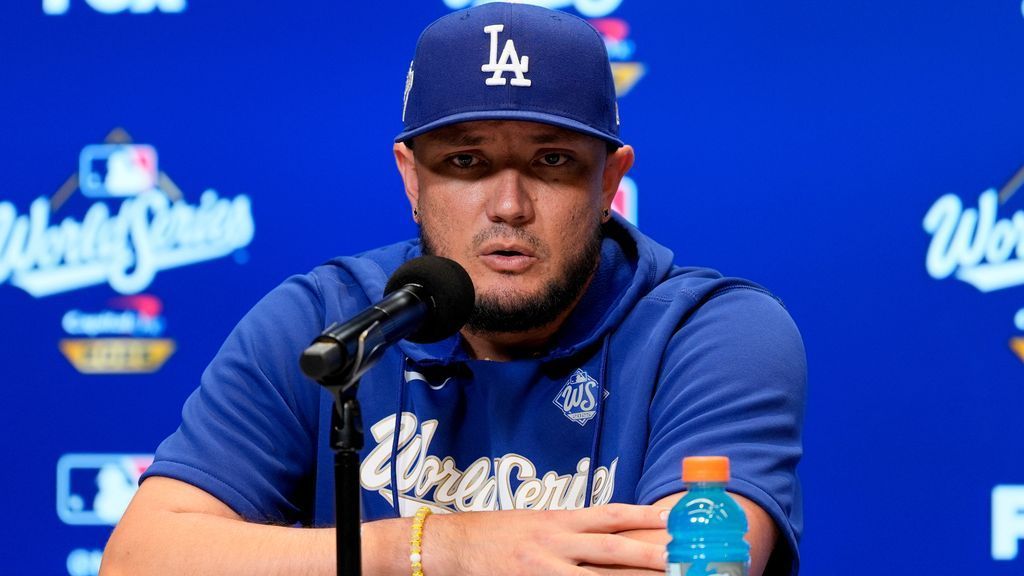
Los Angeles Dodgers infielder Miguel Rojas, who turns 37 on Feb. 24, was denied an opportunity to play for his home country of Venezuela in his final season as a player because of that, a source of frustration for the 12-year veteran.
“It’s really tough,” Rojas said during the Dodgers’ annual fan event Saturday. “I didn’t know if I was going to be part of the team. I just wanted to be available. If something happened and I’m not part of the team in the first round, I can replace one of the players. I can be there for practice. I just wanted to be there and just wanted to be available for my country.”
Insurance approval has emerged as a central issue in the lead-up to this year’s WBC, which has grown into a prestigious baseball tournament.
Jose Altuve, who would have been the starting second baseman for Venezuela, and Francisco Lindor, the shortstop for Puerto Rico, were the latest stars denied entry because their contracts were not insured. The Puerto Rican national team is also reportedly expected to be without third baseman Carlos Correa, catcher Victor Caratini, and pitchers Emilio Pagan, Jose Berrios and Alexis Diaz, prompting the president of the Puerto Rico Baseball Federation, Dr. Jose Quiles, to publicly consider dropping out of the tournament.
Puerto Rico is set to host Pool A from March 6 to March 11 at Hiram Bithorn Stadium, located in the capital city of San Juan.
“My only question is: Why is it just with our countries [in Latin America], like Venezuela, Puerto Rico, a couple Dominican players?” Rojas said. “I don’t see that happening with the United States or happening with Japan. And I’m not trying to attack anybody, or attack what’s going on … but at the end of the day, it feels like it’s just happening with the players that want to represent their country from Latin America. So, there’s a lot of things I would like to talk about with someone in control, with someone from MLB.”
Major league contracts are fully guaranteed, regardless of potential injuries during the World Baseball Classic. The insurance, however, protects the teams in that scenario. As an example, the New York Mets were off the hook from paying Edwin Diaz in 2023, when he tore the patellar tendon in his right knee while representing Puerto Rico.
Insurance company NFP has insured multiple iterations of the WBC, as agreed upon by MLB and the MLB Players Association. The WBC pays the insurance policy. Players whose injuries are classified as “chronic” by the company have a harder time getting insured, as Clayton Kershaw experienced three years ago. (Kershaw is playing in this year’s tournament, but he is no longer with a major league team and thus doesn’t have a contract to insure.)
Players are classified as having “chronic” injuries if they meet one of five criteria, according to sources familiar with the situation: if they were on the injured list for an aggregate of at least 60 days in the prior season; were injured and unable to participate in two of their teams’ last three games of the prior season; underwent surgery following that season; underwent more than one surgery throughout their career; or were placed on the IL in the last day of August of the prior season. The other categories are “intermediate” and “low risk,” which give players a higher probability of being insured.
The size of the contract impacts the likelihood of a player being insured despite their classification. Rojas’ contract — a one-year, $5.5 million deal — is relatively small. He also did not spend time on the IL last season. But the company didn’t insure him because of his age.
If a player can’t be insured, the team can take on the risk and let the player play without insurance, as the Detroit Tigers previously did for Miguel Cabrera, another native Venezuelan. It is not certain whether the Dodgers will do that for Rojas, but a decision needs to be made quickly; WBC rosters are due Tuesday and will be announced Thursday night.
Rojas said he was recently given a HIPAA form that would allow NFP to dig deeper into his medical history, but he received it too late, limiting his ability to seek an alternative option. The new provision, according to a source, states that a player’s contract can’t be insured once he turns 37. If a player’s 37th birthday isn’t until July, for example, that player’s contract would be insured only for March, April, May and June.
“It’s really hard to not have the opportunity to put my country on my chest and to represent them and help win a World Baseball Classic — and not have the opportunity to do it because I’m 37 years old,” Rojas said. “That’s not right. I don’t feel it’s right.”
ESPN’s Jeff Passan contributed to this report.
