
1.e4 – The classical move
For centuries, 1.e4 has been regarded as the classical opening move in chess – direct, ambitious and geared toward fighting play. It opens lines for the queen and bishop, immediately lays claim to the centre, and often leads to sharp, tactically rich positions. Yet this very openness also comes with a major challenge: Black has a wide range of defences at his disposal – from the solid Caro–Kann to the aggressive Sicilian Defence and flexible systems such as the French Defence.
To help players keep an overview in these positions and approach the board with confidence, Indian grandmaster Harshit Raja has developed a beginner-friendly, practice-oriented 1.e4 course. With clear repertoire recommendations, deep strategic understanding and concise explanations, he shows how to be well prepared against every common reply by the opponent – without getting lost in countless theoretical variations.
The goal is an aggressive yet solid White repertoire that promises interesting ideas against every system.
Harshit presents many variations that he has used successfully throughout his chess career. One example is his recommendation against the very solid Caro–Kann Defence.
Grandmaster Harshit Raja, India’s 69th GM, has created a practical and powerful 1.e4 repertoire – perfect for players who want to play aggressively without drowning in opening theory. Whether you’re playing online or over-the-board, this course gives you solid attacking weapons that are easy to learn, fun to play, and difficult for opponents to face.
Free sample video: Introduction
Free sample video: Scandinavian Defence
Two Knights System in the Caro-Kann
After 1.e4 c6, he deviates from the by far most common move 2.d4 and instead recommends the Two Knights System:
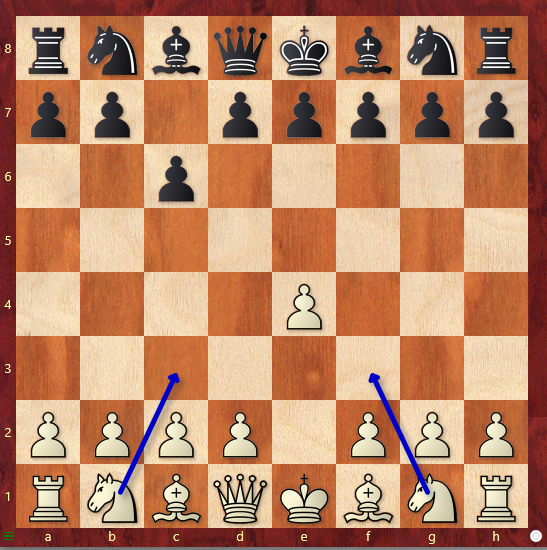
2.Nf3 d5 3.Nc3 Bg4 4.h3 Bxf3 5.Qxf3 Nf6
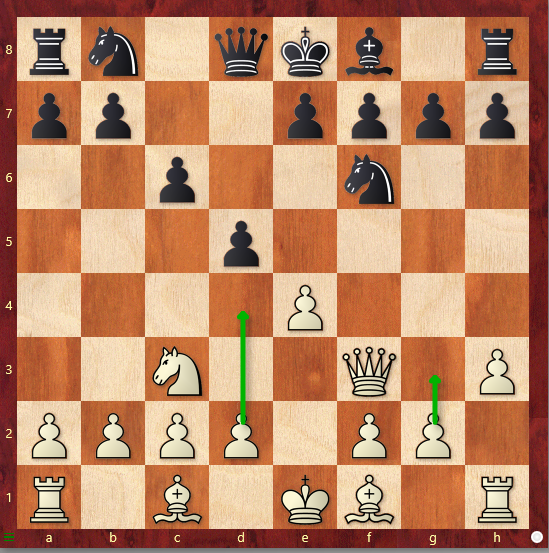
After White has secured the bishop pair, Harshit offers two options:
- the quieter 6.g3, and
- the more aggressive 6.d4.
How quickly the second option can lead to a successful attack is shown in the game Raja, Harshit – Faizrakhmanov, Ramil, Palic 2016:
6…dxe4 7.Qe3 Nd5 8.Qxe4 Nxc3 9.bxc3 Nd7 10.Rb1 Qc7 11.Bd3 e6
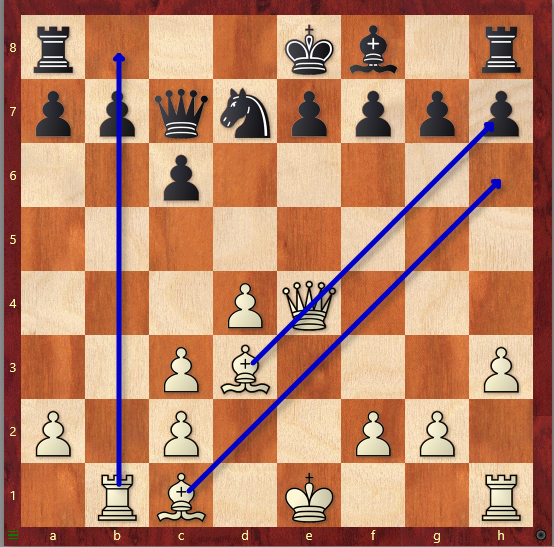
White already has very active pieces.
11…e6 12.Bg5 h6
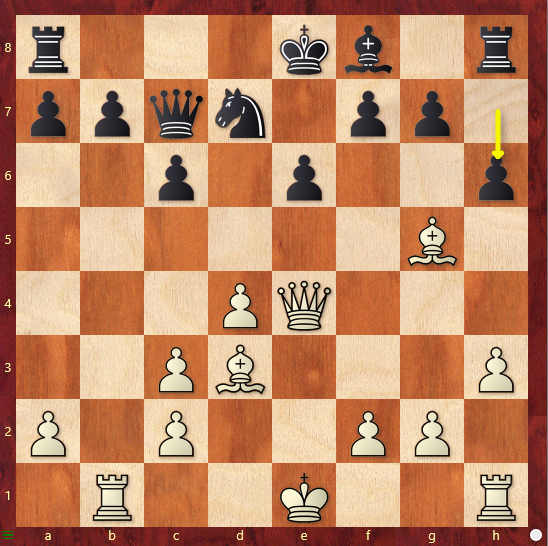
In this position, Harshit played a brilliant queen sacrifice and delivered mate on the very next move!
13.Qxe6!! fxe6 14.Bg6#
This video course includes GM Anish Giri’s deep insights and IM Sagar Shah’s pertinent questions to the super GM. In Vol.1 all the openings after 1.e4 are covered.
Less common systems
Against the less common replies to 1.e4, Harshit recommends relatively simple and solid systems in which the pieces are quickly developed to logical squares, castling takes place early, and the game then transitions into a middlegame in which White usually enjoys a lead in development and good central control.
One example is his approach against the Alekhine Defence:
1.e4 Nf6 2.e5 Nd5 3.d4 d6 4.Nf3
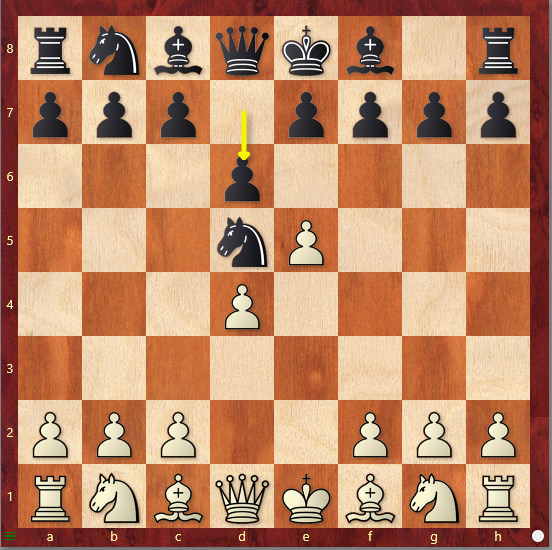
At this point, 4.c4 is usually played, leading to very tactical positions in which both sides need to be well prepared. Instead, with 4.Nf3 Harshit deliberately avoids these complications and places the emphasis on rapid development.
4…dxe5 5.Nxe5 c6 6.Be2 Nd7 7.Nf3 g6 8.0-0 Bg7 9.c4
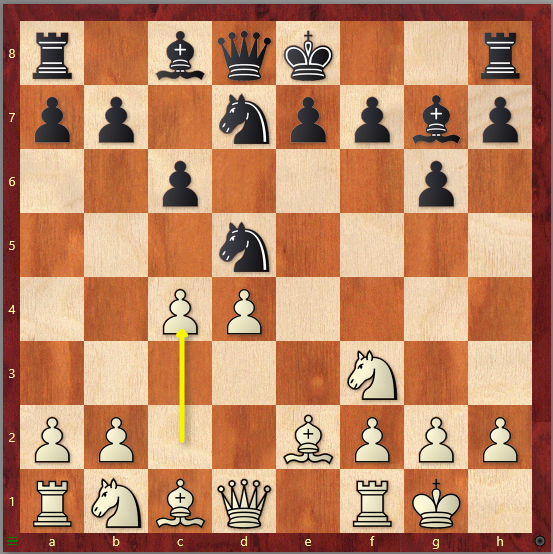
Once the king has been brought to safety, control of the centre is now reinforced with tempo. The knight on d5 has to retreat, but none of the available squares look particularly attractive.
9…Nc7 10.Nc3 0-0 11.Bf4
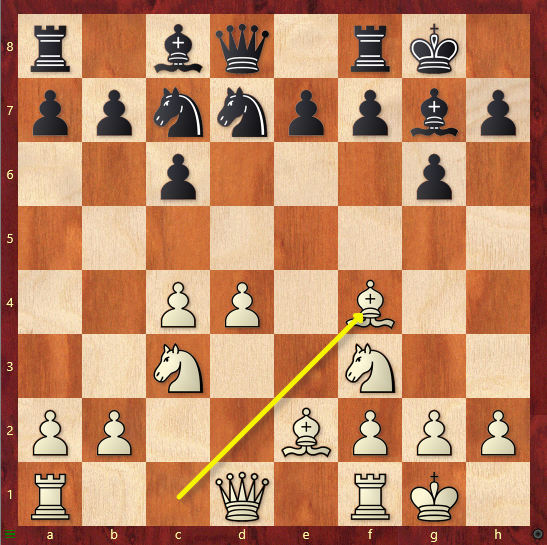
A few logical developing moves later, White has very good control of the centre. Black is denied the desirable pawn thrust …e5. In addition, White enjoys a space advantage, while Black continues to struggle to find good squares for the knights and the light-squared bishop. This position is explained in more detail in the Alekhine Defence video and analysed a few moves deeper.
Sicilian Defence
What I find most interesting is Harshit’s recommendation against the Sicilian Defence:
After 1.e4 c5, he suggests the extremely rare move 2.Be2!?. This move fits in well with the rest of the repertoire: White castles and develops quickly, then either fights for the centre or launches an attack against the opposing king. The following is a sample line:
1.e4 c5 2.Be2 d6 3.d3 Nf6 4.f4 g6 5.Nf3 Bg7 6.0-0
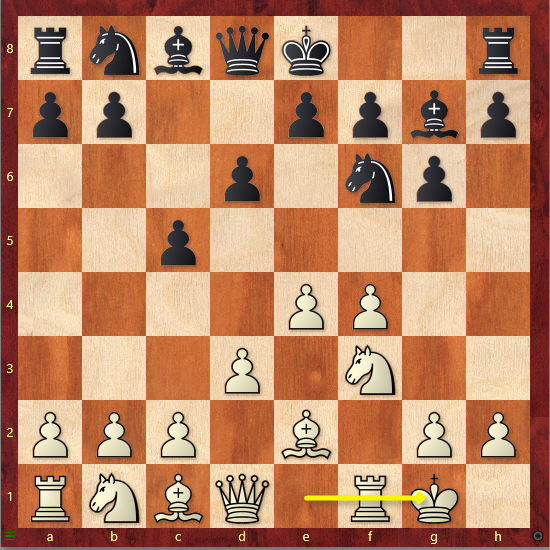
This is the setup that White aims for almost regardless of how Black plays. Once again, White has castled first, yet the minor pieces do not appear particularly active. That, however, is about to change.
6…0-0 7.a4 Nc6 8.Qe1! This move initiates a typical attacking plan.
8…a6 9.Qh4 Nd4 10.Nxd4 cxd4 11.f5
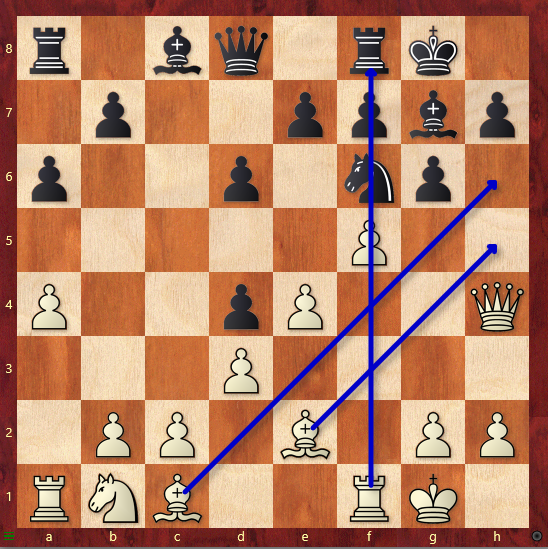
With this pawn thrust, the bishops are activated and the black king can be put under pressure with Rf3–h3, Bg5, Bh6 or g4–g5.
Conclusion
In his 1.e4 course, Harshit Raja presents a practical and dangerous repertoire against all major defences. With rapid development, clear attacking plans and strategically well-thought-out sidelines, White players are rewarded with active, pressure-filled positions. Ideal for anyone looking to score dynamically with creative ideas and without excessive theoretical burden.
About the author:
 Harshit Raja, born in 2001 in Pune, India, rose through the ranks to become India’s 69th Grandmaster in August 2021, fulfilling his final GM norm at the Biel Masters Open. Harshit Raja has also established himself as a lively chess commentator among other platforms for ChessBase India highlighting his ability to combine deep grandmaster-level understanding with the ability to clearly explain concepts and break complex strategic ideas down for the audience.
