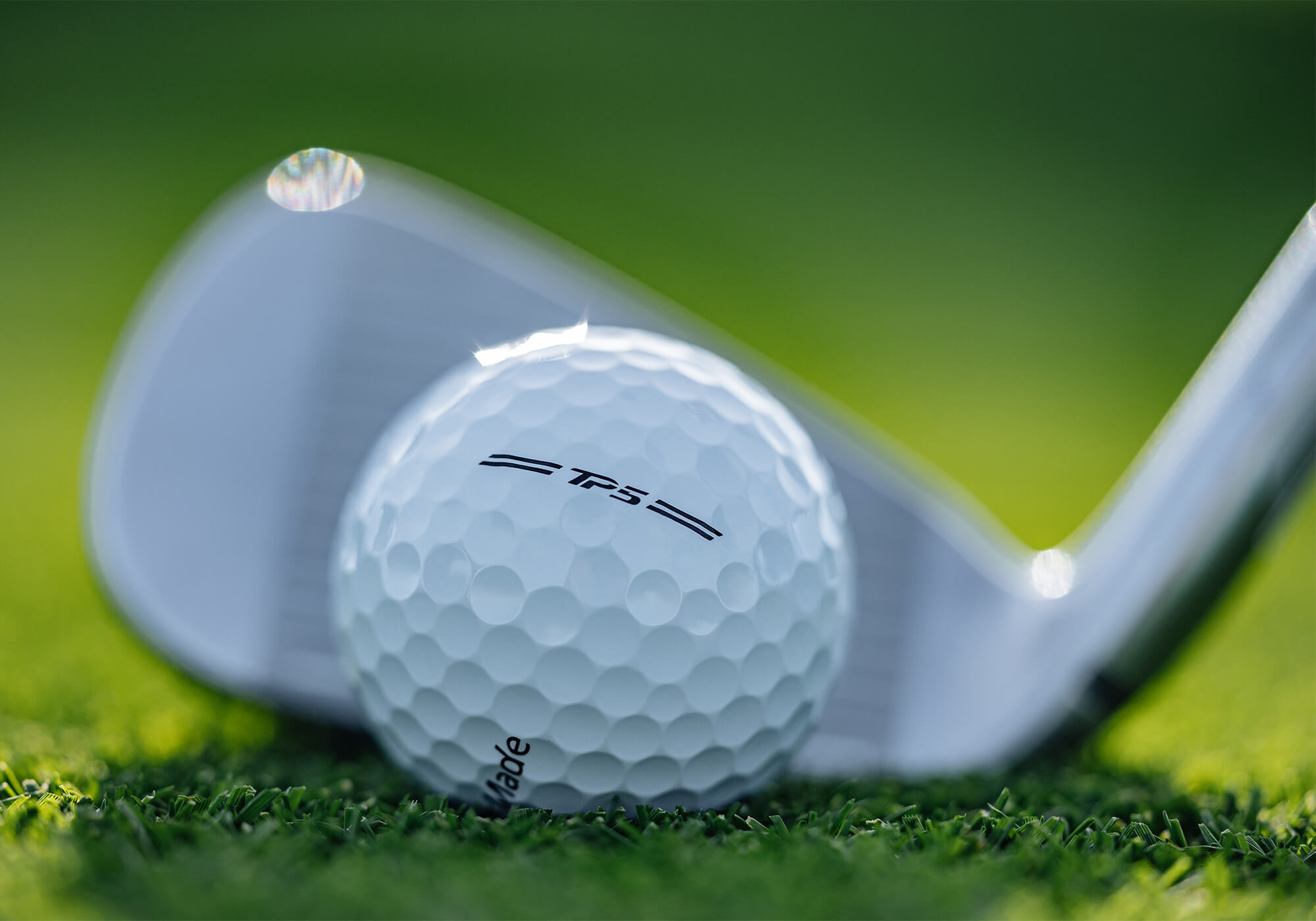
Speed gains are a part of nearly every golf ball story but the biggest breakthrough comes from an all-new micro-coating process designed to eliminate hidden inconsistencies and produce the most predictable TP5 and TP5x ever.
There are product launches that feel iterative and then there are those that feel like something has fundamentally changed. TaylorMade’s new TP5 and TP5x golf balls land squarely in the latter category.
On the surface (that’s a pun that will make sense in just a bit), this is a familiar story: two five-layer tour balls, one tuned for softer feel and higher greenside spin (TP5), the other engineered for speed, lower spin and maximum distance (TP5x). Dig a little deeper, however, and it becomes clear that TaylorMade wasn’t simply chasing incremental gains. Instead, the company attacked the process of how a golf ball is designed and, more importantly (in this story anyway), finished—ultimately suggesting it has solved a problem most golfers never knew existed.
The result, according to TaylorMade, is the most consistent tour ball family the company has ever produced.
And, yes, that does mean we have ourselves the second major paint story of the golf ball release season.
Fun.
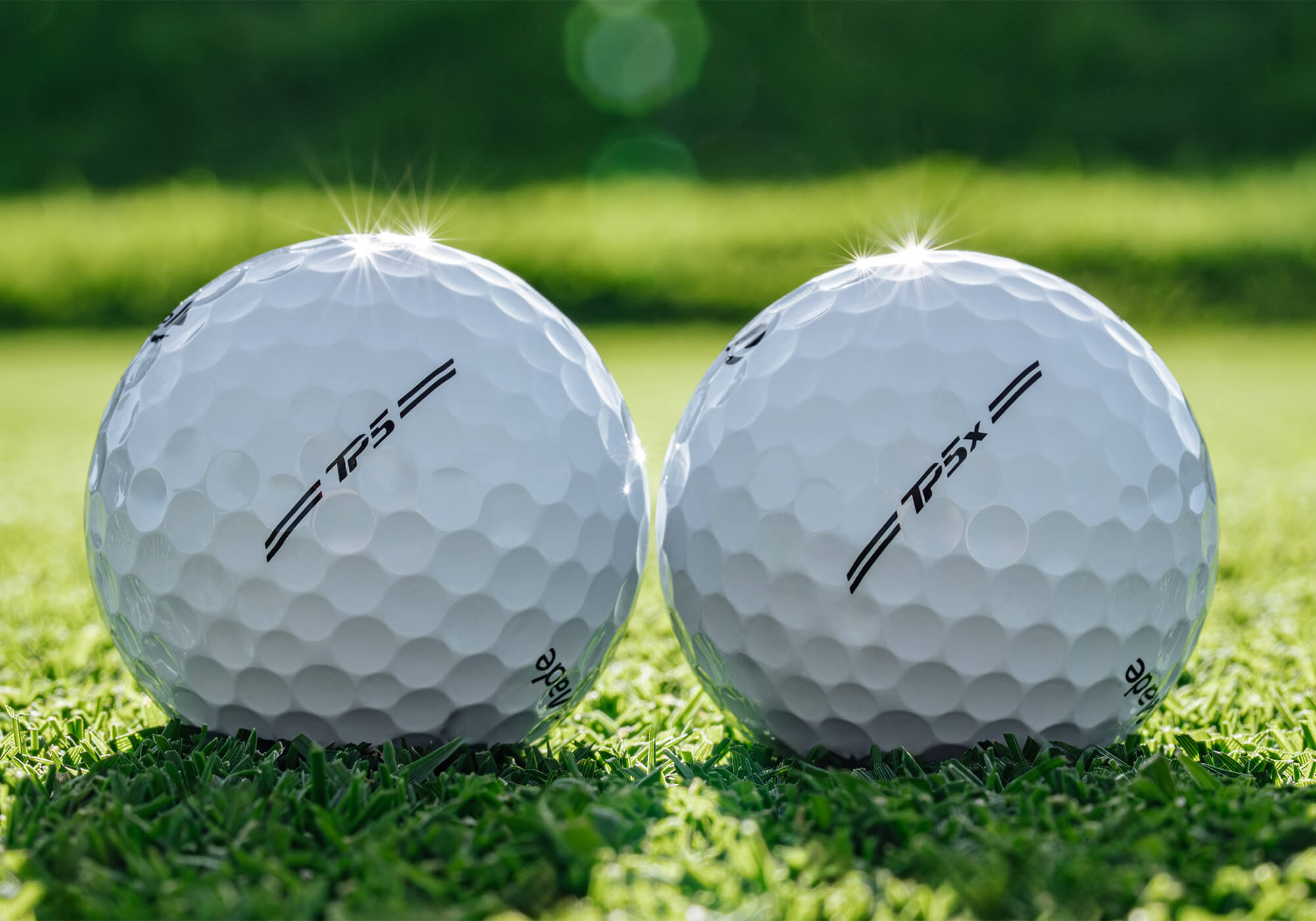
From golfer-first design to 100,000 prototypes
TaylorMade’s approach to golf ball development hasn’t changed. What has changed is the scale at which the company can now explore solutions.
Historically, golf ball R&D is constrained by time and physical prototyping. Engineers would identify a number of constructions that might work, test them indoors and outdoors, gather player feedback and refine. That process still is a part of every ball design and release cycle but for TP5 and TP5x, TaylorMade was able to investigate more possible solutions than ever.
The company has spent years developing digital prototyping capabilities that allow engineers to evaluate more than 100,000 virtual constructions before ever cutting a tool. These aren’t abstract simulations or ChatGPT attempting to design a golf ball; they’re grounded in years of physical prototyping data, material properties and aerodynamic testing. The system allows TaylorMade to explore layer materials, thicknesses and flex profiles in combinations that simply weren’t feasible before.
It’s not fundamentally different from how club design has evolved in recent years but it’s nevertheless important because TaylorMade’s five-layer construction gives it more performance levers than three- or four-layer designs. And while that can have real-world performance benefits, it also presents increased opportunities to run down the wrong rabbit holes. The new virtual prototype system helps narrow down selections more quickly and more accurately.
It’s a key piece of how TaylorMade arrived at its updated models.
TP5: softer feel, now with real speed
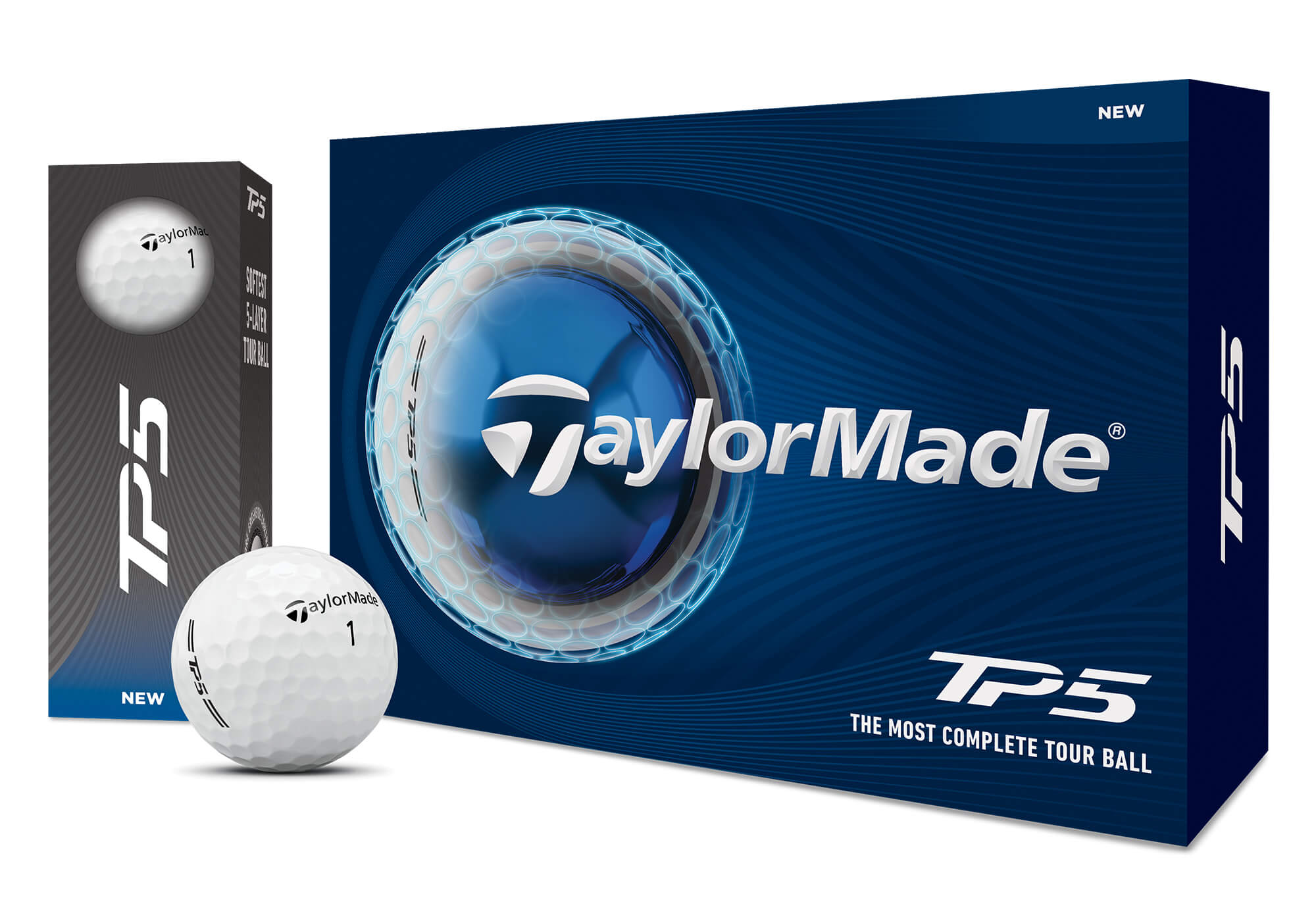
The headline change for TP5 is simple and pretty much exactly what you would expect: it’s faster than any TP5 before it.
TaylorMade says the distance performance of the new TP5 approaches what it previously delivered with TP5x. That’s notable because, among TaylorMade’s golf ball offerings, TP5 has long been the choice for golfers prioritizing softer feel and higher spin around the green. Distance was the tradeoff.
With the new TP5, TaylorMade says that tradeoff is largely gone.
The 2026 TP5 uses TaylorMade’s largest tour core to date. The larger core reduces contact time at impact, helping retain more energy and generate faster ball speeds on full swings. Layer changes throughout the construction further support that speed gain without sacrificing the feel and control TP5 players expect.
Aerodynamically, TP5 gets a reengineered Tour Flight Dimple Pattern designed to reduce turbulence and optimize the lift-to-drag ratio. The practical outcome is a slightly lower, more penetrating flight with less ballooning and improved stability in the wind.
That last bit is no small detail. Over the last few years of robot ball testing, we observed that TP5 tended to launch low but climb higher than pretty much all of its competitors. Flattening things out a bit should improve performance noticeably.
For golfers who love the way TP5 feels off the wedge but previously felt they were giving something up off the tee, this version is designed to close that gap.
TP5x: faster still, and built to stay down
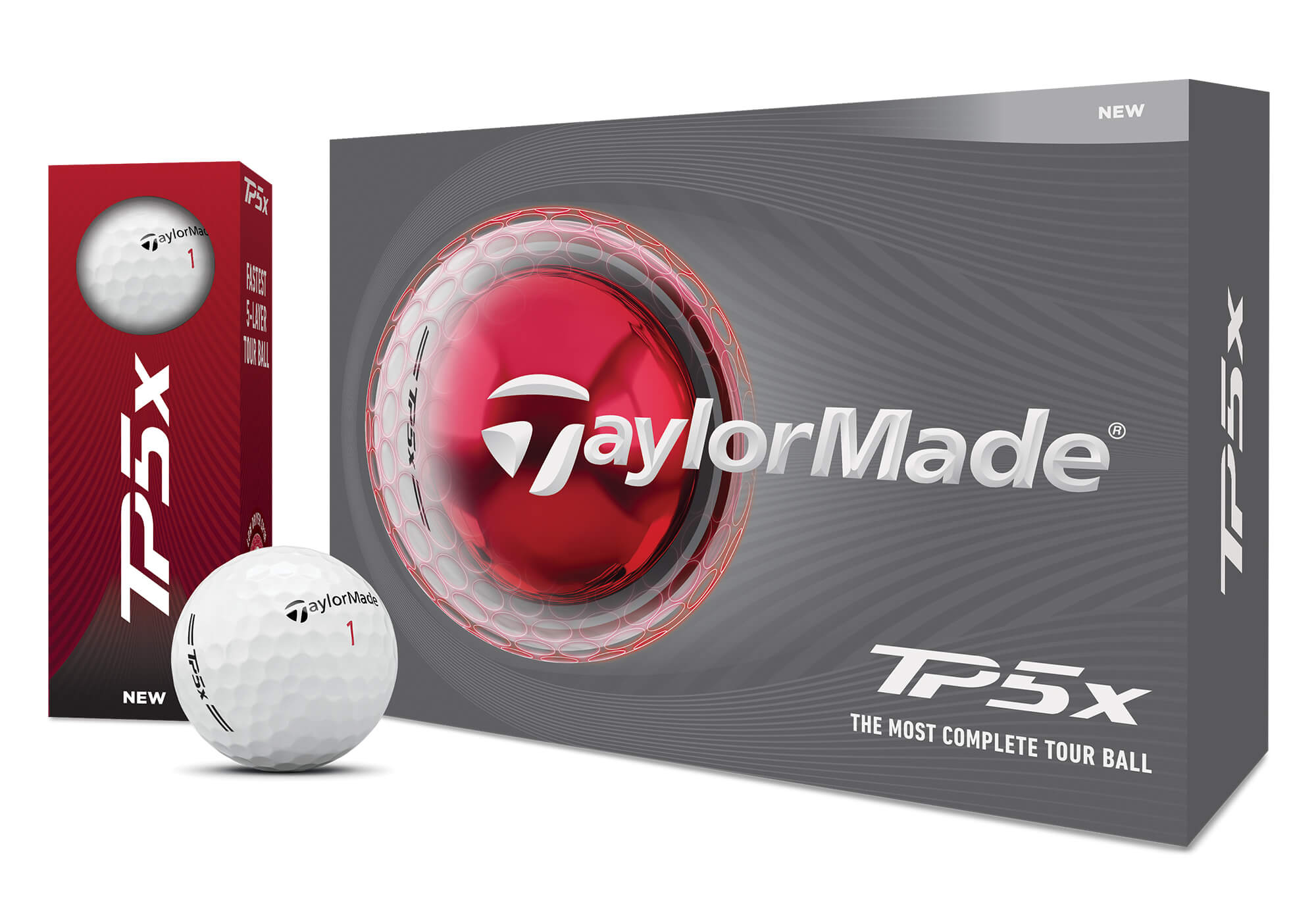
Of TaylorMade’s two TP5 offerings, TP5x remains the speed- and distance-centric option. As you would expect, TaylorMade says it’s the fastest TP5x they’ve ever produced.
That speed comes primarily from changes in the mantle layers. New materials and a bit of added firmness work to increase ball speed at the top of the bag while keeping spin down with the driver and long irons.
The core and mantle system also work together to fine-tune spin. Ultimately, what TaylorMade is claiming is a more penetrating trajectory that holds its line better when the wind kicks up. While greenside spin isn’t likely to match TP5, TP5x has performed well given its other performance characteristics.
The bottom line is that TP5x remains the better choice for golfers who want maximum speed with a lower spin profile.
Solving the invisible problem: Why paint suddenly matters
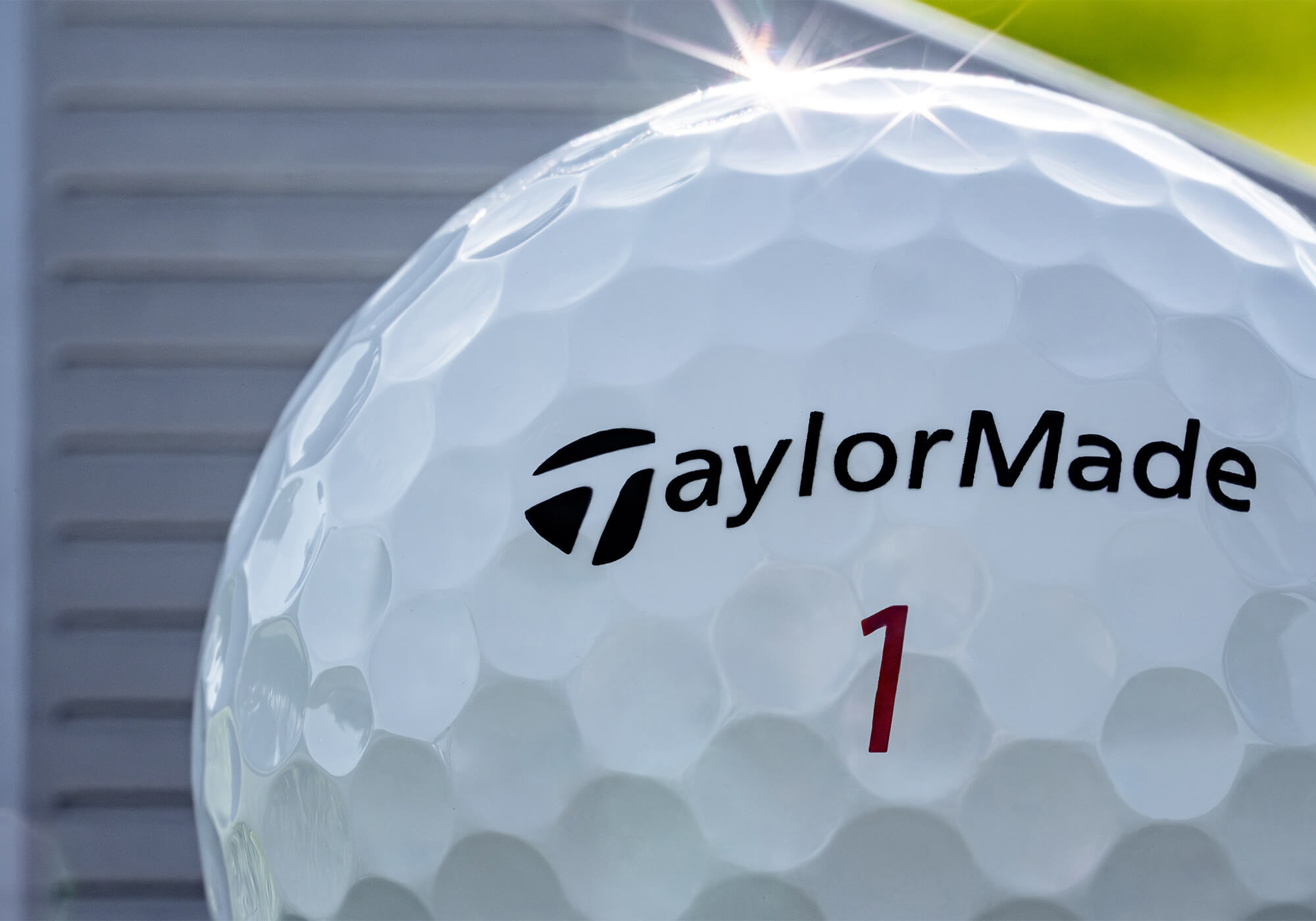
If TaylorMade had stopped with new materials and aerodynamics, TP5 and TP5x would already represent meaningful updates. But the most important change—and the one the industry seems to be talking about this season—has nothing to do with cores or mantles.
It has everything to do with paint.
(I will pause to give you time to recover from the shock.)
During internal testing with previous TP5 models, TaylorMade engineers noticed unexplained inconsistencies. Identical golf balls—same construction, same materials—would occasionally produce noticeably different flights. Some flew higher, some shorter, some drifted more left or right. On camera-based launch monitors, they looked the same. In the air, they didn’t behave the same.
You don’t say. As we’ve noted in our annual ball tests, TaylorMade TP5/TP5x models produced more than their share of cuckoo balls.
To find out why, in addition to its state-of-the-art outdoor test range, TaylorMade invested heavily in image-processing and micro-measurement equipment. The tools can measure surface variations at a scale far thinner than a human hair.
What they found was something that doesn’t get discussed often: traditional paint processes can affect aerodynamics (and often not for the better).
In a traditional paint process, a golf ball is typically painted in multiple stages. Layers of white paint are followed by a clear coat. Unlike molding or milling, painting isn’t inherently precise. Paint flows. It drips. And, crucially, it tends to pool at the bottom of dimples.
When paint pools, it can partially flood dimples or create uneven coverage between the dimple floor and the dimple edges (the frets). That unevenness disrupts airflow, increases turbulence and leads to energy loss and inconsistency in flight. Sometimes the effect is small. Sometimes it isn’t.
Again, in our testing, we’ve seen two balls hit just seconds apart land 40 yards from one another.
TaylorMade calls this the “invisible problem” because the balls look identical to the naked eye.
Micro-coating: A new way to finish a golf ball
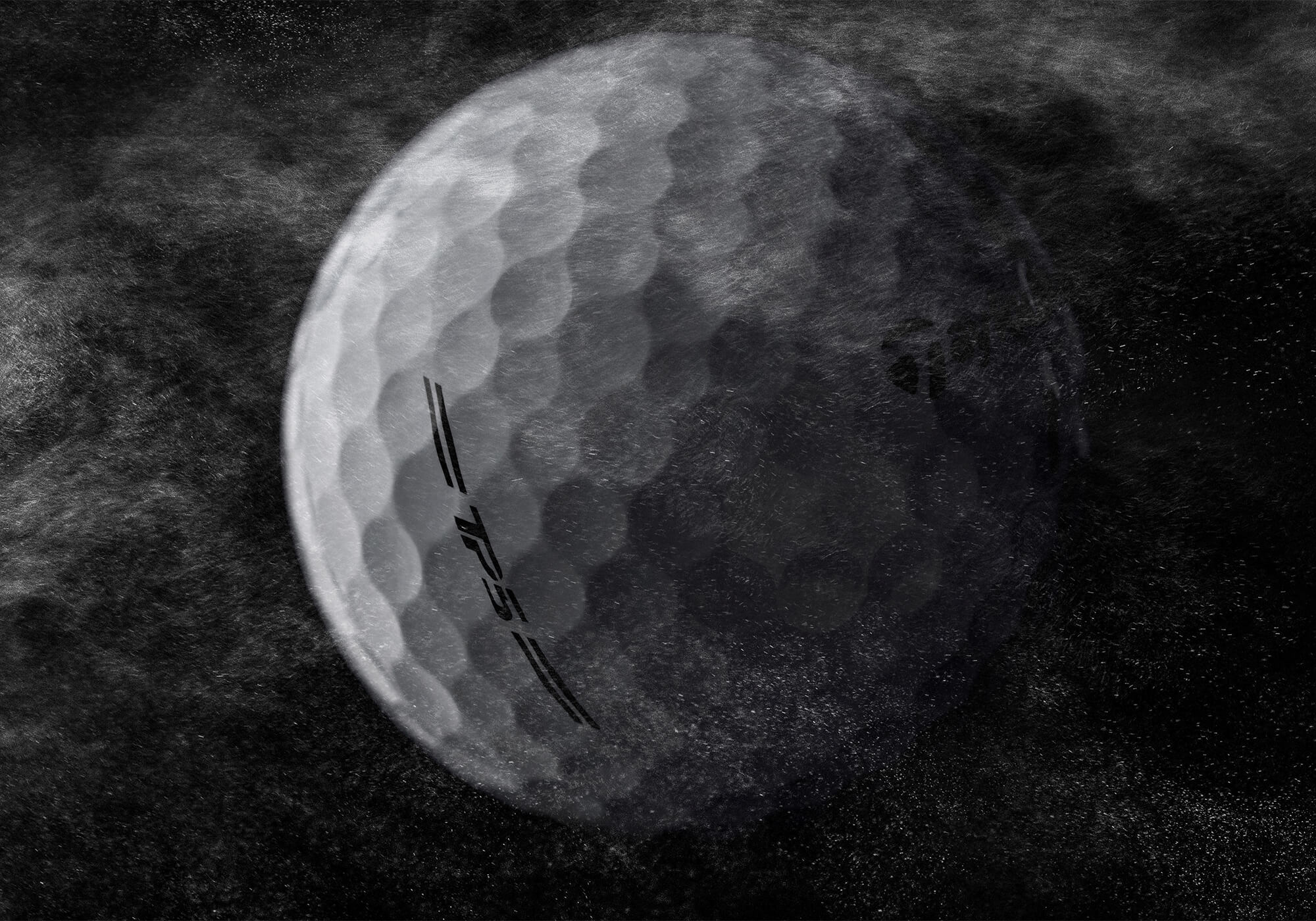
To eliminate that variability, TaylorMade developed a new finishing process it calls micro-coating.
Micro-coating isn’t just thinner paint. It’s a complete reengineering of how paint is applied and cured. TaylorMade says it precisely controls paint particle size, atomization, curing temperatures and total paint mass—down to one-millionth of a gram—to ensure even coverage across the entire surface of the ball.
The result, says the company, is a uniform layer of paint and clear coat that preserves dimple geometry rather than distorting it.
Under microscopic analysis, the difference is obvious. Traditional paint maps show heavier coverage in dimple bottoms and lighter coverage on the frets. Micro-coated balls show consistent coverage everywhere.
In internal robot testing, TaylorMade compared three visually identical balls: one micro-coated TP5, one with heavy, flooded dimples, and one with uneven paint caused by a disrupted spray pattern. The initial numbers on the launch monitor were nearly identical but in the air, the flights diverged dramatically. The full flight of the ball showed differences in peak height, distance and dispersion that no tour ball should exhibit.
Micro-coating is designed to eliminate that variation. The benefit to golfers isn’t more raw speed or spin—it’s predictability. More consistent peak heights. Tighter distance windows. Reduced left-right dispersion. Better performance in the wind.
Given recent scrutiny around golf ball paint and performance, TaylorMade’s message here is unambiguous: paint matters and they believe they’ve solved it.
The painted elephant in the room

Given what appears to be an admission that its previous paint process was less than perfect, there does appear to be a bit of a disconnect with respect to the lawsuit TaylorMade recently filed against Callaway. At the heart of it was a video by a Callaway rep that used black light to illustrate what he claimed was inconsistent paint coverage on TaylorMade balls while likening a heavy splotch of illuminated paint to a mud ball.
Ultimately, TaylorMade’s greatest objection appears to be with the method used (black light) but, nevertheless, filing a suit over the suggestion of a poor-quality paint process two weeks before announcing significant improvements to your paint process is a difficult circle to square.
Ultimately, validation (or lack thereof) will come by way of our ball tests.
Beyond the tour van
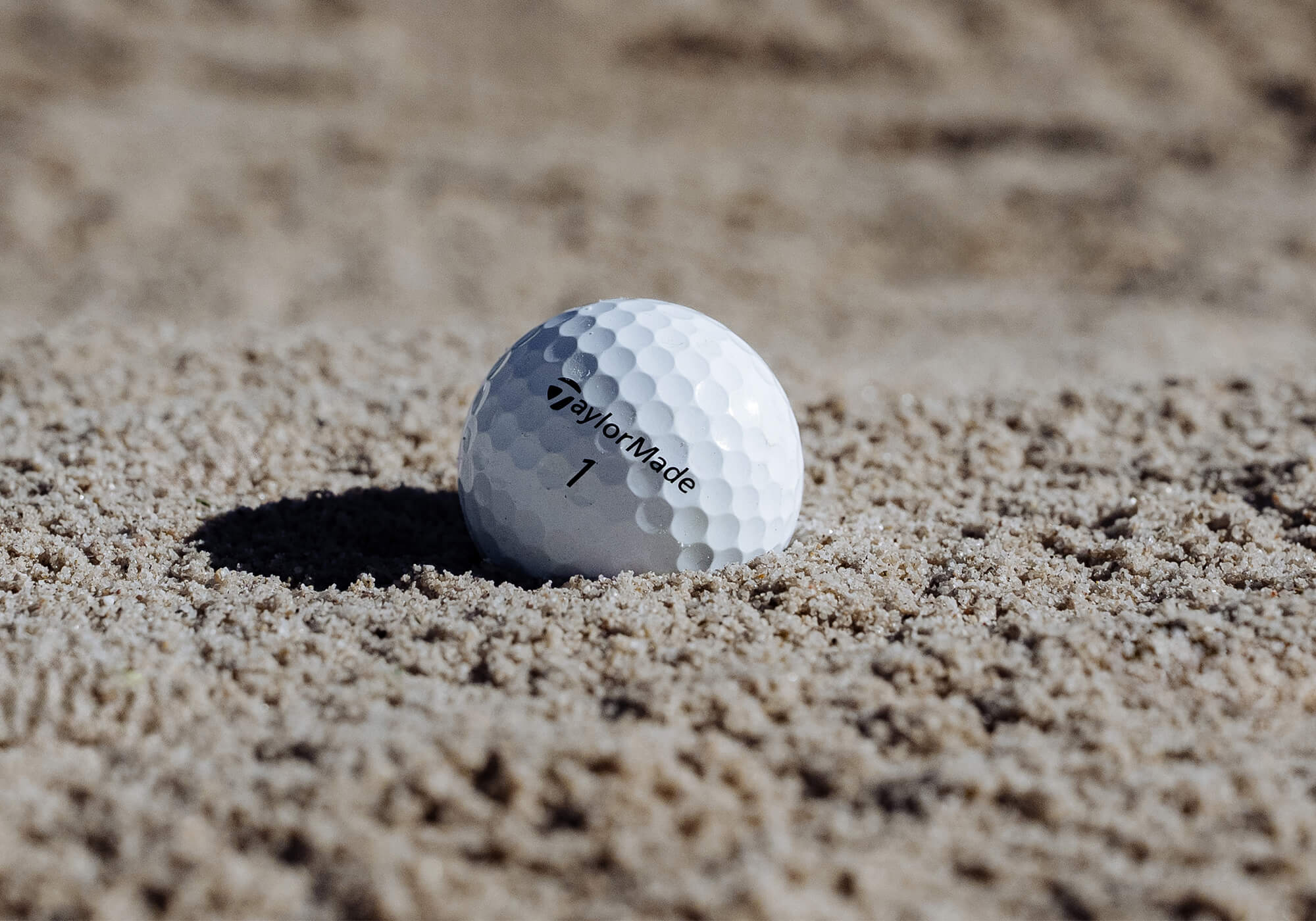
Tour feedback remains a cornerstone of TaylorMade’s development process but for TP5 and TP5x, the company expanded its validation group to include staff professionals—elite (or at least better than good) players who spend their days around everyday golfers.
The feedback was consistent: tighter dispersion, faster feel off the face, stable flight in the wind and immediate confidence. Several testers noted that TP5, despite its higher-spin profile, didn’t balloon and held its line better than expected.
For TaylorMade, that confirmation mattered. If a ball performs for tour players, that’s expected. If it performs the same way for skilled amateurs across varying conditions, that’s what ultimately will drive sales.
If TaylorMade is right, TP5 and TP5x aren’t just faster or longer. They’re built to be the same ball, every time you tee one up—and that may be the most meaningful performance upgrade of all.
Colors, pricing, availability
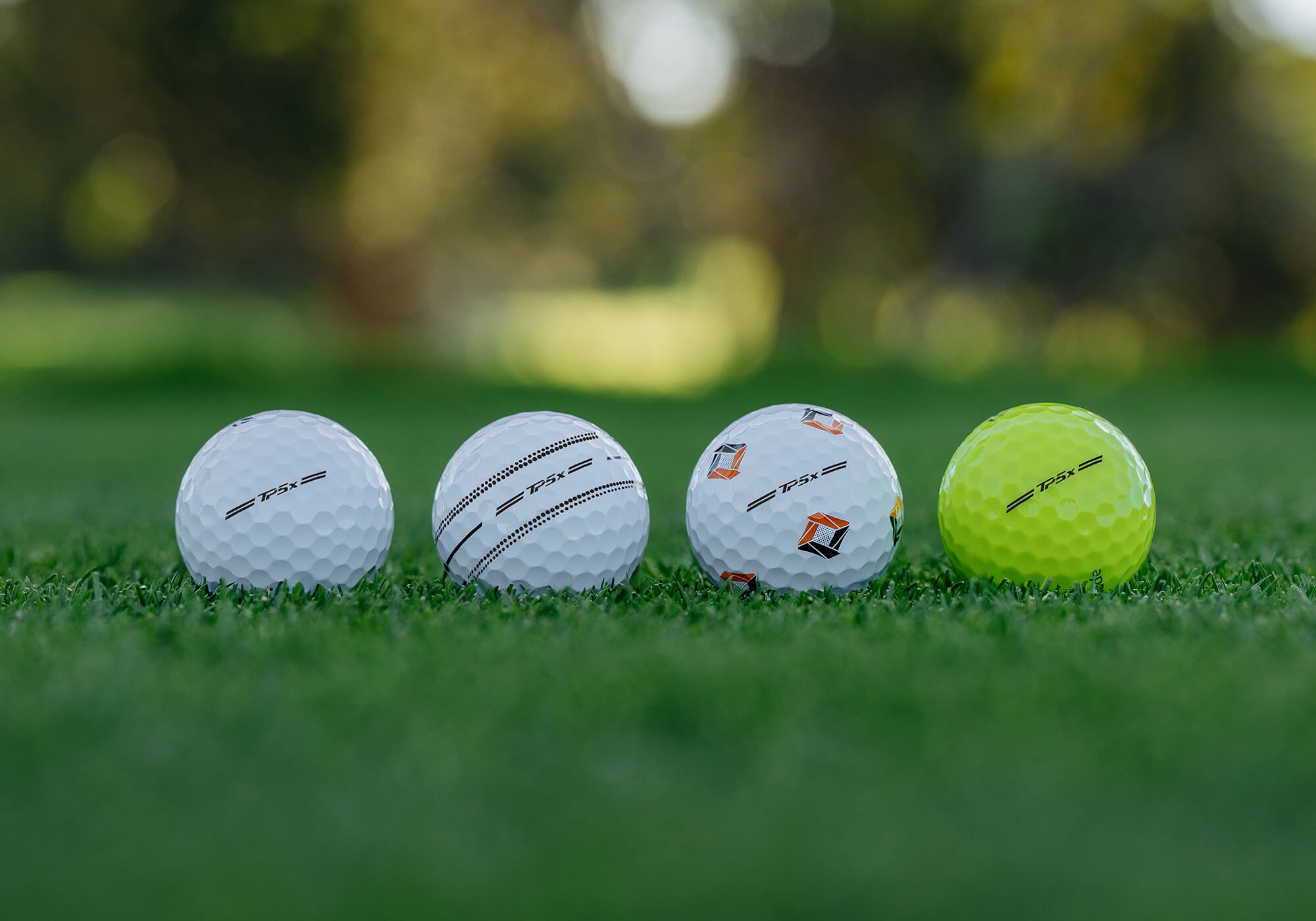
The new TP5 and TP5x are available for pre-order now with full retail availability beginning Feb. 12.
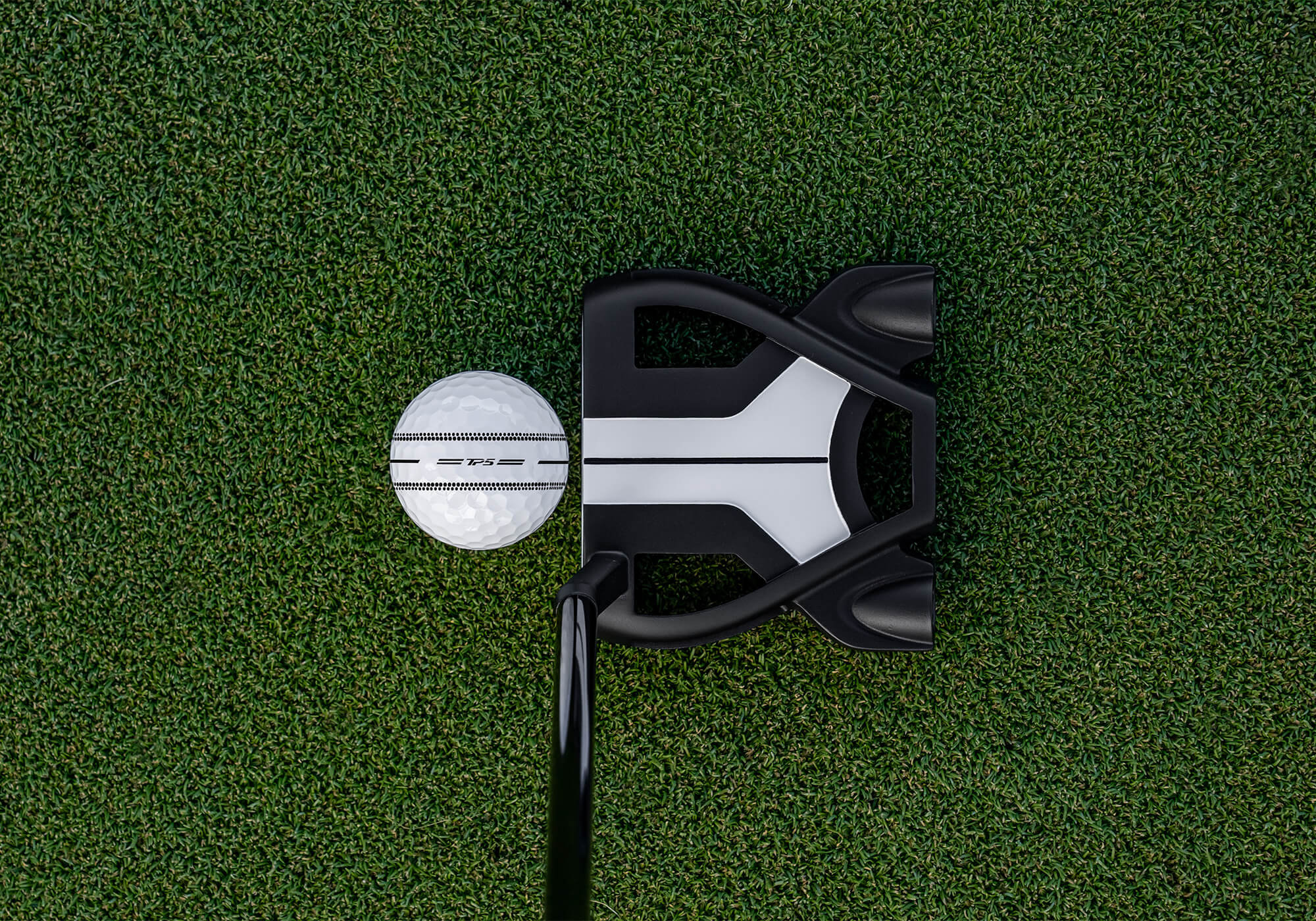
Both models will be offered in White, Yellow, pix , and TP5/TP5x Stripe. The Stripe balls feature a reengineered 360° Tour ClearPath Alignment design with tighter feedback lines and a new performance dot intended to improve alignment and feedback on the greens.
TP5 and TP5x will retail for $57.99 per dozen in standard White, Yellow, pix, and Stripe versions. Specialty options—including TRKR (designed for tour-level indoor launch monitor accuracy) and officially licensed NFL and collegiate designs—will be priced at $64.99 per dozen. MySymbol balls will be available in the U.S. only at $62.99 per dozen.
The post Built Better, From the Inside Out: TaylorMade’s New TP5 And TP5x appeared first on MyGolfSpy.
