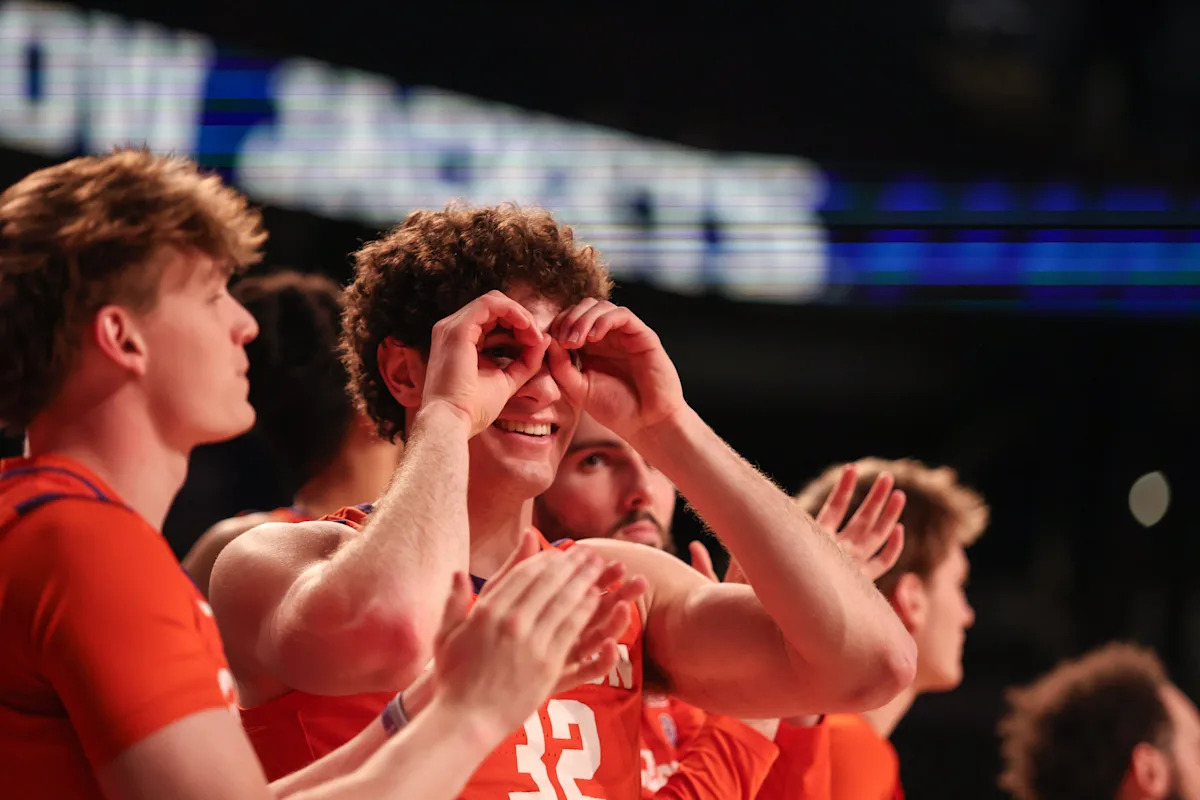
Clemson basketball has been on fire as of late, winning 11 of their last 12 games, and Stanford has been on an abysmal run, losing four of their last five on both home and opposing turf, so this should be a pretty routine game for the Tigers…. right?
That is exactly what Stanford wants you to think.
Advertisement
Because this game falls very far from that ‘routine’ norm. Let me explain.
1) Stanford’s Top-End Scorer Is Better Than Clemson’s Top-End Scorer
Stanford leader:
Ebuka Okorie — 21.8 PPG per ESPN
Clemson leader:
RJ Godfrey — 12.0 PPG per ESPN
That gap is massive, and shows that Stanford has a true alpha threat on their team who can take over stretches of a game. Clemson does not rely on one dominant bucket-getter but spreads production across multiple guys.
Why that matters in road games: When offenses stagnate late, teams lean on their best creator. Stanford clearly has a higher individual ceiling in this regard.
Advertisement
Trap Implication: One hot Okorie night can swing this entire game on its head.
2) Stanford Forces More Turnovers Than Clemson Does
Stanford steals per game (team): 7.7 per ESPN
Clemson steals per game (team): 6.5 per ESPN
Stanford also has multiple guards around 1.5 steals per game, while Clemson’s highest is Jestin Porter at 1.4.Why this matters: Road games already come with increased turnover risk. A team that thrives on passing-lane pressure becomes more dangerous when fatigue and unfamiliarity kick in.
Trap implication: Live-ball turnovers -> easy Stanford points -> crowd energy -> momentum swing.
Advertisement
3) Stanford Gets to the Free-Throw Line Better
Stanford FT%: 71.9% per ESPN
Clemson FT%: 73.1% (slightly higher) per ESPN
But as you look deeper into the stat line, Stanford has multiple high-volume foul drawers:
Okorie: 160 FTA (free throws attempted) per ESPN
Chisom Okpara: 115 FTA per ESPN
That means Stanford’s best players attack the rim consistently.
Why that matters: Foul trouble for Clemson’s frontcourt (Godfrey, Welling) would dramatically change rotation stability.
Trap implication: Early whistles neutralize Clemson’s interior presence.
4) Stanford Shoots Respectable From Three With Volume
Stanford totals:
194 made threes on 568 attempts (34.2%) per ESPN
Advertisement
Clemson totals:
181 made threes on 534 attempts (33.9%) per ESPN
These teams’ shooting profiles are practically identical, including playing on a court with Stanford’s fans chirping at you, I assure you, those percentages for Clemson go down.
Why that matters: You can’t simply “pack the paint” vs Stanford. They can punish that.
Trap implication: If Stanford hits early threes, Clemson is forced into uncomfortable defensive rotations.
5) Stanford’s Balance vs Clemson’s Committee Scoring
Stanford:
2 players averaging 13+ PPG per ESPN
4 players at 7+ per ESPN
Clemson:
Nobody above 12 PPG per ESPN
Heavy reliance on 6–9 PPG range contributors per ESPN
Advertisement
Both approaches can work, but on the road, stars usually travel better than balance.
Trap implication: Stanford’s offense has a clearer late-game hierarchy.
Final remarks
When you combine Stanford’s true go-to scorer, its ability to generate turnovers, and a shooting profile that mirrors Clemson’s, this matchup quietly checks several of the boxes that turn an ordinary road game into a dangerous one.
Contact us @Clemson_Wire on X (formerly Twitter) and like our page on Facebook for ongoing coverage of Clemson Tigers news and notes, plus opinions.
This article originally appeared on Clemson Wire: Stanford vs Clemson basketball won’t as easy as it looks
