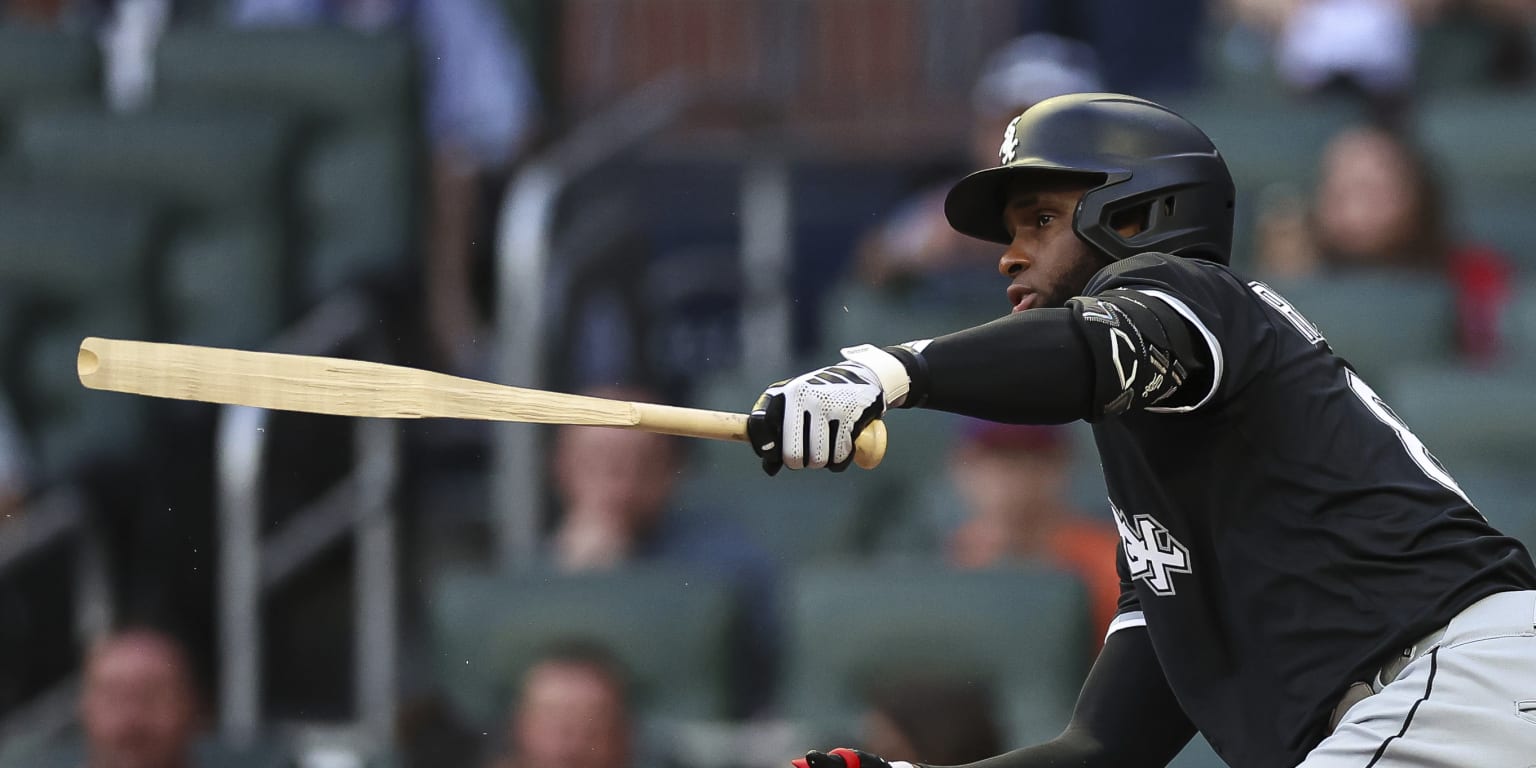
In just a few weeks, Mets fans will get their first look at their new center fielder, Luis Robert Jr.
Why would the Mets think Robert can be that player again, when he’s struggled the past two seasons? It’s simple.
To understand the Mets’ trade for Robert, you just have to look at three numbers:
Those three numbers tell you all you really need to know about why Robert was worth trading for.
Robert has three standout skills in three important areas: He ranked in the top 10% of MLB players last season in one key hitting stat, one key defensive stat and one key speed stat. Here’s a look at each one.
Robert has top-20 bat speed in the Majors. That is the single most important thing that shows he can bounce back as a hitter in 2026.
Statcast’s threshold for a “fast swing” is 75-plus mph. Robert’s average bat speed last season, 75.6 mph, clears that easily. He was one of only 29 qualifying hitters on the bat speed leaderboard with an average swing speed of 75 mph or faster.
That group is populated mainly by star sluggers — hitters like Kyle Schwarber, Aaron Judge, Vladimir Guerrero Jr., Julio Rodríguez, Ronald Acuña Jr., Shohei Ohtani, Pete Alonso and Cal Raleigh. It is a group you want to be in.
Robert’s fast bat gives him the foundation he needs to be an impact hitter. The faster you can swing, the harder you can hit the ball. The harder you hit the ball, the more damage you can do.
Even though Robert only hit 14 home runs and slugged .364 in 2025, his bat speed was at the same elite level it was in 2023, when he hit 38 home runs and slugged .542. The big home run bat is still in there. The Mets just need to bring it out.
That will take some work, as Robert’s swing-and-miss, chase and strikeout rates are all poor. But they’ve kind of always been that way. Robert is a free swinger, and that hasn’t stopped him from putting up strong slugging seasons before. If he can connect on enough of those hacks, his raw bat speed will do the rest.
2) Robert’s outfield range
Like his top-20 bat speed last season, Robert was also a top-20 outfielder by Statcast’s Outs Above Average metric.
Robert’s +7 OAA in 2025 reflects his strong range in center, and he is particularly good covering ground into the gaps to his left and right — which will be a big help to the Mets, since they’ll have Juan Soto with limited range in right field and possibly an untested rookie in Carson Benge in left. Robert in center should anchor their whole outfield.
And he’s also been consistent out there over his career. Since he debuted in 2020, Robert’s +33 Outs Above Average ranks 15th among all outfielders. So the Mets should be very confident that Robert’s glove will help them keep runs off the board in 2026.
If Robert can find his home run power again this season, he will be a power-speed star in New York. The speed is already there.
Robert’s average sprint speed last season, 29.0 feet per second, puts him in the upper tier of all MLB runners. The average big league sprint speed is 27 ft/sec, and true elite speed is 30 ft/sec or faster.
Robert is a lot closer to that top end of the speed scale than he is to average. He reached the elite 30-plus ft/sec threshold on 24 different runs last season. Statcast calls those runs “bolts.” Only 35 players logged at least 20 bolts in 2025, including Robert.
That pure speed is why Robert was able to steal a career-high 33 bases last season. In fact, 2025 was the first time he’d averaged a 29 ft/sec sprint speed since his rookie season in 2020. That’s a good sign for the Mets.
Robert is as fast as ever. He’s stealing bases more often than ever. There’s no reason he shouldn’t get to the 30-steal threshold again in 2026.
That’s the third phase of Robert’s game. And if all three phases come together with the Mets, they’ll have a power-speed-defense triple threat. Those players are very valuable to have on a roster. The chance that Robert will be one again explains why the Mets pulled off a trade for him.
