Super Bowl LX kicks off Sunday night in Santa Clara, Calif., as the culmination of a pair of impressive rebound efforts.
While the confrontation between the Seattle Seahawks and New England Patriots is actually a rematch from Super Bowl XLIX in 2015, the teams had fallen on relatively hard times recently. Prior to this season, the Seahawks had missed the playoffs in back-to-back years, while the Patriots had done so three years in a row, including consecutive 4-13 campaigns.
That got us to thinking: Could we see a similar dynamic emerge in MLB in 2026?
That might seem somewhat far-fetched, but there is actually recent precedent. Not only did the Blue Jays just storm from last place in 2024 to Game 7 of the World Series in 2025, but you only have to go back to 2023 to find a World Series matchup between two teams that missed October entirely the year before. In fact, that Rangers-Diamondbacks pairing was historic for the way two lightning-quick turnarounds happened in concert.
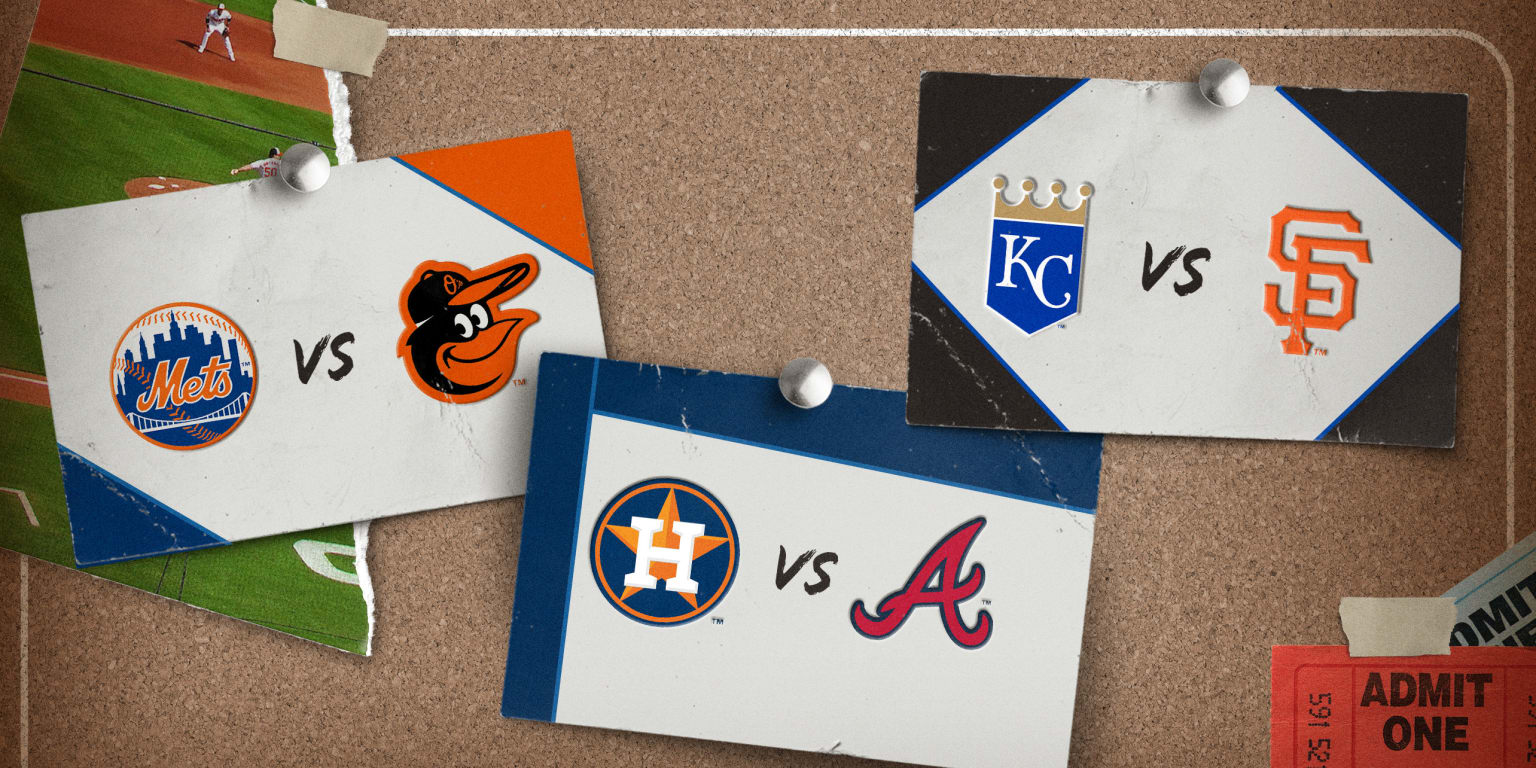
With that in mind, we asked five MLB.com writers and researchers to draft potential 2026 World Series matchups between non-playoff teams from 2025. We added this stipulation to make things a bit more challenging: Each team could be selected only once. These were the results:
What went wrong in 2025: For the Orioles, just about everything that could go wrong did go wrong. The starkest change came on the pitching side, where the group was average or better by most metrics in 2024 but finished with the fifth-worst ERA (4.62) last season, with the underlying numbers supporting that. Even on the position-player side of things, though, the Orioles saw many players take a step back and plenty of injuries to go around.
For the Mets, things looked great through the end of July, when New York led the NL East with a 62-47 record. The season spiraled from there, as the Mets went 21-32 the rest of the way and were eliminated from playoff contention on the final day of the season. Most of the stars, especially on offense, showed up in a big way, but the pitching fell apart with a 4.96 ERA from August onward.
What could go right in 2026: The O’s were one of baseball’s most active clubs this offseason, bringing Pete Alonso, Taylor Ward, Shane Baz and Ryan Helsley into the fold. Along with those additions comes a fully healthy Kyle Bradish, as well as the expectation that Gunnar Henderson, Adley Rutschman and Jackson Holliday should all be better in 2026. Baltimore features a good mix of young talent and experienced vets and should push for a playoff spot, and possibly the AL East crown, in ‘26.
The Mets, too, have seen significant turnover on their roster, parting ways with Alonso, Edwin Díaz, Brandon Nimmo and Jeff McNeil, while acquiring Bo Bichette, Freddy Peralta, Marcus Semien, Jorge Polanco, Luis Robert Jr., Devin Williams and Luke Weaver. Given the roster additions, the superstardom of Juan Soto and Francisco Lindor and the expected growth from young starters like Nolan McLean and Jonah Tong, the Mets could be a force this season.
What went wrong in 2025: The Astros missed the postseason for the first time in nine years, and did so by only one game. Relatively down seasons from franchise stalwarts Jose Altuve and Framber Valdez didn’t help, and top offseason addition Christian Walker posted a disappointing 97 OPS+. But the biggest culprit was likely Yordan Alvarez’s bout of right hand inflammation, which sidelined the slugger for nearly four months.
The Braves began 2025 by dropping their first seven games and were never able to climb out of that hole. As with most teams in this story, Atlanta’s season was also derailed by a rash of injuries. By late July, every member of the team’s Opening Day starting rotation was on the injured list at the same time. Poor output from Ozzie Albies and Michael Harris II, along with an injury-riddled second half from Austin Riley, only made matters worse. After winning at least 88 games in each of the previous six non-shortened seasons, the Braves won 76 games last year.
What could go right in 2026: These squads still have the talent to meet in the Fall Classic, just as they did in 2021. The Braves are projected by FanGraphs to have MLB’s fifth-best roster by WAR. The Astros are a little further down that list — and a little longer in the tooth as a group — but the additions of Japanese starter Tatsuya Imai and right-hander Mike Burrows will help fill the void left by Valdez. Houston will need turn-back-the-clock seasons from Altuve and Carlos Correa, and for Walker to perform like he did with the D-backs from 2022-24 (123 OPS+).
The biggest key for each of these clubs, however, will be having their elite superstar hitter — Alvarez and Ronald Acuña Jr. — available for a full 162 and beyond.
What went wrong in 2025: The Rangers didn’t hit like they did when they won the World Series. In 2023, they were the best offense in the American League. Last season, they were a bottom-10 offense in the Majors. Injuries to key bats — Corey Seager, Marcus Semien, Wyatt Langford, Evan Carter — didn’t help. Texas also struggled to close out games.
The D-backs, on the other hand, had a powerful offense but were undone by their pitching. Zac Gallen — the ace who led them on their 2023 pennant run — had a career-worst year. Arizona lost its new ace, Corbin Burnes, to Tommy John surgery after just 11 starts. And the D-backs’ bullpen was one of the worst in the Majors.
What could go right in 2026: The Rangers finished 81-81 last season, but they actually had the best run differential in the AL West (+79), which translates to an expected win-loss record of 90-72. So they’re close. And they have the horses to get back to the World Series: Seager, Langford and the newly acquired Brandon Nimmo in the lineup; Jacob deGrom, Nathan Eovaldi, Jack Leiter and the also newly acquired MacKenzie Gore in the rotation.
The D-backs’ lineup is just as dangerous as it was last season — Ketel Marte, Corbin Carroll, and breakout star Geraldo Perdomo aren’t going anywhere, and they’ve added Nolan Arenado. Now, the pitching staff is still a big question mark. But Arizona can score its way to the postseason, and if the club can make a couple of pitching moves along the way — re-sign Gallen, to start — that would help a lot. So will getting Burnes back down the stretch.
If the Pats and Seahawks can have their rematch, why can’t the D-backs and Rangers?
What went wrong in 2025: Both teams were undone by imbalance. The Athletics had the bats but not the arms, ranking 12th in runs scored (733) but 27th in runs allowed (817). The Pirates, meanwhile, paired strong pitching with an anemic offense, finishing fifth in runs allowed (645) but last in runs scored (583).
What could go right in 2026: The arrow is clearly pointing upward for both of these teams. The A’s opened last season 42-62 but finished the year 34-24, fueled by MLB’s fifth-best run differential (+62) over that stretch. The Pirates also showed signs of life in the second half, playing .516 ball (32-30) over their final 62 games after starting the season 39-61.
Led by reigning AL Rookie of the Year Nick Kurtz, the Athletics appear to have one of MLB’s most well-rounded lineups entering 2026. They’re one of five teams FanGraphs projects to post at least 2 WAR at all nine lineup spots, along with the Dodgers, Blue Jays, Yankees and Braves. Their offense alone should make them a formidable foe, and if their pitching performs like it did down the stretch in 2025, they’ll have a plausible path to their first playoff berth since ’20.
As for the Pirates, they’ve done well to improve their lineup, adding Brandon Lowe, Ryan O’Hearn and Jhostynxon García to the mix. While those moves aren’t going to turn the Bucs into a juggernaut, they could give a talented young rotation anchored by 2025 NL Cy Young winner Paul Skenes the backing it needs to bring playoff baseball back to Pittsburgh — especially if MLB Pipeline’s No. 1 overall prospect, Konnor Griffin, can make an early impact at shortstop.
What went wrong in 2025: The 2024 Royals made the franchise’s first postseason appearance since its 2015 championship, but the ‘25 club wasn’t able to build on that. Kansas City dropped from 86 to 82 wins and finished five games out of the last AL Wild Card spot, struggling to find consistent success after a 24-16 start. The Royals allowed the fourth-fewest runs per game but also scored the fifth fewest, behind a lineup that was thin beyond its four best hitters.
The Giants, meanwhile, have been stuck in the middle. Since a shocking surge to 107 wins in 2021, they’ve won between 79 and 81 games in four consecutive seasons, finishing third or fourth in the NL West each time. Last year’s team was 17th in runs scored and 14th in runs allowed, with only four players reaching the 2.0 WAR mark, per Baseball-Reference.
What could go right in 2026: Both of these teams enter the season with a bit of a wild card in the mix. The Royals are moving in and lowering the outfield walls at spacious Kauffman Stadium, something projected to create a bunch more home runs. That could work in the team’s favor, given its current roster. The Giants, meanwhile, made an unconventional managerial hire, with president of baseball operations Buster Posey moving on from someone with 22 seasons’ worth of experience in the job (Bob Melvin) while elevating someone with zero experience in pro ball, straight from the University of Tennessee (Tony Vitello). Time will tell if one or both risky maneuvers will pay off with a 2014 World Series rematch.
In terms of their rosters, neither team has done anything dramatic this offseason, although some more modest additions in both Kansas City (Isaac Collins and Lane Thomas) and San Francisco (Luis Arraez and Harrison Bader) could help solidify distinct weaknesses. There are also intriguing young power bats on both sides (Jac Caglianone and Carter Jensen for the Royals, and Bryce Eldridge for the Giants) that could significantly raise each team’s ceiling and lead to renewed October hopes.
