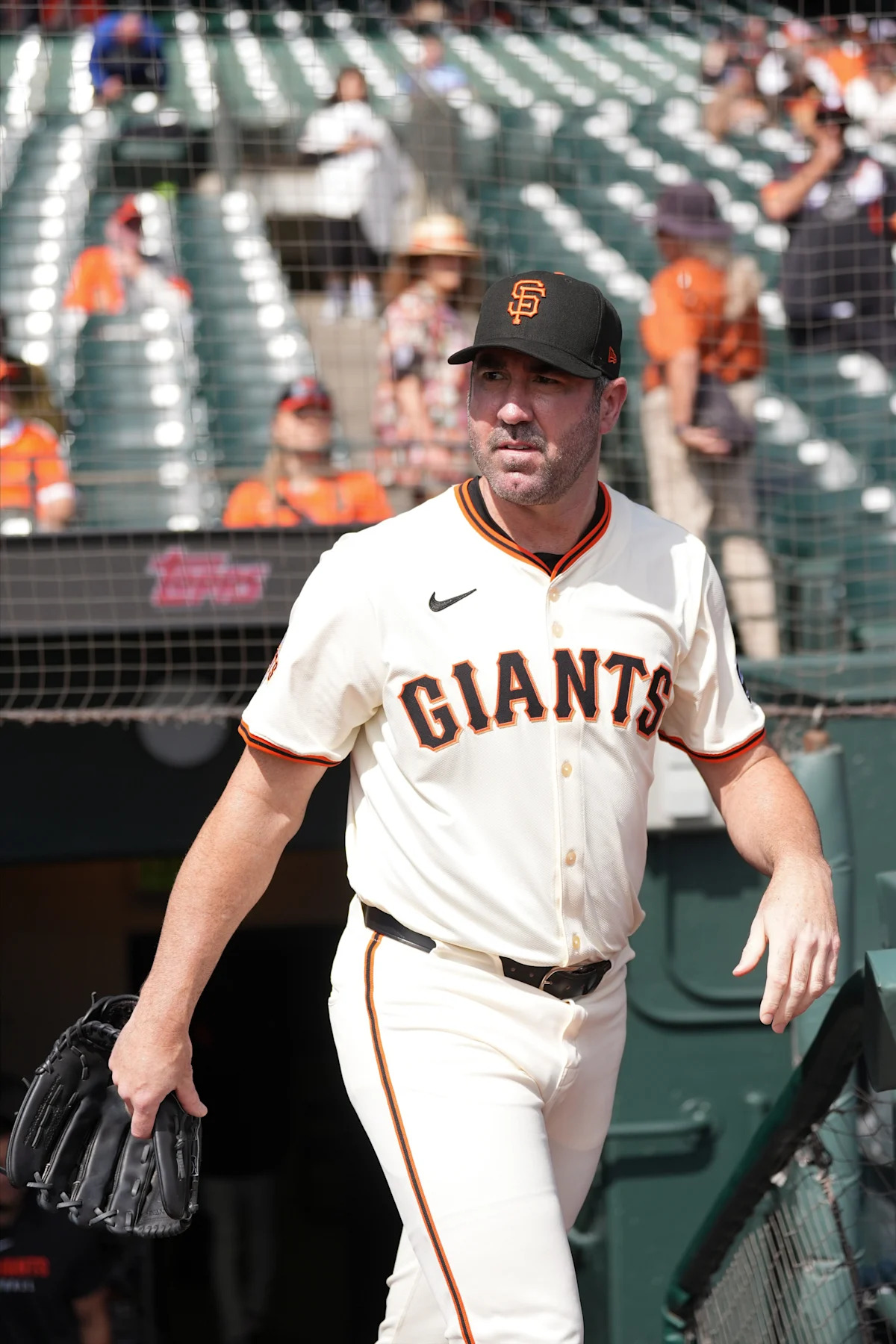
2025 stats: 29 GS, 152 IP, 3.85 ERA / 4.24 xERA, 8.1 K/9, 3.1 BB/9, 1.36 WHIP, +2.2 fWAR
The first ballot Hall of Famer joined the Giants as a sort of prove-it year to show the sport that he still could be “that guy,” and he pulled it off, becoming just the 48th pitcher in MLB history to throw at least 150 innings at the age of 42 (or older). He’s also just the 17th pitcher this century to accomplish the feat, and if you narrow it down to just right-handed pitchers, the list looks like this:
Advertisement
Roger Clemens (2005), 211.1 IP — 1.87 ERA
Bartolo Colon (2015), 194.2 IP — 4.16 ERA
Greg Maddux (2008), 194 IP — 4.22 ERA
Bartolo Colon (2016), 191.2 IP — 3.43 ERA
R.A. Dickey (2017), 190 IP — 4.26 ERA
Tim Wakefield (2011), 154.2 IP — 5.12 ERA
Justin Verlander (2025), 152 IP — 3.85 ERA
Subtract PEDs, knuckleballs, and Bartolo Colon from this list and Verlander really stands out, right? Seriously, though, the rest of those names are from a previous generation of the sport. What Verlander managed to do ought to be considered as impressive as whatever accolades you want to throw at the rest of the names on this list because it’s a very different game now.
The season was far from a farewell tour, which is what it kinda-sorta felt like it could be when the Giants signed him last January. Another Randy Johnson situation. Instead, what the Giants got and what the sport saw was a pitcher who was riding the rapids of time and not defying it so much as going with his increasing limitations.
On the year, his 2.2 fWAR was in the realm of an average starter, but over his final 13 starts, his 2.60 ERA in 72.2 IP with a 22.8 K% and 7.8 BB% made him the sixth-most valuable pitcher in baseball, sandwiched between Max Fried and Garrett Crochet. The Giants went just 6-7 in those starts and all 4 wins of his 4-11 record came during this stretch, which ought to be enough to prove how silly a pitcher win is.
Advertisement
Still, for a guy hoping to retire with 300 wins or thereabouts, pitching for the San Francisco Giants sort of worked against him. He now stands at a career record of 266-158 in 555 career starts, and you could see how if he’d made it to 10 or 11 wins that he’d plausibly be within spitting distance if he pitches two more seasons. The Giants’ bullpen and offense definitely cost him 5 wins and he wouldn’t record that first win in a Giants uniform until literally July 23… simply remarkable.
Less remarkable was how wrong I was about the signing. I was skeptical from the start but on July 7th, I wrote this post: The Justin has Verlanded,
So, is this actually another Buster Posey win, even if it looks ugly? I think so. It seems that Buster’s expectations had nothing to do with statistics and, instead it’s about everything else that Justin Verlander brings to the team. That has to be it, right? Because even by his own assessment, he’s not a competitive pitcher against major league talent.
Of his most recent start against the A’s he said:
I’m just not deceptive enough […] Guys are able to execute their game plan against me too easily. I can’t quite get fastballs by guys when I should be able to. I can’t quite get them to chase the good off-speed pitch. When I do throw a bad one, they’re on it.
[…]
It’s his worst season in the Statcast era (since 2015), and it’s clear this is probably going to be his worst non-injury season ever. At least, that’s how it’s trending. Is there room in the modern game for a team to run out the gritty veteran every fifth day who doesn’t have the stuff but has the resume? It was common enough in Posey’s playing days. Does he believe such a thing is another thing “analytics” took away?
Definitely mean and, of course, totally wrong. I am far from the main character of reality, but as a blogger who swung and missed very, very hard here, I must point out Verlander’s numbers on this very me-centric split:
Prior to The Justin has Verlanded post: 0-6, 4.84 ERA (4.32 FIP) 70.2 IP 60 K 26 BB
Advertisement
After the Justin has Verlanded post: 4-5, 2.99 ERA (3.43 FIP) 81.1 IP 77 K 26 BB
According to Statcast, Verlander’s sweeper was 1) a new pitch and 2) his most valuable by far with a +8 Run Value. That’s Top 10 in the sport good. His changeup, four-seamer, and sinker were also effective enough that he’s still got the bones of a solidly average pitcher going forward.
He gave the Giants everything he had last season and it was plenty and demonstrative of a guy who still has more to give. Unfortunately for Justin Verlander, the Giants could not return the favor.
