The Green Bay Packers are almost certainly going to take a cornerback in the 2026 draft, if not to replace Keisean Nixon, Carrington Valentine or Nate Hobbs in 2026, then to replace the expiring contracts of Nixon, Valentine, Bo Melton and Kamal Hadden in 2027. Nixon, Valentine and Hadden are going into the final year of their deals in Green Bay, Melton is an exclusive rights free agent (which means that he will receive a one-year tender this offseason) and Hobbs could be a cap casualty either this year or next year. To make it simple: They need warm bodies at the position moving forward, at a minimum.
So, who are the Packers going to take in this draft? We’ll get to that, including my thoughts on some of these prospects after hours of film work and phone calls/texts to people in the scouting world. But first, I want to talk about who they probably won’t be adding.
Advertisement
Do not be worried about players’ names being cut off lists. Teams like small boards. Typically, NFL teams usually only have about 100 to 150 prospects ranked on their “big board” on draft weekend, which includes players who don’t even end up getting drafted. The point of a big board is to not have to drink water from a fire hose. All of these draft meetings that you hear about are to get the coaching staff and front office on the same page about which types of players are worth the man-power to fully evaluate. At this point in the year, area scouts have grades in the system for every player on their radar. But do the coaches and top front office members know what their options are on Day 3 (or even Day 2) at this point? No!
If you want an example of an NFL big board, the Dallas Cowboys seem to leak theirs about every three years at this point. Here’s one from 2016, when they only had 16 players graded with first-round grades.
Limiting the board isn’t a bad thing. It helps teams understand their options better and how to navigate the draft. When do teams need to trade up or trade back? Narrowing down options will help give the team that feedback.
At cornerback, the Packers have some pretty specific measurements that they look for at the position, which naturally helps shed some names on the board. But before we get into that, let’s talk about who won’t be there for Green Bay.
Advertisement
Cornerback who will likely be gone by the Packers’ first pick
-
#14 Jermod McCoy, Tennessee
-
#21 Avieon Terrell, Clemson
-
#32 Brandon Cisse, South Carolina
-
#33 Colton Hood, Tennessee
Historically, almost no players who are ranked among the top-40 players on the consensus draft board make it to pick #52, which will be the Packers’ first selection in 2026, as they traded away their next two first-round picks for Micah Parsons. The major exceptions are almost always 1) quarterbacks who were overvalued by the media or 2) players with medical or character red flags. For the most part, Green Bay has stayed away from players with major red flags, so even if the five players above end up popping up with concerns, the Packers probably won’t be the team catching their fall.
Cornerbacks who are probably too small for the Packers
-
#44 Keith Abney II, Arizona State
-
#58 D’angelo Ponds, Indiana
-
#77 Malik Muhammad, Texas
-
#98 Chandler Rivers, Duke
-
#148 Hezekiah Masses, California
Here is where we get to talk about long-term trends. The Packers hate small cornerbacks. They don’t necessarily want their cornerbacks to be big, but they don’t want them to be small. It’s one of the defining traits of the organization.
Advertisement
Since Mike Sherman was fired, the Packers have never drafted a cornerback shorter than 5’10” (and Jaire Alexander was the only cornerback closer to 5’10” than 5’11) or under 194 pounds in the top-150. After about the top-150, the draft essentially turns into priority free agency and the Packers break their rules more, both at cornerback and other positions. Based either on confirmed (from all-star games) or estimated heights and weights, these five players don’t fit what Green Bay looks for.
Could the Packers change two-decade-long trends in this draft? Sure! Anything is possible. I wouldn’t hold my breath about it, though.
Cornerbacks who were college slot defenders
-
#95 Treydan Stukes, Arizona
-
#100 Jalon Kilgore, South Carolina
You will see these players listed as cornerbacks. They are not cornerbacks. They were already slot defenders at the college level. The Packers already have a logjam in the slot with Javon Bullard and Hobbs at the position, even after moving Nixon to a full-time outside cornerback position. If they’re taking a cornerback in this draft, it’s probably to play outside cornerback, specifically.
Advertisement
–
So, with all that in mind, there are really eight guys who are projected to go in the relevant portion of the draft (there’s really no significant difference between sixth-rounders and high-end undrafted free agents) that the Packers could take a look at. I’d bet that if/when Green Bay takes a cornerback this April, it’ll come from this shorter list of names.
Here’s how I’d rank them.
The rest of the top-150
Davison Igbinosun, Ohio State (#72 on the consensus board)
I wrote a full scouting report on Igbinosun two weeks ago, but the gist of it is as follows: He’s a very aggressive and athletic cornerback who played a ton of man coverage for Matt Patricia at Ohio State. He plays zone conservatively when he doesn’t need to because of his athleticism, but that can be fixed with coaching. He also greatly improved the penalty problem that he had in 2024, likely a reason why he returned to school for another season.
Advertisement
Grade: 2nd round for the Packers, higher for a team that plays more press man coverage
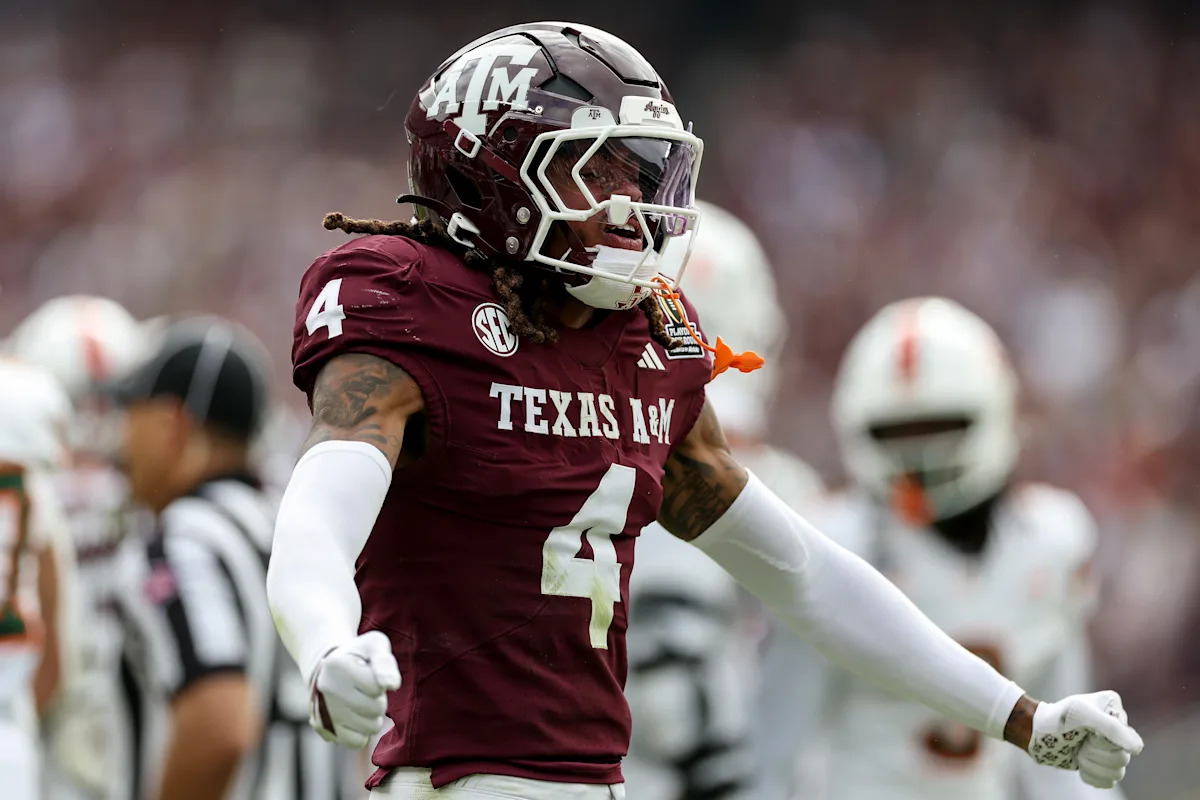
Will Lee III, Texas A&M (#104)
I think that under defensive coordinator Jonathan Gannon, the Packers will put a premium on click-and-close cornerbacks who can quickly react to routes after starting off in an off-coverage position. That is 100 percent Lee’s game, and he fits the quarters system like a glove. He has some bad film in press man, because he’s a little flat-footed in those spots, but that shouldn’t be a big part of what Gannon does. Lee should also do very well for himself at the combine.
Grade: 2nd-3rd round
Advertisement
Chris Johnson, San Diego State (#47)
Johnson is a bit of a jack of all trades, master of none. He might be on the most boards of any cornerback, just because of the crossover ability, but he doesn’t have a real calling card to me. Some people will have Johnson at the top of this list, but I want to see how his combine numbers come in first. I’m not sold that his athleticism is as advertised.
Grade: 2nd-3rd round
Devin Moore, Florida (#93)
There aren’t a lot of comps to Packers players in this crop that make perfect sense, but this is an exception. Moore really does look like Rasul Douglas 2.0. If Green Bay were more of a spot-drop zone team, like they were under both Joe Barry (after his first year) and Jeff Hafley, I’d probably have Moore higher here, just off the scheme fit. In the five years that Gannon overseen defenses, though, he’s been in the bottom quarter of the league in terms of true spot drop coverage calls. I’d love to have Moore on Day 2, don’t get me wrong, but I just think another team will value him more because he’ll fit their defense better.
Advertisement
Grade: 2nd-3rd round, higher for a team that plays more spot-drop zone
Domani Jackson, Alabama (#168)
Behind Lee, Jackson is probably the best true scheme fit in this class, just in terms of how his strengths and weaknesses play into the quarters-system defense. Jackson is the California prep record holder for the 100-meter dash and played at USC before transferring to Alabama. This year, he dealt with a rib injury, which led to him playing limited reps down the stretch until the SEC Championship game and playoffs. Apparently, he didn’t look like himself, including athletically, at the Shrine Bowl, so scouts are really interested in seeing what he looks like at the combine and his pro day. He probably has the biggest opportunity among cornerbacks to rise up or fall down boards this spring, based on how he performs this draft cycle. We also wrote up a full report on Jackson. Scouts are probably more split on Jackson than any other cornerback in this class, based on the conversations I’ve had with them. I’m on the higher end, for what that’s worth.
Advertisement
Grade: 3rd round
Julian Neal, Arkansas (#87)
Ball skills are the name of the game for Arkansas’ Julian Neal, a 6’2”, 202-pound former receiver and basketball player. You don’t really want him to play one-on-one man coverage, but he can get his hands on the ball from off coverage and has the body to fit into the run game. He’s not slow, I’d bet he’s a 4.5 guy, but he does take a while to get going. He will probably be liked more by a team that plays more true spot drop zones. Here’s our full scouting report on Neal.
Grade: 3rd-4th round, higher for a team that plays more spot-drop zone
Daylen Everette, Georgia (#127)
To me, Everette is pretty similar to Johnson, in that jack of all trades, master of none model. He can pretty much play in any scheme, and he’s already lived in a quarters system at Georgia. He had a big interception in the SEC Championship Game that got him some buzz for a while, but it was also his first interception of the year.
Advertisement
Grade: 3rd-4th round
Tacario Davis, Arizona (#128)
I’m going to guess that Davis is going to be a Day 3 selection. Some are still fans of him, but he doesn’t have the best movement skills, despite being 6’3” and 200 pounds. He’s relatively young (21) for a player who was named second-team All-Pac-12 back in 2023, but he also hasn’t shown much improvement over the last two seasons. He’s a spot drop zone corner who might not have the legs to play in Gannon’s system. If you want a Packer to compare him to, he reminds me a lot of Davon House, who started 14 games on his rookie contract after being drafted in the fourth by Green Bay. We also wrote a full scouting report on Davis.
Advertisement
Grade: 4th-5th round, higher for a team that plays more spot-drop zone
–
Other players I’ve been told to keep an eye on from scouts are North Carolina’s Thaddeus Dixon, North Carolina State’s Devon Marshall and Oregon’s Jadon Canady. Both Dixon and Marshall are players who are “Packers-sized,” but Canady was a slot at the college level. I haven’t given Dixon or Marshall a look yet, since they hover around the 200th spot on the consensus board.
