The art of converting winning positions
By Rasika Ratnaparkhi
One of the most common frustrations in chess is not getting a winning position but failing to finish it. Many players struggle with the final phase of the game. They build it patiently, only to slip away in time trouble. What should have been a full point becomes a draw, or worse, a loss! That’s why converting a winning position is one of the most demanding skills in chess. A player has to have a deep understanding of technique. In recent times, Andy Woodward has shown a remarkable ability in this aspect of the game.
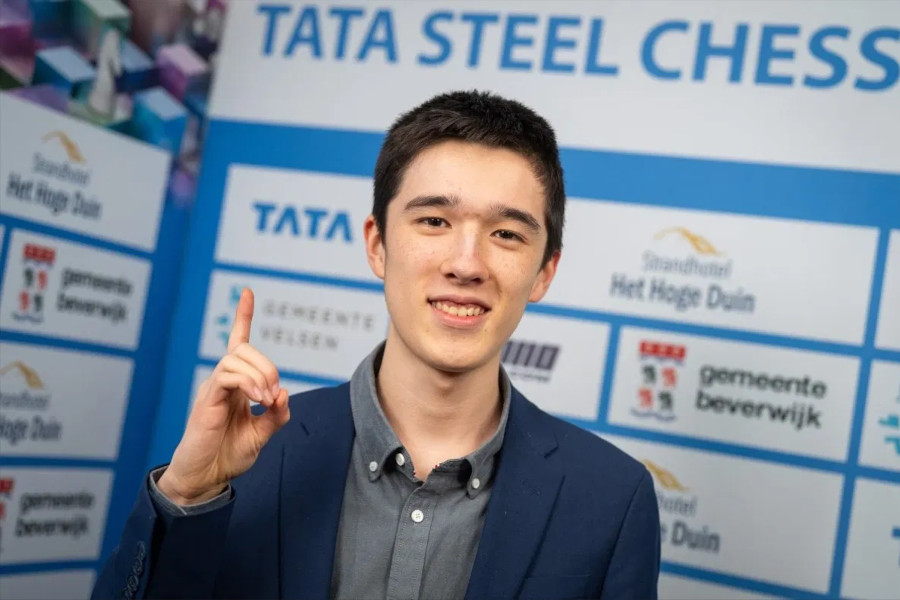
Andy Woodward recently won the Tata Steel Challengers 2026 with 10/13 points
In today’s fast-paced chess world, especially online, where blitz and rapid games dominate, the traditional approach of grinding through lines of opening theory can feel overwhelming, and even unnecessary. The real challenge? Striking the right balance in your opening preparation. How deep should you go? Where do you stop? This course is built on the timeless wisdom of my legendary coach, Chebanenko, who designed opening repertoires for his “lazy” students – not lazy in attitude, but smart in approach. His philosophy? Don’t memorise. Understand.
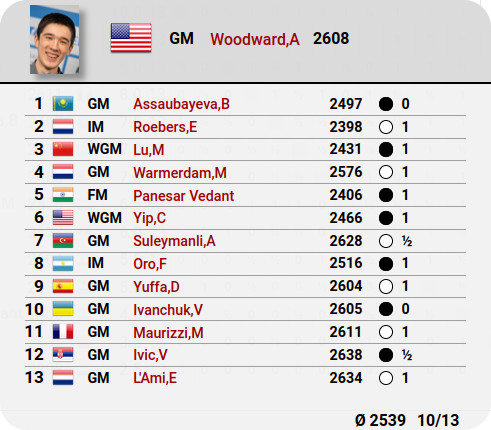
9 wins, 2 draws and 2 losses!
A key reason behind Andy’s strength lies in the way he trained from a young age. He has spoken about how solving puzzles and, more importantly, endgame studies played a major role in shaping his understanding of chess. Around the time he was rated 1600, he began solving studies regularly. This habit significantly improved his pattern recognition and calculation. He became confident in handling complex positions and capitalising on opportunities.
One thing that helps me the most is solving lots of endgame studies. Earlier in my career, it was a part of my daily routine. It helped my pattern recognition, especially knights. The ability to spot tactical patterns and implement them was probably developed with studies.
– Andy Woodward
Alongside practical training, Andy has relied heavily on books to build a strong technical foundation. The following books have been particularly influential in his development:
- Domination in 2545 Endgame Studies by Genrikh Kasparyan
- Comprehensive Chess Endings by Yuri Averbakh
- Decision Making by Boris Gelfand
- Queen endgames books
- Rook endgames books
- Silman’s Complete Endgame Course by Jeremy Silman
- Chess: 5334 Problems, Combinations and Games by László Polgár
- Rock Solid Chess (Volumes 1-3) by Sergei Tiviakov and Yulia Gökbulut
- The Art of Attack in Chess by Vladimir Vuković
- Perfect Your Chess by Andrei Volokitin
Picture this: you’ve outplayed your opponent move by move, you’re clearly better – and then the endgame slips into a draw, simply because you lacked the crucial theoretical knowledge. That is exactly where this course comes in. Without solid endgame skills, there’s no way forward. Rook endgames are most essential: they occur more often than any other type of endgame, and often make the difference between victory and half a point. If you master them, you’ll confidently convert your advantages into wins!
Free video sample: Introduction
Free video sample: Bodycheck
These books focus on endgame technique, decision-making, calculation and positional understanding, all of which are important for converting winning positions. The impact of this foundation is clearly visible in Andy’s games today, and these same resources can offer valuable guidance to any player looking to improve their ability to finish games successfully.You can check out the full interview here:
Interview with Andy Woodward after he won the Tata Steel Challengers | Video: ChessBase India
0:00 – Intro
0:59 – Andy Woodward is here
1:35 – Andy’s secret to recent success
2:16 – Is Andy focusing fully on chess
2:58 – Winning Tata Steel Challengers 2026
4:18 – Andy’s support in Wijk Aan Zee
4:40 – Andy’s relationship with Kasparov
5:57 – Andy’s permanent trainer
6:33 – Where does Andy live in the USA
7:10 – GM Harshit Raja connection
7:49 – Andy’s playing style
9:00 – Rd.1 loss with Bibisara
15:58 – How to recover from Rd.1 loss
17:24 – Mother’s support
18:12 – Puzzle Battle Champion
19:02 – Good at simple Tactics
19:20 – Rd.2 win against Eline Roebers
26:40 – How did Andy get so good tactically
29:00 – Routine at Wijk Aan Zee
30:36 – Andy’s mom cooking for him
31:45 – Round 3 win against Liu Miaoyi
36:10 – How is Andy so very Empathetic, Kind and Modest
38:19 – Andy’s best friends in chess
39:20 – 4th Rd. win against Max Warmerdam
43:25 – 5th Rd. win against Vedant Panesar
48:20 – Rest day and 4.0/5 score
49:05 – Rd.6 win against Carissa Yip
56:30 – Rd.7 draw with Aydin Suleymanli
59:20 – Rd.8 win against Faustino Oro
1:03:15 – Rd.9 win against Daniil Yuffa
1:06:20 – Skill of Converting winning positions
1:07:40 – Andy’s book collection
1:15:30 – Rd.10 loss to Ivanchuk
1:23:00 – Rd.11 win against Maurizzi
1:26:51 – Insane calculations
1:33:45 – Rd.12 draw against Velimir Ivic
1:36:57 – Rd.13 win against Erwin l’Ami
1:46:15 – Final words
1:46:55 – Tata Steel Masters 2027
1:48:08 – Next tournaments
1:48:50 – Sponsorships
1:50:50 – A chess professional?
In almost every chess game there comes a moment when you just can’t go on without tactics. You must strike, because nothing is more annoying than missing a winning combination in the decisive situation, and thus giving away the advantage you have worked for the whole game. So it is vital to train tactics properly – and Master Class Tactics offers you the perfect tool for this! On this Fritztrainer, IM Oliver Reeh has compiled his favourites from the CBM column “Tune your Tactics” issues 219 to 227.
Free sample video: Introduction
Free sample video: Do you know the Archangelsk? / Sukovic – Kazakousky
