WNBPA is going all in. On February 17, the WNBPA submitted a proposal seeking a salary cap below $9.5 million, along with a 25% share of the league’s total revenue in year one of the deal. That revenue share would average out to 27.5% over the life of their proposed CBA. However, the WNBA called that “unrealistic” and responded with the same numbers it had before: a salary cap of $5.65 million, and players would still not receive more than 15% of total revenue. The league has set a deadline for reaching a CBA agreement to ensure the 2026 season proceeds as planned.
“The WNBA told the WNBPA and its teams on Monday that a new collective bargaining agreement should be agreed to by March 10 for the 2026 schedule not to be impacted,” ESPN reported. “The WNBA — represented by league staff, the league’s labor relations committee, and owners — and over 50 players met virtually Monday morning for the second bargaining session this month involving players.”
Advertisement
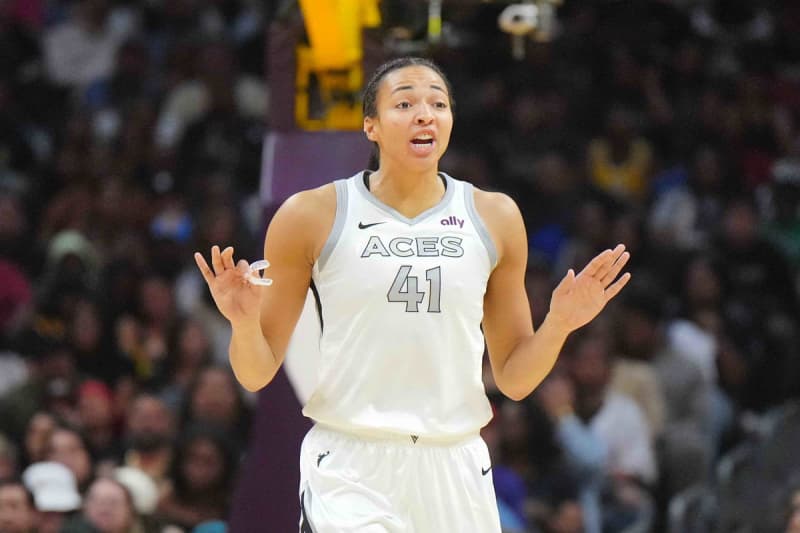
Well, a Las Vegas Aces veteran and three-time WNBA champion has immediately pushed back against this message from the league. Kiah Stokes reposted this news on her Instagram, writing, “Which is so crazy that the league refused to negotiate in good faith the last 18 months. Now tryna speed sh*t up so we sign whatever.”
It is certainly not the first time the players have accused the league of just waiting it out. The league waited six weeks to reply to the WNBPA’s offer before the deadline of January 7 passed. After two weeks, the WNBPA released a statement saying, “The WNBA and its teams have failed to meet us at the table with the same spirit and seriousness. Instead, they have remained committed to undervaluing player contributions, dismissing player concerns, and running out the clock.”
Aug 30, 2025; San Francisco, California, USA; Golden State Valkyries fans hold signs to “make the season long and the teams bigger” and “pay them what you owe them” during the fourth quarter against the Washington Mystics at Chase Center. Mandatory Credit: Kelley L Cox-Imagn Images
It is a game of cat and mouse to see who concedes first. The players have repeatedly emphasized that they want to play, but without any compromise in the CBA. The March 10 deadline is just more than two weeks away. Considering this reaction from Stokes, the prospect that they will agree at this time looks bleak. However, both sides lose if the WNBA season is delayed or canceled. Maybe a stop clock will grease the wheels at the negotiating table. Yet, even if an unlikely agreement takes place by March 10, a delay could be in store.
Advertisement
A Delayed 2026 WNBA Season Could Be the Best Case Scenario
The WNBA’s popularity has spiked severely over the last two years. The arrival of players like Caitlin Clark, Angel Reese, and Paige Bueckers has brought in new viewers. This led to increased attendance and revenue. For the first time in league history, the league hit the required revenue target from the 2020 CBA for the players to get revenue sharing. The union said that the 13 teams will each receive $8 million in bonuses. A loss of momentum here could set the WNBA back to its old ways. Nevertheless, it seems a delay in the 2026 season is imminent.
“Even once a deal is agreed upon, it could take weeks to ratify,” Alexa Philippou wrote. “The WNBA still needs to conduct a two-team expansion draft and hold free agency for 80% of the league. Training camp is currently slated to begin April 19, the college draft April 13, and the regular season May 8.”
That timeline looks increasingly unrealistic day by day. The league’s free agency generally lasts 2+ months. This time, the volume of free agents is unprecedented, with 80% of the players signing new contracts. For the first time since 1998, the WNBA is expanding by 2 teams withthe Portland Fire and Toronto Tempo arriving in the league.
Advertisement
It’s not impossible to execute everything and get the season started on time. But it would require immense cooperation between the WNBPA and the WNBA. In addition, the WNBA’s ownership structure is like a maze: 42% of the league is controlled by the 30 NBA owners, 42% is controlled by WNBA owners, and the remaining 16% belongs to an outside group of investors as a result of a $75 million capital raise in 2022.
