I don’t know about you but when I purchase a conforming golf club, I assume it will remain conforming. Like I’m good to go. Nothing to worry about.
And, for the most part, that’s true.
But if you like to tinker with your equipment, there are a few things you should know. Certain adjustments and modifications can take a perfectly legal club and quietly push it into non-conforming territory.
Adjusting your club during the round
Modern drivers, fairway woods and hybrids are adjustable which is completely legal under the Rules of Golf. However, adjusting them during the round is not.
You cannot deliberately change a club’s performance characteristics once the round has started.
That includes:
- Changing loft settings between holes
- Moving sliding weights
- Swapping weight screws
- Adding or removing lead tape
Adjust before the round. Once you hit your first tee shot, the setup is locked in.
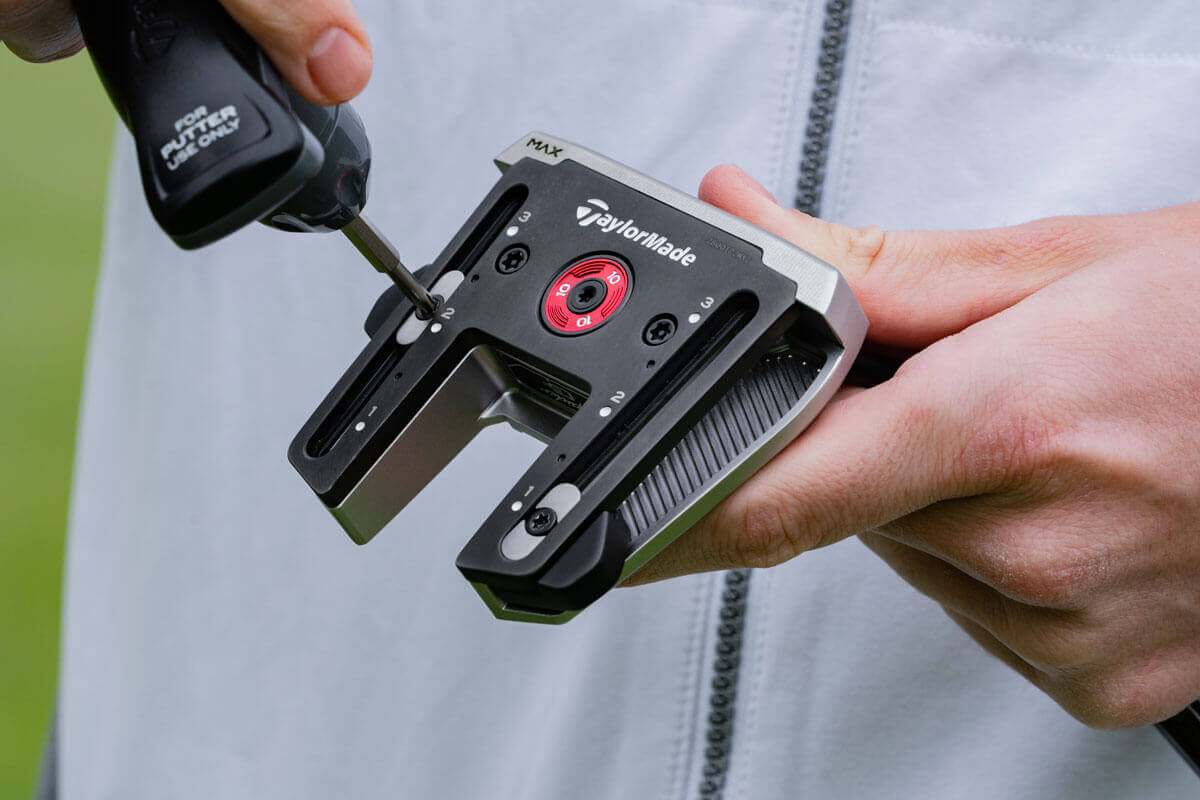
Swapping in aftermarket or non-original weights
This one surprises people.
Adjustable weight systems are legal only when every possible configuration conforms. That means the club must remain within approved specifications in every setting.
Golfers run into issues when they:
- Install third-party weights
- Use heavier screws from another model
- Remove weights entirely
- Modify weight ports or screws
If the weight was not designed and approved for that specific model, you are taking a risk. Just because it fits does not mean it conforms.

Adding substances to the clubface
Cleaning the face is fine. Altering how it performs is not. Applying any substance to influence spin or ball movement is prohibited.
That includes:
- Chalk
- Spray
- Tape on the face
DIY grip modifications
Grip rules are stricter than most golfers realize. Grips must be straight and plain in form and must not be molded for the hands.
Golfers accidentally break this rule when they:
- Build up heavy tape ridges under one hand
- Create finger grooves
- Install two grips incorrectly on a putter
- Add attachments that create a bulge or waist
Making a putter too upright
There is a minimum shaft angle requirement. When the putter is in its normal address position, the shaft must diverge from vertical by at least 10 degrees.
Golfers get into trouble when they:
- Bend a putter extremely upright
- Modify a long putter for a near-vertical stroke
- Add components that allow croquet-style positioning
If the design allows it to be used effectively in a vertical position, it can become non-conforming.
Exceeding length limits
Except for putters, clubs must not exceed 48 inches.
Extending a driver past that limit makes it illegal. Adjustable length mechanisms must require a tool and must be firmly fixed.

The simple rule to remember
Golf’s equipment standards are built around one principle: the club must be a conforming, fixed unit when you make a stroke.
Normal wear is fine but deliberate modification is not.
Conforming when new does not guarantee conforming forever. Here is a chart we put together that explains the differences between conforming and non-conforming clubs.
The post Legal When New, Illegal Later: How Golf Clubs Become Non-Conforming appeared first on MyGolfSpy.
