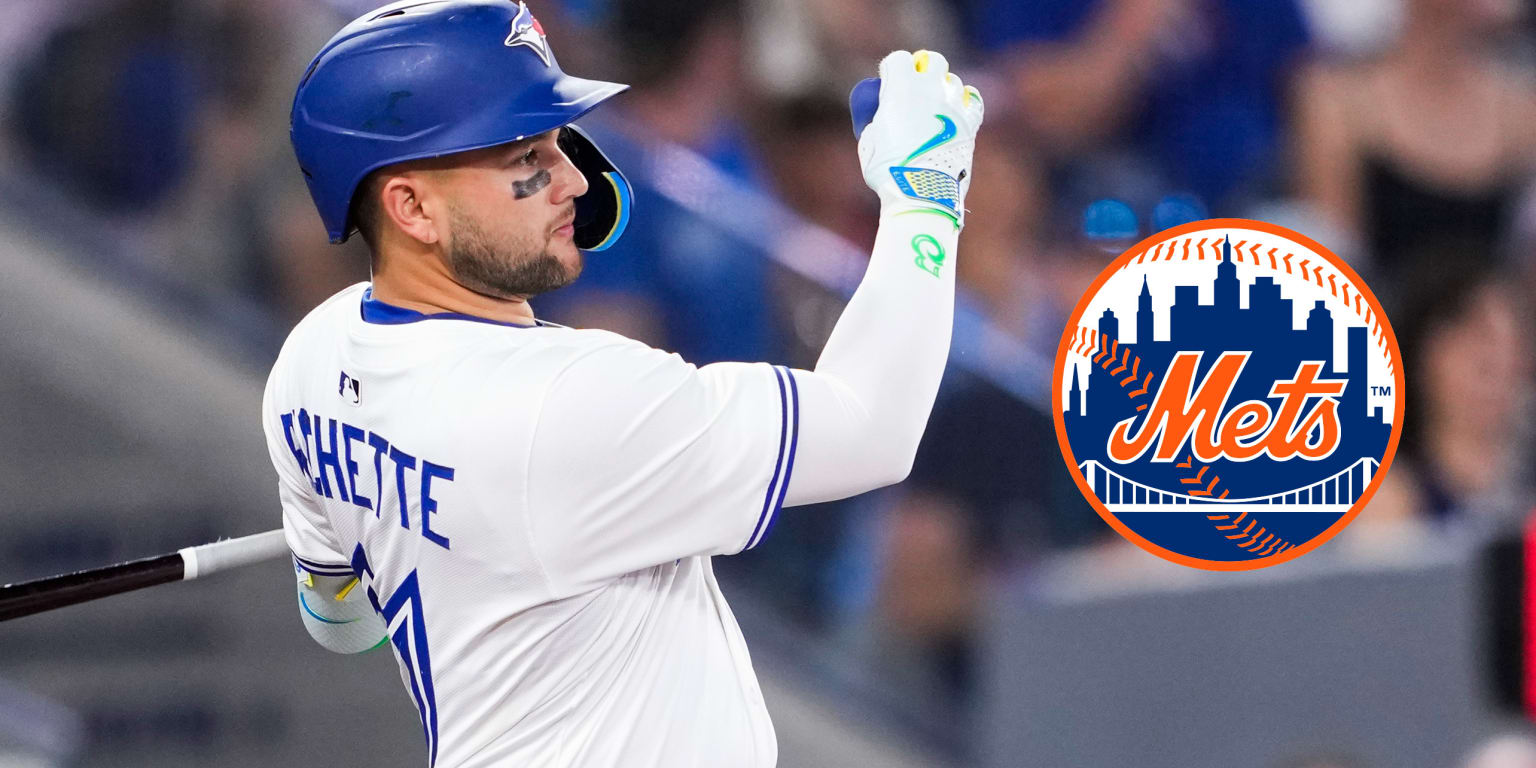
The Mets have agreed to a three-year, $126 million deal with infielder Bo Bichette, a source told MLB.com’s Mark Feinsand on Friday. The club has not confirmed.
The question surrounding Bichette — and the Blue Jays as a club — entering last season was whether 2025 would be a bounce-back year or more of the same following Toronto’s last-place finish in the American League East.
Both the player and the team answered in emphatic fashion. Following a 2024 campaign marred by injury and underperformance, Bichette returned to form as the star hitter who led the AL in hits over the three-season span from 2021-23. Meanwhile, the Blue Jays won the AL East and came within one win of a World Series title.
After the season, Toronto tendered a qualifying offer to Bichette, which he declined. The QO, which would have paid him $22.025 million for 2026, attached him to Draft compensation; the Blue Jays would have received a 2026 Draft pick after the fourth round if he had signed with another club.
The son of 14-year MLB outfielder Dante Bichette, Bo is one of the toughest outs in the game. Last season, the shortstop posted a .311/.357/.483 slash line with 18 home runs and 94 RBIs. Despite missing most of the final month of the regular season due to injury, his 181 hits were only four shy of leading MLB.
With a stringent two-strike approach in which he widens his stance, eliminates his leg kick and shortens his swing, Bichette tends to see a lot of pitches and often fouls off a number of two-strike offerings before getting a pitch to drive. He’s a gap-to-gap hitter who can spray the ball all over the field.
Last September, Bichette injured his left knee while sliding into home plate. He missed the remainder of the regular season and the first two rounds of postseason play. But he returned for the World Series against the Dodgers despite his knee not being 100%.
While Bichette’s ability to run was compromised, it didn’t seem to impact his performance at the plate — he posted a .348/.444/.478 slash line and drove in six runs, including three on a 442-foot homer to dead-center field in Game 7.
Defensively, Bichette has usually graded out as a below-average shortstop, particularly when it comes to his range. In the World Series, he played second, given that he couldn’t move well laterally. But he handled the keystone position well despite the condition of his left knee, and that could very well be where he finds himself in the future.
