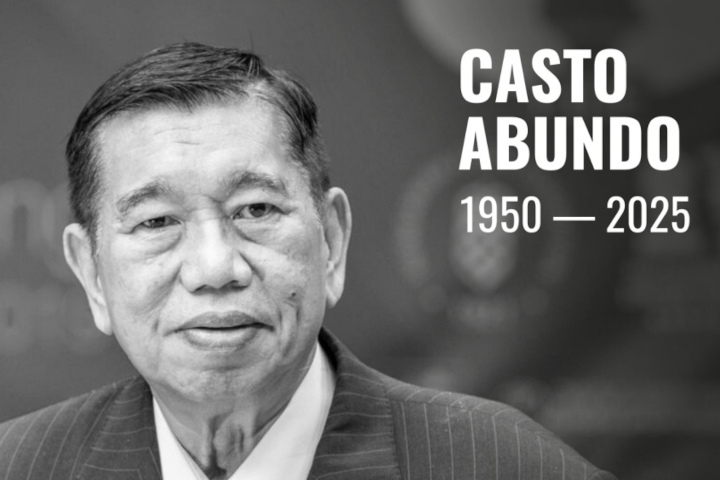
Press release by FIDE
It is with deep sadness that the International Chess Federation (FIDE) has learned of the passing of Casto Abundo, Executive Director of the Asian Chess Federation. Throughout his long and distinguished career, he tirelessly promoted chess at both continental and international levels.
An International Arbiter since 1978, he served as FIDE Secretary from 1988 to 1990. His exceptional organizational skills were demonstrated as director and Chief Arbiter at major events, including the 1992 Chess Olympiad in Manila, the 2000 World Championship, and the 2001 World Cup. As Vice-President (2006-2014) and later Executive Director of the Asian Chess Federation, he was instrumental in strengthening its institutional framework. His groundbreaking initiatives created a solid foundation for the development of chess in Asia for years to come.
Data, plans, practice – the new Opening Report In ChessBase there are always attempts to show the typical plans of an opening variation. In the age of engines, chess is much more concrete than previously thought. But amateurs in particular love openings with clear plans, see the London System. In ChessBase ’26, three functions deal with the display of plans. The new opening report examines which piece moves or pawn advances are significant for each important variation. In the reference search you can now see on the board where the pieces usually go. If you start the new Monte Carlo analysis, the board also shows the most common figure paths.
Casto Abundo’s passing is a great loss to the global chess community. Known for his visionary leadership, he possessed a rare ability to unite national federations, fostering a spirit of mutual respect and shared purpose.
FIDE and the Asian Chess Federation extend their heartfelt condolences to his family, colleagues, and loved ones. His profound professional and human legacy will remain deeply cherished and will continue to inspire the path forward.
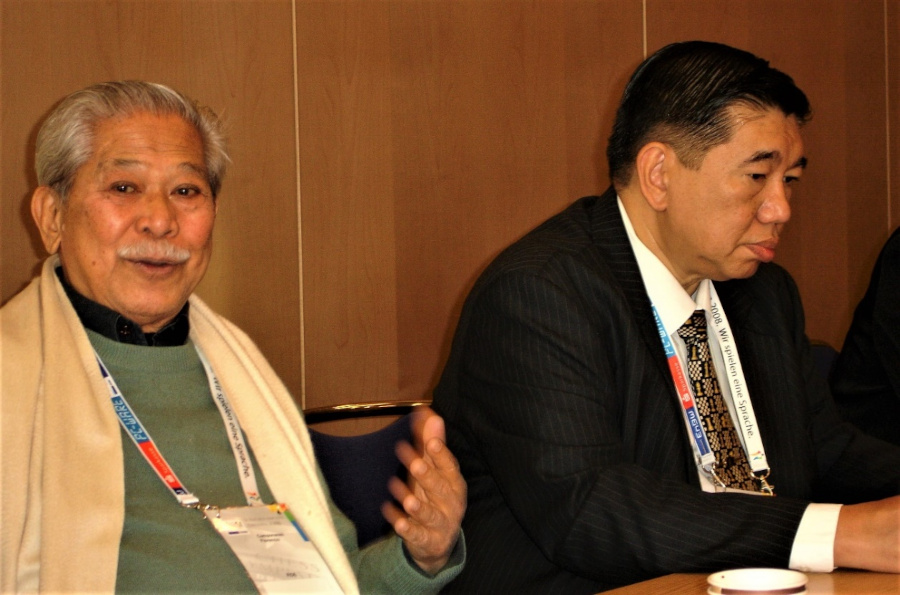
Interview with Casto Abundo (2023)
Find below excerpts from a 2023 interview with Casto Abundo conducted by Uvencio Blanco for ChessBase.
In these five decades of organised work, who are the greatest figures in the world of chess with whom you have become friends?
We become close to friends we meet every day. In FIDE, we see people during meetings or tournaments. Communication before the internet was not as frequent as we have today. I am happy to meet old friends when we have the chance. Willy Iclicki of Belgium (now Israel) became best man at my wedding. I have many close friends from all over Asia.
You were an Executive Director of FIDE together with the President Florencio Campomanes. Tell us about this experience in times of expansion of this sporting organisation.
Sometimes it amazes me when I recall how Campo and I managed the chess world without email or mobile phones. In Campo’s time, we were only four persons in the FIDE office. As Campo would say, we worked 25 hours a day, eight days a week. Today, I try to share my experience by teaching new Arbiters.
Your close friendship and working relationship with Campomanes is well known. In fact, I understand that when he died you were at his side, at which point he exclaimed: what a good time we had! What aspect of this relationship do you value most?
I spent more time with Campo than I did with my own father. Campo always strove for excellence in his work organising chess.
You have been a witness to and actor in important changes in chess as a sport and in FIDE as its governing body; what situations have you found most interesting or challenging?
Controversies would take most of our time and energy, but we have to win the politics to be able to do the work. I proposed the World Cup knockout system to Kirsan when some organisers complained about prima donnas threatening to pull out of a Candidates match of two players and leaving organisers without an event.
Grandmaster Bobby Fischer lived in the Philippines in the late 1970s and early 1980s. In that time period, were you able to coincide in any particular event or circumstance?
Bobby visited the Philippines in 1976 when Campo was trying to revive the match with Karpov. I was assigned to stay with Bobby for a whole month. I had to play racquetball with Bobby, swim with him far into the open seas, go on long nightly walks discussing chess, arrange a date with a Filipina national chess team member he liked, drive him to the yacht of President Marcos, and watch as he replayed games from Chess Informant every night.
Grandmaster Dorian Rogozenco delves into Fischer’s openings, and retraces the development of his repertoire. What variations did Fischer play, and what sources did he use to arm himself against the best Soviet players? Mihail Marin explains Fischer’s particular style and his special strategic talent in annotated games against Spassky, Taimanov and other greats. Karsten Müller is not just a leading international endgame expert, but also a true Fischer connoisseur.
