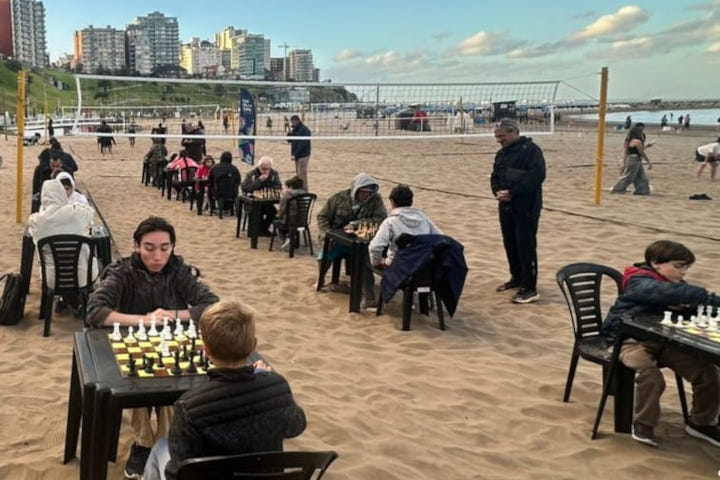
Olympic values brought to the coastline
The Argentine Olympic Committee (COA) has recently launched a new summer programme, Olympic Beach, aimed at bringing organised sport and Olympic values to Argentina’s coastal communities in the lead-up to the Santa Fe 2026 South American Games.
The initiative was formally inaugurated on Thursday, 8 January 2026, at the Horizonte Beach Club in Mar del Plata. The opening ceremony was led by COA President Mario Moccia and attended by the Governor of Santa Fe Province, Maximiliano Pullaro, alongside Olympic athletes and local officials. Representatives of national sports federations were also present, including Javier Curilen, Vice President of the Argentine Chess Federation (FADA).
Grandmaster Harshit Raja, India’s 69th GM, has created a practical and powerful 1.e4 repertoire – perfect for players who want to play aggressively without drowning in opening theory. Whether you’re playing online or over-the-board, this course gives you solid attacking weapons that are easy to learn, fun to play, and difficult for opponents to face.
Free sample video: Introduction
Free sample video: Scandinavian Defence
Olympic Beach is conceived as an open-access circuit combining sport, education and community engagement. Running from 7 January to 1 February, the programme operates from Wednesday to Sunday and spans eight locations: Mar del Plata, Chapadmalal, Miramar, Pinamar, Cariló, Villa Gesell, Rosario and Concepción del Uruguay. Activities are free of charge and designed to reach a broad audience, particularly children and young people spending the summer months at the coast.
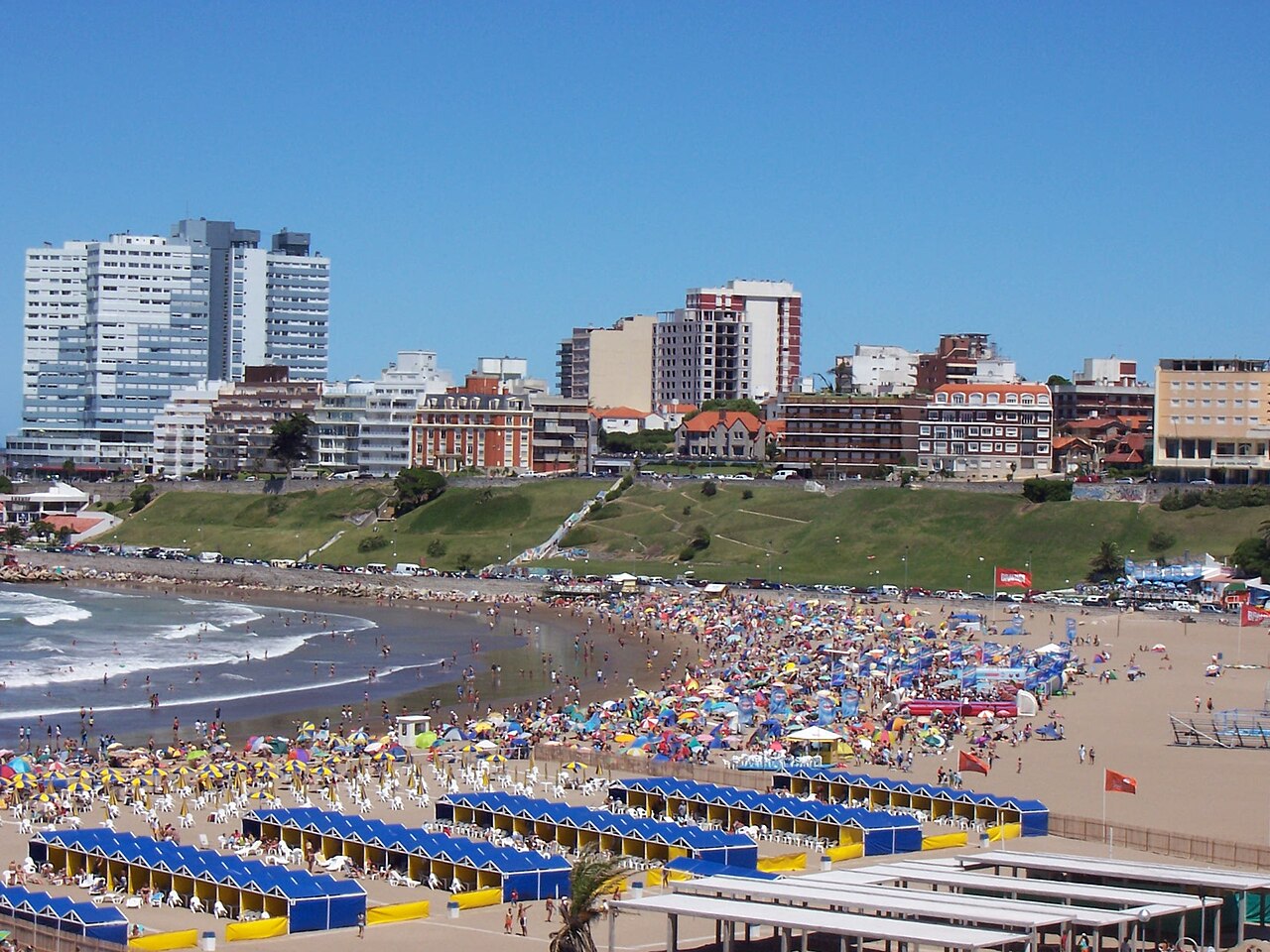
Mar del Plata in 2024 | Photo: Leandro Kibisz via Wikimedia Commons
The schedule includes competitions and exhibition events in a range of beach sports, introductory clinics led by qualified instructors, and recreational activities intended to encourage participation rather than elite performance. In parallel, the programme places emphasis on environmental awareness, with organised beach clean-ups forming part of the calendar at several venues.
Chess has been incorporated into Olympic Beach through the involvement of the Argentine Chess Federation, under the coordination of Mario Petrucci, FADA’s Executive Director, a member of the COA and Argentina’s representative on FIDE’s Chess in Multinational Sports Games Committee. This inclusion reflects the broader Olympic emphasis on intellectual sport and educational values alongside physical activity.
During the opening day in Mar del Plata, the Mar del Plata Chess Federation staged a blitz tournament at Varese Beach, complemented by open boards for informal play and simultaneous exhibitions. The activities were structured to be accessible to players of different ages and experience levels, integrating chess into the wider beach-sport setting rather than isolating it as a standalone event.
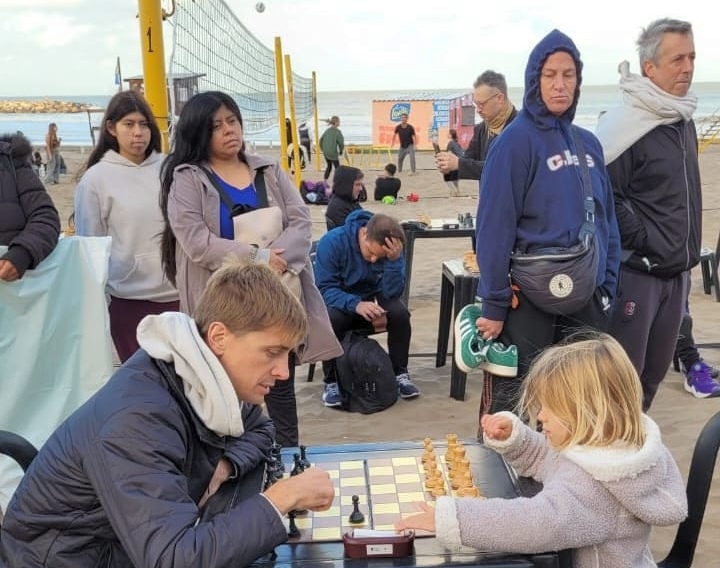
Players of all ages are participating | Photo: FIDE
Following its initial edition in 2025, Olympic Beach has expanded in scale for the current season, both in the number of host locations and in the range of participating sports. The COA has framed the programme as part of a longer-term effort to strengthen links between organised sport, public spaces and community participation, while also promoting Olympic principles in an informal, summer setting.
With events continuing through to early February, Olympic Beach serves as a visible prelude to the continental competitions Argentina will host in 2026, while providing a nationwide platform for federations to present their sports beyond traditional venues.
EXPAND YOUR CHESS HORIZONS
Data, plans, practice – the new Opening Report In ChessBase there are always attempts to show the typical plans of an opening variation. In the age of engines, chess is much more concrete than previously thought. But amateurs in particular love openings with clear plans, see the London System. In ChessBase ’26, three functions deal with the display of plans. The new opening report examines which piece moves or pawn advances are significant for each important variation. In the reference search you can now see on the board where the pieces usually go. If you start the new Monte Carlo analysis, the board also shows the most common figure paths.

