The Cubs already have made a couple of notable moves since the start of the offseason, bringing back Shota Imanaga on the one-year qualifying offer and signing free-agent reliever Phil Maton to a two-year deal.
But there is much work still to be done, if the club is going to take aim at its second straight postseason berth and challenge the Brewers for its first full-season NL Central title since 2017. With that in mind, here are three goals for the rest of the Cubs’ offseason.
1. Add a pillar to the rotation
After a bit of hand-wringing, the Cubs will have Imanaga back in 2026, on the one-year qualifying offer. That still isn’t nearly enough to shore up a rotation that was stabilized almost exclusively by a veteran with an extensive injury history (Matthew Boyd) and a very impressive rookie (Cade Horton) in 2025. The presence of Colin Rea and Jameson Taillon plus the eventual return of Justin Steele does theoretically give them at least six starters, but given their ambitions, this group probably won’t cut it.
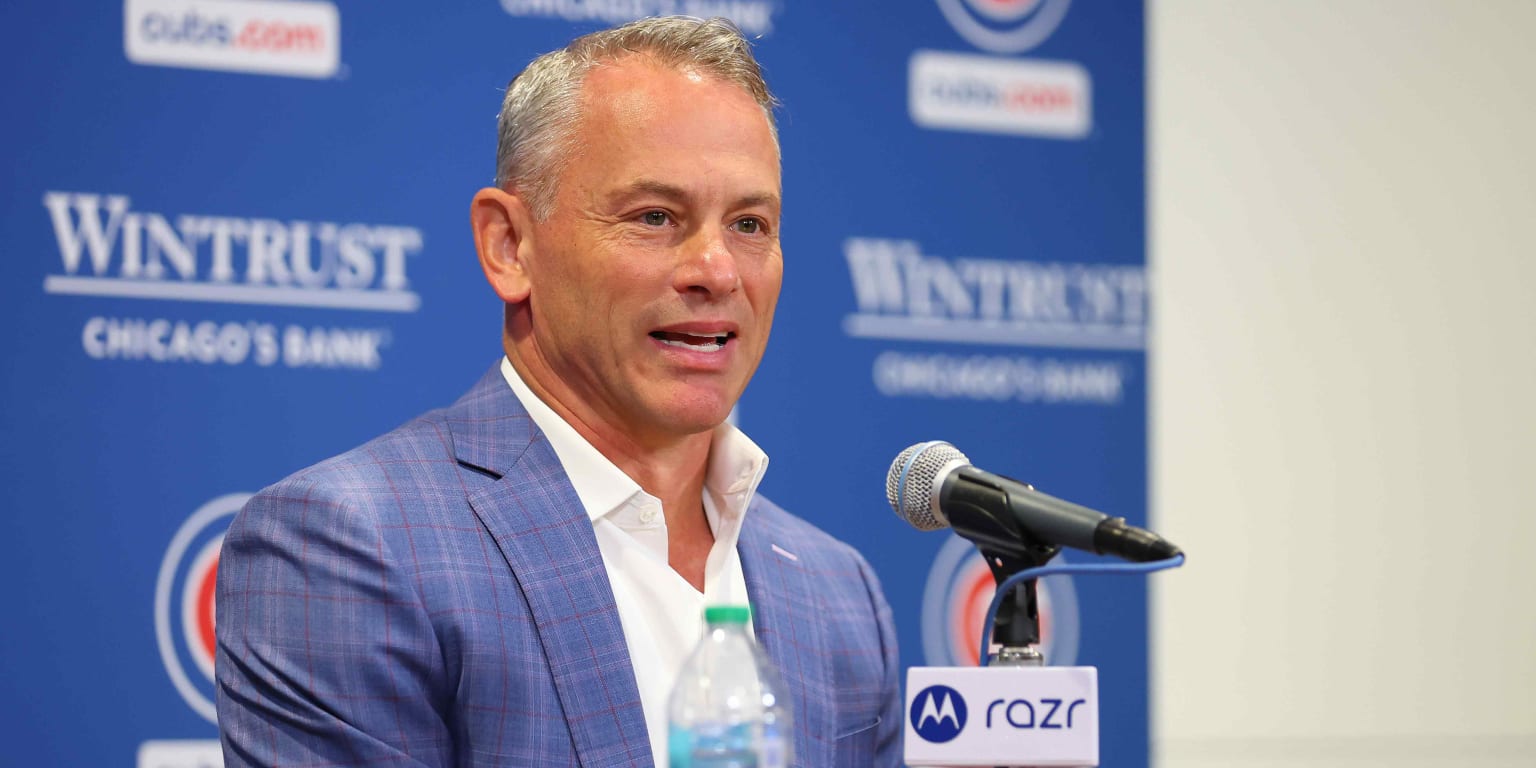
By all accounts, president of baseball operations Jed Hoyer is well aware of this one; there’s been no indication that the club has honed in on one arm in particular, but the Cubs have reportedly already expressed interest in free agent Michael King and have previously been in on several starters who could be available via trade this winter, including MacKenzie Gore and Joe Ryan.
Like the rotation, the Cubs’ bullpen figured it out this year, but it took quite a few players to cover those big innings, and most of them — Ryan Brasier, Brad Keller, Drew Pomeranz, Taylor Rogers and Caleb Thielbar — are now free agents. (A sixth, Andrew Kittredge, was traded back to the Orioles on Nov. 4.)
The recent addition of Maton is a good start, and some additional innings in 2026 are likely to be covered by their long list of expected swing men. Barring more injuries, Daniel Palencia, who got most of the save opportunities in 2025, could remain in his role as their closer; Porter Hodge is coming off a rough season but was so good in 2024 that a rebound is well within the realm of possibility. That still leaves a lot of unanswered questions about those middle innings.
3. Replace Kyle Tucker’s pop
It would seem most natural for the Cubs to slot top prospect Owen Caissie into Tucker’s vacated spot, assuming that he departs via free agency. In all likelihood, a four-man outfield rotation of Caissie, Pete Crow-Armstrong, Ian Happ and Seiya Suzuki is what they’ll plan to have on their Opening Day roster. That could be fine, but remember that the Cubs leaned heavily on breakout seasons from Crow-Armstrong and first baseman Michael Busch in 2025 and still fell off an offensive cliff in the second half. That was with Tucker on the roster — diminished by injury, yes, but still with a post-break .360 OBP.
Relative to the dearth of high-leverage pitchers, this is quite a bit lower on the list of concerns, but it really couldn’t hurt to have another impact bat on hand. In terms of external options, a reunion with old friend Cody Bellinger makes sense but doesn’t seem likely; Pete Alonso or Kyle Schwarber would also fit the bill, although neither have been tied to the Cubs to this point in the offseason. More realistic could be someone like Ryan O’Hearn or Adolis García.
