This feature originally appeared in Cycling Weekly magazine on 11th December 2025. Subscribe now and never miss an issue.
When Lizzie Deignan started the Copenhagen Sprint in June, only she and her husband knew it would be the final race of her long, glittering career. It was 20 years ago she achieved her first major result, a silver medal in the 2005 Junior World Track Championships. More track success soon followed.
Deignan turns 37 on 18 December, and this was always due to be her final season, but she left Denmark with no fanfare, later announcing on Instagram what she and Philip knew before the race; she was pregnant with the couple’s third child and her time racing bikes was done.
Lizzie Deignan at home with a coffee
(Image credit: Future/Andy Jones)
You’ve moved back to Yorkshire from Monaco. How was the transition?
Monaco served a purpose, but being home is lovely. I love the people. I can’t go to a supermarket without having a conversation with a stranger, which wasn’t the case in Monaco. People are very open and warm, and then you’ve got the countryside, the greenness. And I suppose there’s something about your roots – it’s a physical feeling. When I land into Leeds Bradford Airport, there’s an exhale for me: I’m back.
Your last race was in Copenhagen in June. How is retirement?
It’s a bit scary how easy it’s been so far. I’m not naive; I know that moment will come. I’ve seen my husband [former pro Philip Deignan] go through it and people talk about this grief process, grieving your previous identity, but I suppose I’d already started building my other identity. Maybe it’ll hit me in December when everyone goes to training camps, but then I’ll be able to go to my daughter’s nativity play at school – things I’ve not been able to do for years. I was very ready to retire.
You’re pregnant with your third child, but were going to retire this year anyway – why did you choose 2025?
It was a gut feeling. Cycling started to feel like sacrifice rather than the dream it used to be. I’d achieved everything I ever wanted to. If the fire had not gone out, if I really still wanted it, I could have made it work, but I just didn’t.

Lizzie Deignan with a Track Worlds medal
(Image credit: Getty Images)
You started cycling when British Cycling came to your school. What happened next?
Imagine if I hadn’t gone to school that day – my life would have been completely different. I genuinely thought cycling was a weird old bloke’s sport, and I didn’t really identify with anyone within the sport. I got £500 and a free bike, and I thought, “I’m not going to say no, but I’m going to carry on my hockey and my netball and my other sports at school.”
The turning point was going to see a World Cup on the track. It was glamorous, it was exciting, it was bright lights, and from that moment I was captivated. I didn’t really enjoy school, and [British Cycling] were starting to put this pathway through towards the Olympics. I’d always loved sport, always wanted to be an athlete, and it clicked.
When did you realise it could be your job?
I finished my A-Levels, then I had an opportunity to join the Track Academy in Manchester [in 2004].
At the 2008 Olympic Games, the only medal that they didn’t get was the women’s points race. That October, I won the points race, the scratch race and the team pursuit [at the track World Cup in Manchester], and filled the gap, so there was a place there for me. I was on this pathway where I was getting just enough money to support myself.

Lizzie Deignan racing for Boels Dolmans in 2013
(Image credit: Getty Images)
So, why switch to the road?
I’d become tired of the Manchester life, and had a taste of the road. I was very fortunate I’d started working with Emma [Wade], my agent, because the Olympics was coming and there was money out there from personal sponsors, which other athletes in Europe didn’t have. I could afford to turn my back on the funding and try to make it on the road in 2011. I was also fortunate that I come from a privileged background; my parents would have been there to catch me if I needed them.
Teammates view: Elisa Longo Borghini

(Image credit: Getty Images)
The Italian rode against Deignan until the two joined forces at Trek-Segafredo in 2019. A close friend, Longo Borghini has a unique insight into Deignan as a rider and woman.
“I’ve always admired her style and her composure inside and outside the races. She was always classy, and for me she was someone to look up to. Lizzie is a punchy, Classics rider, but she’s extremely good as a championship rider, somebody who can peak and perform well at important events such as World Championships or Olympics.
“I’ve learnt a lot by racing alongside her and my years in Trek were a big learning curve, mostly because of her. We worked very well together because we were complementary to each other, and for me it’s always been a great honour to be at her service.
“As a teammate, Lizzie was somebody you would trust with your eyes closed, both when she was the leader and when she was a helper. She knew exactly what to do and she never let you down. She opened up paths in our sport. She was one of the first women to get a baby and come back, inspiring many other cyclists to do so. She has never been afraid to share her opinions publicly. She’s a real role model.
“She’s the most humble person I’ve ever known. Her feet are down to earth. She’s also a real funny person; when you have Lizzie at the table you’re sure you’re going to laugh a lot. There’s no-one to compare her to, she’s simply Lizzie Deignan.”
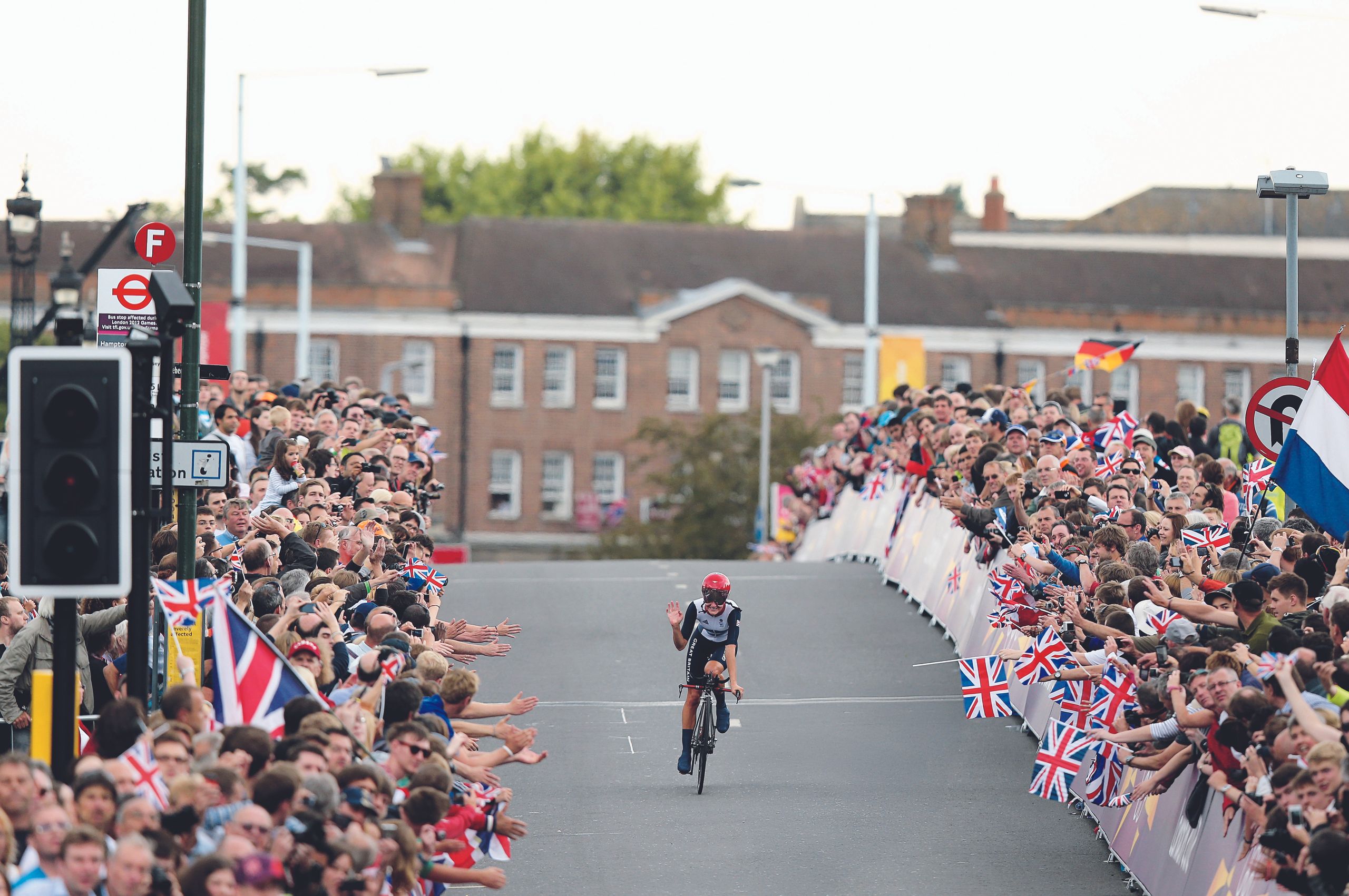
Looking back, how do you feel about the 23-year-old who won road race silver at the London Olympics?
I feel incredibly proud of her. As part of the women’s team, we were second-class citizens compared to Cav [Mark Cavendish] and Bradley Wiggins arriving in helicopters from the Tour de France. We were sat in a room with a world champion in the time trial in Emma Pooley, and a defending Olympic champion in Nicole Cooke, and me, self-coached and wondering where I might get a spare bike to go on the roof of the car. That’s pretty impressive to carry the weight of a nation and to deliver a silver medal. If I could relive one day of my career, it would definitely be that one.
Except, in the relived version, you win?
I honestly felt like I won silver – I was up against the greatest of all time [Marianne Vos].
In 2014 and 2015, you topped the UCI Road World Cup twice, winning big races. How were those seasons?
I was on a wave. I was going into races deciding if I wanted to win them or not. I mean, what a luxury to have, and how much fun you have when you’re in that dominant position in a bike race – it’s almost like playing a game every time you get to race. It’s a very different sport when you’re the one suffering and reacting to somebody like me dictating the moves.
It felt easy, but I was also sacrificing a lot. At some points, I took it for granted, because I really wanted to win gold in Rio. So I never really celebrated any of those victories properly, and often felt relief when I won them, rather than joy. It was a good time, but I think psychologically I could have done things better. If you’re winning, you don’t really think you need any psychological help. That’s probably one regret: if I look at my career, I think I would have used more sports psychology than I did.

Lizzie Deignan in shock as she wins the UCI Road World Championships road race in 2015
(Image credit: Getty Images)
The year after winning the World Championships in 2015, in the rainbow jersey, should have been glorious, but you had to deal with the fall-out after missing two anti-doping tests. How was that?
I aged about 20 years in one year. It was extremely stressful, but also very eye-opening. In hard times like that you realise what’s important to you. [My husband] Phil was brilliant, despite everything he was going through, so it brought us closer. My parents were brilliant and Emma [Wade] was phenomenal. It was really shit. [Initially charged with missing three tests, Deignan was subsequently cleared to compete after the Court of Arbitration for Sport found that one of the missed tests was not her fault.]
But I won some brilliant races and I came out the other side and had some brilliant comments from peers. Moments like that from other people, just to sort of validate you, are so powerful. It taught me that, in other people’s moments of difficulty, one comment to them can be so important. I suppose if I think about 2016, I probably feel like I was a child before and grew up in that process. I’d never faced any adversity or any bad press or anything like that.
Then, at the height of your powers in 2018, you took a year out to become a mum.
The decision to become a mother mid-career was never meant as a pioneering one; it was very much an emotional decision: I’m married, I want to be a young mum. Again I was guided through that process brilliantly by Emma. That made a huge difference, having somebody who advocated for me and believed in me and believed in the process.
Starting a relationship with the Trek team [in 2019] was just brilliant and completely changed my enjoyment of the sport. I felt really valued and really happy off the bike. Becoming a mother was, without a doubt, the best thing that’s ever happened to me. It was no longer all about me, and I found that liberating.

Lizzie Deignan celebrates winning Paris-Roubaix Femmes in 2021
(Image credit: Getty Images)
What kind of rider did you see yourself as?
An all-rounder. I wouldn’t describe myself as a GC rider or a climber – I don’t have the mentality for it. Sometimes I look at a rider like Tom Pidcock, who is a very versatile rider, and I think, “Why’s he putting himself through trying to be a GC rider when he could win every Classic on the calendar?”
To me, [one-day racing] is more of an enticing opportunity than going through the hell of trying to compete over three weeks. To focus over three weeks would be hard for me and my personality definitely. I’m all-in for one day.
What do you see as your greatest cycling achievement?
I’m very proud of when I won the UCI WorldTour in 2020 – pandemic year. All the noise from everybody was, “Train! Train!” I was in lockdown with a one-year-old baby, thinking, “I am not going to continue to train at this intensity. I’m going to back off a little bit until I know that the racing programme is back in place.”
I had confidence in myself, I ignored the noise, and I won the WorldTour, because I was the most consistent rider in the world when the calendar was put back on. I’m proud of myself for being able to do that and deliver.
